


Antique Figural Statuette
An antique figural statuette captures human and mythical forms in miniature, offering a tangible link to past aesthetic movements and domestic display traditions.
Antique Figural Statuette
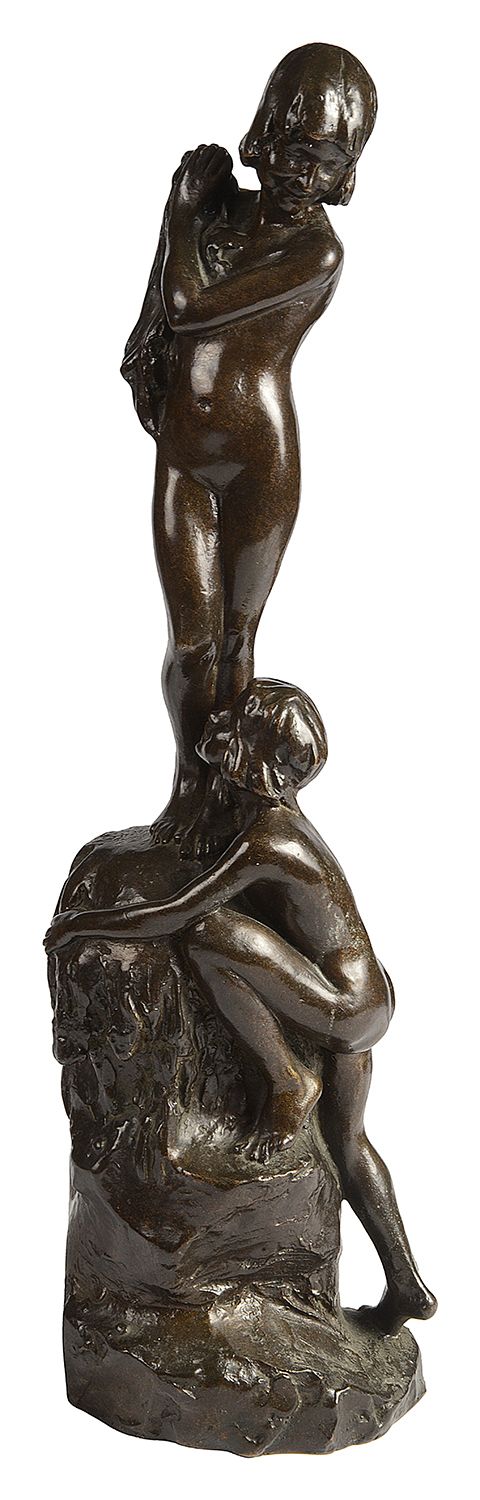
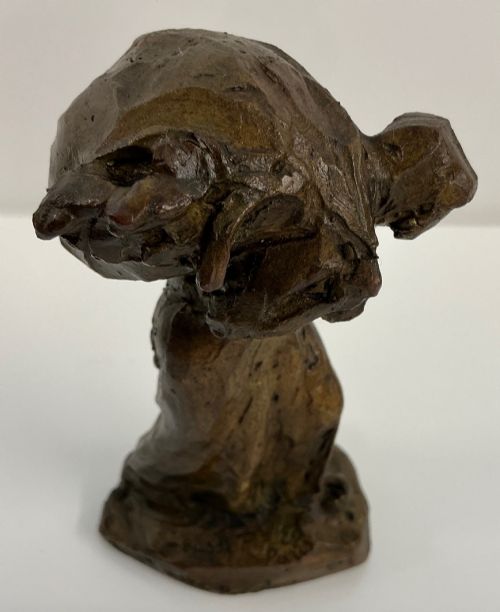
An antique figural statuette takes the shape of human figures, children, animals, and allegorical subjects rendered in three dimensions. Buyers seeking these works encounter a diverse array of sculptural objects ranging from cabinet bronzes to porcelain figurines and terracotta studies.
The selections span distinct periods, notably the nineteenth century, Victorian era, and the Art Deco and Art Nouveau movements of the early twentieth century. Common formats include standalone studies, clock garnitures, doorstops, and table lamps that incorporate sculptural figures into functional objects.
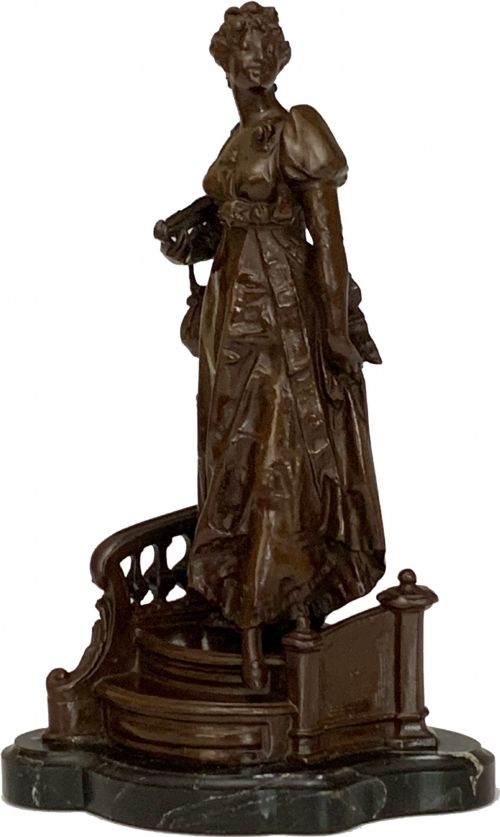
French foundries and European studios dominate the origins of these pieces, alongside English porcelain works and domestic brass foundries. Subjects vary from classical mythological scenes and literary characters to everyday depictions of children, dancers, and elegant ladies.
Materials and Working Methods
Bronze casting forms a substantial portion of the material evidence, often finished with patination, gold leaf, or mounted on marble and alabaster bases. Makers also utilised spelter and chrome as alternative metallic mediums during the Art Deco period.
Ceramic works rely on porcelain, bisque, parian, and terracotta, capturing fine details through mould-casting and hand-finishing. Parian ware provides a marble-like matte surface popular in Victorian figural groups, while glazed ceramics incorporate enamel colouring.
Among the children and nobility, a frog prince waits quietly for his transformation.
Assessing Quality and Execution
The crispness of the casting and the sensitivity of the chasing separate standard production pieces from superior works. Foundries that retained skilled artisans produced sharper facial expressions, distinct drapery folds, and clean removal of casting seams.
Material integration also dictates quality, such as the harmonious pairing of cast bronze with heavy veined marble plinths or alabaster bases. Hand-painting on porcelain figures and the depth of the chemical patina applied to bronzes demonstrate the level of workshop care.
Jules Dalou·Georges Van Der Straeten·Emmanuel Villanis·Carl Kauba·Auguste Moreau·Bruno Zach
The Antique Figural Statuette Glossary
- Patina
- The surface sheen or colour layer developed on bronze and metal over time or through chemical application. This treatment protects the metal and defines the visual depth of the sculpture.
- Bisque
- Unglazed fired porcelain that yields a matte, white texture resembling marble. It was widely used for nineteenth-century figures and portrait busts.
- Parian ware
- A type of fine biscuit porcelain developed in England to imitate carved marble. It is prized for its smooth, translucent finish.
- Spelter
- An alloy of zinc and other metals utilised as a cheaper alternative to bronze. It appears frequently in twentieth-century figural statuettes and decorative lamps.
- Gilt bronze
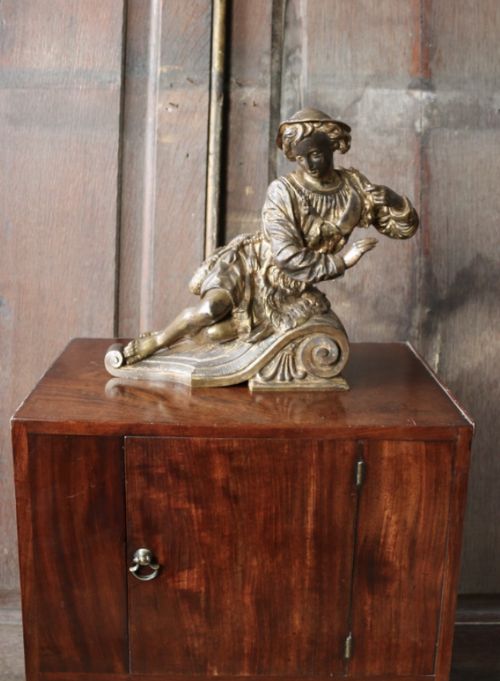
- Metal surfaces coated with a thin layer of gold leaf or applied gold amalgamation. This technique adds a reflective decorative finish to bronze statuettes and andirons.
Antique Figural Statuette: Frequently Asked Questions
What materials were used for antique figural statuettes?
Makers cast these pieces in bronze, patinated bronze, brass, chrome, and spelter. Ceramic variations include porcelain, bisque, parian ware, and terracotta.
Marble and alabaster frequently appear as supportive bases for metallic figures.
How do I identify an Art Deco statuette?
Art Deco statuettes generally date from the 1920s and 1930s, featuring stylised human forms such as dancers and figures with geometric lines. Materials like chrome, painted terracotta, and spelter are common in this group.
These pieces often incorporate stepped marble or alabaster plinths.
What is the difference between bronze and spelter?
Bronze is a durable copper alloy that accepts detailed chasing and holds rich patinas over centuries. Spelter is a softer zinc-based metal utilised as an economical substitute in later decorative pieces.
Spelter statuettes are lighter and more prone to surface wear.
How were these statuettes used originally?
Owners displayed them on mantelpieces, tabletops, and within multi-piece clock garnitures in nineteenth-century drawing rooms. Some utilitarian objects, such as doorstops and table lamps, integrated figures directly into their design.
Cabinet bronzes were intended for close inspection by collectors.