



Antique Executive Armchair
An antique executive armchair brings substance and history to a workspace, combining traditional seating forms with durable desk functionality.
Antique Executive Armchair
An antique executive armchair provides a supportive seat designed specifically for a study or office space. Buyers exploring this category encounter varied desk chairs, library armchairs, and revolving office variants spanning the nineteenth and early twentieth centuries.
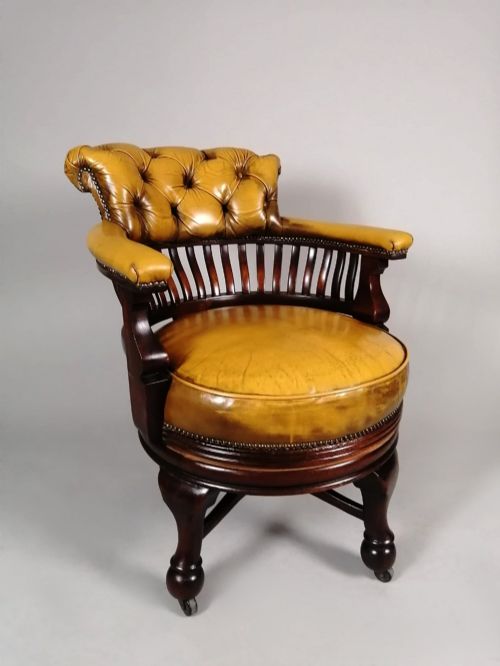
The selections on this page lean heavily towards nineteenth century and Edwardian production, featuring sturdy timbers paired with upholstered seats. Common configurations include swivel models with cast iron mechanisms alongside stationary library chairs designed for reading and writing.
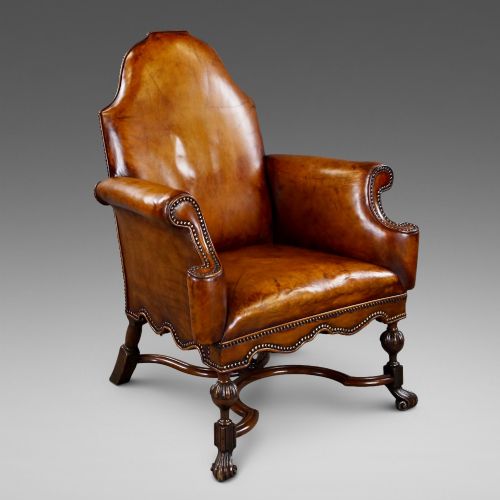
Makers and designers drew upon established historical aesthetics, resulting in pieces referencing Regency, Victorian, and Queen Anne styles. Mahogany and walnut frames frequently dominate the selection, often upholstered in leather to withstand daily use.
How they were made
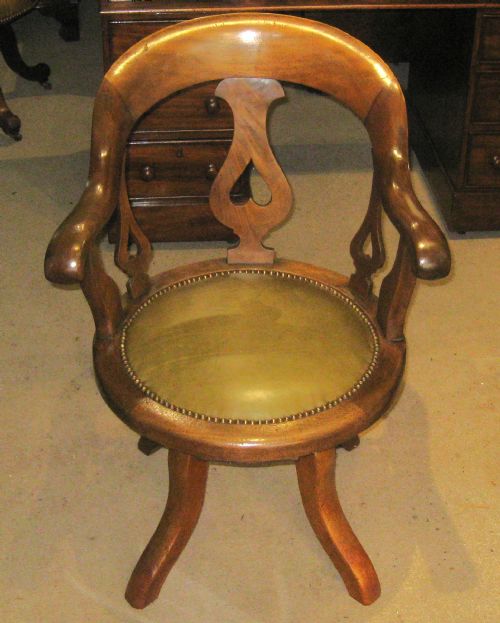
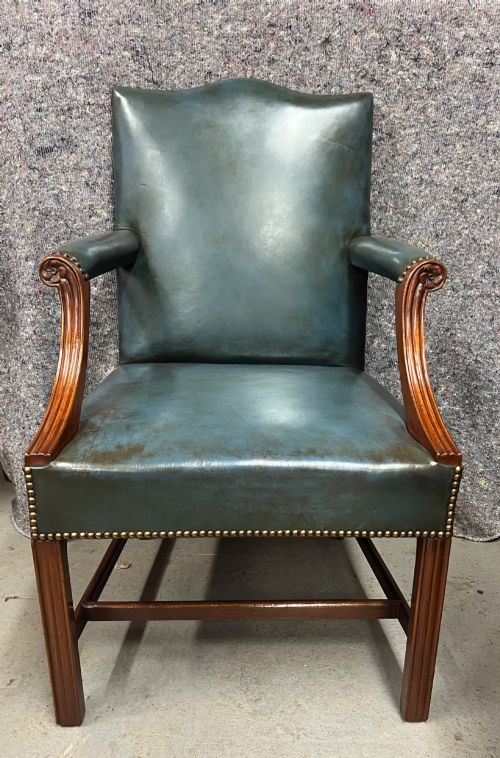
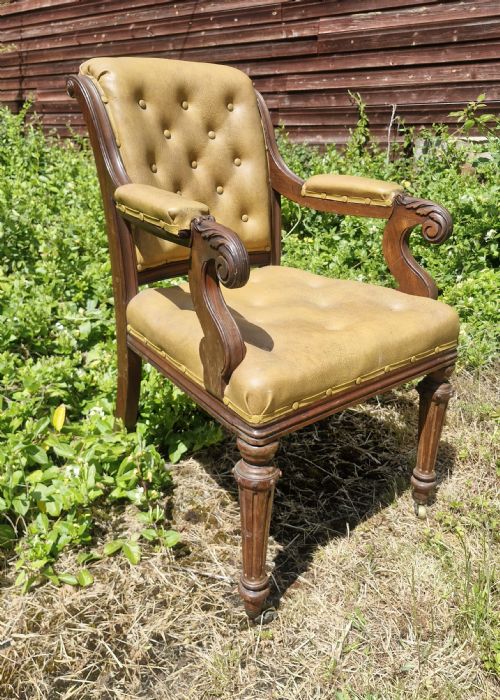
Craftsmen utilised dense hardwoods such as mahogany, walnut, and oak to build structural frames capable of enduring constant movement and weight. These timbers were shaped into bow backs, solid panels, and carved armrests using traditional joinery techniques.
Upholstery typically relied on leather or fabric stretched over padded seats, frequently accented with brass nailheads securing the edges. Swivel and revolving versions incorporated iron and brass mechanical components beneath the seat to allow movement.
Listings feature items spanning the 19th century through the Edwardian era, constructed from mahogany, walnut, oak, and leather.
What varies in quality
Quality rests in the selection of timber and the execution of the timber carving, where finely figured mahogany or rich walnut elevates a piece above standard utility items. The integration of mechanical swivel actions also dictates the standard, with smooth movement and original brass or cast iron hardware marking superior examples.
The depth and condition of the leather upholstery significantly affect the character of the chair, alongside the retention of original framing structures. Pieces showing cohesive stylistic intent from recognised design traditions generally hold greater historical interest.
The Antique Executive Armchair Glossary
- Revolving desk chair
- A seating form fitted with a central spindle or mechanical pivot allowing the user to turn in place. These typically feature wooden frames set atop cast iron or brass bases.
- Library armchair
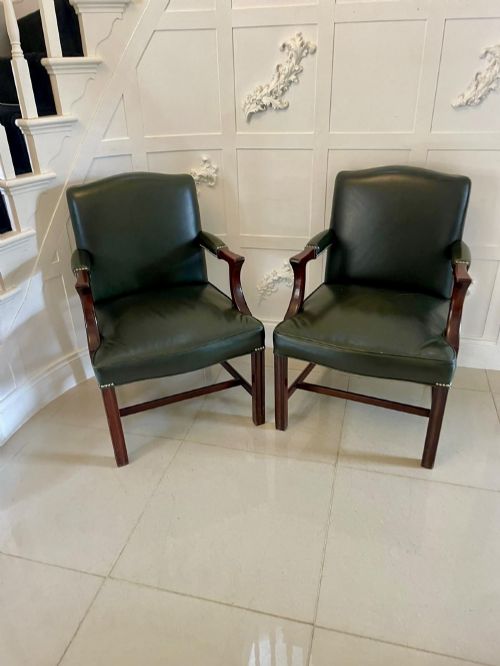
- A comfortable upholstered seat intended for reading rooms and studies. These often feature generous padded arms and leather coverings suited for prolonged use.
- Bow back
- A curved wooden backrest wrapping around the upper portion of the chair. This construction offers ergonomic support for the user.
- Chippendale style
- A decorative aesthetic characterised by elaborate carved woodwork and classic proportions. Pieces in this tradition reflect the influential eighteenth-century cabinet maker's patterns.
Antique Executive Armchair: Frequently Asked Questions
Are these chairs comfortable for daily use?
Many of these chairs were built for long hours at a desk, offering supportive upholstered seats and supportive armrests.
Revolving and swivel models provide the mobility expected in a modern workspace while retaining traditional materials.
How do I identify the period of a desk chair?
Dating relies on observing structural characteristics, timber choices, and hardware styles associated with nineteenth or early twentieth-century production.
Stylistic nods to Regency or Victorian designs offer further clues regarding the era of construction.
What is the difference between a library chair and a desk chair?
Library chairs often prioritise plush upholstery and fixed frames suited for reading spaces and casual study.
Desk chairs more frequently incorporate swivel mechanisms, height adjustments, or narrower profiles designed for sitting close to a writing table.
What woods were commonly used?
Mahogany and walnut appear frequently in these listings, prized for their rich colour and structural strength.
Oak and rosewood are also utilised, particularly in pieces reflecting specific regional styles or earlier design periods.