



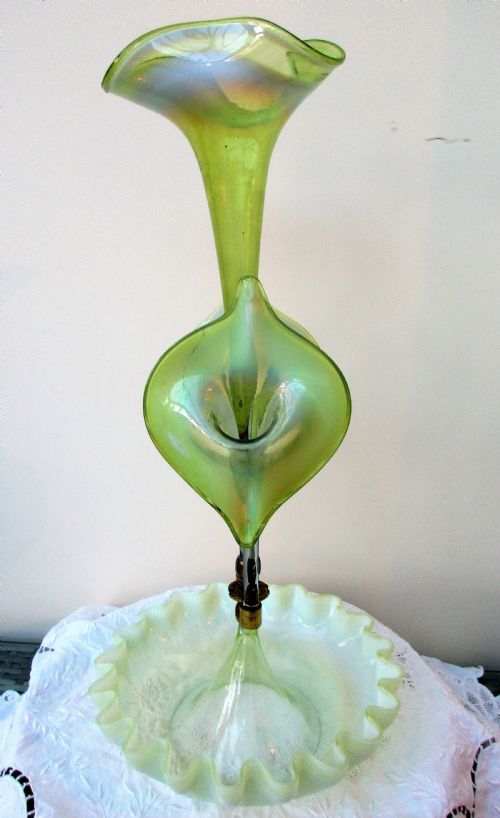

Antique Epergne Vase
An antique epergne vase is a multi-trumpet table centrepiece designed for grand floral displays.
Antique Epergne Vase
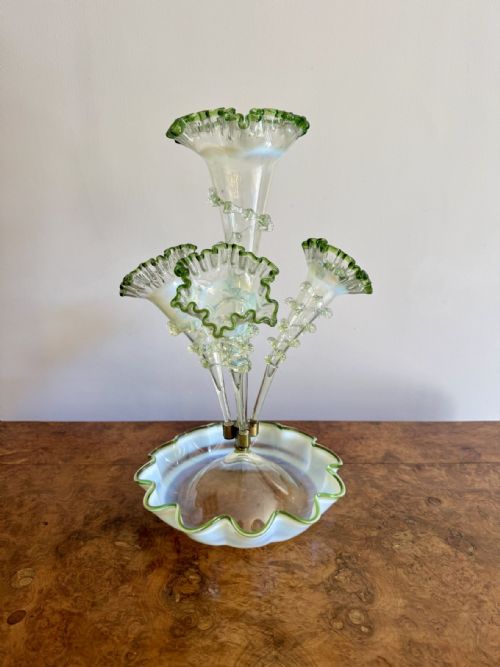
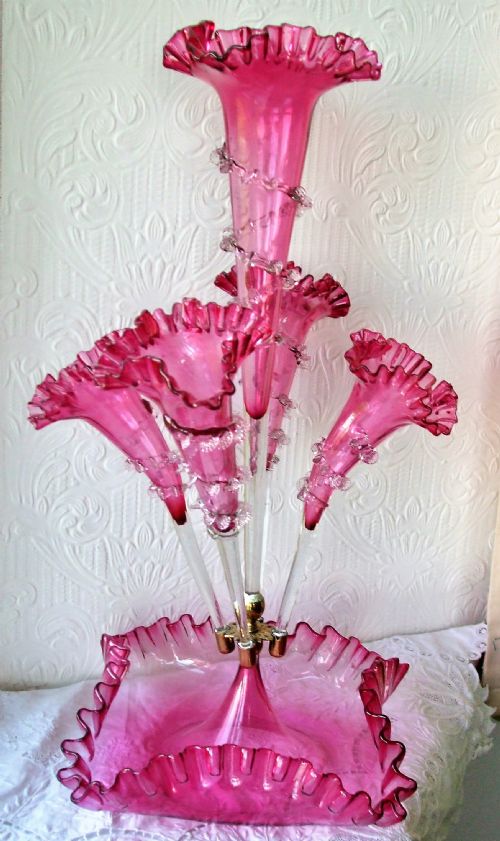
When you search for an antique epergne vase, you encounter elaborate table centrepieces built to hold multiple stems in dramatic fashion. These constructions typically feature a central trumpet vase surrounded by smaller flutes, branches or posy vases mounted on a shared base.
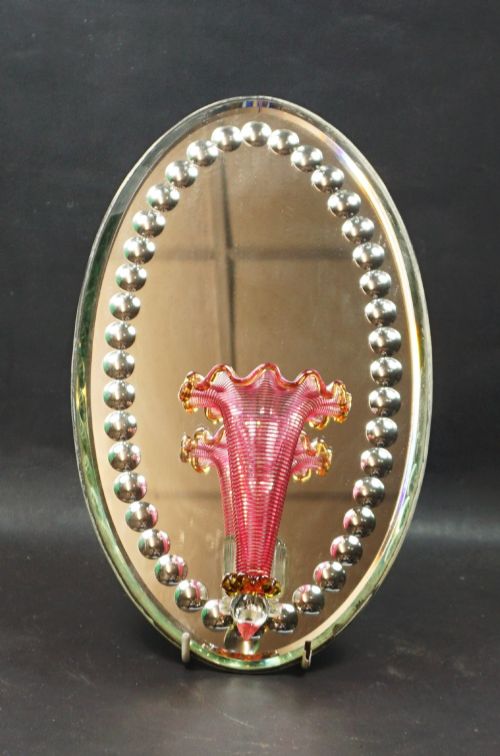
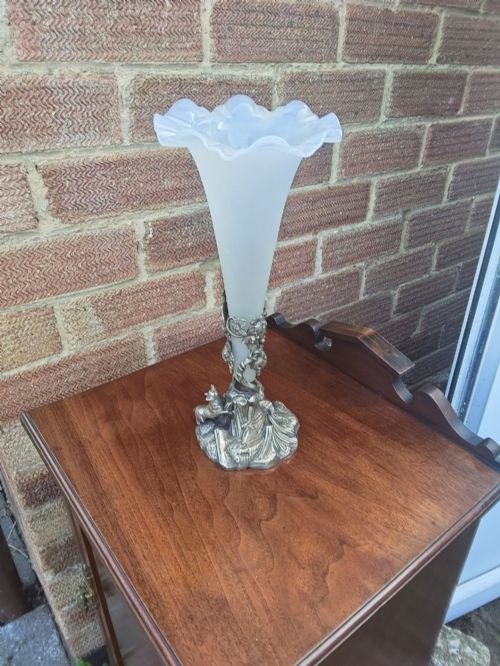
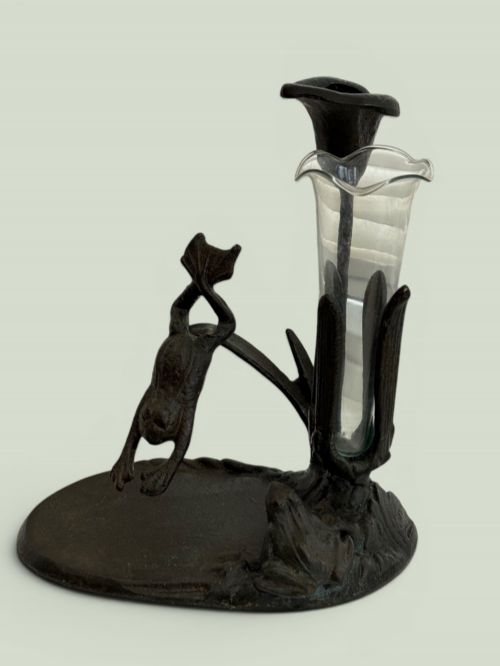
The pieces appearing on this page span the nineteenth century through the 1930s, taking the form of Victorian cranberry glass arrangements, Edwardian silver-mounted flutes, and Art Nouveau or Art Deco bronze centrepieces. Origins stretch across English, French and Black Forest workshops, uniting varied materials into singular display vessels.
Most examples function as table centrepieces designed for dining rooms and parlours, utilising removable glass inserts that lift from metal or wooden frames for cleaning. Buyers select them for their vertical presence and the colourful interplay of glass against bronze, brass or silver plate.
Materials and construction methods
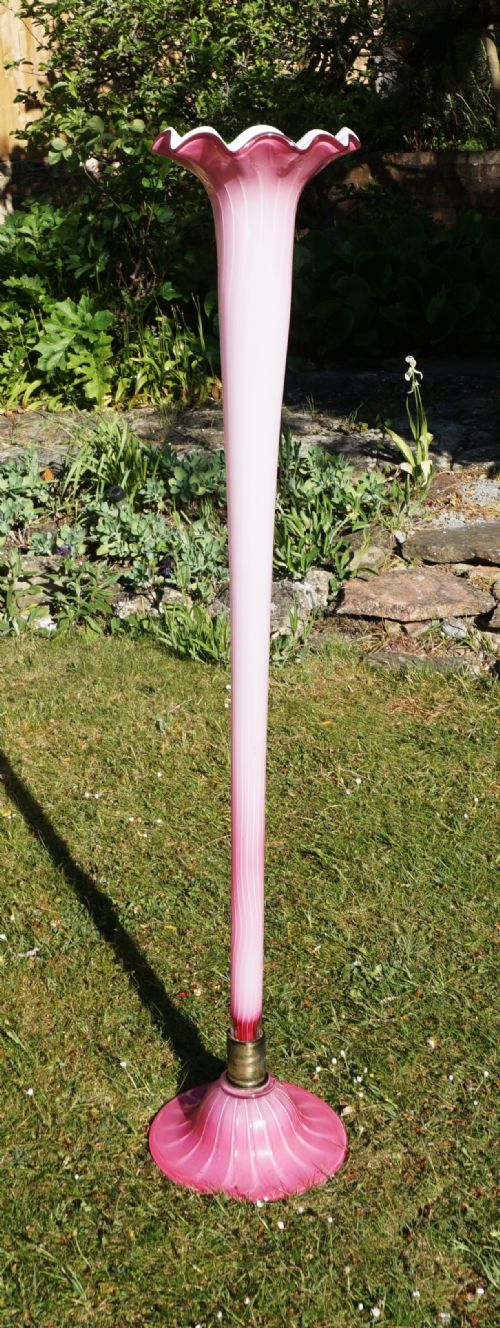
Makers combined blown glass with cast metal frameworks, joining delicate hand-blown trumpets to sturdy bases of brass, bronze, silver plate or carved wood. Glass components frequently display cased colours, frilled rims and etched patterns achieved through specialist manipulation while hot.
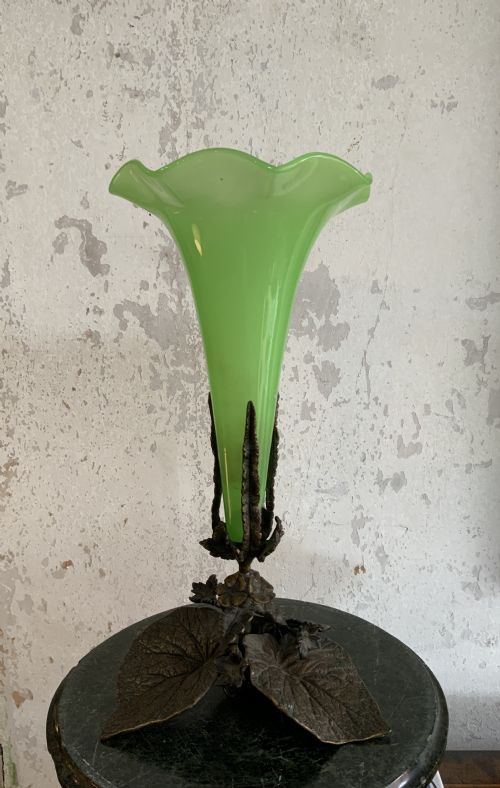
Metal mounts utilise casting, silver plating and gilt work to support heavy glass bowls and flutes without tipping. Carved Black Forest timber bases anchor baccarat crystal bowls, while silver-plated frames use screw fittings and collars to secure individual glass vases.
Antique Epergne Vase Retail Price Guide 2026
Typical asking prices for epergne vase among the pieces listed under this phrase on Sellingantiques today, from the lower quarter to the upper quarter. They describe what is for sale here now, not the wider market.
The listings span the nineteenth century through the 1930s, uniting English silver, French gilt bronze, Black Forest carved wood and vibrant cranberry glass.
Distinctions in quality
Quality rests in the harmony between the metal armature and the blown glass components, where heavier silver-plated bases and finer crystal flutes indicate superior manufacture. Maker attributions, such as pieces bearing marks for Walker & Hall or Daniel & Arter, distinguish standard items from documented workshop output.
The complexity of the glasswork dictates the upper tier of the range, evidenced by multi-trumpet configurations, cased pink and cranberry colours, uranium reactivity, and intricate hand-etched detailing. Robust casting in the bronze or gilt metal mounts similarly separates substantial centrepieces from lighter commercial output.
Walker & Hall·Daniel & Arter·Goldsmiths & Silversmiths
The Antique Epergne Vase Glossary
- Epergne
- A large table centrepiece featuring multiple arms or sockets designed to hold fruit, sweetmeats or flowers. The form evolved during the Georgian period and reached its decorative peak in Victorian dining rooms.
- Trumpet vase
- A conical vessel with a flared rim, shaped like the brass instrument of the same name. These form the primary vertical elements of multi-flute epergnes.
- Cranberry glass
- A rich red-pink transparent glass coloured with gold chloride during the melting process. It remains a defining material of Victorian decorative glassware.
- Vaseline glass
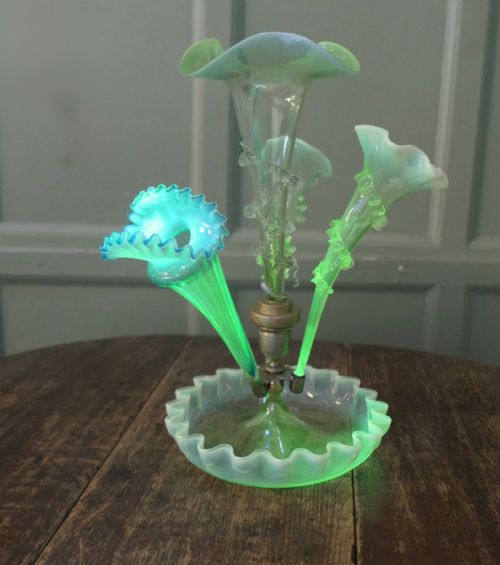
- A yellow-green glass containing uranium dioxide that glows under ultraviolet light. The material gained widespread popularity in nineteenth-century decorative tableware.
- Jack-in-the-Pulpit
- A style of art glass vase featuring a distinctive flared, folded rim resembling the woodland plant. Makers shaped the hot glass by hand to create the characteristic asymmetrical hood.
Antique Epergne Vase: Frequently Asked Questions
What was an epergne used for?
These vessels served as ornamental dining table centrepieces for displaying cut flowers, fruit or sweetmeats during formal meals.
Hosts positioned them in the middle of the table so guests could converse beneath or around the elevated floral stems.
How do I clean an antique epergne?
Most glass trumpets lift entirely out of their metal or wooden bases to allow safe washing in warm, soapy water.
Metal mounts require dry dusting or specialist metal care depending on whether they are silver-plated, bronze or brass.
How do I date a glass epergne?
Victorian examples typically feature vibrant cranberry or vaseline glass with hand-crimped rims and heavy silver-plated or bronze bases.
Edwardian and later twentieth-century pieces often incorporate sterling silver mounts with strict hallmarks or adopt simplified Art Deco and Art Nouveau geometric lines.
Are the glass vases removable?
The individual trumpets and flutes slide or drop into designated metal rings, sockets or collars attached to the central base.
This removable design allowed servants to empty, wash and replenish the water and flowers without moving the heavy metal structure.