


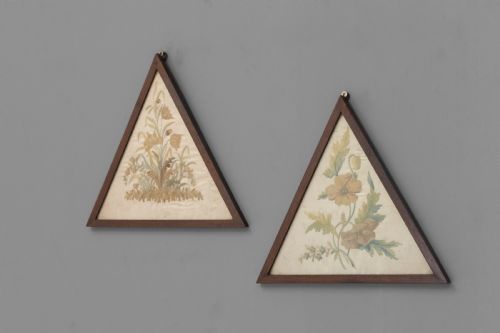

Antique English Wall Hanging
When you search for an antique English wall hanging, you encounter functional timber cupboards, gilt mirrors, and crewelwork panels made to save floor space.
Antique English Wall Hanging
An antique English wall hanging encompasses a diverse group of objects designed to be mounted securely onto domestic vertical surfaces rather than left freestanding. This category brings together practical storage items, timepieces, decorative mirrors, and textiles produced across several centuries.
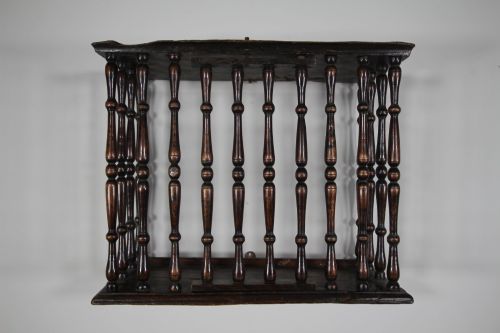
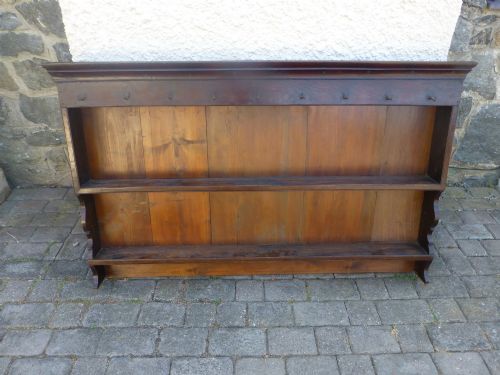
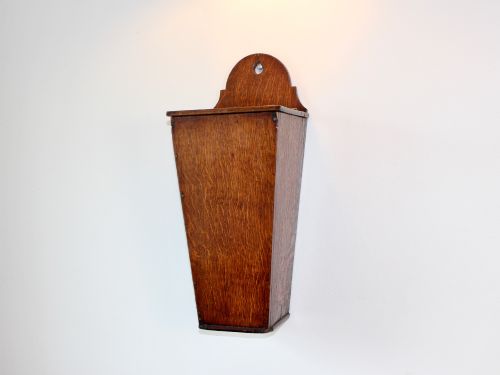
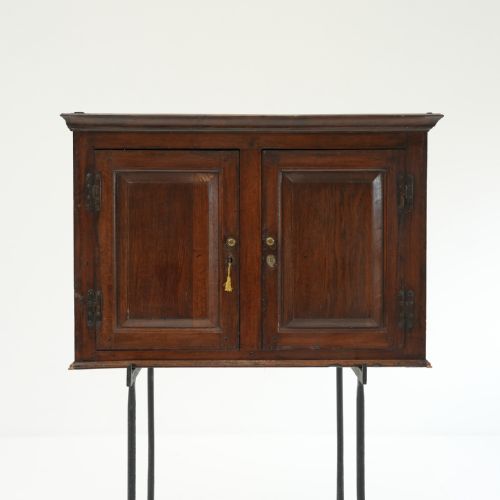
Buyers frequently encounter corner cupboards, wall cabinets, and spice cupboards fashioned from sturdy timbers like oak and mahogany. These functional items served domestic needs in period homes, providing enclosed storage for provisions, tableware, or valued personal belongings while occupying minimal floor space.
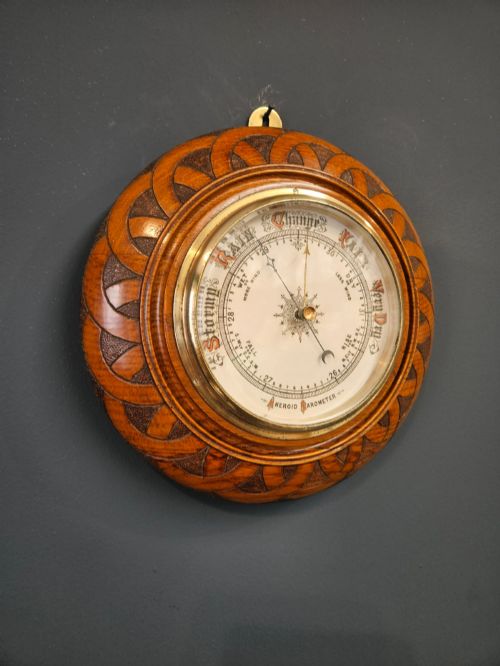
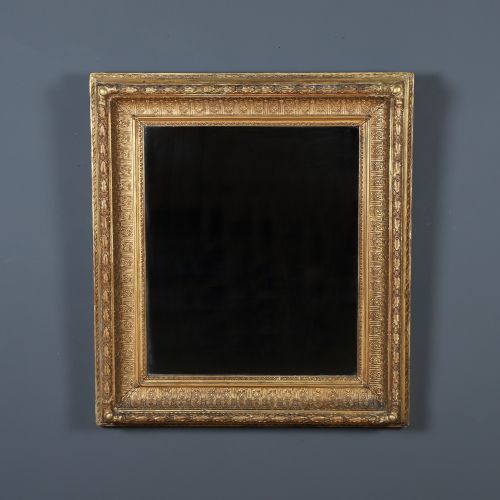
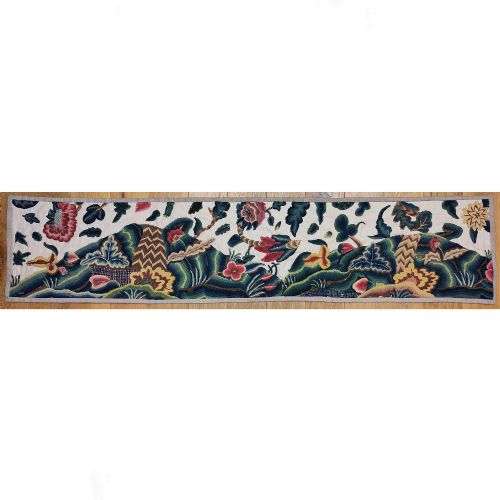
Beyond cabinetry, the category includes wall mirrors framed in giltwood or mahogany, barometers housed in turned wood cases, and textile works such as crewelwork panels and embroidered pictures. Such pieces reflect the stylistic shifts of the Georgian, Victorian, and Edwardian eras, spanning simple country house utility to ornate revival designs.
How They Were Made
Cabinetmakers utilised solid native timbers, chiefly oak and mahogany, often applying crossbanding, inlays, or fruitwood details to enrich the surfaces of hanging cupboards and corner cabinets. Joinery methods relied on traditional dovetails and pegged joints to ensure wall-mounted weight was safely supported.
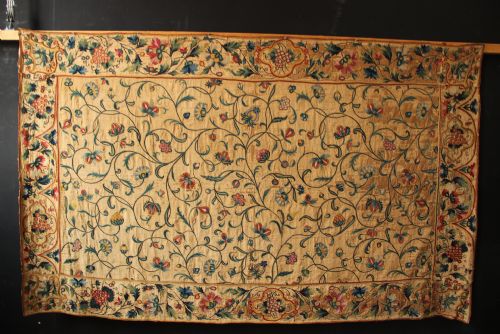
Mirrors and decorative plaques combined carved gesso, giltwood, brass fittings, and painted earthenware, whilst barometers integrated sensitive glass tubes and mechanical dials into turned timber housings. Textiles required meticulous hand-embroidery on heavy linen or wool grounds using fine crewel wools and silk threads.
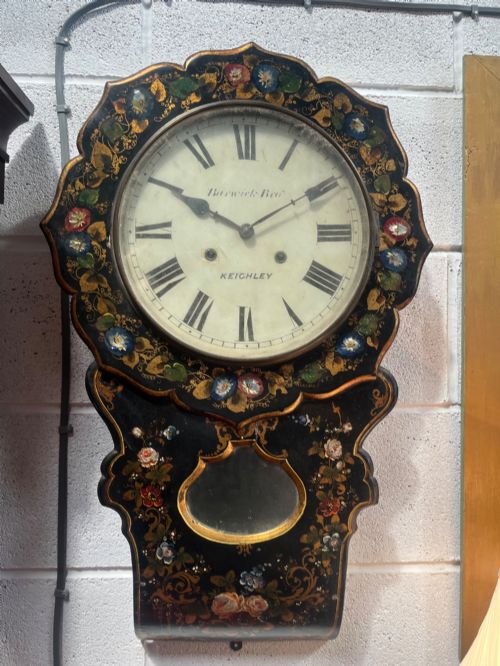
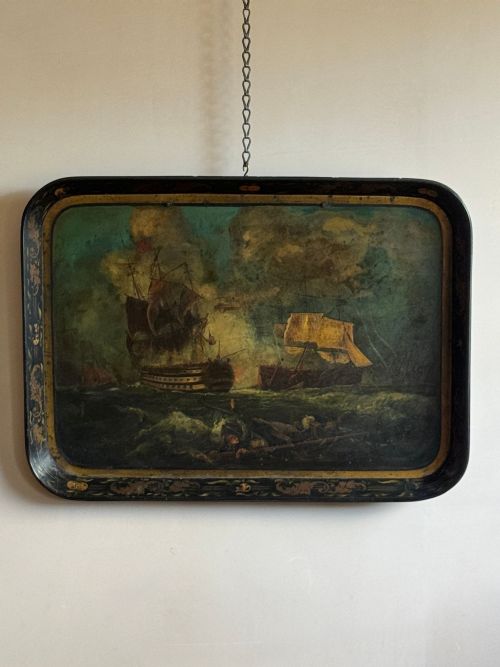
Finishes were achieved through hand-applied polishes, waxes, and japanning techniques that highlighted the natural grain of the wood or provided a smooth, protective coating to papier-mâché and framed panels.
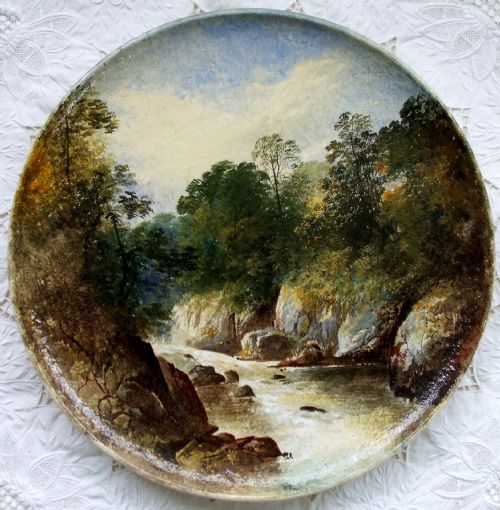
A painted ceramic plaque immortalises the Welsh landscape of the Fairy Glen for indoor admirers.
What Varies in Quality
The standard of an antique wall hanging is dictated by the selection of materials and the precision of the maker's hand, where figured mahogany or finely carved oak separates high-status items from utilitarian workshop output. Superior cabinet work displays tight dovetailing, carefully matched veneer grains, and original brass hardware.
Decorative elements such as gilding on gesso mirrors or hand-painted details on ceramic plaques and clock dials reveal the artisan's individual skill level. Pieces retaining their original surface patination and structural integrity command greater appreciation among collectors than those subject to heavy alterations or modern replacements.
William Yale
The Antique English Wall Hanging Glossary
- Crossbanding
- A decorative technique where a narrow strip of veneer is applied across the grain of the primary wood panel. This method frames the drawer fronts or cabinet doors of Georgian furniture.
- Crewelwork
- A type of embroidery executed using wool yarn on a sturdy fabric foundation like linen. It appears on early panels designed for interior wall display.
- Gesso
- A plaster-like mixture applied to wood surfaces as a base for moulding and gilding. It provides the raised relief work seen on Victorian and Georgian mirror frames.
- Japanning
- A European imitation of East Asian lacquer work created using layered varnishes and metallic dust. It adorns items such as papier-mâché trays and decorative panels.
- Overmantle
- A large mirror designed to hang directly above a fireplace mantelpiece. These pieces often feature extensive carved giltwood frames dating from the Victorian period.
- Whatnot
- An open set of tiered shelving designed to display small ornaments on a wall. These tiered fixtures utilise rosewood or mahogany structures.
Antique English Wall Hanging: Frequently Asked Questions
How were corner cupboards fixed to walls?
Period corner cupboards feature integrated hanging brackets, robust internal battens, or screw holes drilled through the rear framing timbers. These fixtures distributed the heavy weight of the solid oak or mahogany construction safely into structural wall studs.
Installers ensured these mounting points anchored securely into masonry or timber framing to prevent the loaded cabinet from pulling free under its own mass and stored contents.
What is a ships barometer?
A ships barometer is a specialised meteorological instrument housed in a secure timber case designed to withstand movement at sea. These wall-mounted barometers used gimbals or heavy mountings to remain steady during rolling conditions.
Victorian examples frequently utilised turned oak housings and clear glass tubes filled with mercury to measure atmospheric pressure for maritime and domestic use alike.
How do I care for antique crewelwork?
Antique crewelwork panels require protection from direct sunlight to prevent the natural wool yarns from fading and becoming brittle over time. Gentle, low-suction vacuuming through a protective mesh screen helps remove accumulated dust without disturbing the historic stitches.
Keeping the textile away from high humidity and fluctuating temperatures ensures the base linen and delicate threads remain stable within their frame.
What distinguishes a Chippendale style mirror?
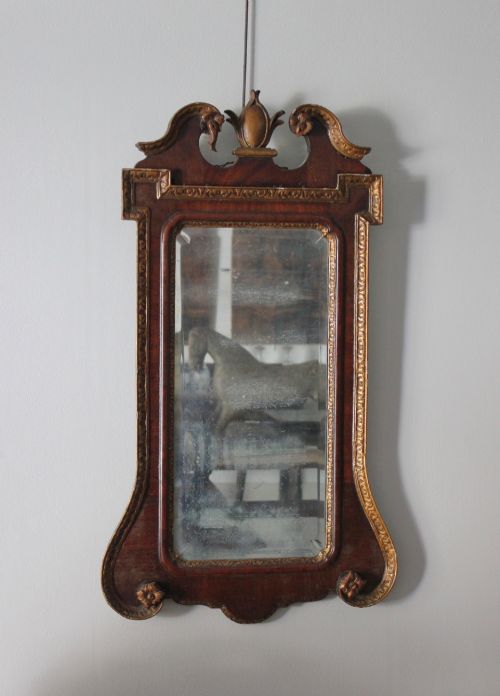
Chippendale style mirrors exhibit distinct fret-carved wooden frames often featuring scrolling foliage, gilded accents, and symmetrical or asymmetrical ogee silhouettes. These walnut or mahogany frames draw inspiration from Thomas Chippendale's mid-eighteenth-century design publications.
Later revival pieces produced in the Victorian and Edwardian periods adopted these same ornate fretwork patterns while utilising updated manufacturing techniques and timber preparations.