


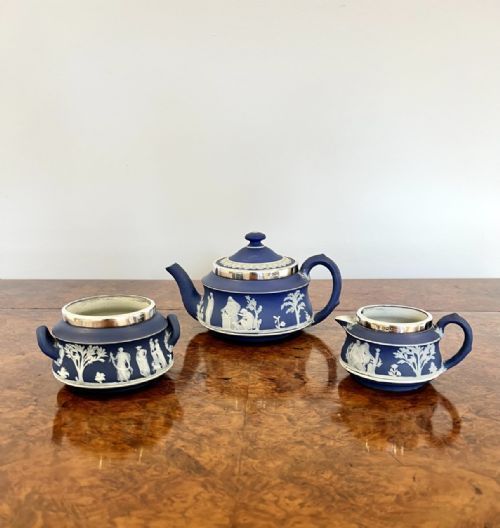

Antique English Tea Service
An antique english tea service gathers the table with porcelain and silver shaped by centuries of domestic ritual.
Antique English Tea Service
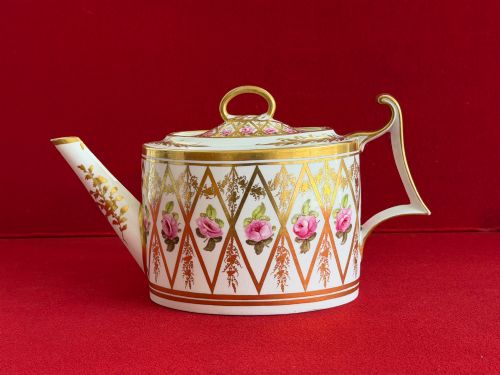
An antique english tea service brings together coordinated pots, jugs, bowls and cups originating from periods spanning the eighteenth century through to the twentieth century. These groupings range from intimate tea for two sets to large afternoon tea services intended for ten or more guests.
The ceramic and silver compositions reflect shifting domestic habits across Georgian, Regency, Victorian, Edwardian and Art Deco eras. Buyers encounter individual teapots, sugar boxes, cream jugs and complete multi-piece services bearing the marks of historic potteries and silversmiths.
How they were made
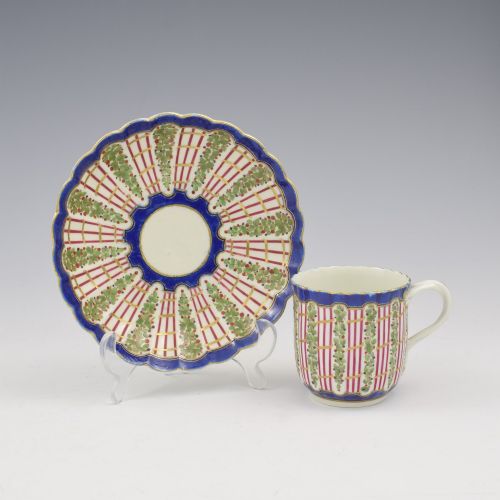
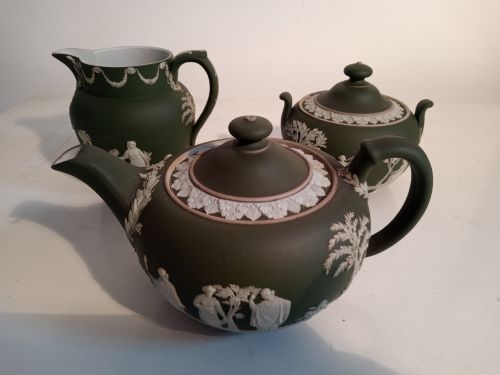
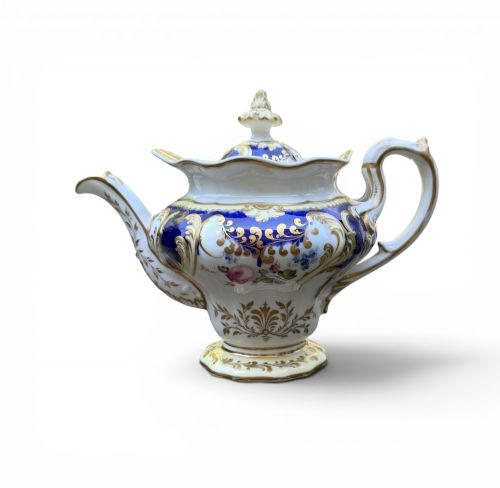
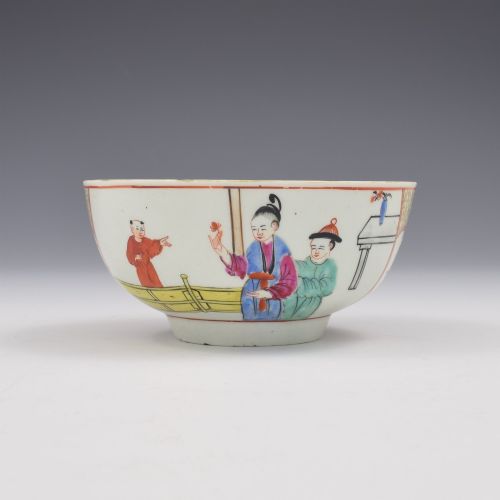
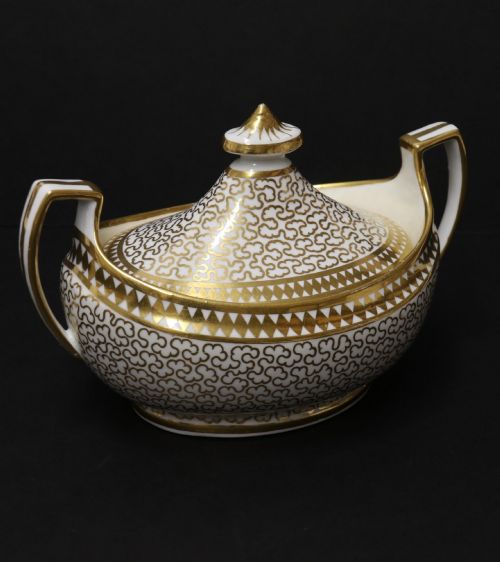
Potters shaped these vessels using porcelain, bone china, ironstone and stoneware, often applying hand-painted enamels, gilding with gold leaf and transfer-printed motifs. Early porcelain bodies required high-firing techniques developed by historic factories across Worcester, Derby and Staffordshire.
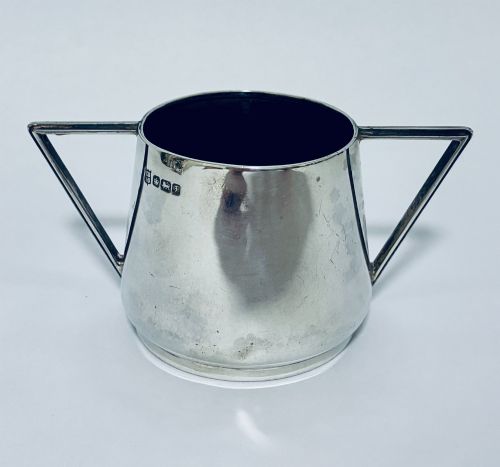
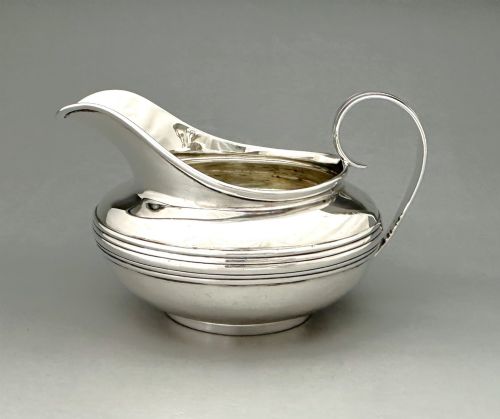
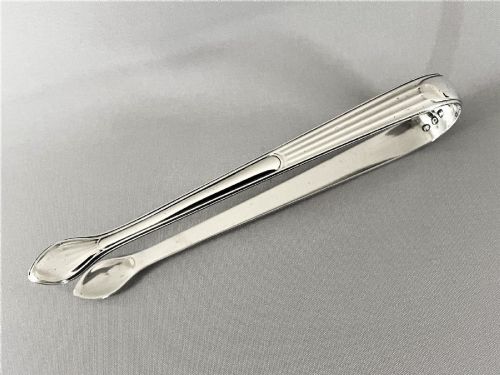
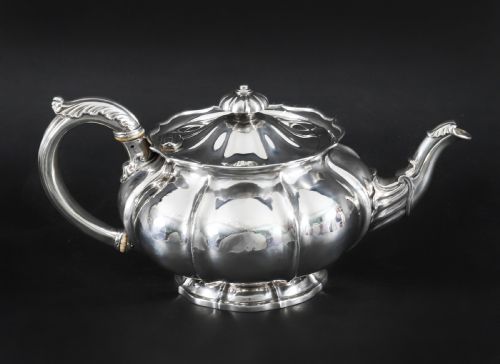
Silversmiths hammered and cast sterling silver and silver plate into substantial teapots, cream jugs and sugar bowls. Artisans finished metal components with engraved detailing, embossed handles and fitted lids.
Several sets include dedicated slop bowls, quietly reminding us of past guests who felt entirely too free with their tea leaves.
What varies in quality
The standard of an antique english tea service rests upon the crispness of the hand-painted enamel work and the preservation of delicate gilding across handles and rims. Finer porcelain pieces display translucent bodies and precise potting without warping from the kiln.
Metal sets depend on the weight of the sterling silver or the integrity of the silver plating over base metal. Maker attribution also shapes distinction, with documented pieces from celebrated porcelain factories or prominent silversmiths commanding closer attention.
Bateman Family·Paul Storr·Clarice Cliff·Thomas Wolfe·Benjamin Smith·Roberts and Belk
The Antique English Tea Service Glossary
- Sucrier
- A covered container designed to hold sugar. These vessels frequently match the teapot and cream jug within a porcelain tea service.
- Slop bowl
- A matching basin used during tea service to discard spent tea leaves and dregs from the cups. These bowls appear commonly in eighteenth and nineteenth-century ceramic sets.
- Bone china
- A type of porcelain incorporating bone ash, yielding a durable and slightly translucent body. English potteries utilised this material extensively for nineteenth-century teaware.
- Ironstone
- A dense, heavy ceramic developed to resist chipping while offering a durable canvas for enamel decoration. Masons and other makers produced extensive tea and dinner wares in this durable body.
- Gilding
- The application of gold leaf or gold paint to ceramic surfaces and metal rims. Artisans used this technique to accentuate handles, spouts and painted panels.
Antique English Tea Service: Frequently Asked Questions
How do I date an old tea set?
Dating relies on ceramic factory marks, pattern numbers and stylistic indicators such as rococo moulding or Art Deco geometric forms. Silver components carry hallmarks that record the assay office and exact year of creation.
Matching the ceramic body type, such as early bone china or ironstone, with documented operational dates of the pottery narrows the period further.
Can I use an antique tea service?
Many collectors use silver and porcelain tea sets for occasional dining, provided the pieces receive careful hand washing. Sudden temperature changes should be avoided to protect antique glazes and historic porcelain bodies.
Silver services require occasional polishing with appropriate compounds to maintain the metal surface without wearing down engraved details.
What pieces belong in a full service?
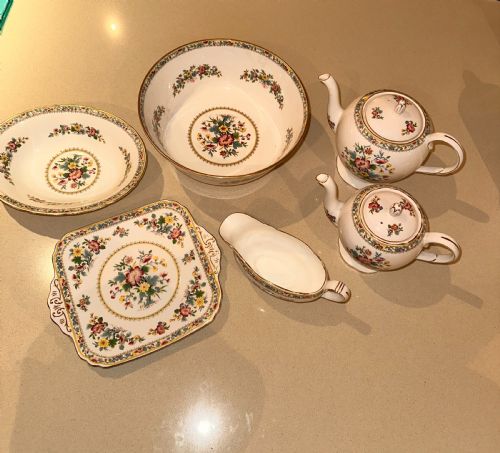
A standard antique tea service typically includes a teapot, a cream jug and a sugar bowl alongside matching cups and saucers. Larger Victorian and Edwardian groupings often expand to include slop bowls and coffee pots.
Assembled sets may grow over time to accommodate larger gatherings while maintaining matching patterns and materials.
How do porcelain and silver sets differ?
Porcelain sets emphasise hand-painted floral motifs, transfer printing and gilded highlights created by historic potteries. Silver sets rely on metal form, chased decoration and maker hallmarks from notable silversmiths.
Both materials served central roles in British domestic hospitality across the Georgian and Victorian periods.