
Antique English Bureau Desk
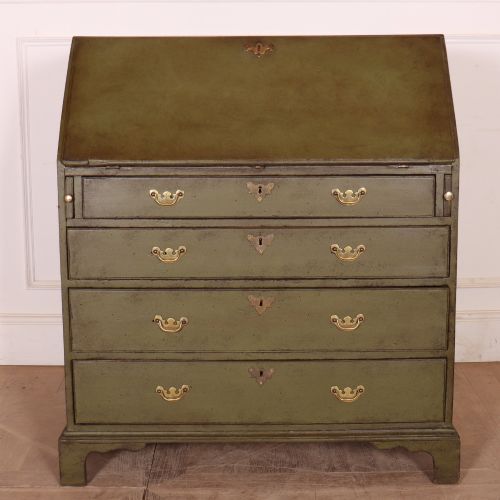
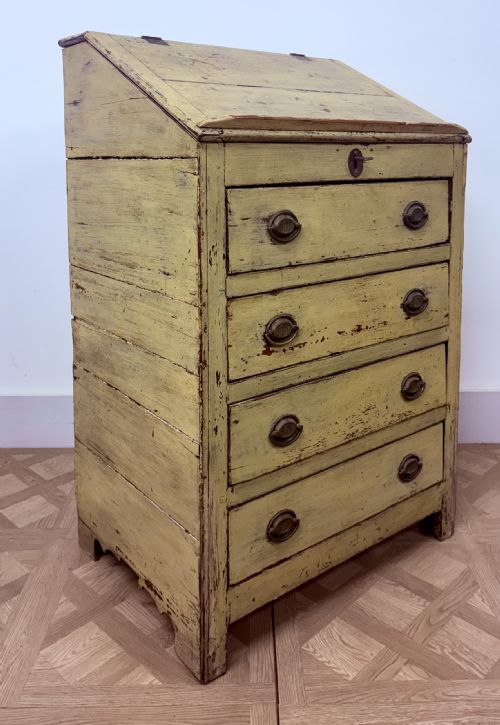
An antique English bureau desk combines a practical writing surface with concealed drawers and pigeonholes behind a sloping fall front.
Antique English Bureau Desk
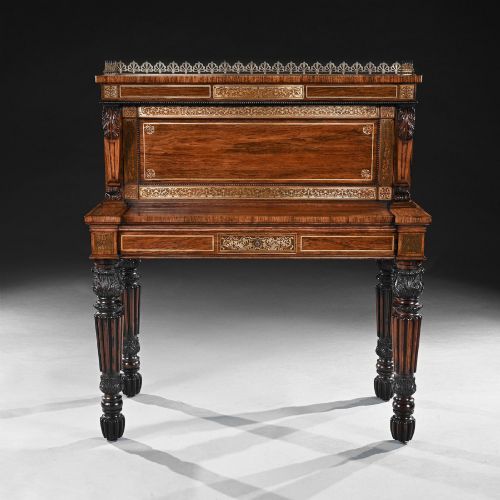
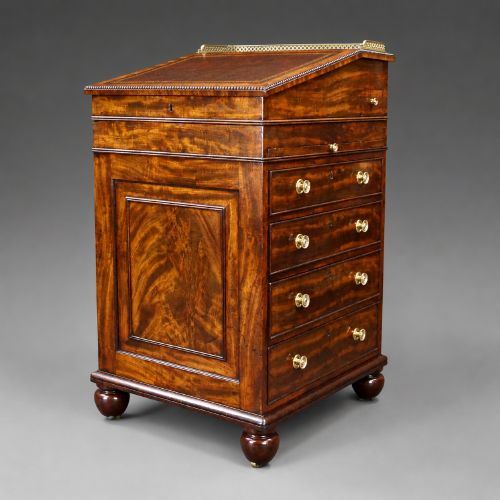
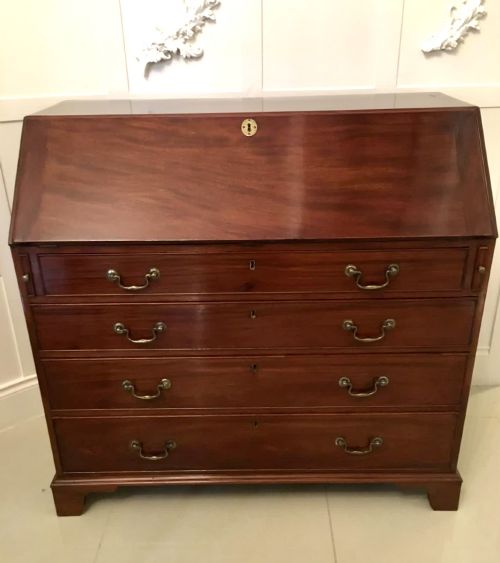
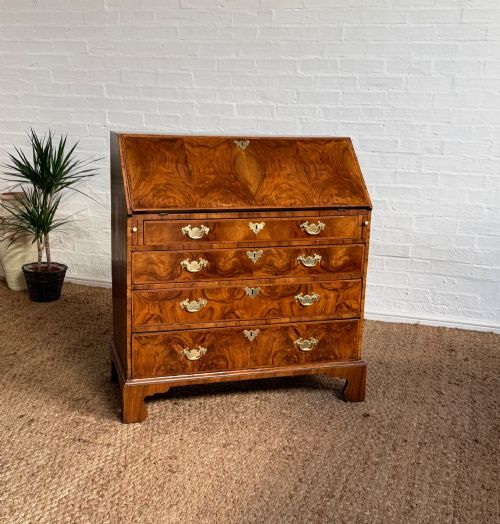
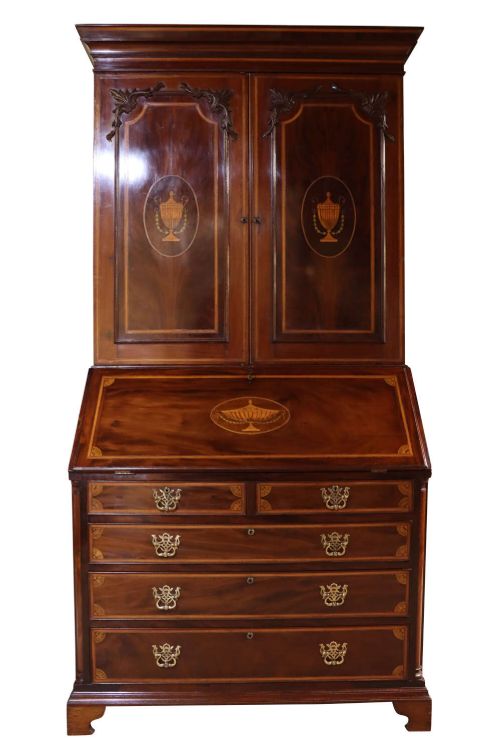
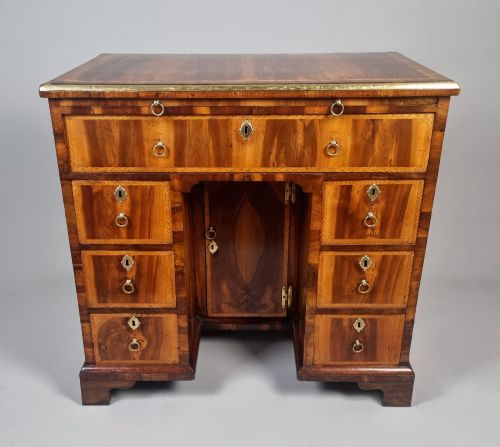
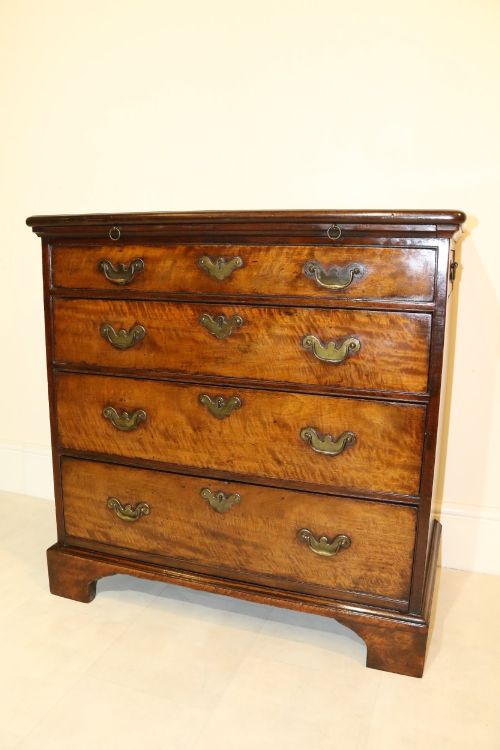
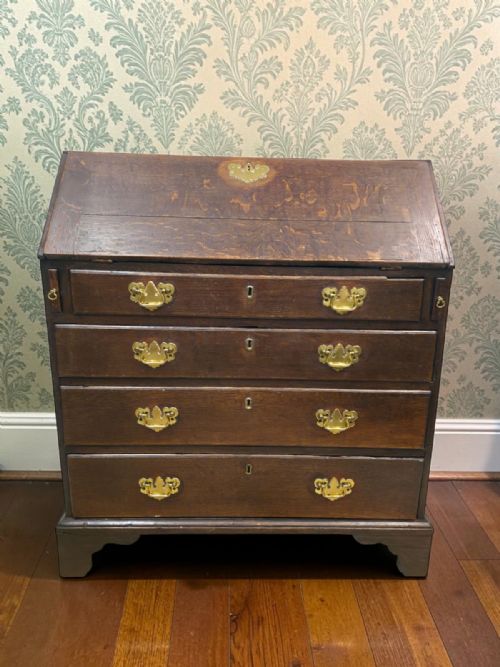
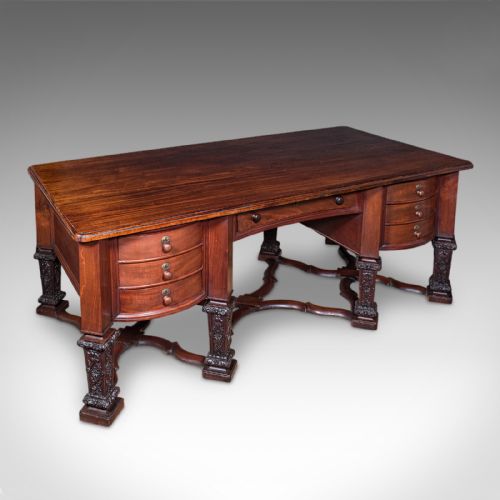
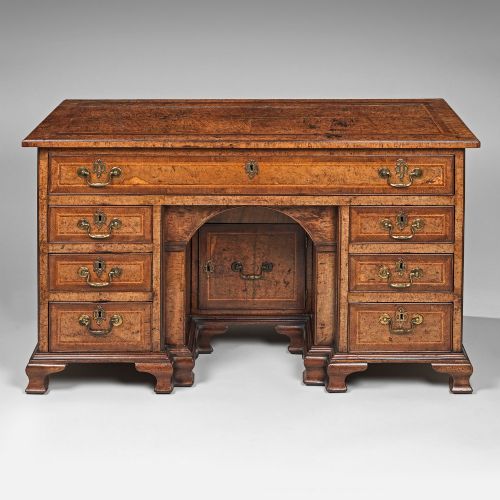
The antique English bureau desk encompasses traditional fall-front writing cabinets, tall bureau bookcases, and compact kneehole desks spanning from the seventeenth century through the Georgian and Victorian eras into the nineteen-thirties.
Early examples frequently utilise solid oak or figured walnut, while later nineteenth and twentieth-century pieces introduce mahogany, rosewood, and burr elm alongside distinct regional styles.
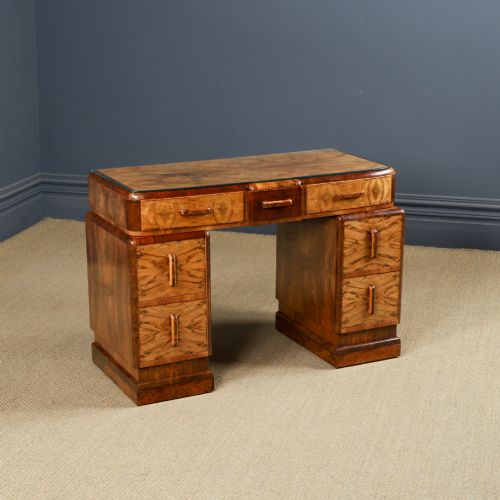
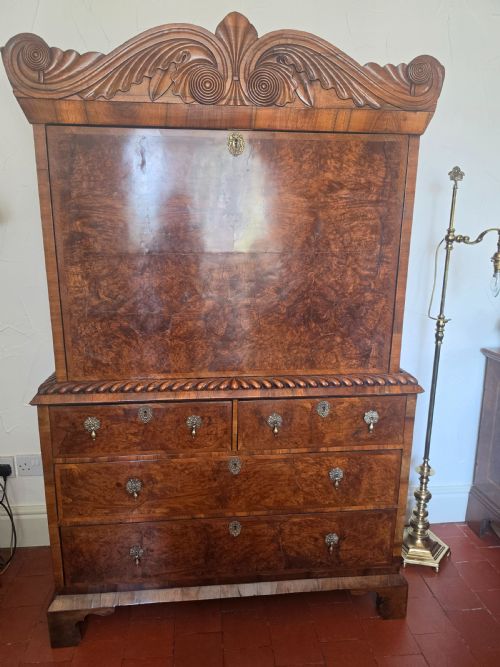
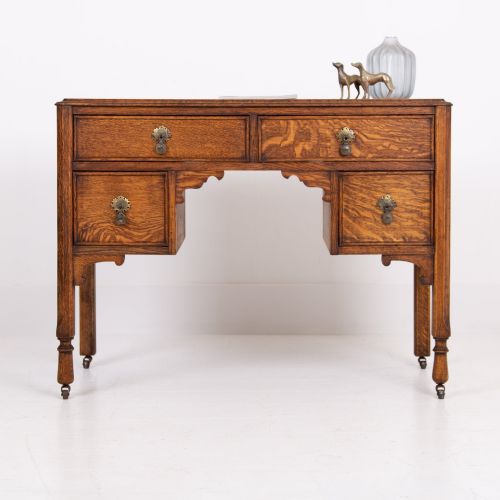
Buyers encounter everything from provincial oak writing chests to sophisticated Georgian secretaire cabinets and streamlined Art Deco pedestal desks.
Materials and Technique
Cabinetmakers constructed these writing pieces using dense hardwoods like mahogany, oak, and walnut, frequently applying burr walnut or flame mahogany veneers to create rich grain patterns across the fall front.
Joinery techniques involved dovetailed drawer construction and framed panels, supported by brass handles, escutcheons, and occasionally leather writing surfaces inset into the slope or table top.
Listings feature pieces spanning the seventeenth century to nineteen-thirty, constructed in oak, walnut, mahogany, rosewood, and glass.
Assessing Craftsmanship
The division between standard and superior pieces rests on the choice of timber figures, such as highly figured walnut or burr elm, and the precision of the internal pigeonholes and secret compartments.
Original hardware, including period brasses and working locks with keys, elevates the integrity of an antique bureau desk above those altered or restored with replacement components.
Gillows Oxford Street Workshop·Stanley Webb Davies
The Antique English Bureau Desk Glossary
- Fall front
- The hinged sloping panel that folds down to create a horizontal writing surface. This panel conceals the internal pigeonholes and small drawers.
- Secretaire
- A piece of furniture containing a writing drawer or fall-front compartment. It often forms the upper section of a tall bookcase cabinet.
- Kneehole desk
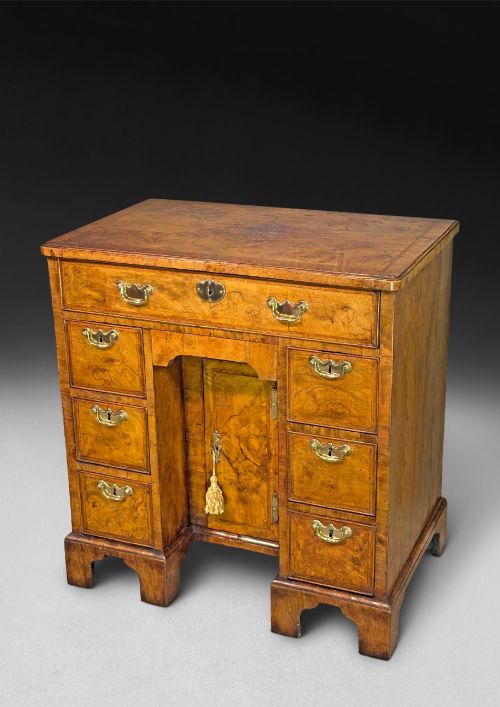
- A compact desk featuring a central recess for the user's legs with pedestals of small drawers on either side. These typically date from the Georgian period.
- Pigeonhole
- A small compartment within the bureau interior used for sorting letters and papers. These compartments sit above internal drawers.
- Escutcheon
- A protective plate surrounding the keyhole of a drawer or cabinet door. They are frequently cast in brass on period pieces.
Antique English Bureau Desk: Frequently Asked Questions
What is an antique English bureau desk?
An antique English bureau desk is a traditional writing cabinet featuring a hinged sloping front that opens to reveal internal compartments and small drawers.
These pieces typically sit atop a chest of drawers or a pedestal base, originating from workshops across the seventeenth, eighteenth, nineteenth, and early twentieth centuries.
How do I date an antique bureau?
Dating relies on examining the primary timbers, construction methods, and hardware styles. Early pieces from the seventeenth and early eighteenth centuries commonly utilise oak or walnut with straightforward dovetails.
Later Georgian and Victorian examples introduce mahogany and rosewood veneers, while nineteen-thirty designs embrace art deco forms in burr walnut and elm.
Were these desks used for writing?
These desks served as primary domestic writing stations for correspondence and household administration. The fall front provided a stable horizontal surface when lowered.
Internal pigeonholes and concealed drawers kept letters, ledgers, and writing instruments organised securely.
What timbers were used?
Cabinetmakers utilised native and imported hardwoods including oak, walnut, mahogany, and rosewood. Decorative veneers such as burr walnut, burr elm, and flame mahogany appeared on prominent exterior surfaces.
Secondary woods like pine occasionally formed internal drawer linings on later or provincial items.