

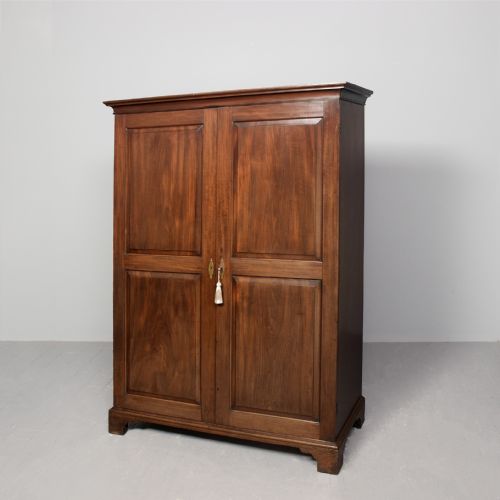
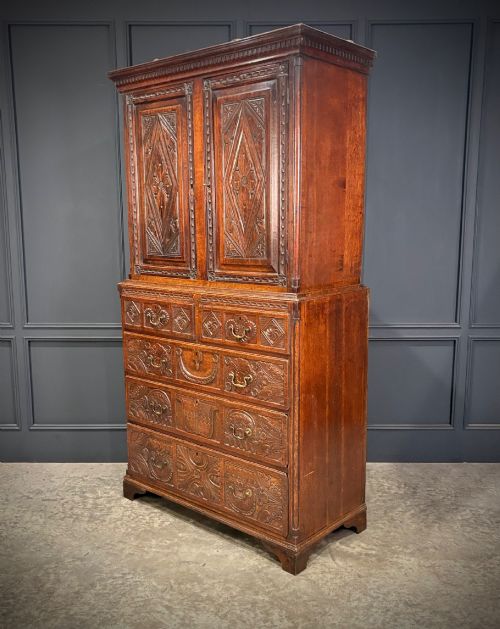


Antique English Armoire
An antique english armoire brings substantial storage and centuries of craftsmanship into a room.
Antique English Armoire
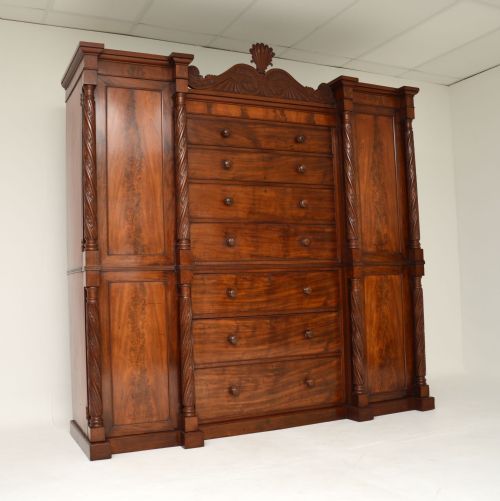
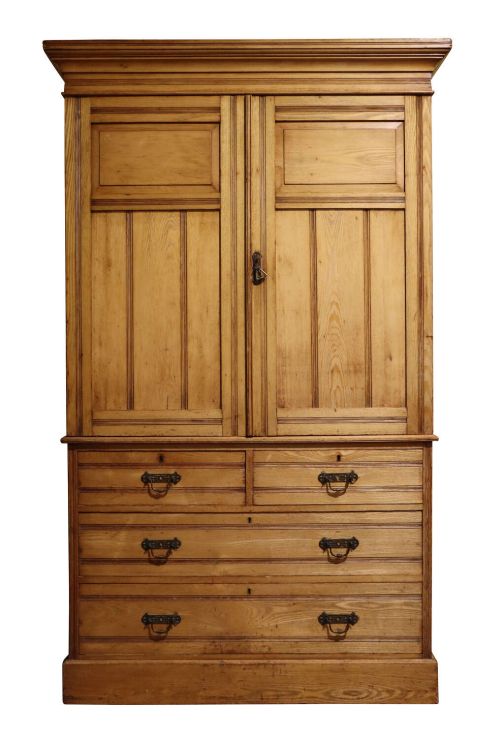
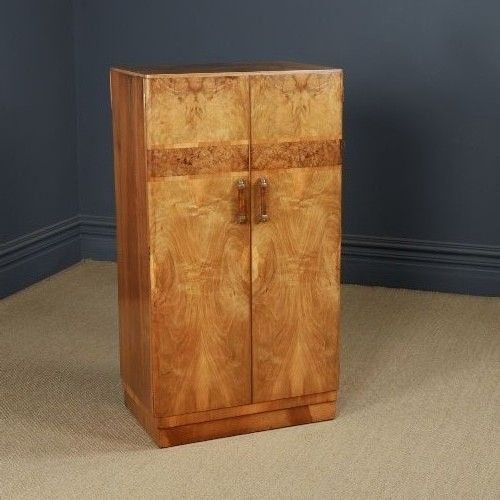
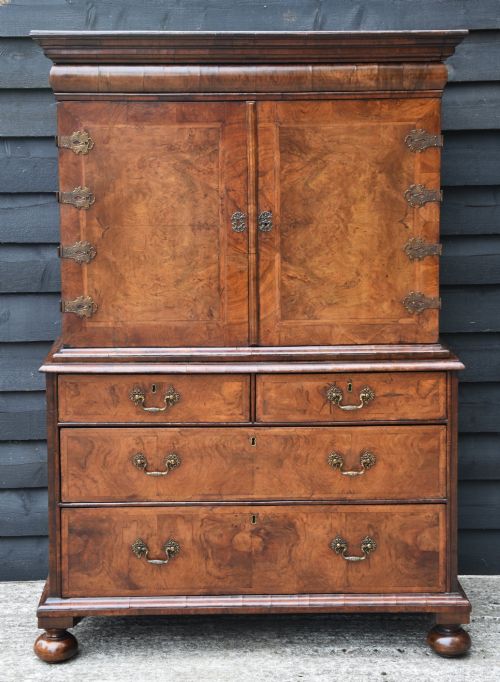
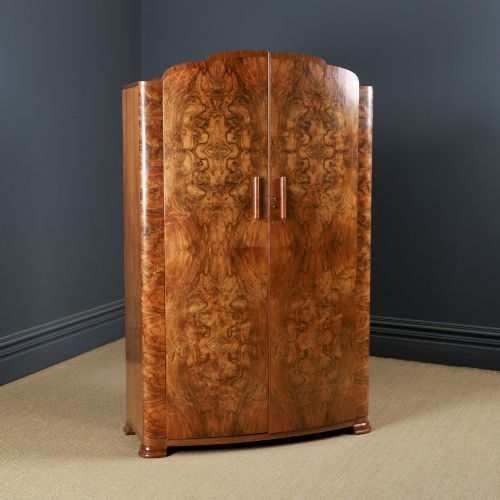
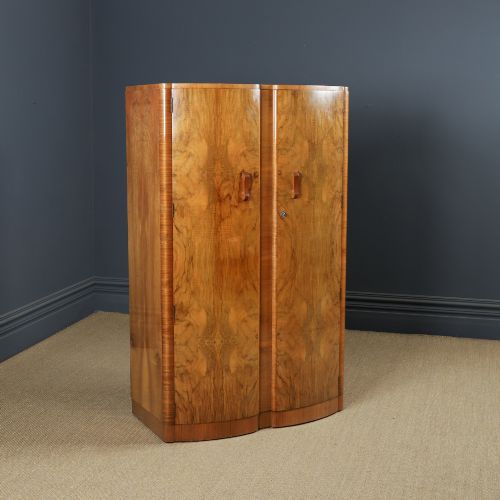
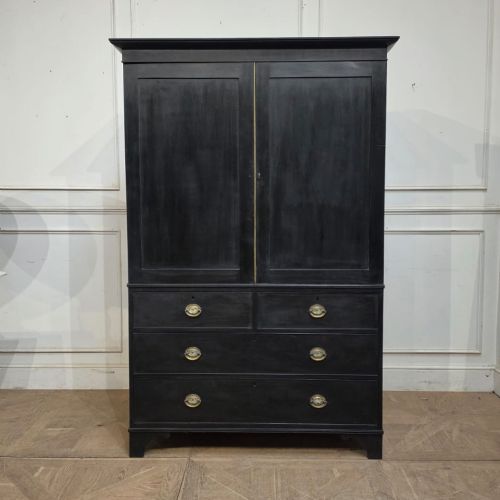
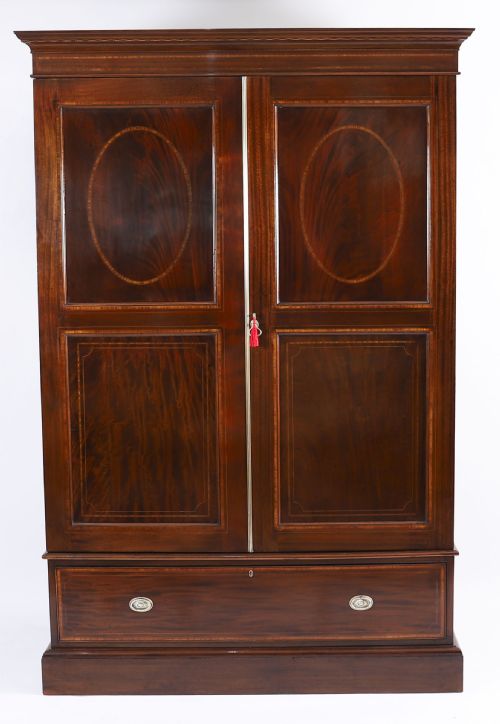
When you search for an antique english armoire, you enter a category that spans tall storage furniture, including wardrobes, linen presses, and housekeepers cupboards. The pieces you meet on this page range from seventeenth-century oak and walnut items to eighteenth-century Georgian mahogany presses, alongside later Victorian and Art Deco examples.
The term encompasses diverse regional formats, from robust country oak cupboards to refined flame mahogany pieces and painted finishes. Buyers frequently encounter form variations such as compactums, cabinets on chests, and tallboys designed for domestic organisation.
How They Were Made
Cabinetmakers utilised solid timbers and veneers, building structures primarily in oak, walnut, mahogany, and pine. Joinery relied on traditional framing methods, dovetails, and panel construction to house sliding trays, hanging spaces, and drawers.
Surface treatments included wax polishing, ebonising, and applied paint finishes, complemented by brass hardware such as drop handles and escutcheons.
Listings feature woods including oak, pine, mahogany, walnut, and flame mahogany across periods from the 17th century to Art Deco.
What Varies in Quality
The distinction between tiers rests upon timber selection and the precision of the cabinet work. Highly figured grains like flame mahogany, burr walnut, and amboyna elevate a piece above standard stock.
Proportion, architectural moulding, and the sophistication of interior fittings such as original sliding linen trays or compartmentalised drawers separate standard utility furniture from exceptional examples.
Maple And Co·Gillows·Ray And Miles
The Antique English Armoire Glossary
- Compactum
- A multi-functional wardrobe featuring a combination of hanging space, drawers, and shelving units. This format maximises internal storage capacity within a single footprint.
- Linen Press
- A tall piece of furniture featuring upper cupboard doors enclosing sliding trays and lower chest drawers. Originally utilised for flat textiles, these items evolved into general wardrobes.
- Cabinet on Chest
- A two-part storage form comprising an upper display or cupboard section resting upon a lower chest of drawers. This architectural arrangement became prominent during the seventeenth century.
- Housekeepers Cupboard
- A large utility cupboard traditionally kept in domestic service quarters for household stores and linens. They typically feature panelled wooden doors and sturdy pine or oak construction.
- Flame Mahogany
- A wood veneer figure displaying a flickering, flame-like pattern created by cutting through boughs or forks of the tree. Cabinetmakers prized this figuring for prominent drawer fronts and panel surfaces.
Antique English Armoire: Frequently Asked Questions
What is an antique english armoire used for?
These pieces serve as primary storage furniture for clothing, linen, and household items. Their internal configurations often include hanging rails, shelves, and sliding trays.
Historically, specific formats housed folded textiles before evolving into modern wardrobe uses.
How do I date an antique english armoire?
Dating relies on identifying timber choices, construction techniques, and stylistic periods such as Georgian, Victorian, or Art Deco. Tool marks and joint types provide further clues to the era of manufacture.
Secondary woods and hardware styles also help narrow the decade of production.
Are antique armoires modular or fixed?
Traditional armoires and wardrobes were constructed as heavy, solid units or dismantled into major sections for transport. Large cupboards often separate into a cornice, middle carcass, and base plinth.
This sectional design allowed historic craftsmen to move bulky furniture through domestic doorways.
How do I care for a wooden armoire?
Maintenance involves keeping timber pieces away from direct heat sources and sudden humidity shifts. Regular dusting with a dry cloth preserves the polish and natural grain.
Application of traditional beeswax helps nourish antique wood surfaces over time.