


Art Deco Closet
These art deco closet pieces bring bold grain and clean lines to a bedroom, offering a sturdy home for your clothes.
Art Deco Closet
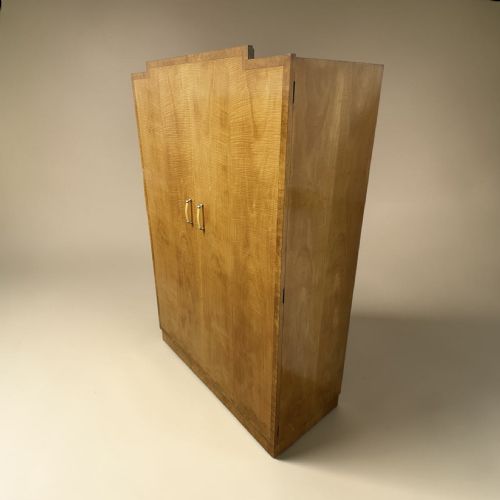
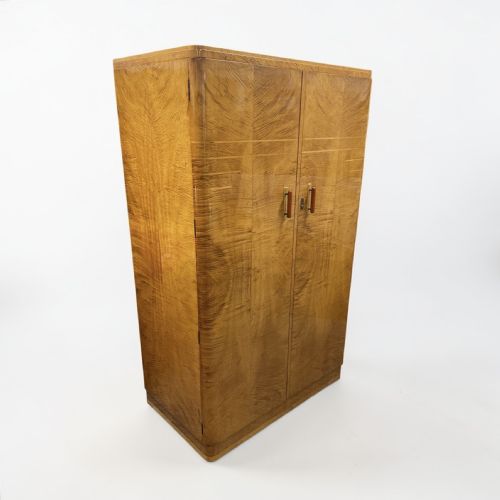
When you search for an art deco closet, you are looking at substantial wardrobes and armoires originating primarily from the 1920s and 1930s. These pieces serve as the focal point of a bedroom, designed to hold garments while displaying the distinctive symmetry of the period.
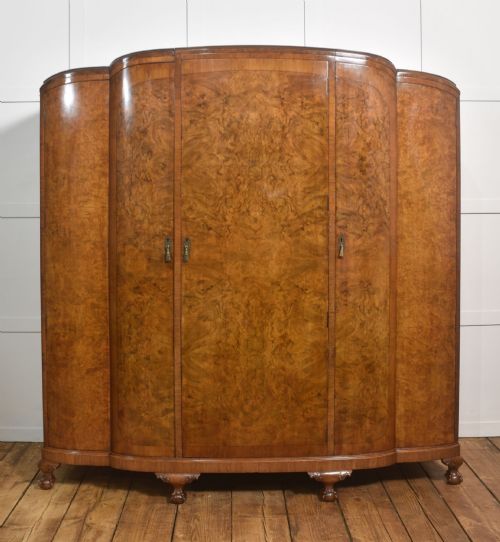
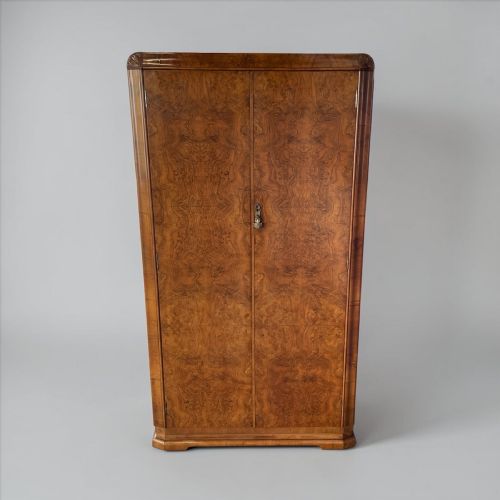
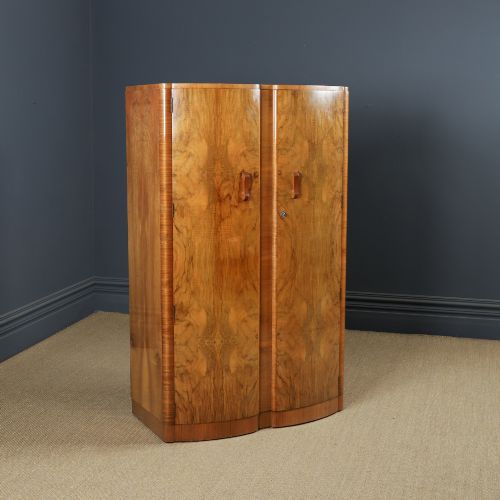
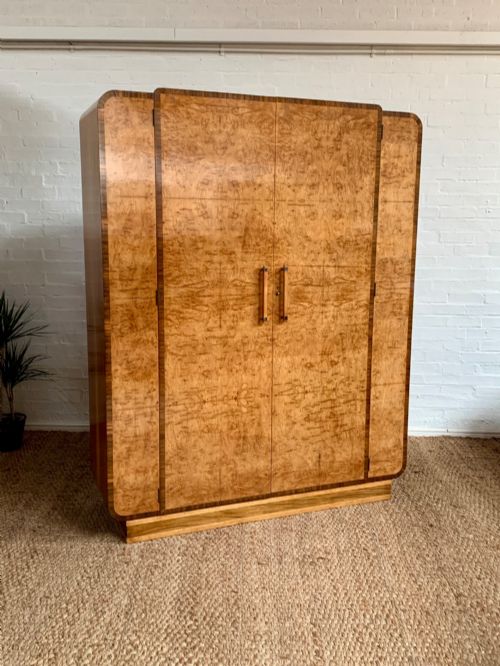
On this page, you are most likely to meet two-door and triple wardrobes configured with fitted interiors. They frequently arrive in forms such as breakfront and bow front designs, giving them a strong architectural presence.
The origins lean towards English workshops of the interwar years, though master cabinetmakers also contributed signed works. Each item balances practical storage with the decorative optimism of the interwar era.
How they were made
Cabinetmakers built these pieces using solid oak and birch for internal structure and framing, ensuring structural integrity. They applied walnut veneer, burr walnut, and figured walnut to the outer surfaces to create striking visual patterns.
Metal hardware such as brass handles and hinges completed the construction, adding contrast to the rich brown timber tones. Master workshops utilised book-matching techniques with veneers to form symmetrical grain patterns across the double and triple doors.
The listings show items exclusively from the 1920 and 1930 periods, executed in walnut, burr walnut, oak, birch, and maple.
What varies in quality
The distinction between standard production and top-tier examples lies in the selection of timber veneers. Masterpieces feature intensely figured burr walnut or maple laid out with deliberate symmetry, whereas lesser pieces use plain timber.
Construction complexity also dictates the tier, separating simple box wardrobes from breakfront and bow front designs with fitted internal compartments. Signed pieces by notable cabinetmakers elevate the standing of a wardrobe far above anonymous factory output.
JEAN FAURE·Harry and Lou Epstein
The Art Deco Closet Glossary
- Breakfront
- A cabinet design where the central section projects forward from the flanking wings. This architectural arrangement creates depth and visual interest across large wardrobe facades.
- Bow front
- A convex, outward-curving front facade that softens the geometry of a room. It requires skilled carpentry to bend wood veneers smoothly to the curve.
- Veneer
- A thin layer of choice hardwood applied to a stable secondary wood base. This technique allows makers to display decorative grain patterns without wasting scarce timber.
- Armoire
- A tall cupboard used for storing garments, typically fitted with hanging space and shelves. In this context, it is used interchangeably with wardrobe.
- Fitted interior
- The internal arrangement of shelves, drawers, and hanging rails designed for practical organisation. It reflects the modern push for functional domestic design during the interwar years.
Art Deco Closet: Frequently Asked Questions
What is an art deco closet?
An art deco closet is a large wardrobe or armoire produced during the 1920s and 1930s, characterised by geometric lines and decorative wood veneers.
These pieces provide substantial hanging space and internal fittings while serving as a prominent decorative element in a bedroom.
How do I live with one?
Living with these large wardrobes requires measuring your bedroom space carefully to accommodate their substantial height and depth.
They pair well with both modern minimalist decor and traditional settings, offering ample enclosed storage that keeps bedrooms tidy.
How do I tell the periods apart?
Pieces from the 1920s often exhibit more experimental artisan designs, sometimes carrying signatures from prominent French makers.
Items from 1930 tend towards British production with heavy emphasis on figured walnut veneers and practical bow front or breakfront shapes.
Were these used for hanging clothes?
Yes, these wardrobes were engineered to store contemporary fashions of the interwar period, incorporating hanging rails and internal compartments.
Many feature fitted interiors with designated spaces for accessories, shoes, and folded garments alongside full-length hanging sections.