



Two Door Walnut Wardrobe
A two door walnut wardrobe brings warmth and proportion to a bedroom, offering generous hanging space behind figured timber panels.
Two Door Walnut Wardrobe
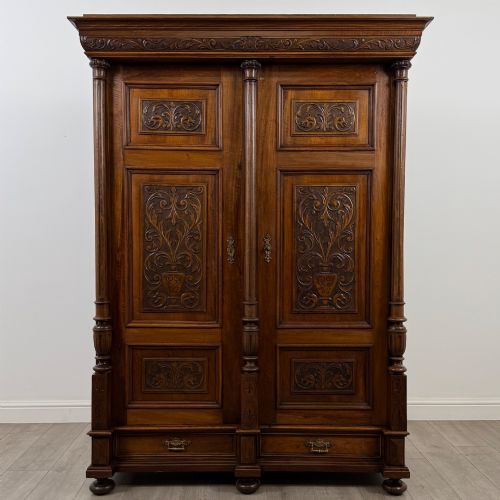
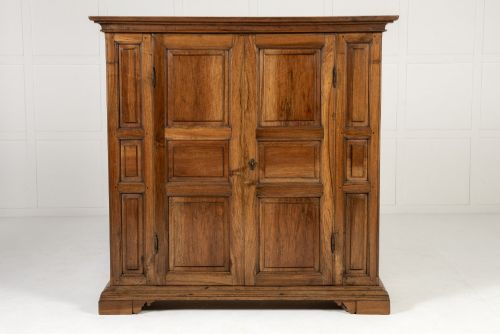
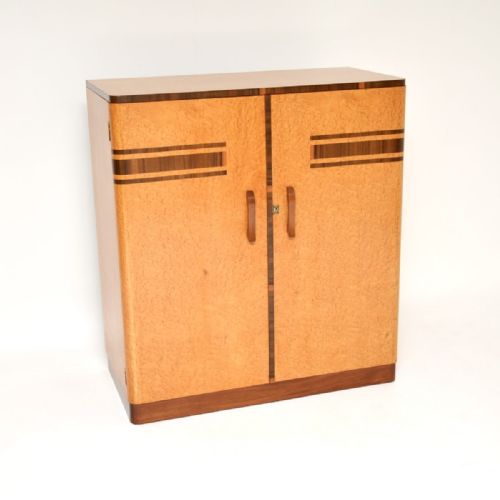
A two door walnut wardrobe is a large freestanding storage piece defined by its dual timber doors and structural timber framing. These pieces emerge across several distinct periods, spanning eighteenth-century continental designs to nineteenth-century Victorian workshops and twentieth-century Art Deco creations.
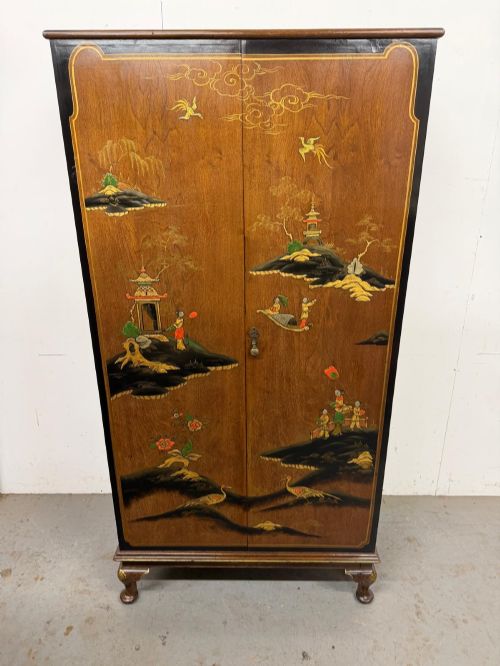
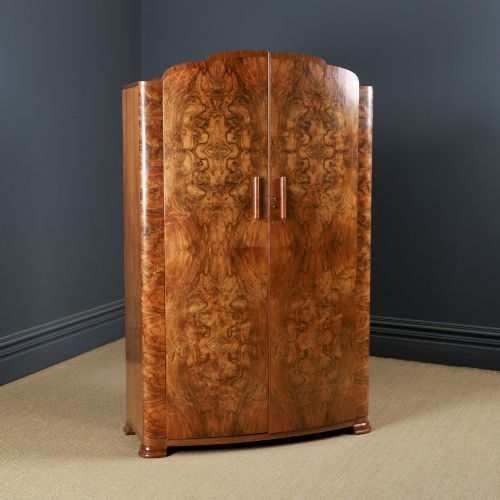
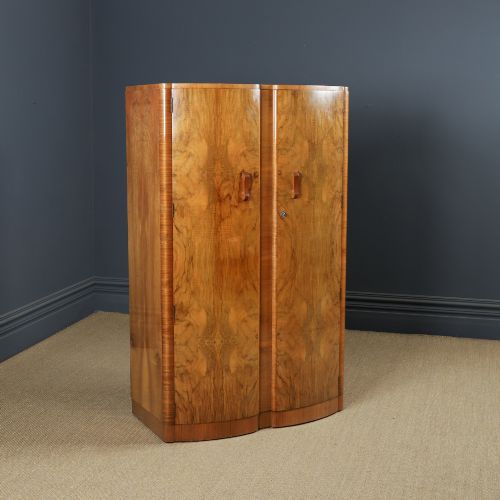
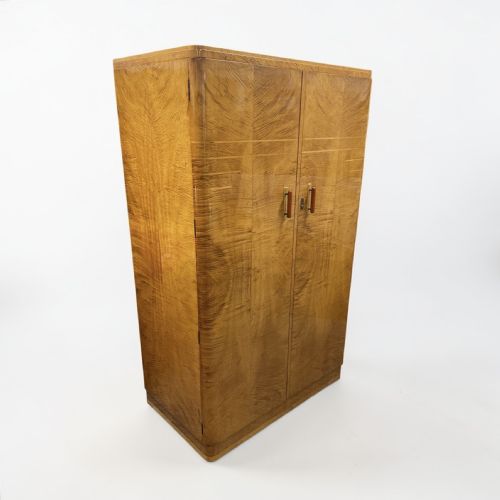
Buyers encounter numerous regional variations when searching this phrase, including French armoires, Italian cabinets, and English compactum designs. The proportions shift from tall eighteenth-century carved forms to streamlined nineteen-thirties bow fronts and serpentine shapes.
How They Were Made
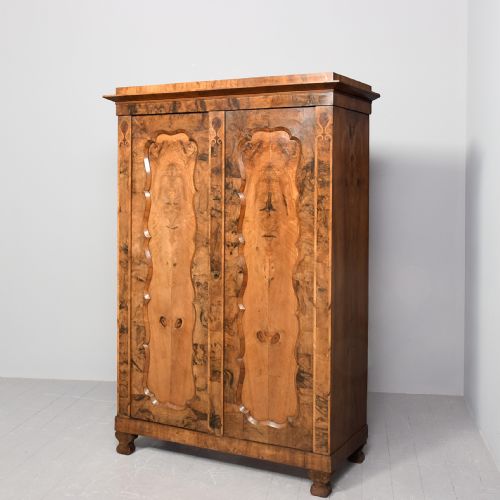
Cabinet makers utilised solid walnut alongside decorative veneers such as burr walnut and figured walnut to create rich grain patterns across the primary surfaces. These timbers frequently combine with secondary woods, brass hardware, iron fittings, and occasional ormolu mounts.
Construction techniques involve framing panels within solid structures, applying specialised parquetry, and occasionally incorporating hand-painted lacquer finishes on continental examples.
Some nineteenth-century wardrobes were built with hidden compartments large enough to store family secrets alongside your morning suits.
What Varies In Quality
The standard of a two door walnut wardrobe rests largely upon the selection and matching of the veneer figures across the doors. Master craftsmen laid burr and figured walnut symmetrically to create striking visual movement, whereas lesser examples rely on plain timber boards.
Structural refinement also separates the tiers, seen in the subtlety of the carved mouldings, the integrity of the fitted interior compartments, and the execution of brass or ormolu mounts.
Whytock and Reid·A&W Stewart·Ray & Miles of Liverpool·Maple & Co
The Two Door Walnut Wardrobe Glossary
- Burr walnut
- A prized timber harvested from the irregular growth excrescences of a walnut tree, yielding intricate swirling grain patterns. Cabinet makers slice this wood into thin veneers for decorative door panels.
- Compactum
- A fitted wardrobe containing internal divisions such as linen shelves, drawers, and hanging space. This layout maximises storage within a single footprint.
- Armoire
- A traditional large cupboard or wardrobe, often of continental European origin. These pieces frequently display pronounced architectural cornices and carved door panels.
- Parquetry
- A geometric mosaic of wood pieces used for decorative effect on furniture surfaces. Craftsmen arrange contrasting timber veneers to form repeating patterns.
Two Door Walnut Wardrobe: Frequently Asked Questions
How do I date a walnut wardrobe?
Dating relies on observing structural characteristics, hardware, and stylistic details associated with periods like the Victorian era or Art Deco. Eighteenth-century pieces display hand-carved elements and pegged construction, whereas 1930s examples favor streamlined curves and figured veneers.
Changes in interior fittings and overall silhouette also provide chronological markers. Earlier pieces tend to be taller and deeper, while twentieth-century compactum designs prioritize internal compartmentalisation.
What is the difference between a wardrobe and an armoire?
An armoire is a traditional continental European term for a large cupboard, often featuring deeper proportions and decorative carved panels. A wardrobe specifically denotes a tall piece designed primarily for hanging garments.
In modern usage, the terms often overlap, particularly when describing continental pieces adapted for contemporary clothes storage. Both formats rely on two primary doors to enclose the interior space.
How do I care for walnut veneer?
Walnut veneer benefits from stable room temperatures away from direct sunlight and heat sources to prevent timber movement. Regular dusting with a soft, dry cloth preserves the polished surface finish.
Avoid using silicone-based polishes or excessive moisture on antique wood surfaces. Occasional application of quality beeswax helps nourish the grain without buildup.