
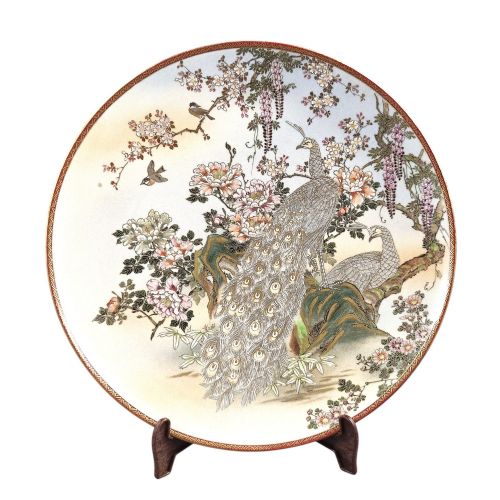


Antique Enamel Wall Dish
These antique enamel wall dish selections encompass large chargers, decorative plates and plaques designed for display.
Antique Enamel Wall Dish
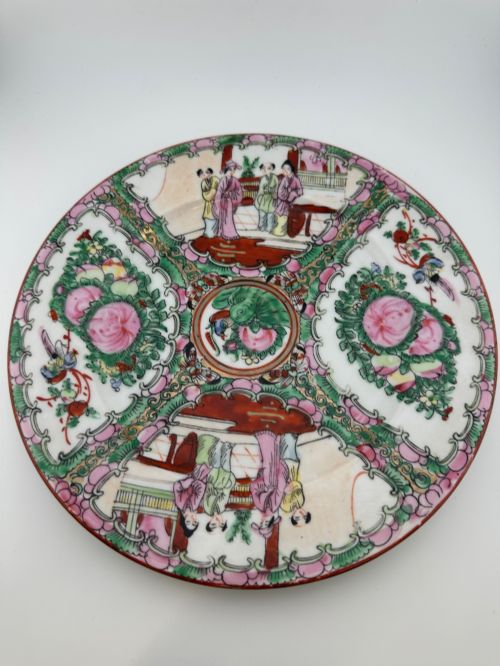
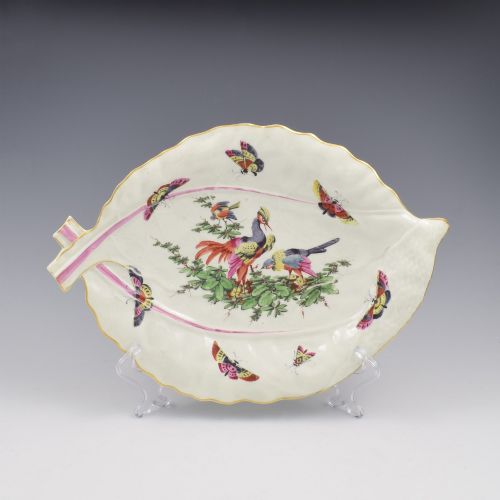
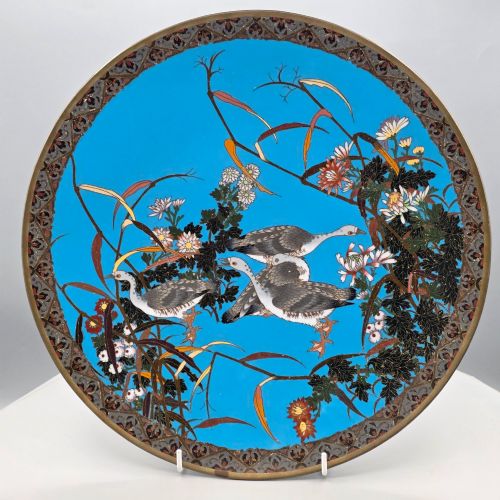
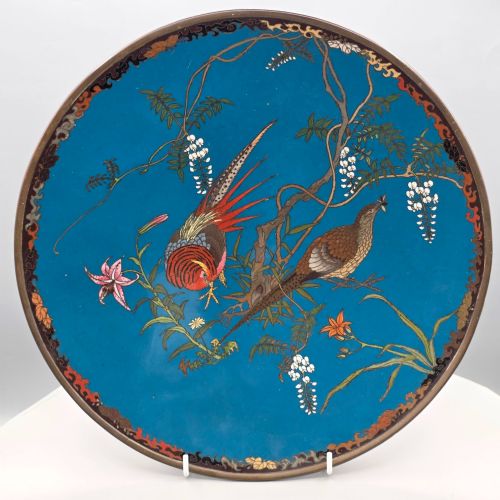
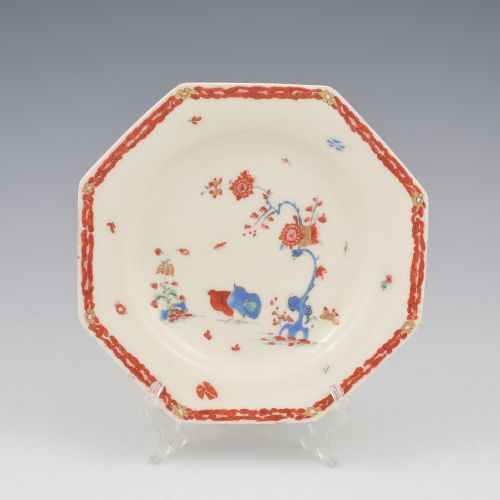
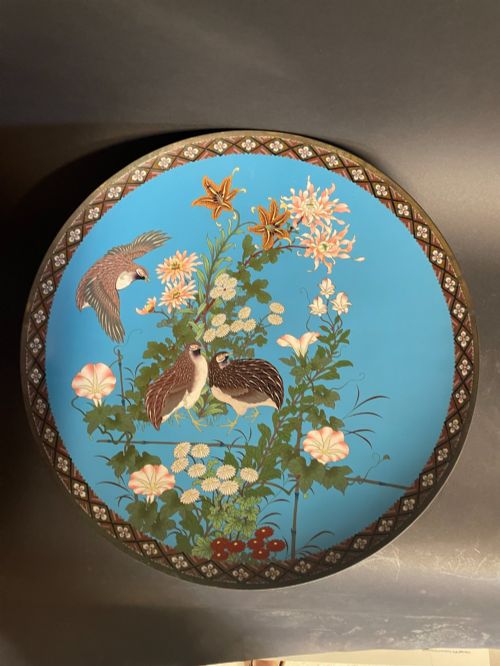
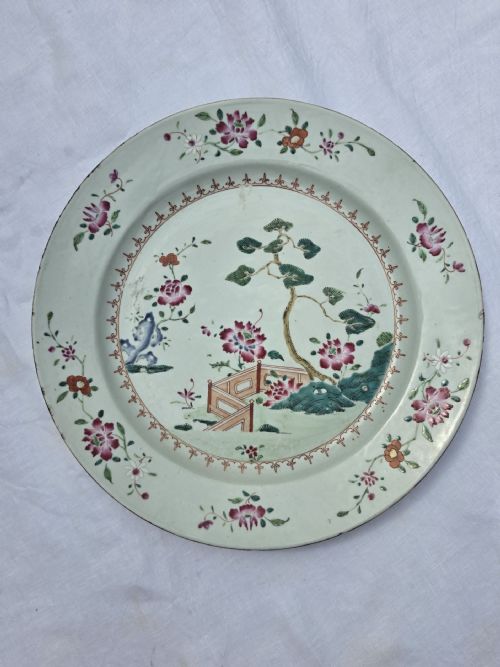
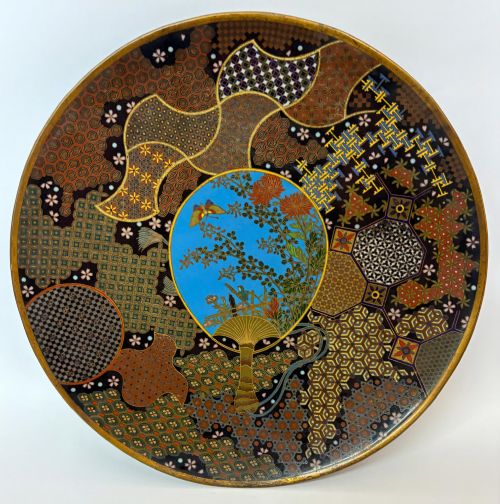
An antique enamel wall dish covers decorative chargers, plaques and plates formed for hanging or mounting on vertical surfaces. The items gathered here are dominated by Japanese cloisonne enamel chargers originating from the Meiji period, alongside Chinese export porcelain and European porcelain plates.
The Meiji period pieces demonstrate intricate wirework depicting birds, dragons, flowers and landscapes across broad copper surfaces. Other examples employ porcelain bodies with applied cloisonne enamel, known as totai shippo, incorporating motifs such as tree bark and cranes.
Earlier pieces extend to eighteenth century Chinese export porcelain and European ceramic chargers. These plates provide alternative forms of wall decoration through hand painted enamel designs.
How they were made
Cloisonne enamel pieces are constructed by soldering thin metal wires onto a copper, brass or bronze base to create cells known as cloisons. These compartments are filled with coloured enamel paste and fired in a kiln before the surface is ground and polished smooth.
Totai shippo examples apply the same wire and enamel technique directly onto porcelain or earthenware bodies rather than metal foundations. Porcelain dishes from European and Asian kilns utilise hand painted enamel pigments fired onto glazed ceramic surfaces.
Several Meiji period chargers feature meticulously detailed frogs sharing space with chrysanthemums and leaping koi.
What varies in quality
Quality in cloisonne enamel wall dishes depends upon the precision and thinness of the metal wirework used to outline the design. Finer pieces display dense, complex motifs such as dragons, samurai or landscapes executed without visible pitting or distortion in the coloured enamel fills.
The inclusion of signatures from known makers or workshops distinguishes superior examples from standard production pieces. Surface finish, weight of the metal base and complexity of the subject matter further separate standard decorative plates from masterclass creations.
Dr Wall·Meizan
The Antique Enamel Wall Dish Glossary
- Cloisonne enamel
- A decorative technique where metal wires are soldered to a base to form cells that hold enamel paste. This method creates detailed patterns defined by thin metallic borders.
- Charger
- A large decorative plate or dish intended primarily for display rather than service. These pieces form the focal point of many wall hanging collections.
- Totai shippo
- A Japanese method where cloisonne enamel is applied over a porcelain body rather than metal. The resulting pieces combine ceramic forms with wired enamel decoration.
- Meiji period
- The era of Japanese history spanning from 1868 to 1912. Metalwork and enamel production reached high levels of technical refinement during this time.
- Famille rose
- A palette of opaque enamel colours dominated by pink or rose tones introduced in Chinese porcelain during the eighteenth century. These pigments allow for subtle tonal gradations in painted scenes.
Antique Enamel Wall Dish: Frequently Asked Questions
How were antique enamel wall dishes displayed?
These decorative chargers and plates were traditionally mounted on walls using specialised wire hangers or displayed on heavy plate stands on furniture.
Their large diameters and pictorial subjects made them prominent focal points in nineteenth century interiors.
What is the difference between cloisonne and totai shippo?
Cloisonne enamel is typically built upon a metal foundation of copper or brass using soldered wire cells.
Totai shippo applies the same wirework and enamel process directly onto a porcelain body.
How do I date a Japanese Meiji period charger?
Meiji period pieces date between 1868 and 1912, often identifiable by the complexity of the wirework and naturalistic motifs.
Signed pieces frequently bear artist or workshop marks on the reverse or within the design.
Are these plates suitable for daily dining use?
Antique wall dishes and large decorative chargers are intended for display and visual appreciation.
Surface wear, delicate enamel fills and old metal bases mean they are unsuited to practical dining service.