



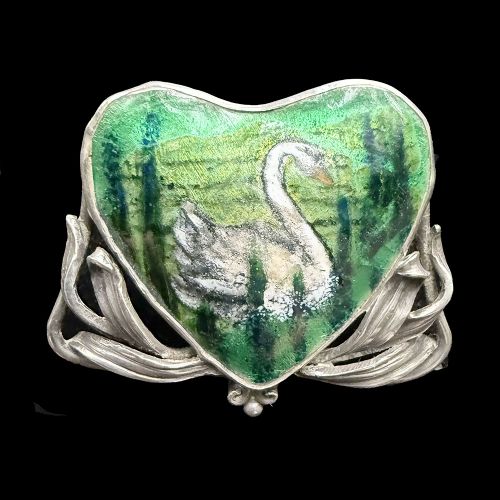
Antique Enamel Pin
An antique enamel pin brings together coloured vitreous glass and precious metals to wear as a bright fastening or lapel decoration.
Antique Enamel Pin
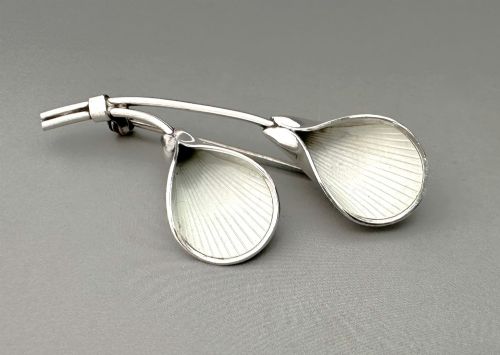
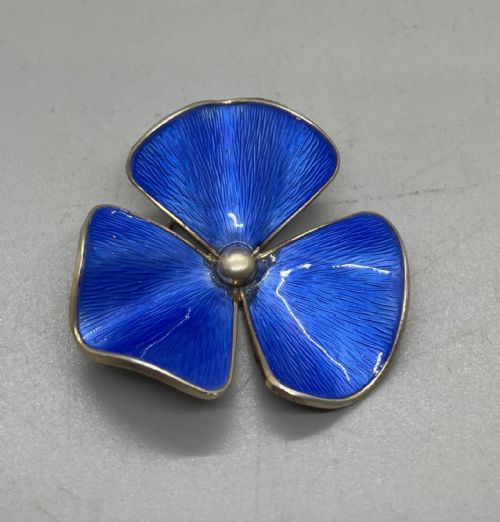
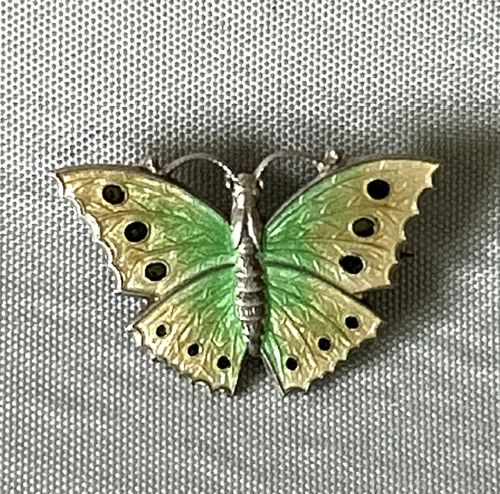
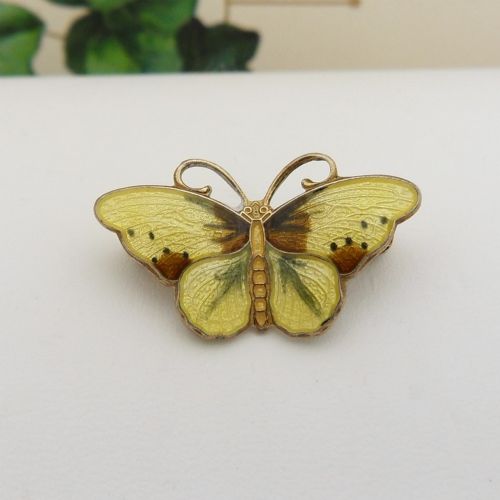
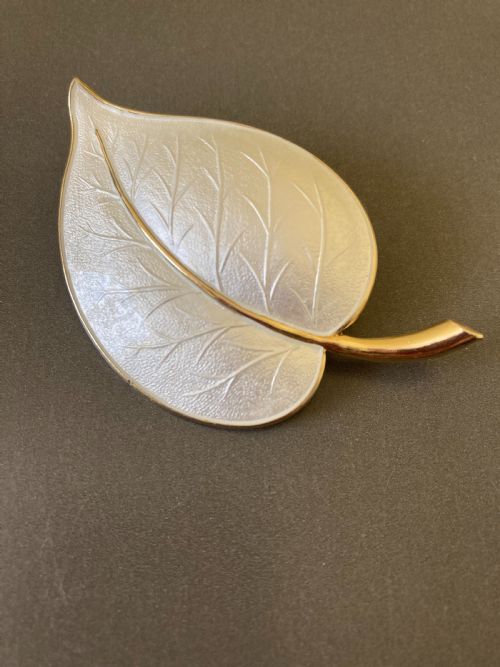
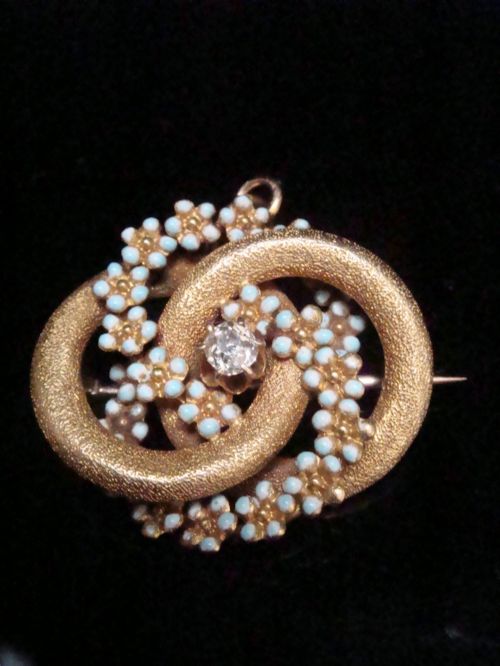
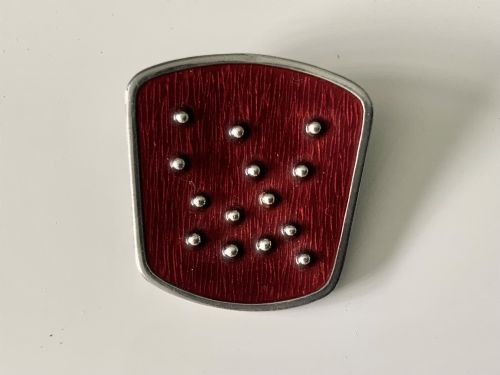
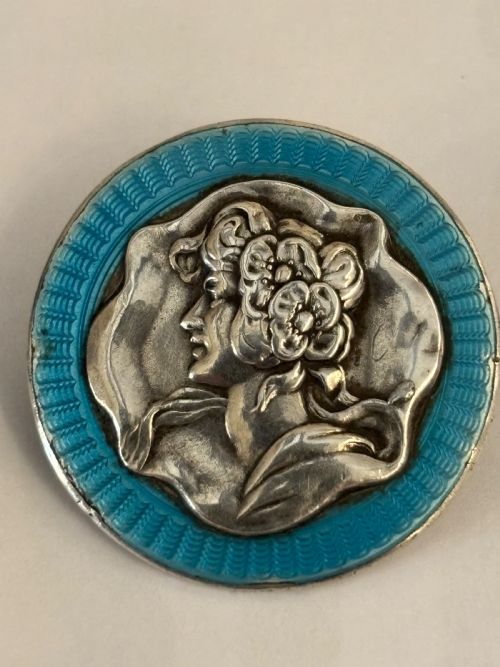
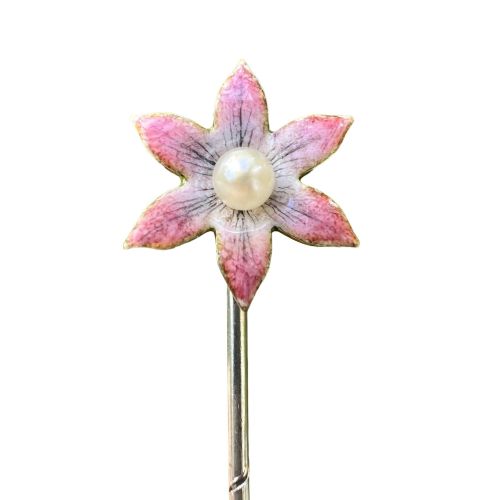
When searching for an antique enamel pin, collectors encounter brooches, stick pins, and small fasteners spanning the Victorian, Edwardian, Arts and Crafts, and Art Nouveau periods. These pieces appear in silver, silver gilt, and various gold purities, often decorated with subjects ranging from flowers and birds to geometric motifs.
The selection includes floral and faerie designs alongside starburst patterns and heraldic symbols such as the fleur-de-lys. Forms vary from simple bar brooches to intricate multi-part constructions incorporating moonstones, pearls, and diamonds.
Materials and construction methods
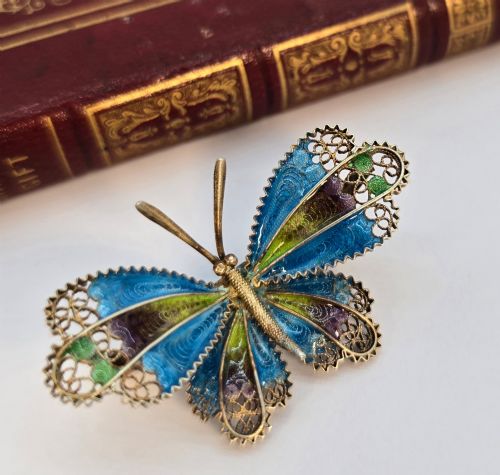
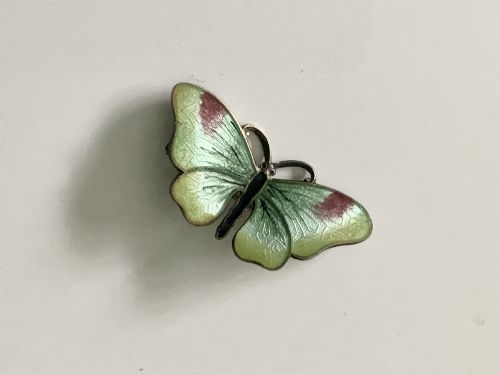
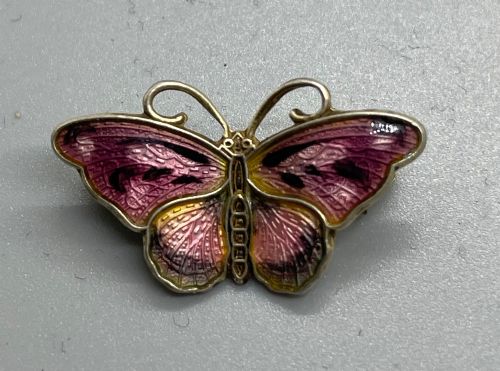
Makers fused powdered glass onto metal bases under high heat to create smooth, vitreous surfaces in shades of blue, pink, purple, and white. Guilloche techniques involve engraving mechanical patterns beneath translucent enamel layers, while plique-à-jour suspends transparent enamel within open metal cells like stained glass.
Metalwork frames utilise sterling silver, silver gilt, gold, and 18ct or 15ct gold. Jewellers set supplementary stones including moonstones and pearls directly into the metal mounts alongside the enamelled elements.
Antique Enamel Pin Retail Price Guide 2026
Typical asking prices for enamel pin among the pieces listed under this phrase on Sellingantiques today, from the lower quarter to the upper quarter. They describe what is for sale here now, not the wider market.
Common motifs across the inventory include floral sprays, insects, birds, and starbursts.
Distinguishing quality across examples
Quality rests upon the precision of the metalwork and the clarity of the enamel firing. Expert execution shows even glass distribution without pitting, alongside secure stone settings and well-defined chased or engraved details in the underlying metal.
Makers who utilised specialised techniques like plique-à-jour or delicate guilloche engraving achieved greater depth and luminosity in the finished pieces. The integration of high-purity gold and high-grade pearls or moonstones elevates the standard of the manufacture.
Meyle And Mayer·Henry James Hulbert·Mappin And Webb
The Antique Enamel Pin Glossary
- Guilloche
- Enamel applied over a metal surface that has been mechanically engraved with a precise repeating pattern. This technique allows light to reflect through translucent coloured glass.
- Plique-a-jour
- Enamelling technique without a backing metal, leaving transparent glass cells that let light pass through like miniature stained glass windows.
- Silver gilt
- Sterling silver coated with a thin layer of gold. This treatment provides the warm tone of gold while utilising silver as the structural base metal.
- Stick pin
- A long pin with a decorative head, originally designed to secure cravats or lapels. The head frequently displays enamelwork and gemstones.
- Cartouche
- An ornamental frame or panel enclosing a design or inscription. These enclosures appear frequently in metalwork surrounding central enamel motifs.
Antique Enamel Pin: Frequently Asked Questions
How do I wear an antique enamel pin?
These pieces function well secured to coat lapels, scarves, or heavy knitwear using their original pin stems and safety catches. Care must be taken to match the weight of the pin to the fabric thickness.
Storing them in individual lined boxes prevents the glass surfaces from scratching against other items in a collection.
What periods do these pins come from?
The available pieces span the Victorian, Edwardian, and Art Nouveau eras, extending through the 1930s and 1940s. Each era brought distinct aesthetic preferences, from naturalistic flower motifs to geometric styling.
Stylistic markers and metal hallmarks help establish the approximate decade of manufacture.
How should I clean my enamel pin?
Cleaning requires only a soft cloth and warm soapy water to remove surface dust without disturbing the glass or metal. Harsh chemical dips or ultrasonic cleaners will damage fragile enamel and soft stones like pearls.
Dry the piece thoroughly with a lint-free cloth immediately after washing.
Are these pieces made of solid gold?
The metals vary between sterling silver, silver gilt, and solid gold components including 15ct and 18ct standards. Each piece relies on different metal alloys depending on the maker's workshop and the period of creation.
Hallmarks stamped on the reverse or pin stem usually indicate the specific metal purity.