
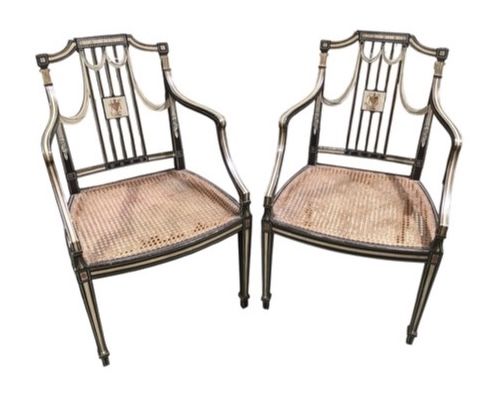


Antique Ebonised Carvers
Antique ebonised carvers are dark wood elbow chairs originating across several historical periods, prized for adding striking contrast and formal elegance to a dining room.
Antique Ebonised Carvers
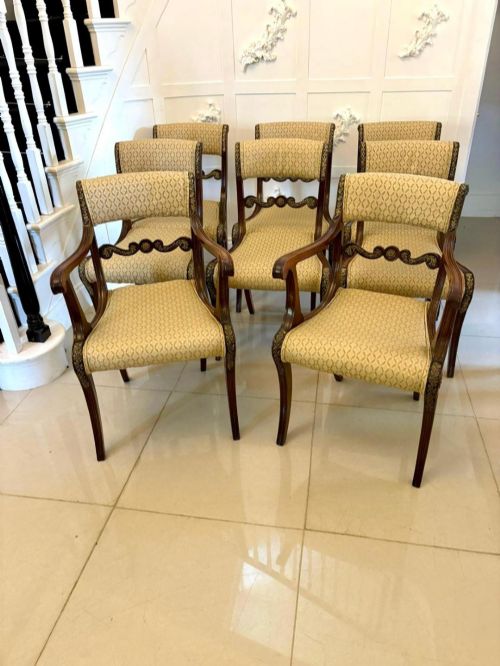
When searching for antique ebonised carvers, buyers encounter seating spanning the 18th century, Regency era, Victorian period, and early 20th century. These armchairs and dining chairs display stylistic influences ranging from Grand Regency and George III to Arts and Crafts, Art Deco, and the Aesthetic Movement.
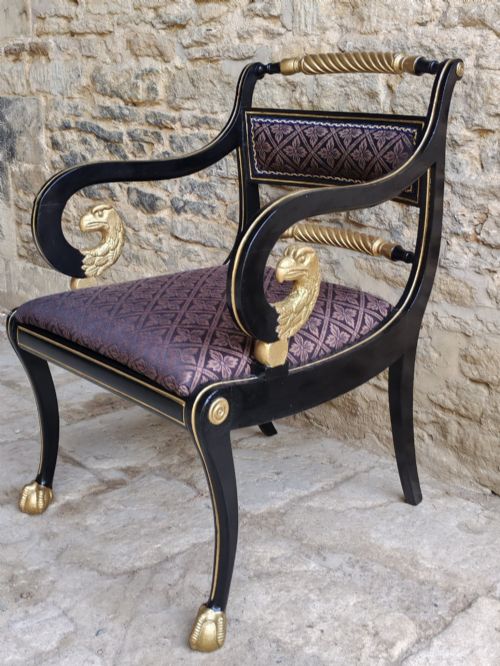
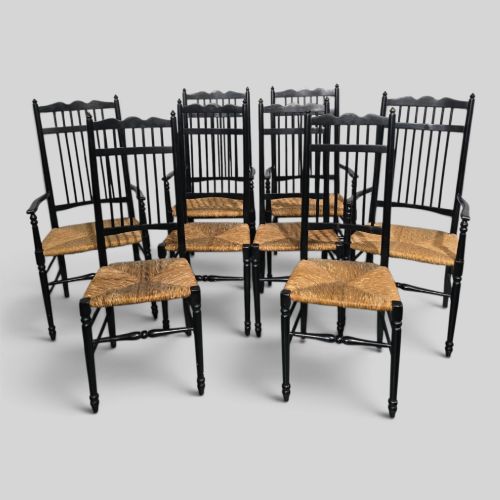
The versions most frequently met on this page are Regency and Regency style pieces, often featuring painted or ebonised wood finishes alongside cane or fabric seats. Pairs and larger sets appear alongside individual library chairs and elbow chairs.
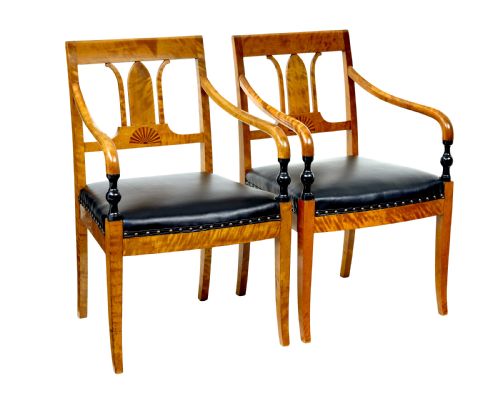
Origins vary across British, Scandinavian, and Swedish workshops, demonstrating diverse regional interpretations of ebonised furniture traditions. Forms include faux bamboo frames, Chippendale designs, and decorative parcel-gilt details.
Materials and construction
Construction relies upon hardwoods such as mahogany, beech, and birch, selected for structural strength in load-bearing armchairs and dining chairs. Craftsmen applied ebonisation to mimic expensive ebony wood through painting and staining techniques.
Surface decoration frequently incorporates brass accents, paint, and parcel gilt highlights to contrast against the dark ebonised finish. Seating surfaces utilise woven cane or traditional fabric upholstery tailored to the period style.
Current listings feature ebonised wood, cane, brass, and fabric across pieces spanning the 18th, 19th, and early 20th centuries.
Evaluating quality in ebonised seating
Quality separates through the crispness of carved details and the depth of the ebonised finish applied to the wood. Superior examples maintain structural integrity in their joints and arms without excessive repainting obscuring the original timber grain.
The refinement of secondary materials, such as finely woven cane panels or well-executed parcel gilding, distinguishes high-status workshops from standard production pieces.
The Antique Ebonised Carvers Glossary
- Carver
- An armchair, typically designed to sit at the head of a dining table and featuring elbow rests. These chairs match or complement the side chairs in a dining set.
- Ebonised
- Timber treated with stain or paint to resemble natural ebony wood. This dark finish gained popularity during various historical revivals.
- Caned
- A seating surface woven from peeled rattan cane. This technique provides a light, flexible support popular in period chair seats and backs.
- Parcel Gilt
- Decoration where specific carved areas or details are highlighted with gold leaf. This technique contrasts sharply against an ebonised background.
- Regency Style
- Design characteristics inspired by the British Regency period, frequently revived in later decades. It encompasses classical motifs and clean structural lines.
Antique Ebonised Carvers: Frequently Asked Questions
What defines an ebonised carver?
An ebonised carver is an armchair featuring a dark finish designed to imitate ebony wood. These chairs function as dining or library seating.
They appear across multiple design movements, including Regency, Aesthetic, and Arts and Crafts styles.
Are these chairs suitable for daily dining?
Many of these sturdy hardwood chairs remain robust enough for regular use at a dining table. Their solid construction in mahogany, beech, or birch supports everyday sitting.
Care should be taken with delicate cane seats or antique fabric upholstery during daily use.
How do I identify a Regency piece?
Regency chairs typically exhibit classical proportions, sabre legs, and restrained decorative elements. Many feature painted finishes or ebonised surfaces with minimal carving.
Later revival pieces from the twentieth century often adopt these specific Regency forms.
What is an Aesthetic Movement chair?
Aesthetic Movement chairs reflect late Victorian design principles focused on artistic refinement and form. They frequently incorporate ebonised wood and stylized ornamentation.
Makers working in this manner drew inspiration from various historical and international sources.