
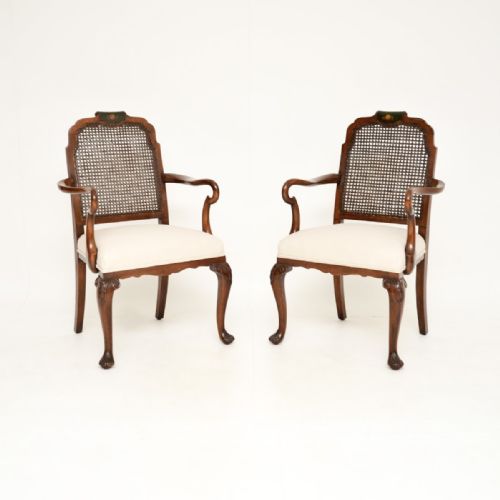


Caned Seat Carver Chairs
Caned seat carver chairs bring open woven cane work and supportive armrests to seating, combining lightness with strength.
Caned Seat Carver Chairs
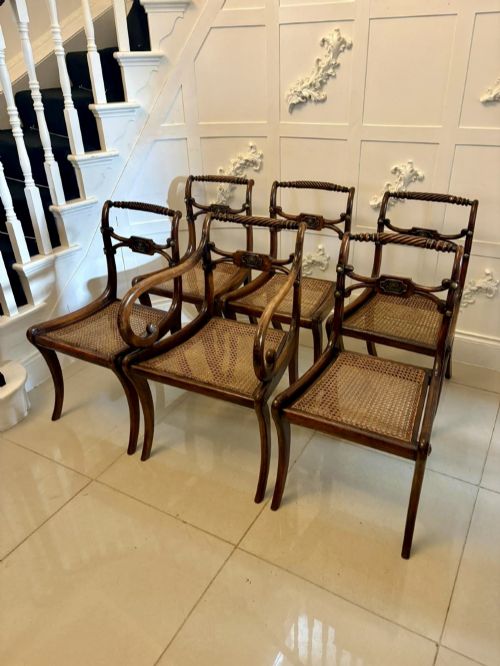
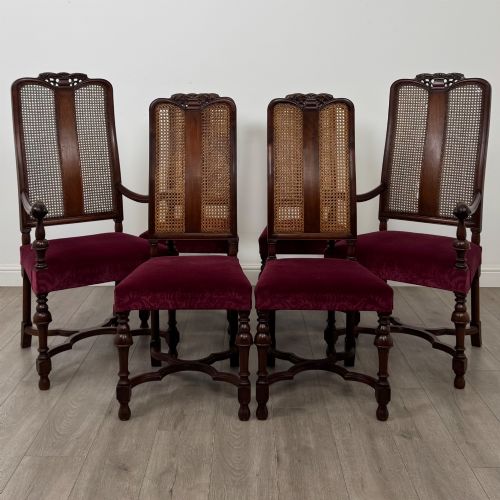
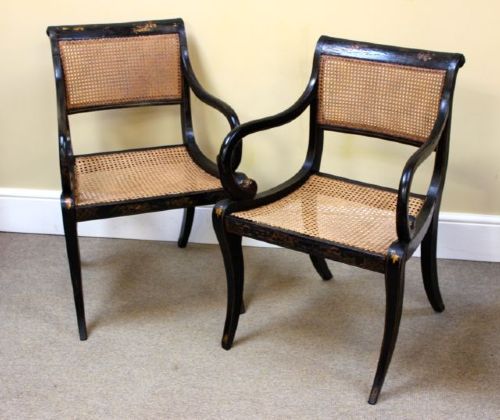
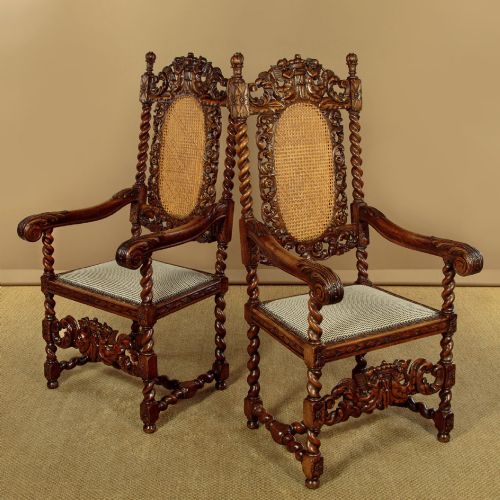
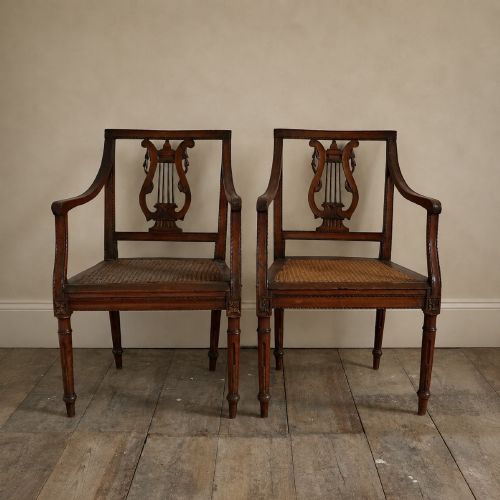
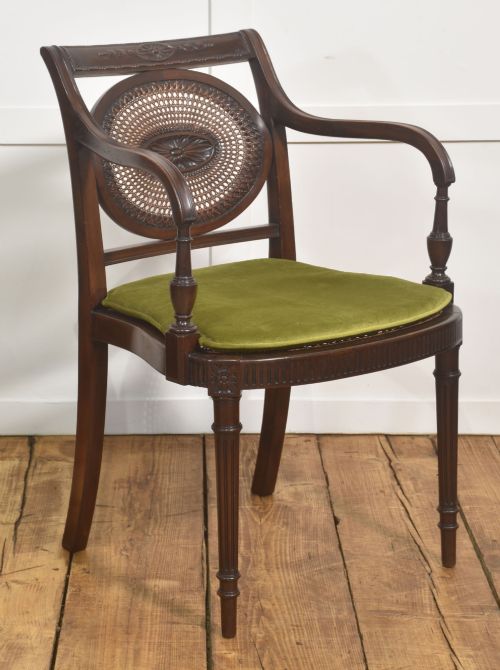
Caned seat carver chairs are armchairs designed with woven cane panels on the seat or back, often appearing as part of larger dining sets or as individual elbow chairs. When exploring caned seat carver chairs, buyers encounter forms ranging from Regency mahogany designs to Edwardian lacquered walnut and heavier revival styles.
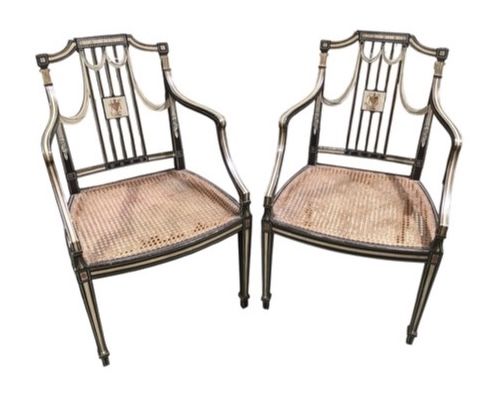
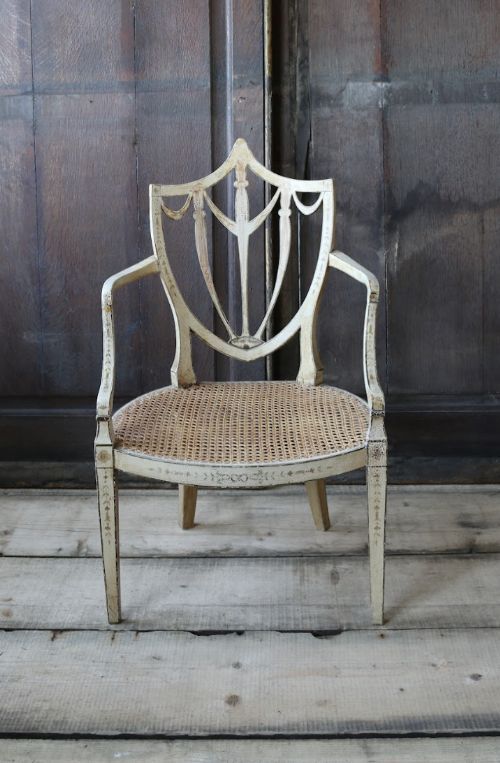
The selection includes dining armchairs, library armchairs, and salon pieces originating from periods such as the eighteenth century, the Regency era, and the early twentieth century. Variations span painted finishes, ebonised wood, and Anglo Indian craftsmanship, alongside Jacobean and Carolean revival interpretations.
Many examples emerge as pairs or solitary library and drawing room armchairs rather than standard single chairs. The presence of open arms and woven panels defines the group, distinguishing them from standard upholstered dining seats.
How they were made
Frames rely on timbers such as mahogany, oak, walnut, and ebony, shaped through turning, carving, and sometimes painting or applying parcel gilt. Woodworkers constructed solid joints to support the stress placed upon the open arms and legs of each elbow chair.
Cane panels are woven by hand through drilled holes or channeled frames, creating a resilient, breathable surface. Additional detailing involves applied fabric or velvet pads on specific versions, while other pieces showcase intricate faux bamboo turning or elaborate carved crestings.
Materials utilised across the available inventory include mahogany, walnut, oak, ebony, paint, ebonised wood, and cane.
What varies in quality
Quality rests upon the crispness of the timber carving and the regularity of the cane weaving across the seat and back. Finer pieces demonstrate precise joinery and well-selected hardwoods like mahogany or walnut that retain stability over generations.
The distinction between standard production and superior work lies in the depth of decorative detail, such as parcel gilt accents, painted enrichment, or the balanced proportions of the arms and legs. Original surfaces and undamaged woven panels elevate the standing of an armchair.
Gillows
The Caned Seat Carver Chairs Glossary
- Carver
- An armchair, typically larger than its companions, designed with elbow rests and often placed at the head of a dining table.
- Caning
- A method of weaving peeled rattan or cane strips into an open mesh pattern for seats and backs, offering flexible support.
- Bergere
- An enclosed or open armchair with a solid upholstered or cane-paneled back and sides, frequently featuring a loose seat cushion.
- Regency style
- A design movement drawing on neoclassical and ancient Greek or Roman forms, noted for saber legs, painted finishes, and bamboo turnings.
- Revival
- A nineteenth or twentieth century style that recreates historical aesthetics, such as Jacobean, Carolean, or Sheraton designs.
Caned Seat Carver Chairs: Frequently Asked Questions
What is a carver chair?
A carver chair is an armchair with elbow rests that traditionally sat at the head of a dining table alongside matching single chairs.
Over time these armchairs also found places in libraries and drawing rooms as standalone seating.
How do you care for cane seats?
Cane requires occasional light dusting and hydration to keep the natural rattan material from becoming brittle.
Avoiding excessive weight and keeping the chairs away from direct heat sources helps preserve the woven panels.
Are these chairs comfortable?
The woven cane provides a springy, breathable surface that adapts slightly to the body when seated.
Many examples also incorporate upholstered cushions or fabric pads for added comfort during prolonged sitting.
How are different periods identified?
Periods are distinguished through timber choices, turning styles, and decorative motifs such as painted finishes or carved crests.
For instance, Regency pieces often show saber legs or faux bamboo, while revival pieces draw on seventeenth century oak patterns.