
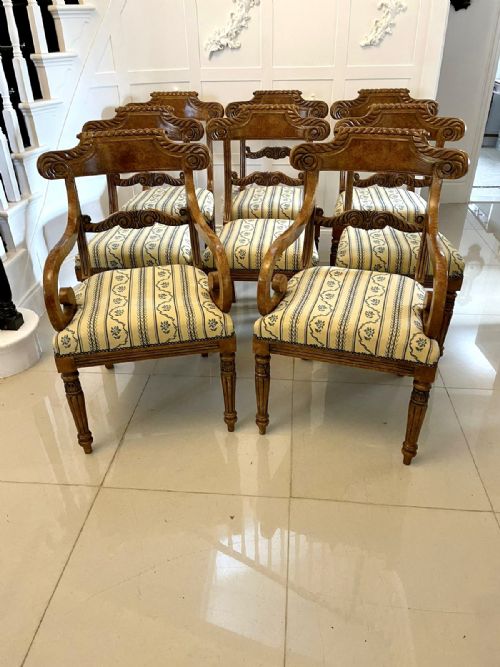


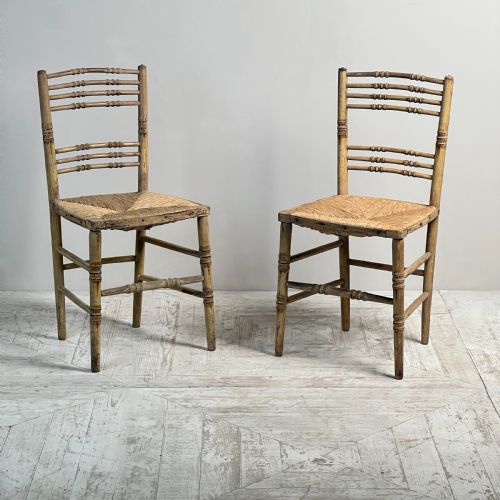
Painted Regency Dining Chairs
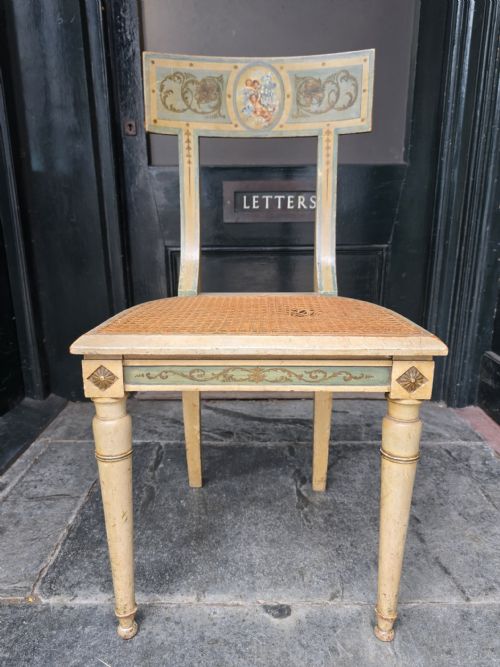
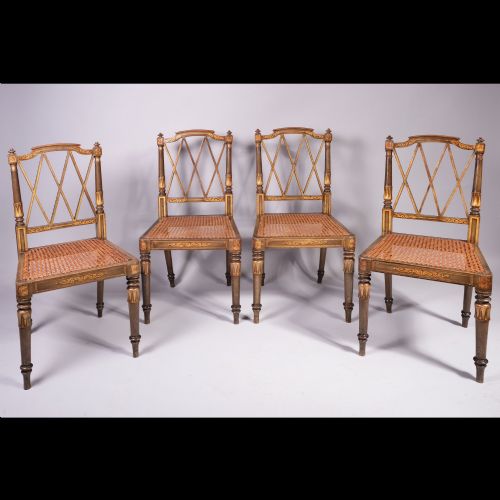
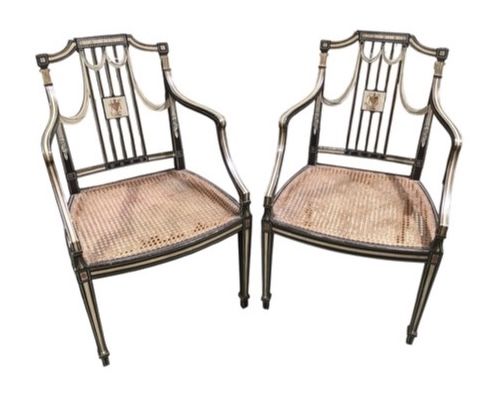
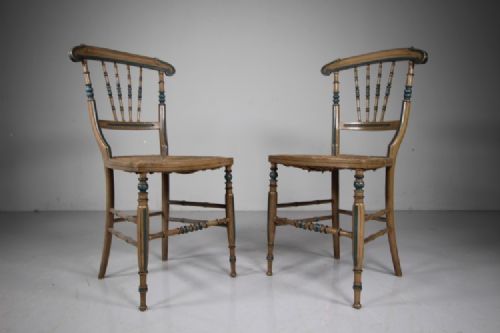
These painted regency dining chairs bring lightness and neoclassical grace to a room, offering both decorative surface detail and formal seating.
Painted Regency Dining Chairs
When you search for painted regency dining chairs, you encounter seating ranging from genuine Regency period pieces to later twentieth century revivals. The forms appearing here span side chairs, armchairs, and hall chairs designed for dining rooms and formal spaces.
Original pieces date from the early nineteenth century alongside revivals from the 1910s and 1920s executed in Regency taste and style. You will find single chairs, pairs, and larger sets suitable for a dining table.
The aesthetic relies on classical lines paired with painted, gilded, or faux-finished surfaces rather than exposed polished mahogany or walnut. These seating options combine architectural silhouettes with decorative motifs.
How they were made
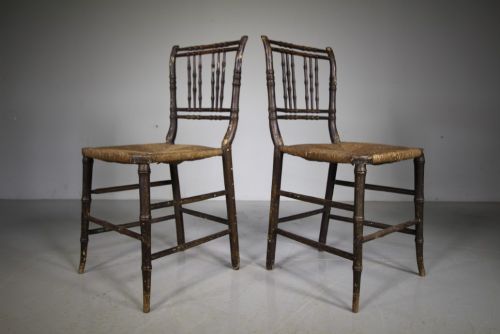
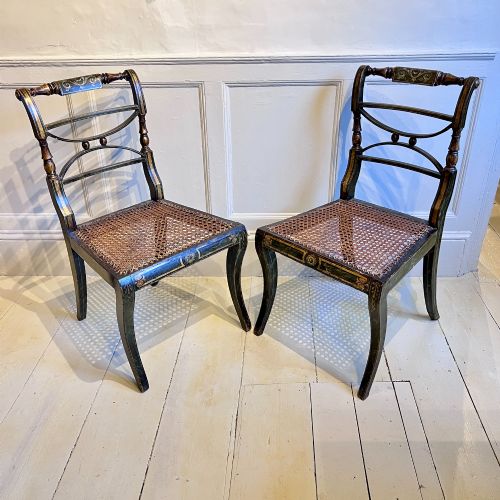
Construction relies on timber frames fashioned from pine, mahogany, and bamboo, frequently finished with paint, ebonisation, or gold leaf. Artisans applied decorative paintwork, including faux birds-eye maple effects and floral or heraldic motifs.
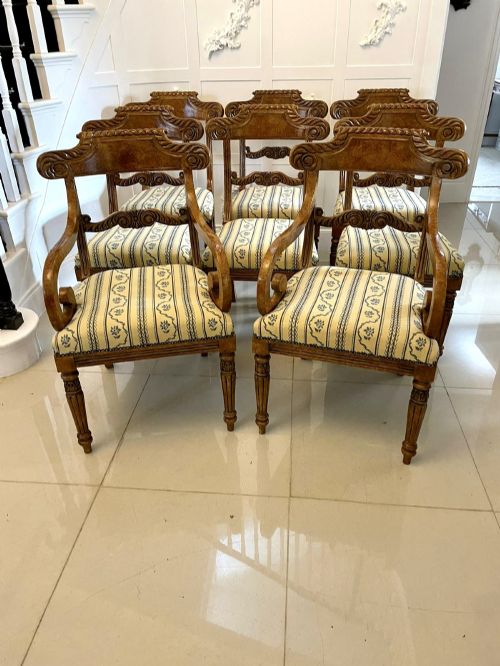
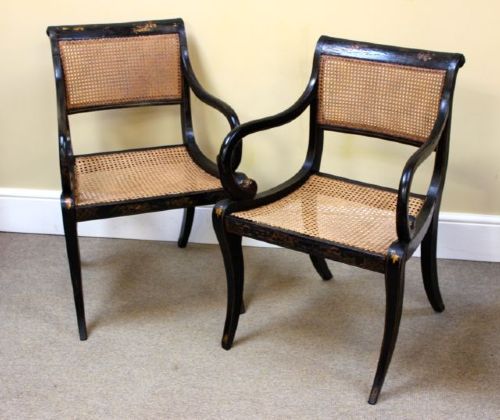
Seating portions utilise traditional materials such as cane, rush, and fabric upholstery fitted to the frames. Surface decoration involves hand-painted details and parcel gilt highlights applied over the painted wood.
Listings feature pieces spanning the Georgian era, the Regency period, and twentieth-century revivals.
What varies in quality
The refinement of the painted and gilded decoration distinguishes the standard of execution across these chairs. Original surface finishes retain greater character and integrity compared to later repainted or revived surfaces.
The complexity of the timber work, from standard turned members to intricate faux bamboo turnings or carved shell backs, shifts the level of craftsmanship. Consistency across a larger set requires uniform quality in both frame construction and decorative detail.
Gillows
The Painted Regency Dining Chairs Glossary
- Regency
- A British design period dating from the early nineteenth century characterised by classical revival motifs and refined proportions. It draws heavily on ancient Greek, Roman, and Egyptian forms.
- Ebonised
- Wood treated to imitate ebony through a dark staining or painting process. This finish appears frequently on Regency and revival seating to create high contrast.
- Parcel Gilt
- A decoration method where only specific portions of an object are gilded with gold leaf. This technique highlights carved details or structural lines against a painted background.
- Cane
- Material woven from stripped rattan plants to form open-work seat panels. It provides a light and flexible surface used on period frames.
- Rush
- Traditional seating material made from twisted marsh grasses. It creates a durable, textured surface woven directly onto the chair rails.
Painted Regency Dining Chairs: Frequently Asked Questions
Are these chairs comfortable for daily dining?
Most of these chairs are upright formal seating designed for nineteenth-century dining habits rather than modern lounging. Their comfort depends largely on whether they feature upholstered pads, caning, or rush seats.
Adding fitted squab cushions can improve comfort for long dinner parties without altering the historic character of the seat.
How do I spot an original Regency chair?
Original pieces display authentic period construction techniques, timber ageing, and wear patterns consistent with the early nineteenth century. Surviving original painted finishes often exhibit craquelure and softening that modern revivals lack.
Comparing the joinery and weight of the wood helps distinguish genuine period examples from early twentieth-century revival pieces.
Can I mix different sets around a table?
Mixing sets requires careful attention to seat height, arm clearance, and the visual weight of the painted finishes. Pairing armchairs at the head of the table with side chairs along the sides creates a balanced arrangement.
Matching the general period style helps unify disparate chairs gathered around a single dining table.
How do I care for painted wooden surfaces?
Painted and gilded surfaces require gentle dusting with a soft dry cloth and protection from direct sunlight and moisture. Avoid using harsh chemical cleaners or modern polishes that can lift delicate old paint layers or gold leaf.
Maintaining stable room humidity prevents the timber beneath the paint from expanding and cracking the surface decoration.