
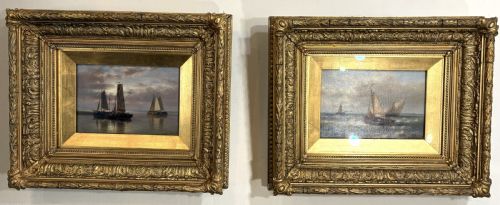


Antique Dutch Marine Artwork
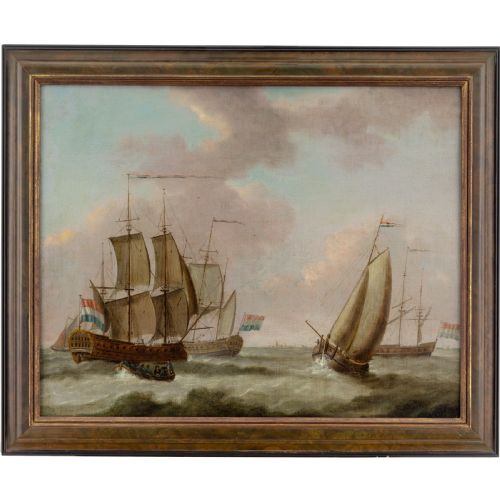
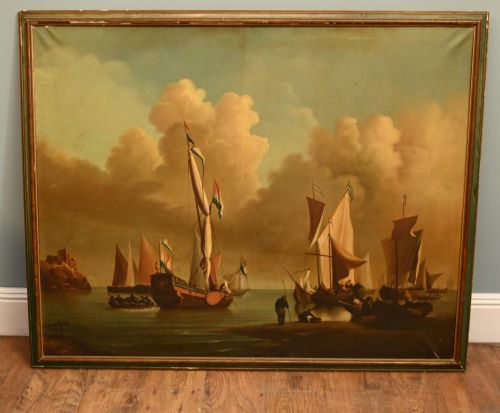
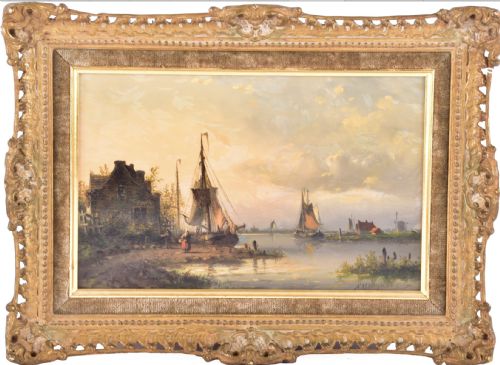
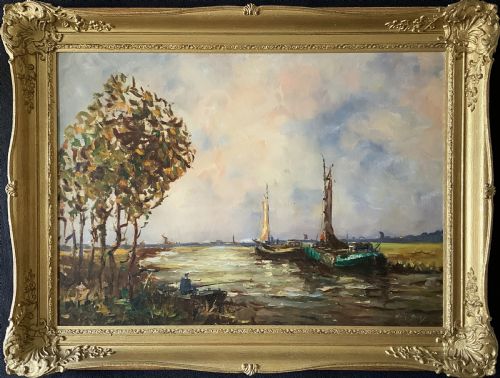
Antique dutch marine artwork captures the turbulent waters and bustling harbours of the Netherlands through oil on canvas and wood.
Antique Dutch Marine Artwork
When you search for antique dutch marine artwork, you encounter maritime paintings that record sailing boats, shipping scenes, and coastal views. These oil paintings depict subjects ranging from stormy gales and sea battles to calm canalscapes and estuary views.
The pieces on this page span several centuries, with a strong representation of nineteenth-century interpretations alongside earlier seventeenth-century examples from the Dutch Golden Age. You will frequently find works featuring fishing boats by a Dutch shore, harbour entrances, and naval vessels.
Makers and followers working within nineteenth-century Dutch schools dominate the selection, alongside British and other international artists recording Dutch scenes. These canvases and panels capture both bustling commercial ports and quiet coastal waters with remarkable fidelity.
Assessing quality and execution
Quality in these marine paintings rests upon the handling of light, water movement, and atmospheric perspective. Superior examples demonstrate skilled brushwork in rendering the churn of waves, the weight of storm clouds, and the precise rigging of sailing vessels.
The distinction between standard works and finer pieces involves the confidence of the composition and the preservation of the painted surface. Well-maintained canvases retain vibrant pigment layers and stable grounds that reveal the full intent of the painter.
Several artists clearly spent too much time watching waves crash against Dutch seawalls before picking up their brushes.
Bonaventura Peeters·Willem Bos·Abraham Hulk I·Pieter Cornelis Dommersen·Thomas Bush Hardy·Adrian Van Porten·Hendrik Willebrord Jansen·Paul Jean Clays·Frank Myers Boggs·William Dommersen·Charles Martin Powell·Jacob Knyff·Abraham Storck·Alfred Montague
The Antique Dutch Marine Artwork Glossary
- Oil on canvas
- A painting medium where pigments bound in oil are applied to a stretched woven fabric support. This method allows for subtle blending and rich texture.
- Giltwood
- Wood carved and coated with gold leaf or a gold-coloured metallic finish. It forms the decorative framing surrounding many period marine paintings.
- Gesso
- A paint mixture consisting of a binder mixed with chalk, gypsum, or pigment. It serves as a prepared surface layer on wood panels before oil painting begins.
- Estuary
- The tidal mouth of a large river, where the tide meets the stream. These areas provided popular subjects for artists painting coastal shipping and boats.
Antique Dutch Marine Artwork: Frequently Asked Questions
What subjects appear in these paintings?
The artworks display sailing boats, fishing vessels, naval battles, and bustling canalscapes. Many depict specific Dutch coastal locations and river estuaries.
Scenes range from calm waters with moored shipping to dramatic gales affecting boats off the coast.
Which centuries do these works represent?
The pieces span from the seventeenth century through the nineteenth century and into the mid-twentieth century. Seventeenth-century examples connect to the Dutch Golden Age tradition.
Nineteenth-century works show artists revisiting maritime themes with various schools of painting.
How should I hang an oil painting?
Select a wall away from direct sunlight and strong heat sources to protect the canvas and oil paint. Ensure the wall structure securely supports the weight of the frame.
Maintain stable room humidity to prevent warping in wooden panels and canvas stretchers.
What supports do these artists use?
Painters utilised stretched canvas, wooden panels, and occasional board supports for their marine compositions. Canvas remains the most common surface across the selection.
Prepared grounds on wood panels allowed for finer, smoother detail in smaller coastal views.