
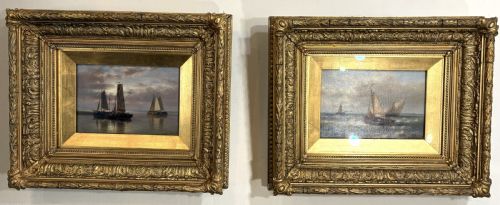


Gilded Seascape Artwork
Gilded seascape artwork brings nineteenth-century coastal and maritime scenes into rooms through oil paint and gilt frames.
Gilded Seascape Artwork
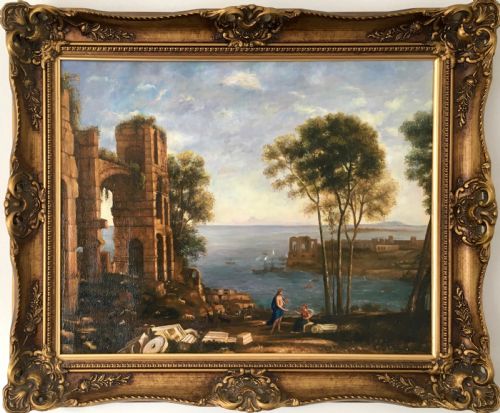
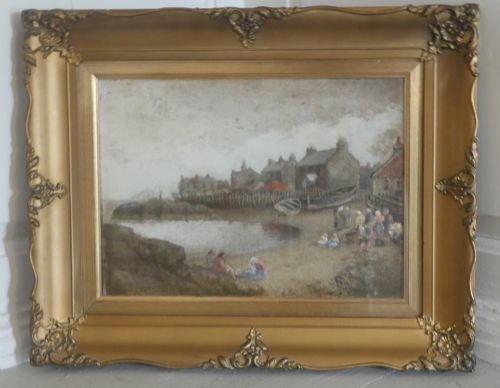
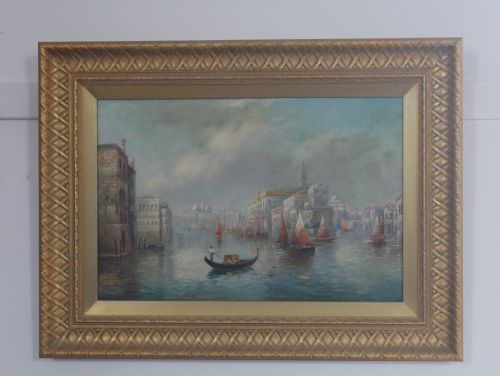
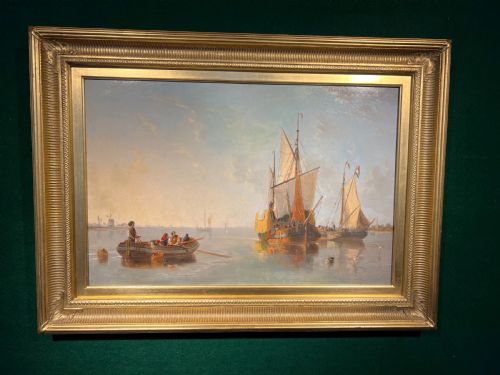
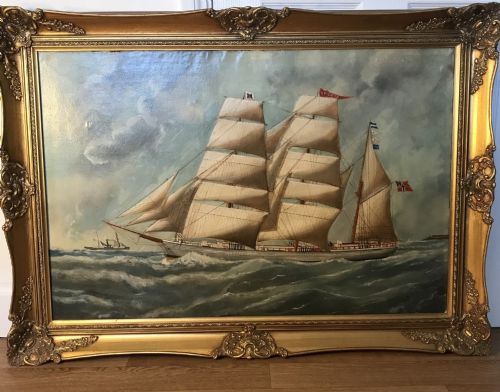
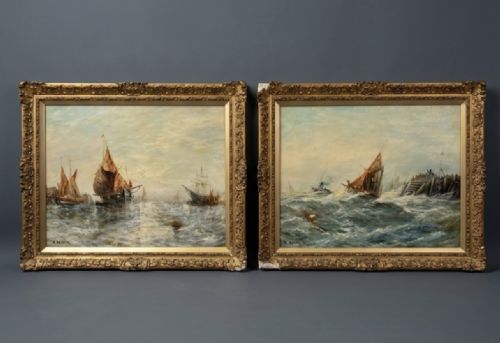
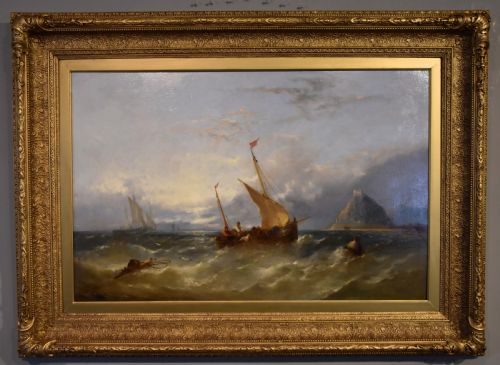
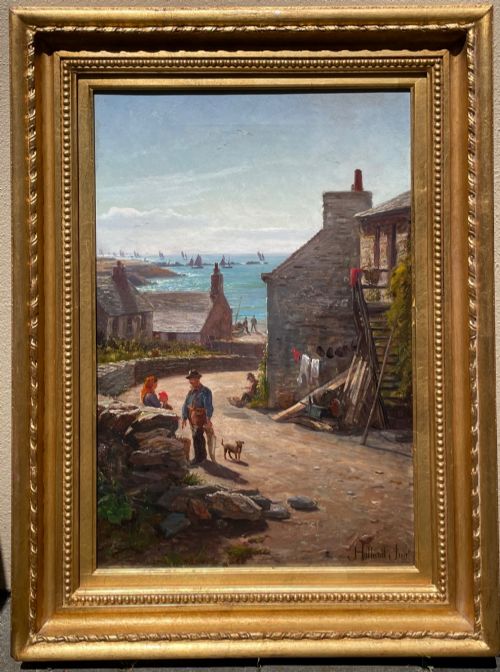
Gilded seascape artwork comprises oil paintings and watercolours depicting marine subjects, coastal harbours, and shipping scenes housed in ornate wooden frames. These pieces span the nineteenth century, the Victorian period, and into the Edwardian era, capturing waterscapes from Dutch coasts to Venetian canals.
Buyers seeking this phrase most commonly encounter nineteenth-century oil paintings on canvas or board, accompanied by period giltwood and gesso surrounds. The selection ranges from ship portraits and calm coastal views to dramatic maritime shipwrecks.
Materials and construction
Artists applied oil paint and watercolour onto canvas, wood panels, and paper supports to render marine landscapes and shipping vessels. These painted surfaces capture coastal light, water textures, and atmospheric skies.
Frames utilise carved wood, gesso, and applied gold leaf to create luminous borders that complement the maritime subjects within.
Listings feature oil paintings and watercolours on canvas and wood, created during the nineteenth century, Victorian, and Edwardian periods.
Quality factors
Quality rests upon the artist's ability to render maritime anatomy, water movement, and atmospheric light convincingly across the canvas. Works attributed to known nineteenth-century marine painters display greater precision in rigging, vessel construction, and coastal topography.
The craftsmanship of the accompanying frame influences the piece, with deep relief gesso mouldings and fire-gilt surfaces marking superior examples from the period.
Clifford Hanney·Edward Mills·John Wilson Carmichael·William Henry Williamson·John Holland·Abraham Hulk I·Louis Suire·Adrian Van Porten·Daniel Sherrin·Stanley Leader·Fred Waugh·John McDougal·Thomas Bush Hardy·Hendrik Willebrord Jansen·James Webb·George Dodgson Callow·Gustave de Breanski·Claude Thomas Stanfield Moore·William Raymond Dommersen·Alfred Henry Vickers·Thomas Rose Miles·John Callow·Alfred Pollentine·Richard Brydges Beechey·Charles Dixon
The Gilded Seascape Artwork Glossary
- Giltwood
- Wood carved and coated with gold leaf or metallic powder. This material forms the ornate frames typical of nineteenth-century picture presentation.
- Gesso
- A plaster-like mixture applied to wooden frame bases and carved into decorative relief before gilding. It creates the intricate moulding patterns seen on period frames.
- Marine art
- Paintings depicting ships, maritime battles, coastal views, and open seas. This genre forms the core subject matter of the works listed here.
- Oil on canvas
- Pigment bound in oil medium applied to stretched woven fabric. It serves as the primary painting surface for nineteenth-century maritime scenes.
Gilded Seascape Artwork: Frequently Asked Questions
What periods do these paintings date from?
The works originate largely from the nineteenth century and the Victorian era, extending into Edwardian times. These pieces reflect historical maritime traditions and nineteenth-century realism.
Dates align with active painting periods of listed artists, spanning from the early eighteen-hundreds through to the nineteen-thirties.
How should I hang these framed works?
Hang paintings on sturdy walls using appropriate picture hooks secured to wall studs or masonry. Consider the weight of the timber and gesso frame when selecting support hardware.
Keep pieces away from direct sunlight and damp environments to protect both the canvas and the gilded wooden frame.
Are the frames original to the paintings?
Many works retain their period giltwood or gesso frames, which match the Victorian or nineteenth-century date of the canvas. Frames often feature decorative mouldings typical of their manufacturing era.
Check individual listings for specific details regarding whether a frame is contemporary to the artwork.
What subjects appear in these scenes?
Subjects include sailing ships, fishing boats, shipwrecks, and coastal harbours across British, Dutch, and Italian waters. Venice canals and local coastal landmarks also feature prominently.
Artists recorded specific locations such as the Isle of Man, Portsmouth harbour, and the Grand Canal alongside historical vessels.