
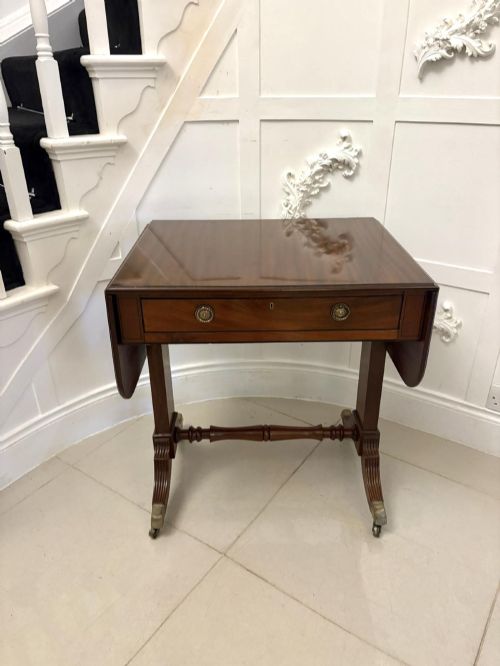
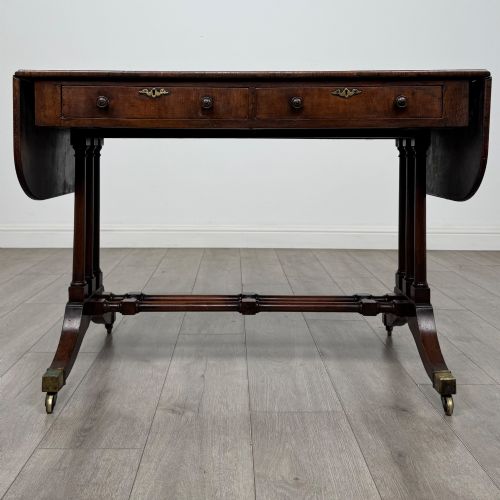
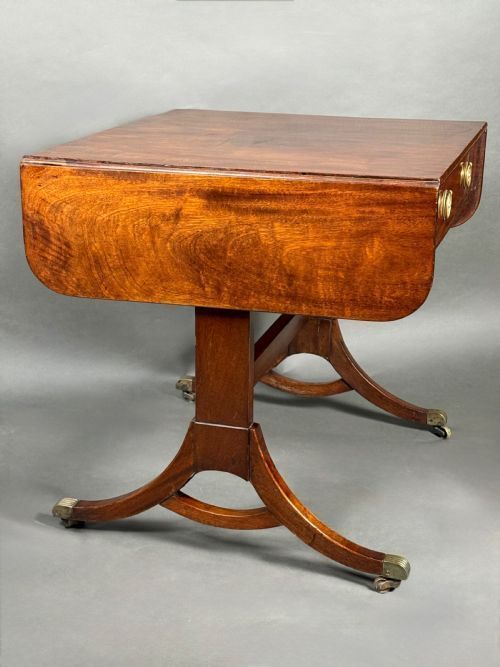

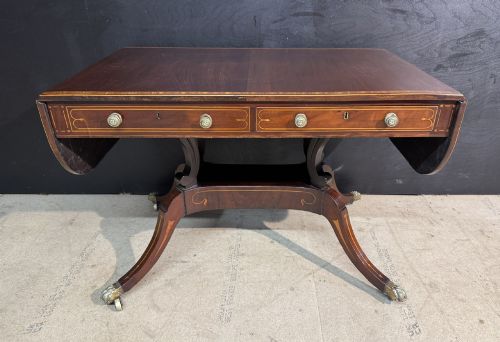


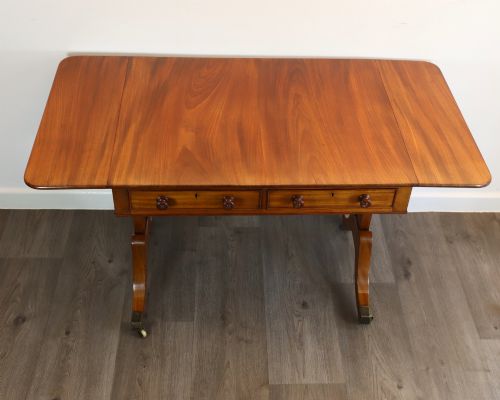
Antique Drop Leaf Writing Table
An antique drop leaf writing table offers versatile surface space and compact ingenuity, blending practical writing utility with refined period timber work.
Antique Drop Leaf Writing Table
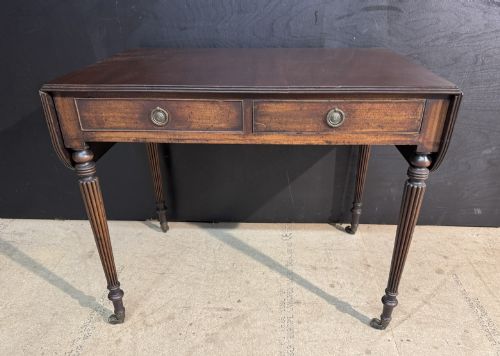
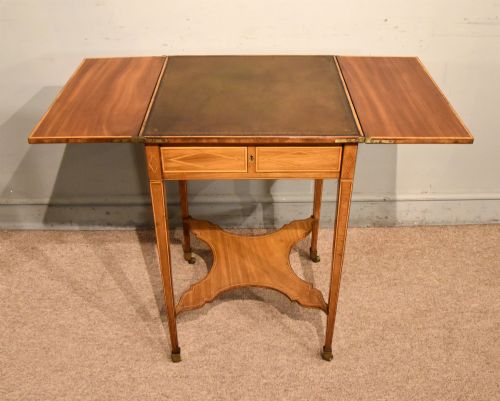
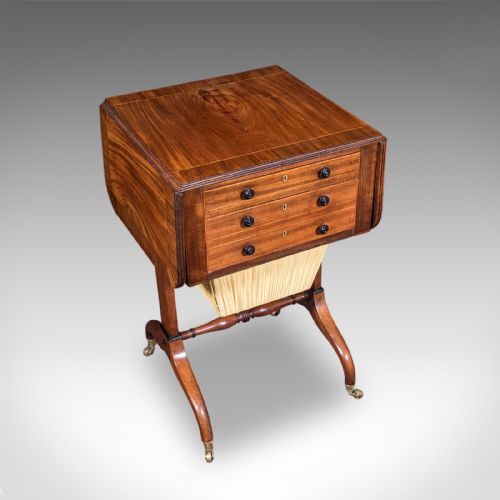
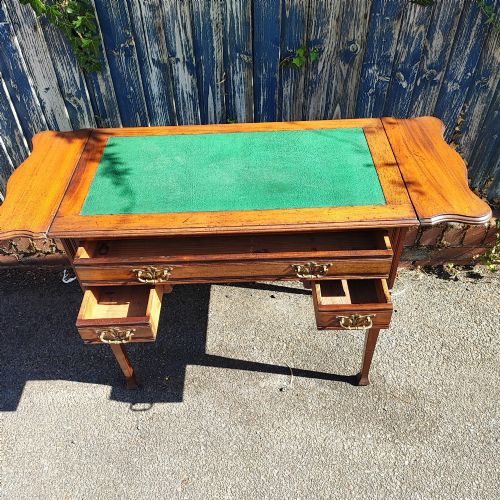
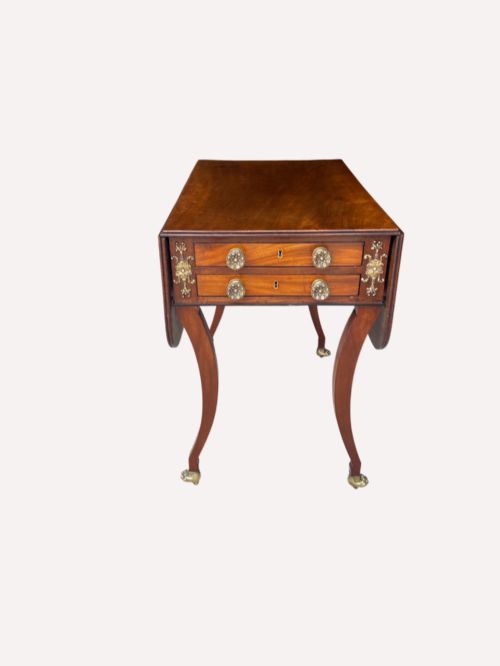
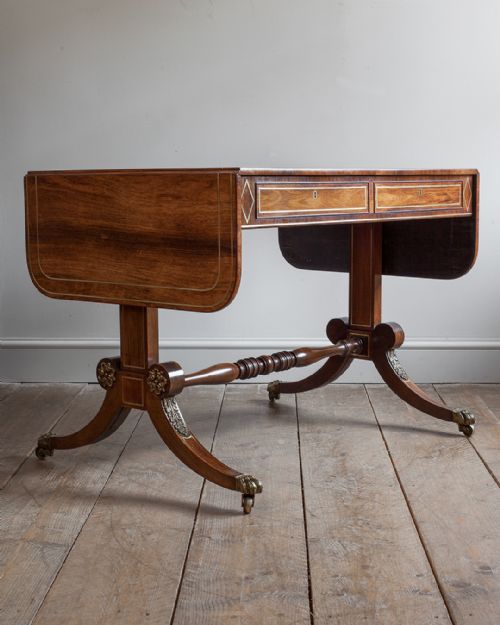
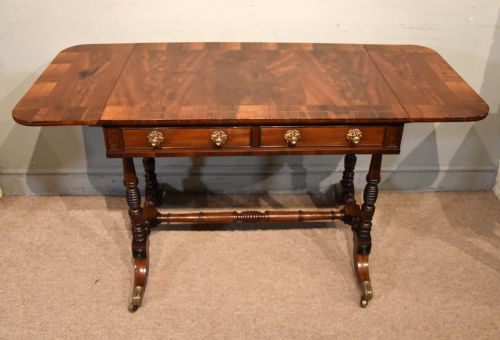
When searching for an antique drop leaf writing table, buyers encounter a diverse selection spanning the Georgian, Regency, Victorian, and Edwardian eras. These pieces frequently appear as sofa tables, Pembroke tables, and work tables equipped with drop side flaps for adaptable surface area.
The inventory demonstrates a strong representation of Regency and Georgian examples alongside later 19th-century and early 20th-century revivals. Makers of these periods often incorporated fitted drawers and free-standing designs suitable for placement in the centre of a room.
Materials and construction
Cabinet makers utilised dense hardwoods such as mahogany, flame mahogany, rosewood, and burr walnut, frequently enhancing the surfaces with intricate wood inlay, satinwood, and ebony stringing. These timbers provided the structural integrity required for hinged drop leaves and moving drawer components.
Metal mounts in brass, leather writing inserts, and crossbanding in contrasting timbers appeared regularly on high-status examples from the Regency and George III periods. Construction techniques balanced decorative elegance with mechanical function, particularly in tables designed for sewing, writing, and library use.
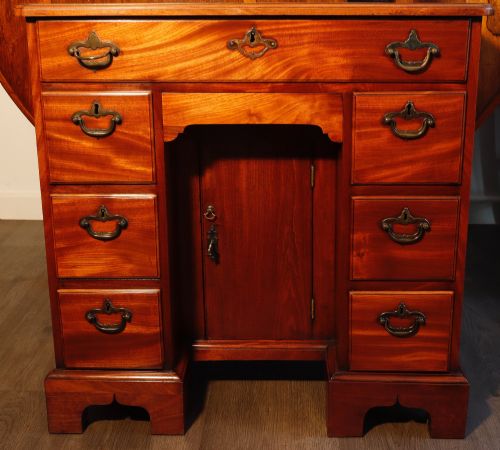
Several tables include hidden compartments and fitted drawers intended specifically for secret correspondence and sewing implements.
Evaluating distinction
Quality in these tables rests upon the selection of timber figures, such as highly figured flame mahogany or richly grained rosewood, matched evenly across the top and drop leaves. Superior pieces exhibit crisp inlay work, fine crossbanding, and integrated brass mounts rather than plain or heavily restored surfaces.
The refinement of the undercarriage, including the joinery of the legs, pedestals, and stretcher supports, dictates the structural calibre of the piece. Tables displaying documented attribution or thoughtful proportions command greater interest among collectors.
James Mein·Jean-Joseph Chapuis·Gillows
The Antique Drop Leaf Writing Table Glossary
- Pembroke table
- A small occasional table featuring two hinged drop leaves on opposite sides, frequently fitted with one or more small drawers.
- Sofa table
- A long, narrow table designed to stand in front of a sofa, typically featuring drop leaves at either end and twin pedestal supports.
- Crossbanding
- A decorative border technique where strips of veneer are laid perpendicular to the grain of the primary surface.
- Stringing
- A narrow inlaid line of contrasting timber used to outline panels, drawers, and tabletops on fine case furniture.
- Secretaire
- A desk or writing table incorporating a pull-down writing flap or fitted drawer concealing pigeonholes and small compartments.
Antique Drop Leaf Writing Table: Frequently Asked Questions
How were these tables used originally?
Owners positioned them near sofas or in the centre of principal rooms for writing letters and reading. Fitted drawers held inkwells, stationery, and sewing equipment.
The drop leaves allowed the furniture to remain compact against a wall before being opened for active use.
How do I live with one today?
These tables adapt easily to modern rooms as compact desks, hall tables, or lamp tables behind seating. The drop leaves permit flexible placement in constrained spaces.
Routine maintenance involves gentle dusting and avoiding placement near direct heat sources to protect the polished wood.
How can I tell the periods apart?
Georgian and Regency examples rely on solid mahogany, rosewood, brass mounts, and fine stringing. Later Victorian and Edwardian pieces often introduce burr walnut or revival styling.
Construction methods and timber selection provide the clearest indicators of a table's chronological origins.