




Antique Double Door Bureau
An antique double door bureau offers stately presence and fitted writing space, combining large timber cabinetwork with a drop-front desk.
Antique Double Door Bureau
An antique double door bureau is a substantial piece of furniture uniting a fitted writing compartment with enclosed upper shelving behind paired doors. These pieces span from the late seventeenth century through the Georgian era and into the Victorian period, reflecting evolving domestic storage needs.
How they were made
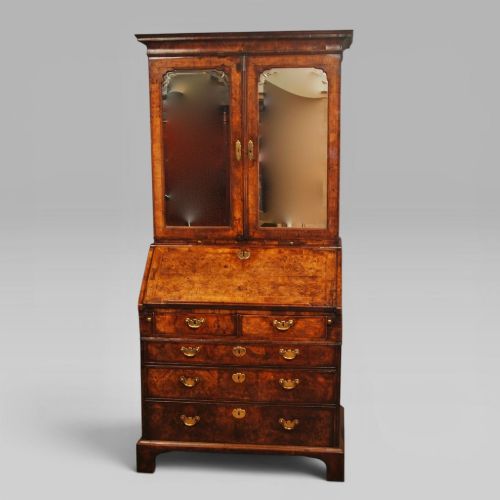
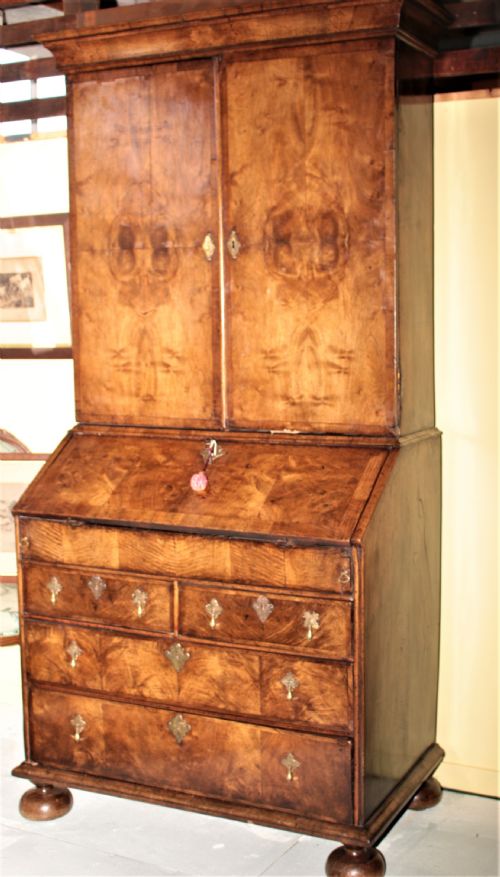
Cabinetmakers utilised dense timbers such as walnut, mahogany, and burr walnut, applying figured veneers over sturdy oak carcases to create striking visual depth on the fall-fronts and door panels. Brass hardware, including keyplates and escutcheons, secured the doors and drawers.
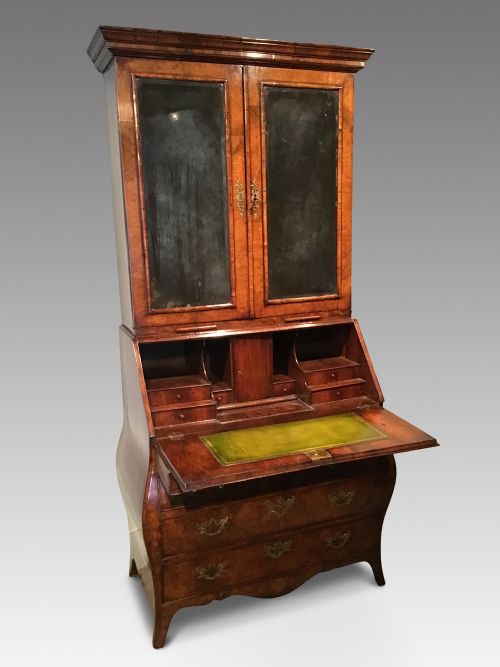
Upper compartments incorporated glazed panels, sometimes with original mirror glass, to protect valuable libraries. Specialist finishes like red lacquer also appear on select period pieces, requiring meticulous multi-layer application.
Antique Double Door Bureau Retail Price Guide 2026
Typical asking prices for double door bureau among the pieces listed under this phrase on Sellingantiques today, from the lower quarter to the upper quarter. They describe what is for sale here now, not the wider market.
Listings feature periods from William and Mary through George I, Queen Anne, and Georgian styles, extending into Early Victorian eras.
What varies in quality
The sophistication of the internal pigeonholes and secret drawers dictates much of the distinction between standard and superior pieces. Finer cabinets possess intricate architectural interiors with sliding wells and well-figured grain matching across the entire facade.
The integrity of the original timber surfaces and the choice of veneer figure separate standard cabinetwork from exceptional examples. Early walnut and burr walnut surfaces with undisturbed patination command greater appreciation than heavily restored or later-veneered instances.
The Antique Double Door Bureau Glossary
- Double dome
- A cabinet top featuring two rounded arched hoods side by side, typical of early eighteenth-century case furniture. This profile added height and architectural grandeur to tall bookcases.
- Bureau bookcase
- A combination of a sloping writing desk below and a shelved bookcase enclosed by doors above. It serves both study and storage functions in a single tall carcass.
- Fall-front
- The hinged sloping lid of a bureau that lowers to form a horizontal writing surface. It conceals internal drawers and pigeonholes when closed.
- Secretaire
- A piece of furniture containing a drawer or compartment engineered to pull out and fold down for writing. It often mimics the appearance of a standard chest of drawers or bookcase.
- Burr walnut
- Timber sliced from walnut tree growths that display highly convoluted, swirling grain patterns. Cabinetmakers prized this material for decorative veneering on prominent surfaces.
Antique Double Door Bureau: Frequently Asked Questions
What is an antique double door bureau?
An antique double door bureau is a tall furniture form combining a enclosed bookcase above with a drop-front desk below.
These pieces provide both display space for books and a private writing station with internal compartments.
How were these bureaus used?
Owners utilised the upper cabinet for storing valuable libraries and papers behind locked doors. The drop-front desk served as a private writing surface for correspondence and household accounts.
Internal drawers and secret compartments kept stationery and valuables secure.
How do I date a bureau bookcase?
Dating relies upon observing the timber choices, construction methods, and stylistic details like cornice shapes and foot designs. Early eighteenth-century examples frequently employ walnut and double dome profiles.
Later Victorian pieces tend to use mahogany or rosewood with different internal layouts and glazing bars.
Where should I place a double door bureau?
These tall cabinets require a stable wall with adequate ceiling height and depth to accommodate the open desk flap. Placing them away from direct sunlight preserves the fragile walnut or mahogany veneers.
Rooms with stable humidity prevent timber movement and protect old glass panels.