

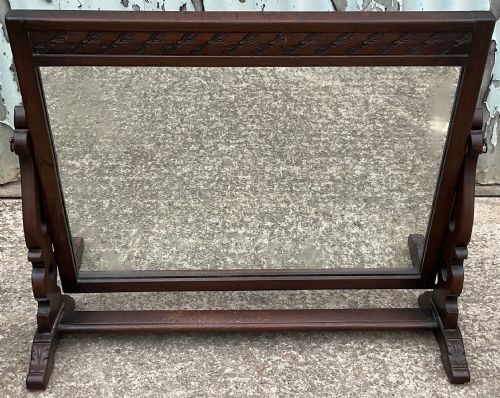
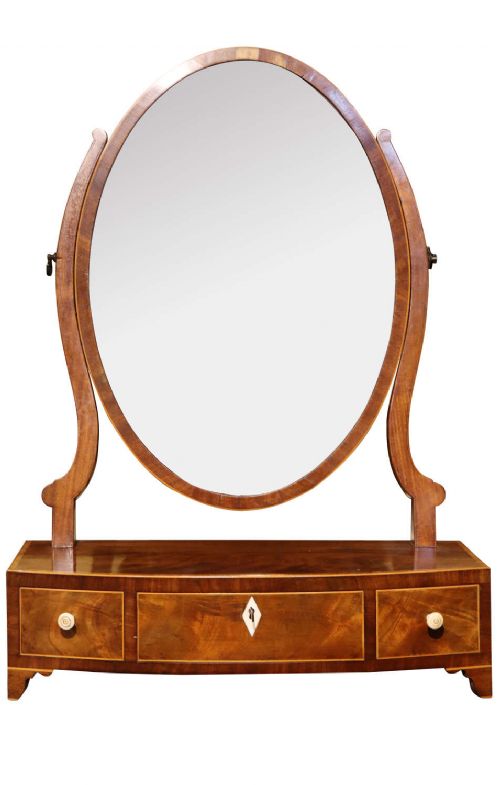
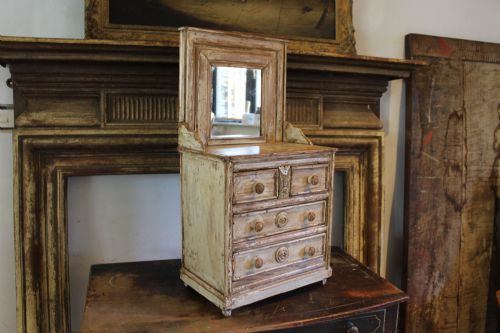


Antique Desktop Dressing Mirror
An antique desktop dressing mirror provides a practical and decorative reflection, bringing period timber and adjustable glass directly to the top of a chest or table.
Antique Desktop Dressing Mirror
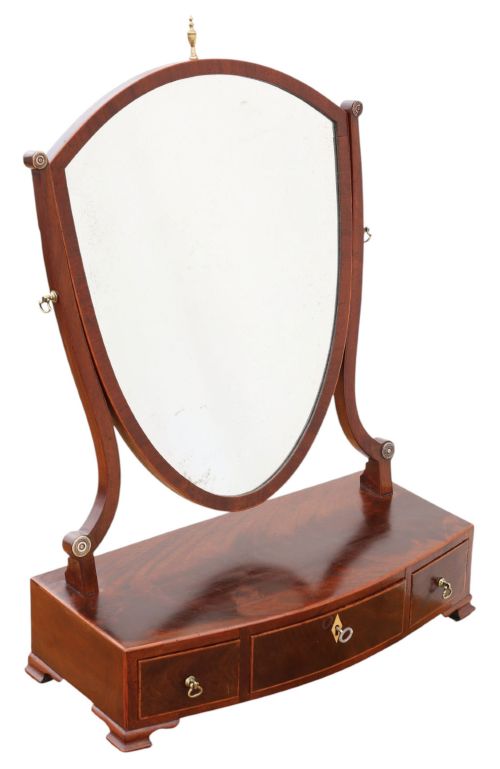
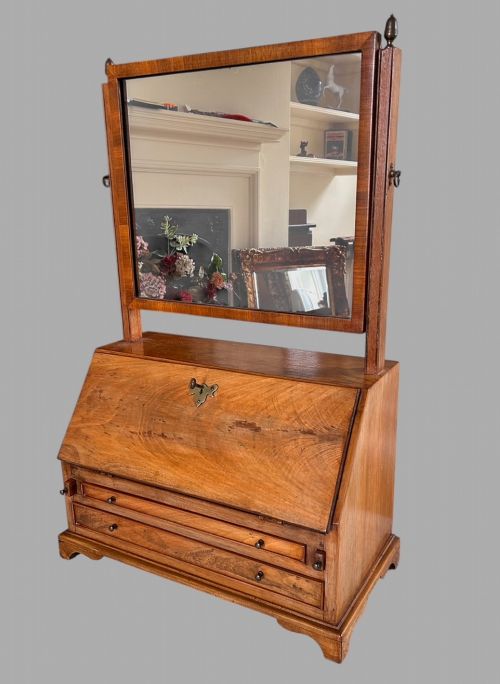
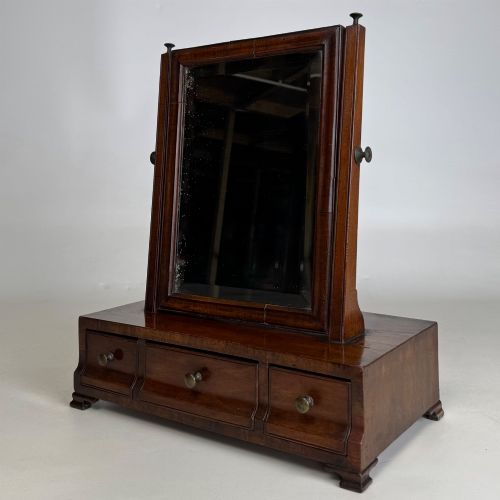
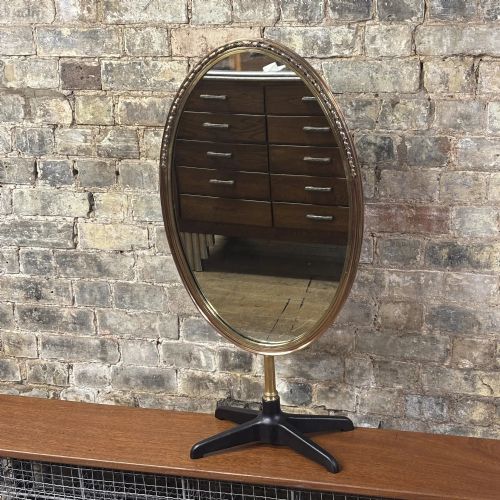
When you search for an antique desktop dressing mirror, you encounter pieces designed to sit on a chest or table for grooming. These objects appear in various forms including swing mirrors, toilet mirrors, and bureau combinations.
The pieces listed on this page span several centuries and styles, featuring Georgian, Victorian, and Edwardian examples. You most frequently meet mahogany and walnut frames, often constructed with small storage drawers integrated into the base.
Origins range across English, Dutch Neo-Classical, and French Provincial traditions. The scale varies from small portable desk pieces to large serpentine formats.
How they were made
Cabinetmakers utilised dense hardwoods such as mahogany and walnut, frequently incorporating crossbanding and satinwood or marquetry inlays to decorate the surfaces. Timber frames hold the glass plates securely within adjustable pivots.
Brass fittings appear as decorative hardware, candle arms, and pivot screws that allow the mirror plate to tilt. Drawer boxes utilise traditional joinery to form the compact storage sections beneath the glass.
Listings feature pieces spanning the Georgian, Victorian, and Edwardian eras, constructed primarily from mahogany and walnut.
What varies in quality
The refinement of the timber selection and the subtlety of the crossbanding or marquetry inlay set the better examples apart from standard workshop output. Finely figured mahogany and rich walnut grains elevate the visual presence of the frame.
Proportion and the execution of architectural details, such as serpentine bases or carved crests, determine the standing of a piece. Original mirror glass and well-cast brass pivots contribute to the overall integrity of the construction.
The Antique Desktop Dressing Mirror Glossary
- Swing mirror
- A glass plate mounted within a frame that pivots between upright supports, allowing the angle of reflection to change. This mechanism forms the central function of most desktop dressing glasses.
- Toilet mirror
- A traditional term for a dressing table mirror used during the eighteenth and nineteenth centuries. These items usually incorporate a small box base fitted with drawers for cosmetics and personal items.
- Crossbanding
- A border technique where narrow strips of veneer are laid across the grain of the primary wood. This method frames the drawer fronts and edges of the mirror stand with contrasting timber grains.
- Serpentine
- A curved outline featuring a convex centre flanked by concave curves. This shaping appears along the front edges of the mirror base drawers.
- Marquetry
- Inlaid patterns formed by fitting together pieces of various coloured woods and other materials. Dutch examples frequently employ this technique on walnut surfaces.
Antique Desktop Dressing Mirror: Frequently Asked Questions
What is an antique desktop dressing mirror?
An antique desktop dressing mirror is a portable looking glass mounted on a stand or small set of drawers, designed to rest on top of a chest or table for personal grooming.
These pieces date from the eighteenth century through to the early twentieth century, constructed mainly in mahogany and walnut.
Where did people use dressing mirrors?
People placed these mirrors on bedroom chests of drawers, dressing tables, or writing desks before fitted wardrobes and wall mirrors became common.
They provided a movable source of reflection that could be positioned near a window for optimal light.
How do I date a dressing mirror?
Dating relies upon the timber species, construction methods of the base drawers, and the overall style such as Georgian or Victorian.
Earlier examples often feature walnut or red mahogany with hand-cut dovetails, while later pieces show Edwardian or Arts and Crafts influences.
Are the mirror plates original?
Many antique mirrors retain their original mercury or silvered glass, which can show characteristic oxidation spots or light foxing.
Replacement glass occurs frequently in pieces of this age to maintain a clear reflection.
How do I maintain the wooden frame?
Keep the wood conditioned with appropriate furniture wax and avoid placing the mirror in direct sunlight or near heat sources.
Ensure the brass pivot screws are neither too loose nor overly tight when adjusting the angle of the glass.