



Antique Desk Pen Tray
An antique desk pen tray organises ink and nibs on a writing surface, bringing tactile order to nineteenth and twentieth-century correspondence.
Antique Desk Pen Tray
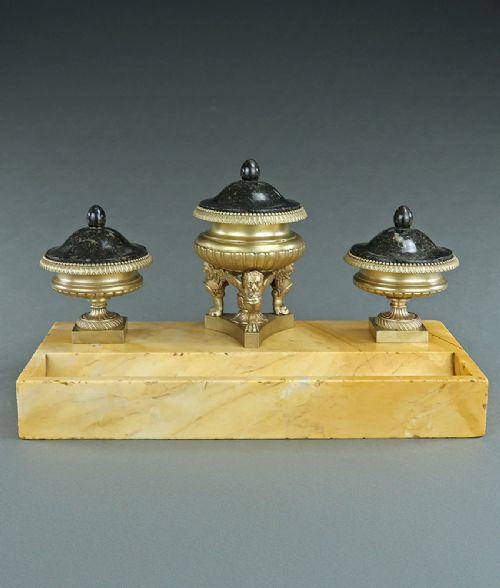
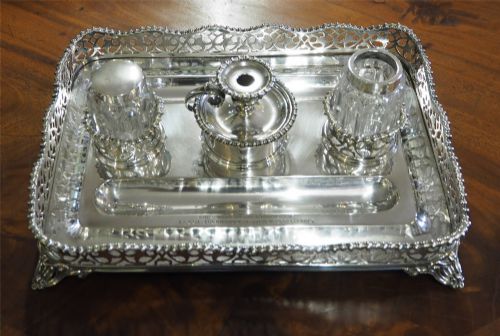
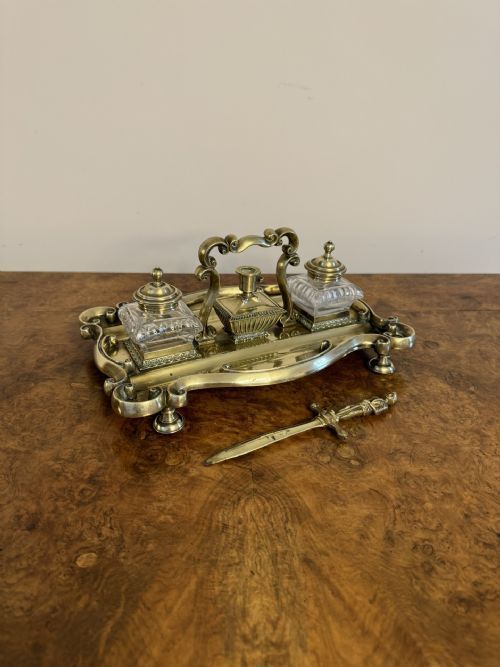
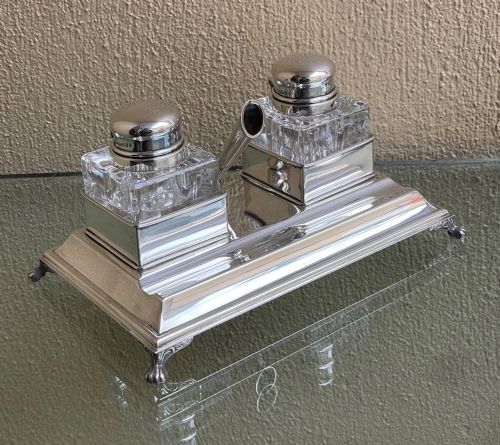
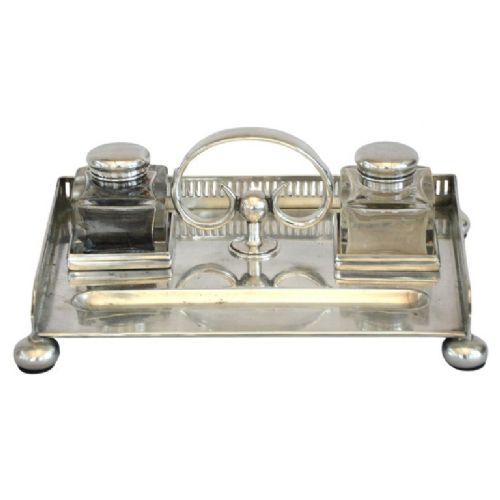
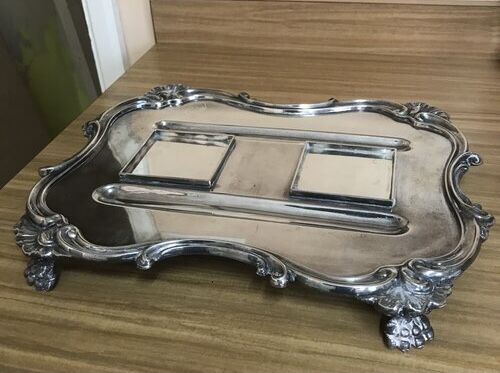
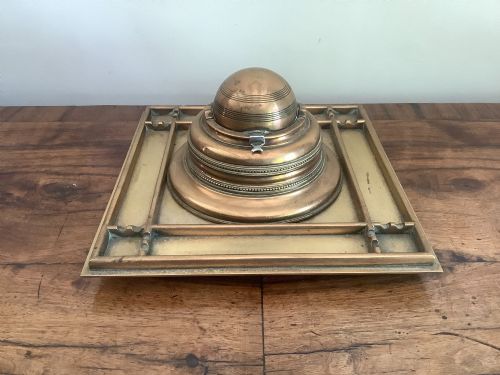
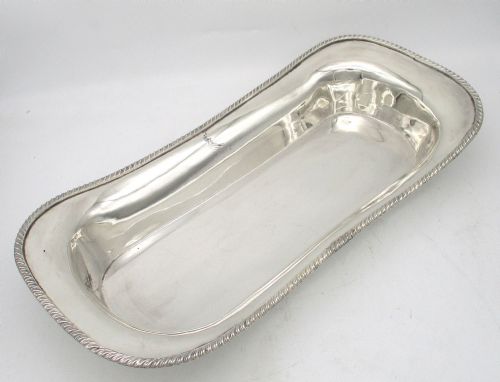
The antique desk pen tray category encompasses tabletop vessels designed to hold writing instruments alongside inkwells, sanders, and stamp boxes. Most examples appearing here date from the nineteenth century into the Edwardian period, often taking the form of standalone dishes or integrated components of larger desk sets and inkstands. Buyers encounter flat elongated receptacles alongside fitted troughs incorporating pen rests.
Materials vary from solid sterling silver and silver plate to cast brass, bronze, pewter, and ceramics such as porcelain and Dutch Delft. Wooden examples utilise timbers like coromandel, walnut, rosewood, and fruitwood, sometimes enhanced with brass inlay, tortoiseshell, or mother-of-pearl. These desk accessories served domestic and professional writing spaces, reflecting the heavy reliance on handwritten correspondence before the twentieth century.
Materials and construction methods
Metal pieces rely on casting, chasing, and plating techniques, with bronze and brass shaped via foundry work and hand-finished detailing. Silver items utilise sheet forming, stamping, and applied cast borders, whilst older plated pieces apply silver sheets over copper bases through early fusion processes.
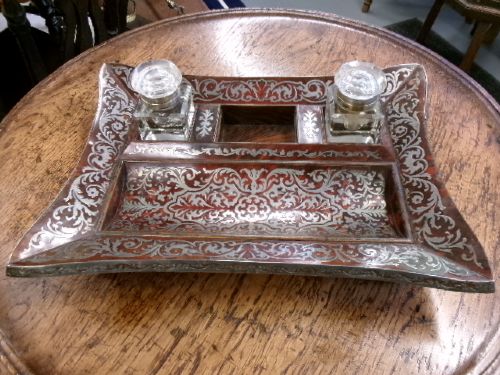
Wooden desk accessories involve cabinetmaking techniques such as veneering exotic timbers over carcase woods, alongside precision marquetry and boulle work incorporating brass and tortoiseshell. Ceramic and glass trays depend on moulding, hand-painting, and firing, frequently paired with fitted metal rims and pen rests.
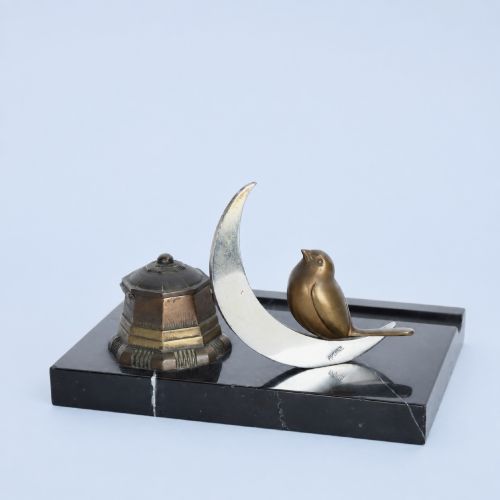
Listings feature desk accessories spanning the Victorian, Edwardian, and Art Deco periods, created in brass, silver plate, and exotic woods.
Distinguishing quality across examples
Superior execution shows in the crispness of cast metal ornamentation, the depth of hand-chasing, and the precision of fitted joints in wooden carcases. High-grade items incorporate substantial gauge metals and genuine exotic veneers rather than thin surface coatings.
Makers known for exceptional retail supply, such as Elkington, Walker and Hall, or Asprey, maintained rigorous standards in structural integrity and decorative restraint. Pieces displaying hand-painted ceramic details or intricate Boulle work rely heavily on the artisan's skill for enduring visual balance.
Elkington·Walker And Hall·Harrods·Creswick·Walker Knowles·Robert Garrard·Asprey Of London·Minton·WMF
The Antique Desk Pen Tray Glossary
- Inkstand
- A fitted tray or stand holding inkwells, pen rests, and accessory pots for sealing wax or sand. These desk fixtures formed the central writing equipment of a nineteenth-century study.
- Boulle work
- Marquetry of tortoiseshell and brass inlaid into a dark ground, popular in French-influenced nineteenth-century furniture and desk accessories. This technique requires meticulous hand-cutting of layered materials.
- Champlevé
- An enamelling technique where troughs or cells are hollowed out in a metal surface and filled with vitreous paste before firing. The resulting coloured patterns contrast sharply with the exposed bronze or brass base.
- Old Sheffield Plate
- An early composite material made by fusing a thin sheet of silver to a thicker copper core under heat and pressure. Examination under magnification reveals the copper edges where the sheets met.
- Pen rest
- A raised channel or support integrated into a tray to prevent dipping pens from rolling across the desk. This functional feature often dictates the entire elongated profile of the tray.
Antique Desk Pen Tray: Frequently Asked Questions
What is an antique desk pen tray used for?
These trays held dip pens, quill knives, and writing nibs within easy reach on a desk surface.
They kept ink-stained nibs from touching fine blotters and writing paper during correspondence.
How do I date a brass or bronze desk tray?
Stylistic indicators such as Rococo Revival curves or Art Nouveau floral asymmetry provide initial chronological markers.
Maker marks, registration numbers, and casting techniques help narrow the production decade within the nineteenth and twentieth centuries.
Were pen trays sold alone or with inkwells?
Surviving examples appear both as standalone pen dishes and as fitted components within larger multi-piece desk sets.
Many larger desk stands integrated fixed pen rests alongside removable inkwells and sand shakers.
How should I clean a silver plated desk tray?
Gentle dusting with a soft cloth removes surface debris without harming aged patination or thin plating.
Harsh chemical dips risk stripping historic finish from silver plate and older base metals.