

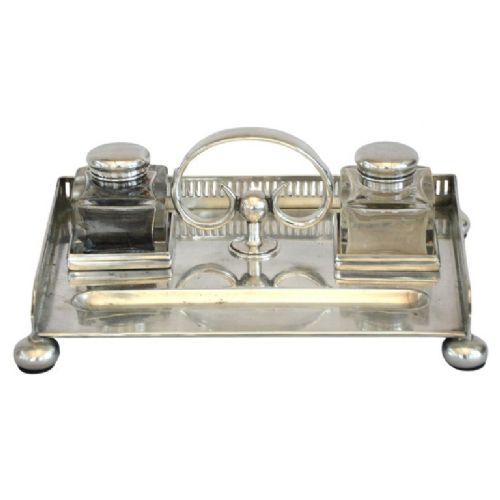


Glass Inkwell Desk Tray
A glass inkwell desk tray organises writing tools with a fitted glass vessel mounted on a wooden, metal or stone base.

Glass Inkwell Desk Tray
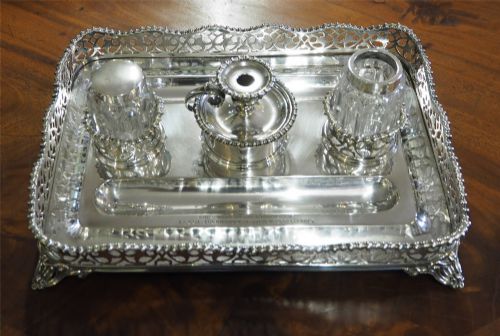
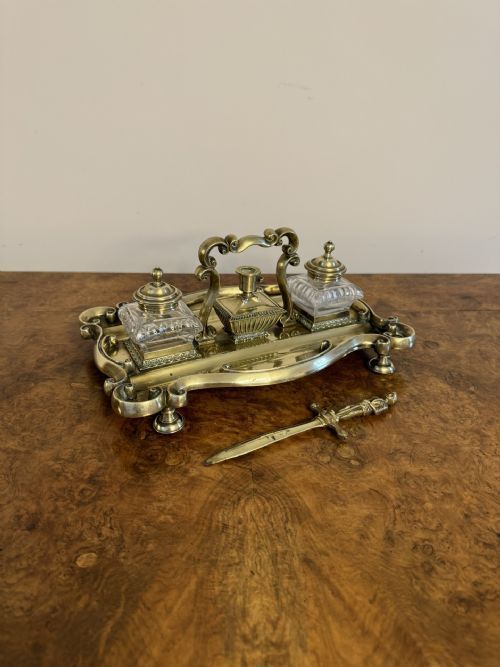
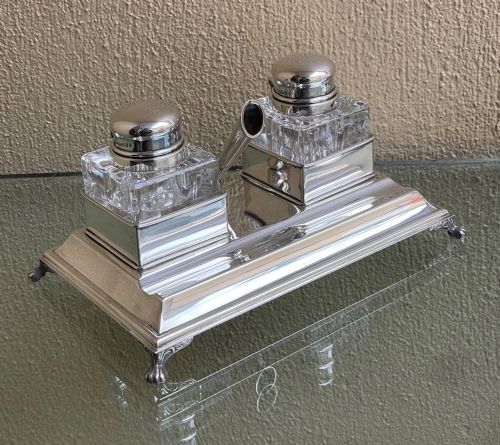
A glass inkwell desk tray combines a flat wooden or metal base with one or more glass ink vessels, often accompanied by pen troughs and stamp boxes. When you search for glass inkwell desk tray, you encounter pieces spanning the Georgian, Victorian, and Edwardian periods.
The most common examples on this page date from the nineteenth century, constructed in timber bases such as coromandel, walnut, and oak. These utilitarian yet decorative desk accessories reflect the heavy correspondence culture of the Victorian era.
Earlier iterations lean towards Georgian and Regency designs in mahogany, rosewood, and Sheffield plate, whilst later items incorporate brass mounts and silver-plated fittings.
Materials and Construction
The foundation of these desk accessories relies on dense hardwoods like coromandel and walnut, frequently accented with brass inlay, mother-of-pearl, or tortoiseshell. Metal components utilise cast brass, silver plate, and solid sterling silver alongside Sheffield plate for mounts and trays.
Glass elements range from simple moulded inkwells to heavy cut-glass vessels, often fitted with hinged sterling silver or brass collars and lids. Wooden bodies employ dovetail joinery and applied veneers, while carved wooden stands utilise traditional hand-carving techniques seen in Black Forest items.
Listings feature wooden bases in oak, walnut, coromandel, and mahogany, paired with cut glass, brass, and sterling silver.
Standard and Execution
Quality separates mass-produced utility desk stands from bespoke pieces through the precision of the metal mounts and the depth of the timber grain. Superior examples exhibit heavy-gauge glass with crisp cutting, substantial silver or brass fittings, and intact internal components such as matching glass liners.
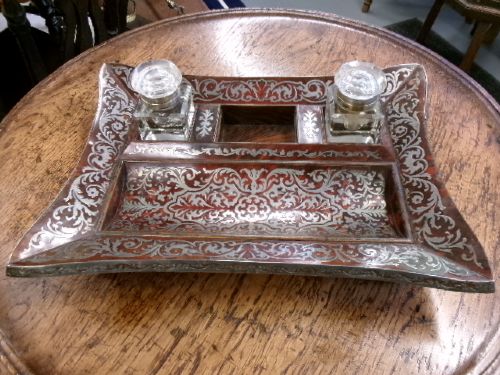
Finer items demonstrate meticulous marquetry, such as Boulle work or brass stringing set evenly into walnut and coromandel bases. The integration of functional elements, like secure pen trays and well-fitted inkwell lids, marks the distinction between standard workshop production and master craftsmanship.
Elkington·Walker And Hall·Rupert Favell·James Cartland And Sons·Daniel Holy
The Glass Inkwell Desk Tray Glossary
- Inkstand
- A portable desk tray or stand holding inkwells, pen holders, and sometimes a sander or bell. It served as the primary writing accessory on a desk.
- Standish
- An alternative term for an inkstand or desk tray, frequently used to describe more formal or elaborate writing furniture from the Georgian period.
- Coromandel
- A dense, heavily figured timber imported from Asia, prized for its dark brown colour and contrasting light stripes used extensively in nineteenth-century luxury boxes.
- Sheffield plate
- A composite material made by fusing a thin sheet of silver to a copper ingot, common on desk accessories dating before the invention of electroplating.
- Boulle work
- A style of marquetry using brass and tortoiseshell inlaid into wooden furniture and desk trays, named after the cabinetmaker André-Charles Boulle.
Glass Inkwell Desk Tray: Frequently Asked Questions
What is a desk tray?
A desk tray is a portable wooden, metal, or papier-mâché base designed to hold writing instruments and inkwells in one orderly place.
These accessories kept desks clean from ink spills and kept pens close at hand during letter writing.
How do I date a desk tray?
Dating relies on materials, wood types, and silver hallmarks stamped onto the metal collars or mounts.
Victorian pieces often use coromandel, walnut, and heavy brass, whereas Georgian and Regency items favour mahogany and rosewood with Sheffield plate.
Are glass inkwells removable?
Most glass inkwells lift out of their fitted recesses in the wooden or metal base for cleaning and refilling.
Matching glass inserts with original hinged metal lids indicate a complete and well-preserved set.
How should I clean wood and brass?
Wood surfaces require only a gentle dusting and occasional waxing to maintain the natural grain and finish.
Brass and silver-plated mounts benefit from careful wiping with a dry or slightly damp cloth, avoiding harsh chemical polishes.