
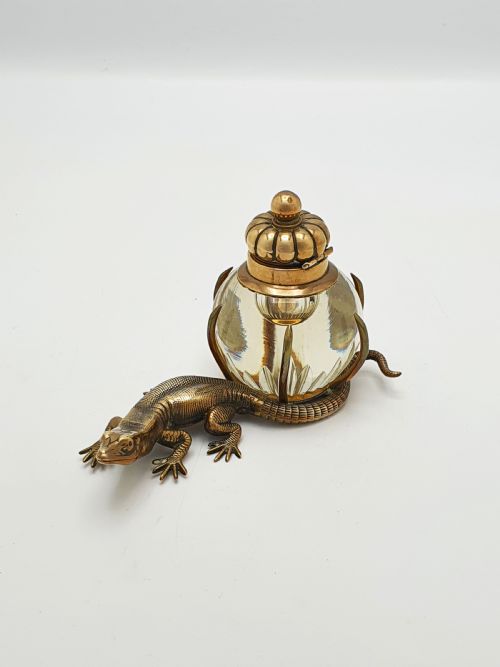


Victorian Cut Glass Inkwell
A victorian cut glass inkwell brings heavy, light-catching crystal and metal mounts together to anchor a writing desk with nineteenth-century substance.

Victorian Cut Glass Inkwell
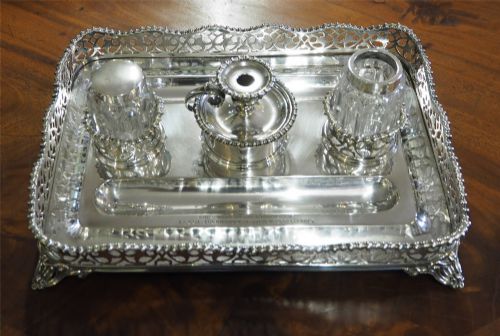
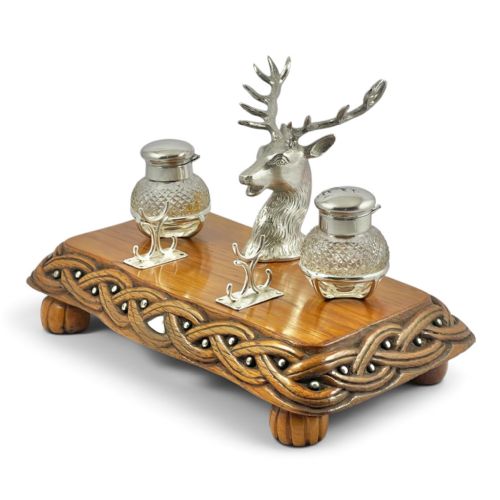
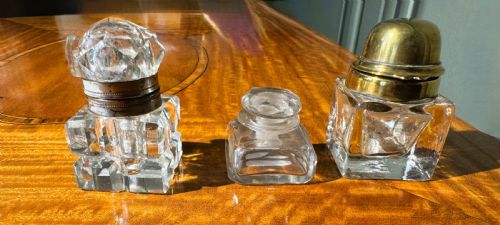
A victorian cut glass inkwell appears here as a standalone glass vessel or fitted within desk stands and inkstands made of oak, brass, silver plate, and sterling silver. The selections span the nineteenth century, including pieces from the eighteen-eighties and eighteen-nineties alongside occasional Edwardian examples.
Buyers encounter single pots with hinged metal lids alongside double inkstands holding matched cut glass bottles. Many incorporate silver mounts, brass collars, or hinged lids bearing hallmarks from cities like London and Sheffield.
Evaluating the Pieces
Quality rests on the depth and crispness of the glass cutting, where sharper facets and heavy crystal weight distinguish finer vessels from simpler moulded glass. The metalwork tells a similar story, separating solid sterling silver or substantial brass mounts from lighter plated alternatives.
The integration of the stand elevates certain pieces, particularly where fitted trays combine multiple materials like tortoiseshell, coromandel, or satinwood with intact silver mounts.
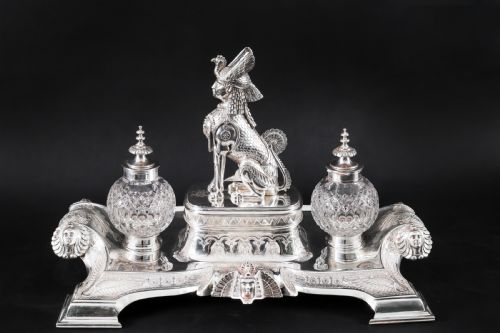
Design styles span from standard Victorian through Victorian Gothic Revival, Egyptian Revival, and Napoleon III.
Wilkinson and Co·Rupert Favell·James Cartland and Sons·John Grinsell and Sons
The Victorian Cut Glass Inkwell Glossary
- Cut glass
- Glass decorated by grinding facets and patterns into the surface with a rotating wheel. This technique creates deep, light-catching prisms characteristic of the period.
- Inkstand
- A complete desk accessory comprising one or more inkwells alongside pen trays and sometimes taper holders. These portable desk pieces kept writing materials organised.
- Sterling silver
- An alloy containing ninety-two point five percent silver by mass, frequently used for the hinged lids, collars, and mounts on better inkwells. Hallmarks on these parts reveal the assay office and date.
- Silver plate
- A base metal coated with a thin layer of silver through electroplating or older manufacturing methods. It provided the look of solid silver for larger desk stands.
- Mount
- A metal collar, rim, or hinge fitted directly to the glass neck of an inkwell. These components secure the lid and protect the glass rim from damage.
Victorian Cut Glass Inkwell: Frequently Asked Questions
How do I clean a cut glass inkwell?
Warm soapy water and a soft bottle brush safely clear dried ink residue from the interior without scratching the crystal facets. Metal mounts require careful wiping to avoid moisture damage to old brass or silver plate.
Allow the vessel to dry completely before replacing any fitted lids or returning the piece to a wooden desk surface.
Are these inkwells safe to use for writing today?
Most antique inkwells function adequately with modern fountain pen inks, provided the glass and internal collars remain free of cracks. The hinged lids protect the contents from dust and slow down evaporation.
Fittings with delicate silver hinges or old cork inserts benefit from gentle handling to preserve their original mechanisms.
How can I tell the period of an inkwell?
Hallmarks on silver mounts provide exact assay dates and maker marks for many pieces. Stylistic cues such as brass lizard motifs or heavy oak stands point toward specific decades like the eighteen-eighties.
Glass weight, cutting style, and associated materials help narrow down manufacture when metal stamps are absent.
What is the difference between an inkwell and an inkstand?
An inkwell is a single container designed specifically to hold ink, often featuring a protective lid and collar. An inkstand is a larger desk set incorporating one or more inkwells mounted onto a tray with integrated pen rests.
Stands frequently include supplementary compartments for stamps or wax seals alongside the central glass vessels.