


Victorian Mahogany Desk Accessory
These Victorian mahogany desk accessory pieces bring architectural weight and practical order to any study, combining rich dark timbers with honest brass and glass.
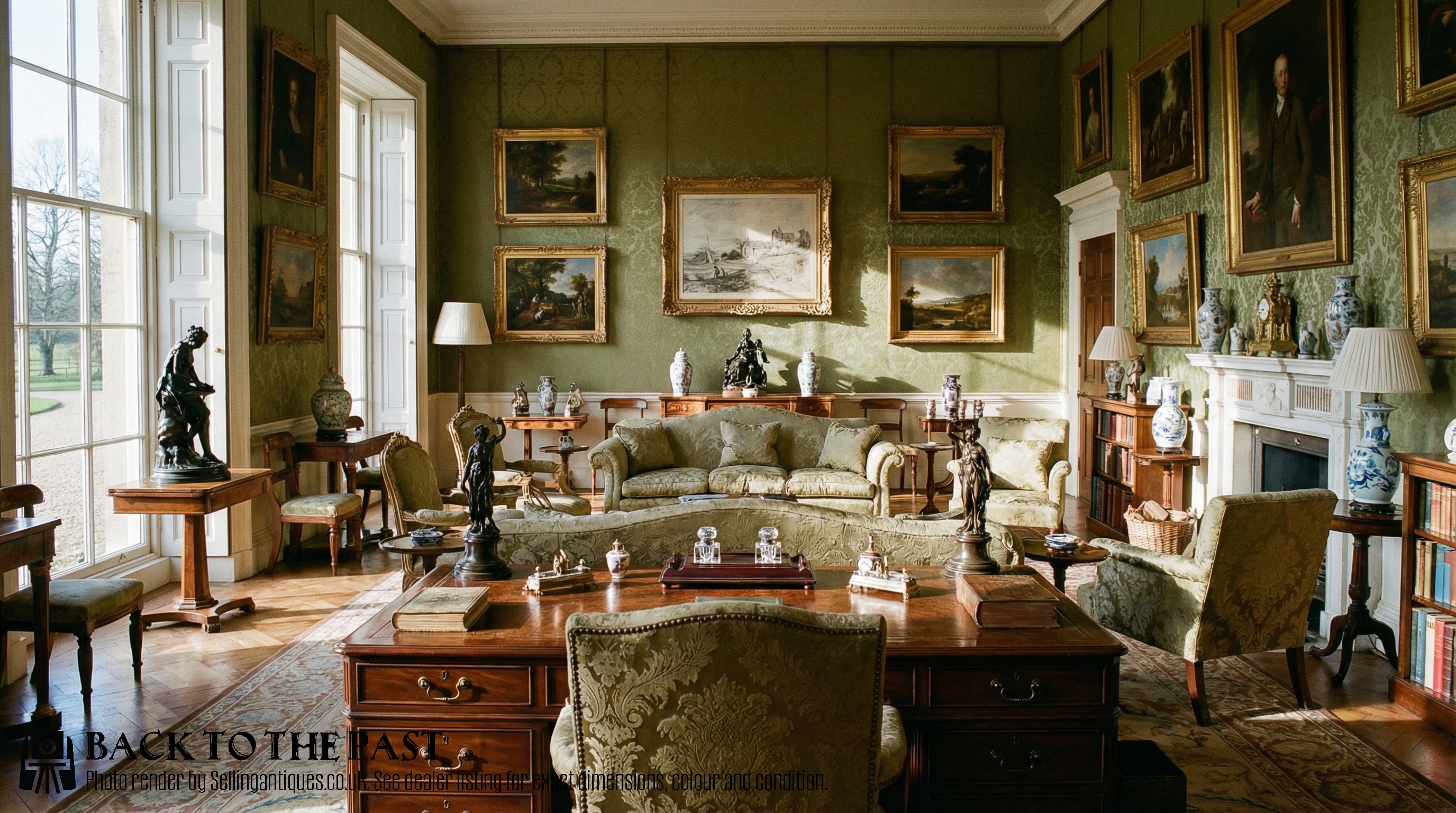
Victorian Mahogany Desk Accessory
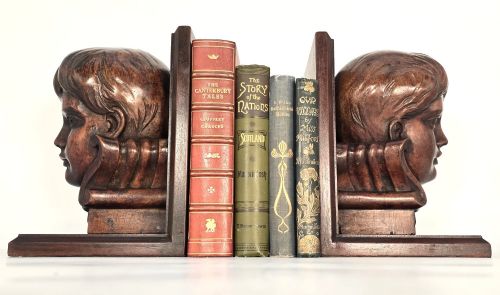
The selections available here lean heavily into practical desktop organisation, featuring specific forms like ecclesiastical carved bookends, revolving or static desk tidies, and brass-mounted letter racks.
These pieces originate largely from the Victorian and Edwardian eras, displaying styles that shift from plain utilitarian grain to elaborate Gothic Revival carving and maritime motifs.
Materials and construction
Makers relied on solid mahogany and rich mahogany veneers as the primary timber, valued for its deep grain and stability on working surfaces.
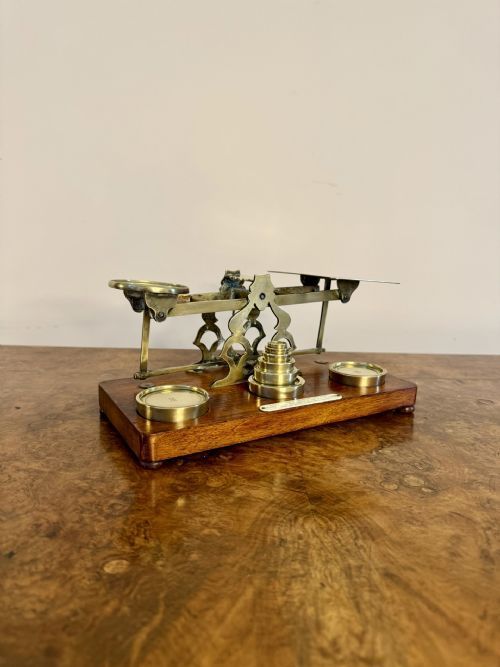
Brass mounts, hinges, and calibrated balance scales provide structural reinforcement and functional contrast against the dark wood.
Secondary elements of glass, bone, and bronze appear frequently in inkwells, desk sets, and mounted novelties.
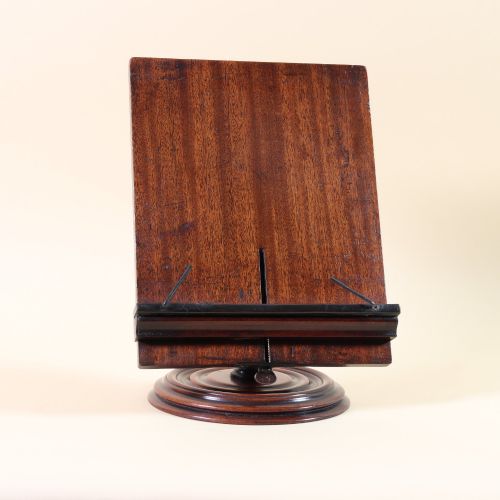
Book slides and postal scales represent the dominant functional forms among these nineteenth-century desk furnishings.
Design and execution
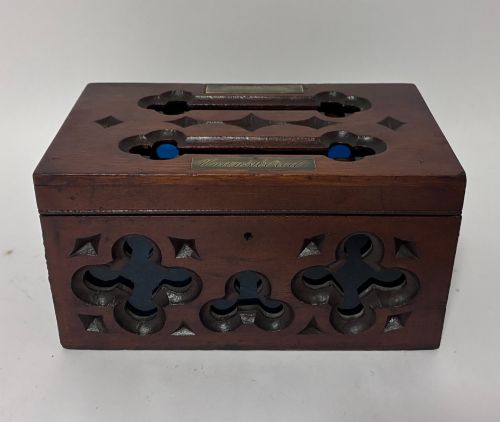
Quality rests in the crispness of the carving, particularly on Gothic Revival motifs and ecclesiastical bookends, where hand-chiselled detail defines the better workshops.
The integration of brass mechanisms, such as working letter box springs, patent book slide actions, and accurate postal scale balances, separates standard utilitarian pieces from superior examples.
Proportion and material pairing dictate the overall success of an object, distinguishing harmonious domestic items from heavier, less refined commercial stock.
S Mordan London·Betjemanns·S Mordan & Co London
The Victorian Mahogany Desk Accessory Glossary
- Book slide
- An expanding desktop rack featuring a central stationery trough and sliding wooden ends supported by brass linkage, designed to hold a row of octavo volumes.
- Letter box
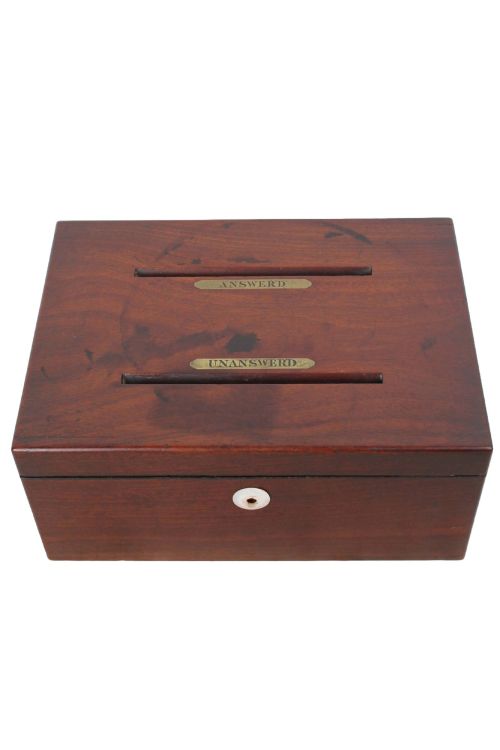
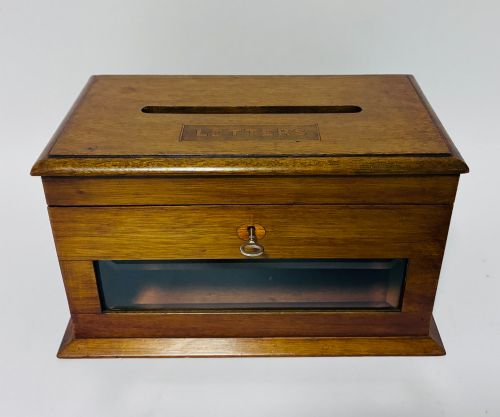
- A secure wooden correspondence container fitted with a slotted top lid or front brass flap, often bearing applied campaign handles and lockable doors for private mail.
- Postal scales
- A weighing balance mounted on a mahogany base with brass pans and interchangeable weights, utilised for calculating postage rates before the introduction of uniform tariffs.
- Desk tidy
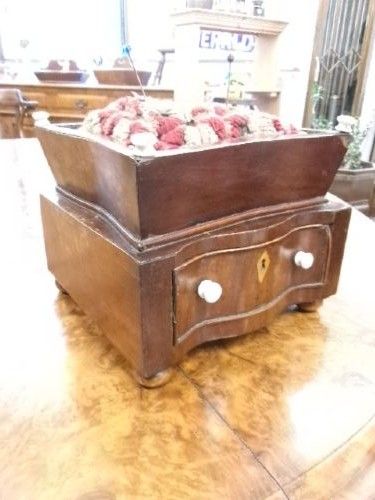
- A compartmentalised stationery stand incorporating inkwells, pen troughs, and upright dividers for envelopes, keeping the writing surface orderly.
Victorian Mahogany Desk Accessory: Frequently Asked Questions
What items belong to a desk accessory collection?
This category covers practical objects designed to organise correspondence and writing materials on a nineteenth-century table. Common forms include letter boxes, postal scales, inkstands, and extending book slides.
Most items combine dense mahogany timber with brass hinges, mounts, or calibrated balance arms. They reflect the heavy stationery demands of Victorian households and offices.
How do I date a mahogany desk tidy?
Dating relies on stylistic clues and construction methods, shifting from plain Regency-influenced forms to ornate Gothic Revival carving by the middle of the century. Edwardian examples often introduce lighter woods or simpler brass fittings.
Makers' marks, patent stamps, and the presence of heavy cast brass mechanisms also help narrow the decade of production. Examining the depth of the mahogany patina provides further guidance.
Were postal scales used in homes?
Large country houses and wealthy Victorian residences maintained private correspondence setups that required accurate weighing of letters and parcels. Scales mounted on mahogany bases sat alongside letter boxes in studies and halls.
As postal systems expanded, these brass-balanced scales became standard desk equipment for managing outgoing post before collection.
How should I maintain mahogany desk accessories?
Keep wooden surfaces clean with a soft, dry cloth and apply occasional high-grade beeswax to preserve the natural grain of the mahogany. Avoid placing pieces in direct sunlight or near heat sources that might dry out the timber.
Brass elements can be left with their natural aged patina or gently polished with a non-abrasive cloth depending on personal preference.