


Vintage Desk Tidy Inkstand
These vintage desk tidy inkstand pieces keep correspondence orderly, bringing period craftsmanship and practical ink storage to the writing table.
Vintage Desk Tidy Inkstand
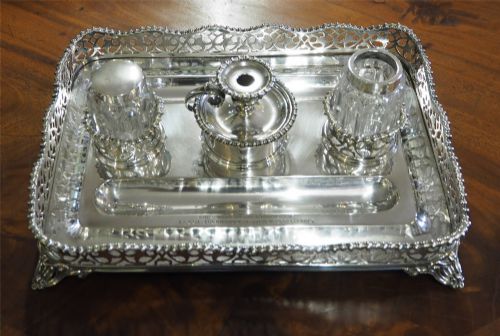
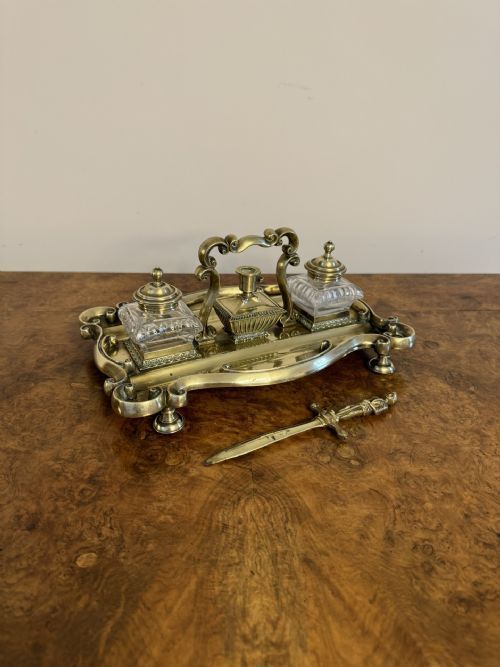
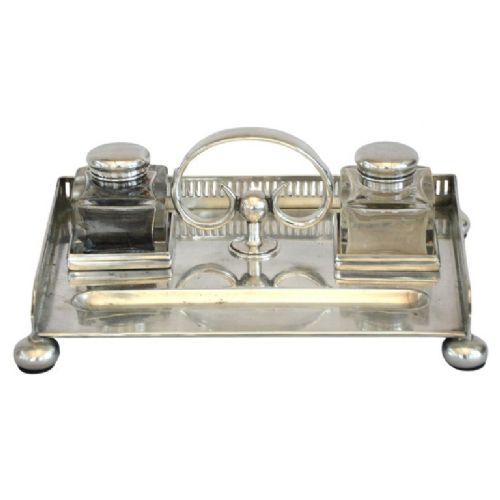
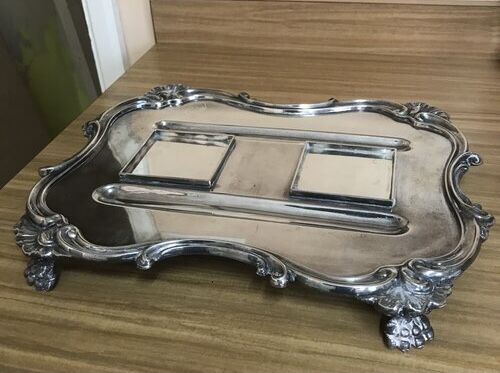
A vintage desk tidy inkstand brings together inkwells, pen rests and stationery compartments in a single desktop accessory. When searching for this phrase, collectors encounter desk sets and ink stands originating from the eighteenth century through to the nineteen-thirties.
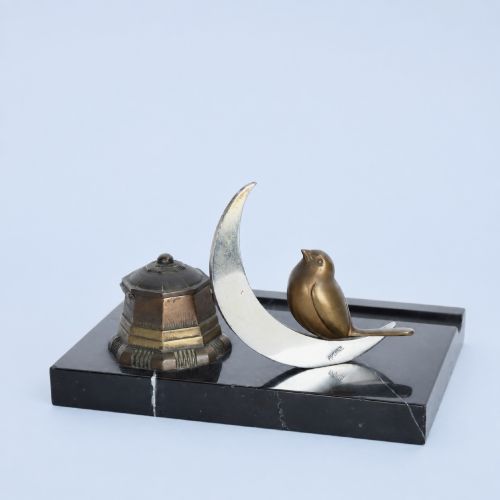
The pieces on this page span Victorian, Edwardian, Art Nouveau and Art Deco styles, alongside regional forms such as Dutch Delft, Anglo-Indian and French Empire. Most examples date from the nineteenth and early twentieth centuries, reflecting the height of handwritten correspondence.
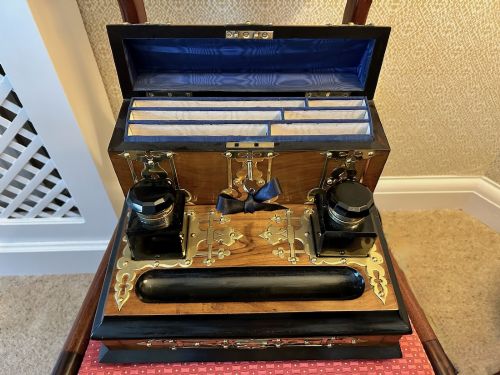
Forms vary from simple oak blocks with a single glass well to elaborate double-inkstands fitted with drawers, ormolu mounts, marble bases and hand-painted papier-mâché. Buyers meet everything from utilitarian office accessories to highly decorative boudoir pieces.
How they were made
Metalwork dominates the construction, utilising cast brass, bronze, copper, pewter and silver plate alongside ormolu mounts and champlevé enamel. Artisans combined these metals with turned hardwood bases in oak, walnut, coromandel, mahogany and rosewood.
Insects, birds and decorative motifs appear rendered in bronze and brass, paired with cut glass, ceramic, marble, onyx and lapis lazuli inserts. Papier-mâché and painted faience provide lighter or more colourful surfaces for desk organisation.
One exceptional Victorian inkstand captures the likeness of a jockey cap perched on a desk.
What varies in quality
Quality rests in the weight and integration of the materials, separating solid cast bronze or heavy hardwoods from lighter plated alternatives. Finer items feature matched stone bases, detailed hand-painted ornament and heavy cut-glass ink inserts that remain original to the piece.
Design complexity marks the upper tier of production, where makers incorporate dual inkwells, hinged lids, pen trays and integrated drawers. The harmony between the metal mounts, the central tray and the fitted glass components dictates the overall success of the object.
Elkington·Walker And Hall·Harrods·Zimmermann
The Vintage Desk Tidy Inkstand Glossary
- Inkstand
- A desktop stand designed to hold one or more inkwells and pens. It forms the central hub of nineteenth-century writing equipment.
- Ormolu
- Gilt bronze ornamentation applied to furniture and decorative objects. It provides a bright golden contrast against dark woods and marble.
- Champlevé
- An enamelling technique where troughs are dug into a metal surface and filled with vitreous enamel. These coloured glass pastes are then fired and polished flush.
- Faience
- Tin-glazed earthenware, notably produced in traditions like Dutch Delft. It offers a smooth white background for blue painted decoration.
- Cut glass
- Glass decorated by cutting facets into the surface using a wheel. This technique gives inkwell inserts brilliance and weight.
Vintage Desk Tidy Inkstand: Frequently Asked Questions
What is a desk tidy inkstand?
A desk tidy inkstand is a combined desk accessory designed to hold inkwells, pens and sometimes stamps or stationery in one organised station.
These pieces served as functional writing equipment on nineteenth and early twentieth-century desks, keeping liquid ink contained and writing implements close at hand.
How do I date an inkstand?
Dating relies on stylistic clues, such as the flowing organic lines of Art Nouveau or the geometric symmetry of Art Deco and the heavy ornamentation typical of Victorian pieces.
Materials also offer guidance, as brass and heavy oak mark the Victorian era, while onyx, marble and specific silver hallmarks often point towards Edwardian or nineteen-thirties production.
Are the inkwells usually original?
Many surviving desk stands retain their original cut glass or ceramic ink pots, often featuring matching hinged brass or silver lids.
Because inkwells were fragile and prone to damage or loss, replacement bottles do occur within the category, making matching glass inserts a notable point of interest.
How should I use one today?
These pieces fit modern desks as catch-alls for small items, or as functional holders for fountain pens and modern writing instruments.
They bring tactile materiality to a workspace, utilising compartments meant for stamps and nibs to store paper clips, USB drives or everyday desk clutter.