



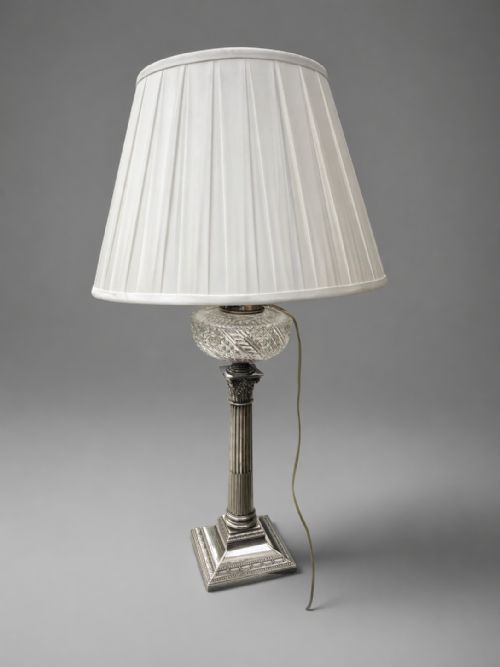
Antique Desk Oil Lamp
An antique desk oil lamp brings nineteenth-century warmth to a workspace, combining heavy brass and coloured glass into a practical task light.
Antique Desk Oil Lamp
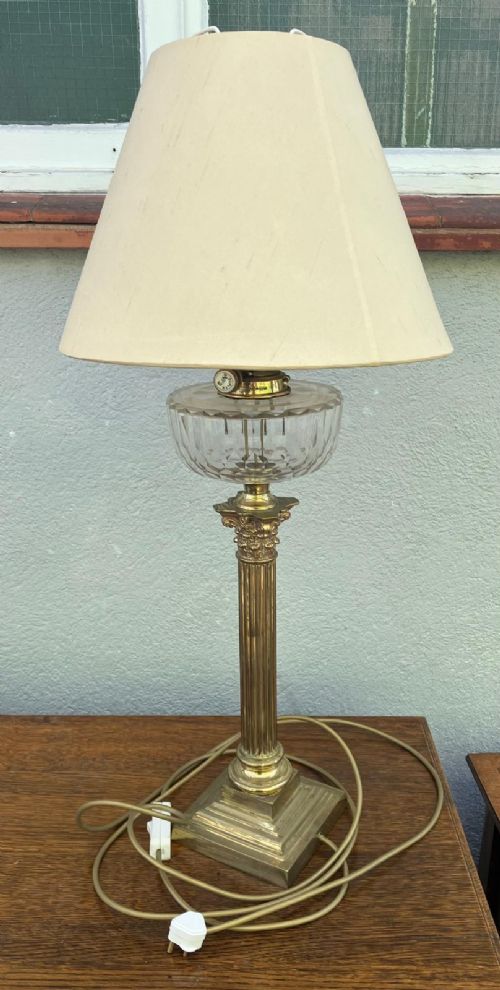
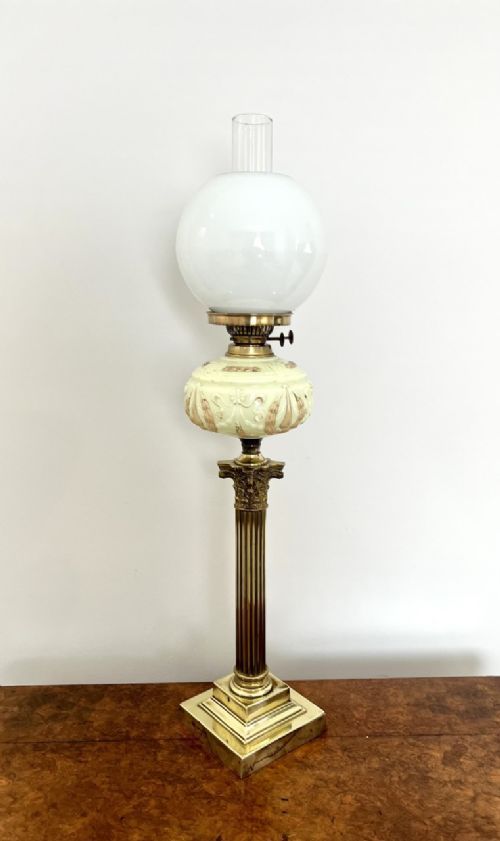
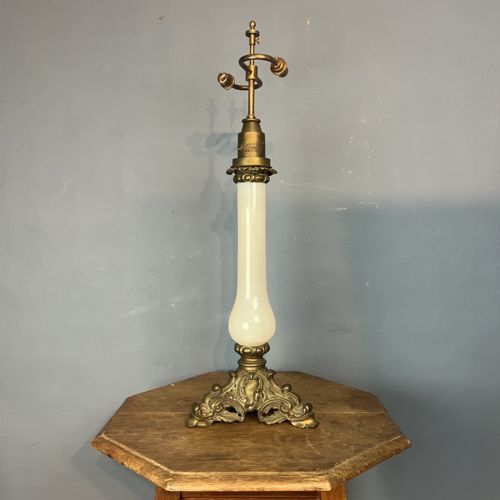
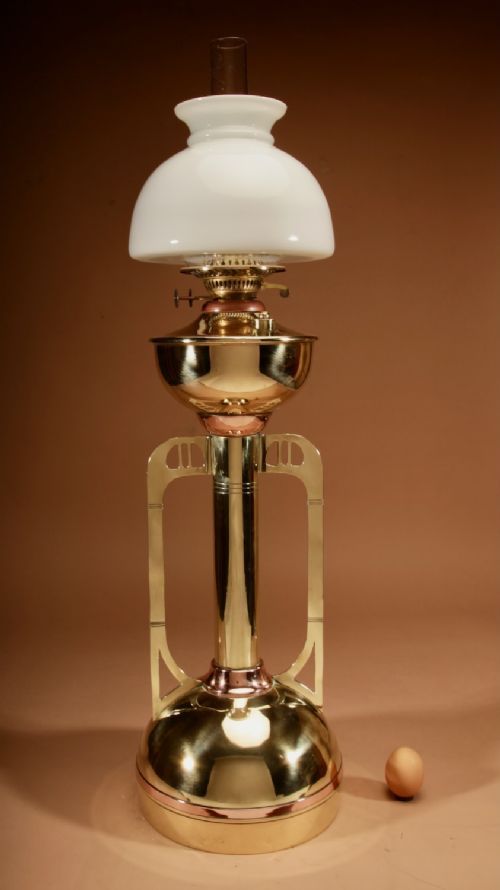
An antique desk oil lamp provides a focused pool of light for a writing surface, drawing on nineteenth-century designs that pre-date modern electricity. These pieces frequently appear from the Victorian and Edwardian periods, constructed as sturdy brass columns or decorative ceramic bodies.
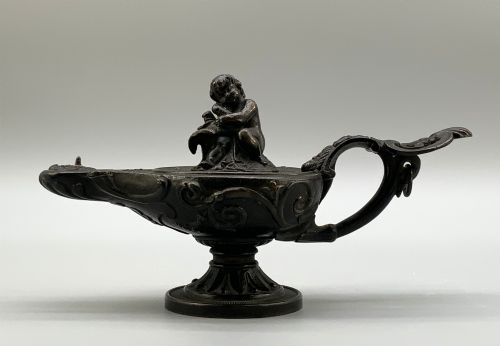
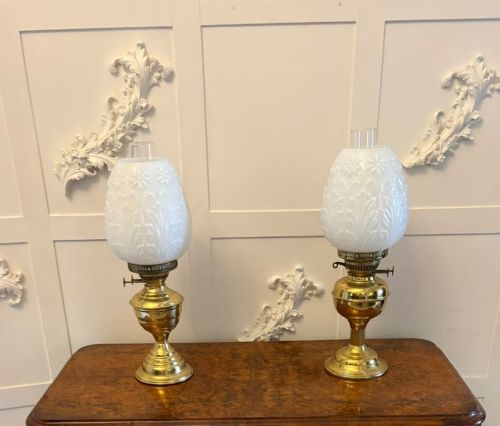
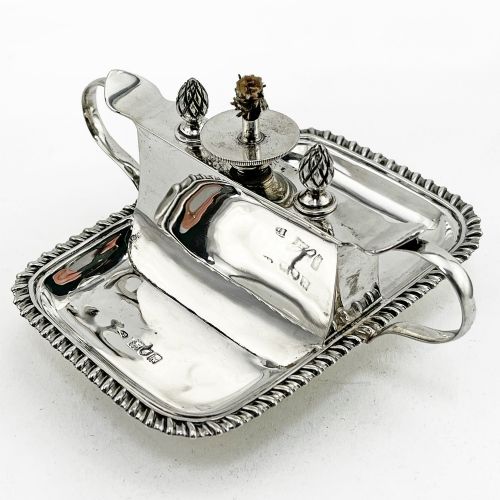
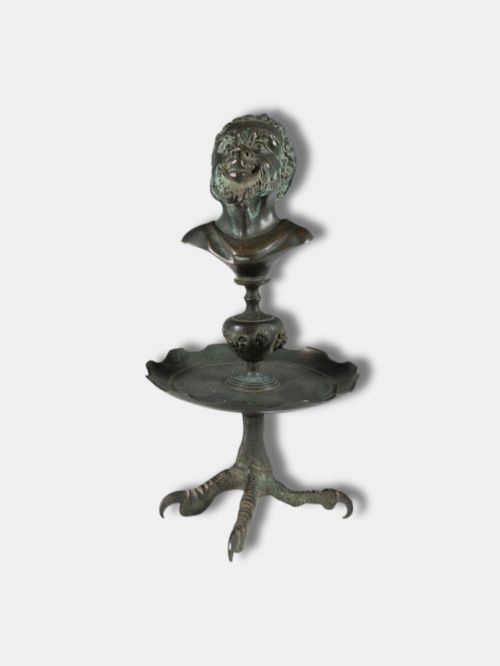
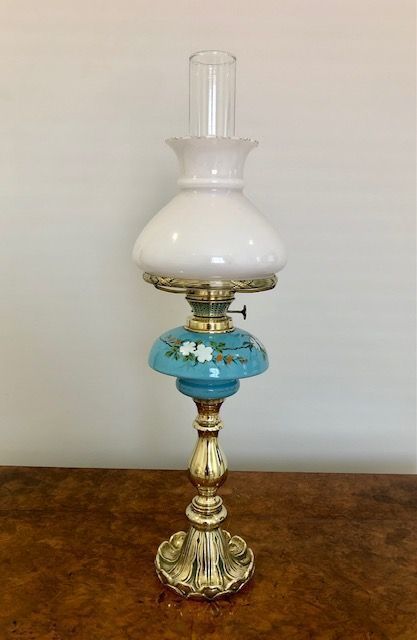
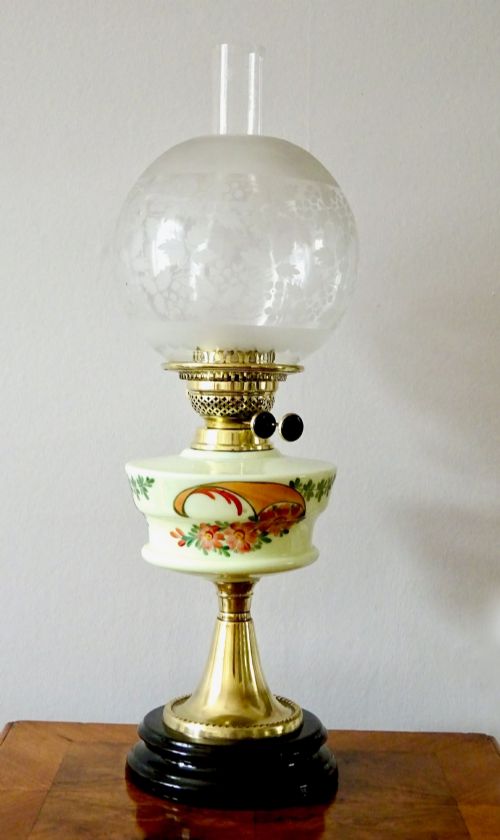
The form encompasses standard table lamps alongside smaller table lighters and desk lamps designed for burning paraffin or oil. Many surviving examples pair metal bases with opaline glass shades or incorporate figural bronze elements inspired by the Grand Tour.
Materials and construction methods
Makers built these lamps using cast brass, bronze, and sterling silver for structural rigidity, often mounting them on weighted black glass or ceramic bases. Metal components required lathe turning, chasing, and assembly by hand.
Glass elements such as opaline shades, cut glass fonts, and coloured reservoirs relied on traditional blowing and moulding techniques. Brass burners were frequently patented by specialised firms to control the flame efficiently.
Materials documented across the inventory include brass, bronze, sterling silver, opaline glass, and cut lead crystal.
Distinguishing quality in period lamps
Weight and casting crispness separate standard production items from superior examples, particularly in brass and bronze work where fine detail defines the ornamentation. Heavier gauge metalwork and substantial lead crystal or opaline glass indicate higher production standards.
Signed components, patent marks from established makers, and complete original burner mechanisms add historical integrity to a piece. The integration of materials, such as combining gilt brass with contrasting coloured glass, reveals the maker's design ambition.
Gustave Serrurier Bovy·Joseph Hinks·Jan Eisenlöffel·Wild And Wessel
The Antique Desk Oil Lamp Glossary
- Opaline glass
- An opaque white or pastel-coloured glass used extensively for lamp shades to soften and diffuse light. This material gained popularity during the nineteenth century for decorative table lighting.
- Font
- The reservoir that holds the paraffin or oil beneath the burner mechanism. Fonts are frequently formed from cut glass, ceramic, or brass.
- Grand Tour
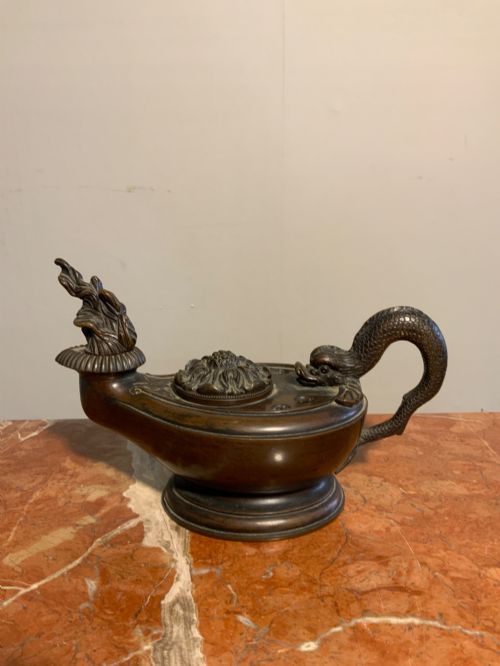
- A nineteenth-century travel phenomenon that inspired decorative arts, resulting in classical bronze figural lamps and inkwells modelled on ancient antiquities. These items reflect classical revival aesthetics.
- Student lamp
- A functional desk lamp featuring a single adjustable burner and an oil reservoir positioned to direct light downward over a workspace. They typically include implements for maintenance.
- Table lighter
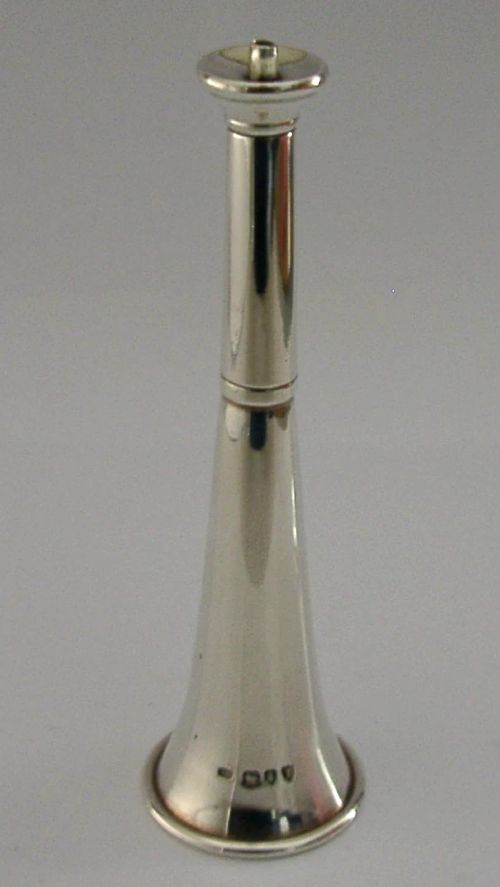
- A smaller tabletop device styled after a classical oil lamp or hunting horn, used for igniting cigars or pipes. These often appear in sterling silver or bronze.
Antique Desk Oil Lamp: Frequently Asked Questions
How do I operate an antique oil lamp?
Operating an antique oil lamp requires filling the reservoir with a suitable lamp oil and allowing the wick to saturate fully before lighting. The wick height is adjusted via a thumbwheel on the burner to maintain a steady, smokeless flame.
Most period lamps intended for modern use require rewiring if converted to electricity, while others remain configured for burning oil. Care must be taken with vintage burners to ensure mechanisms move freely without forcing seized components.
Were these lamps used for reading?
These lamps provided direct illumination for reading, writing, and administrative tasks in nineteenth-century studies and offices. Desk variants directed light downward to concentrate brightness onto paperwork.
Student lamps and adjustable brass designs were particularly suited for close work. Shade materials like opaline glass helped diffuse the light to reduce glare on the page.
Can I convert an oil lamp to electricity?
Many nineteenth-century lamps are found with historic or recent electrical conversions that allow them to function safely as modern table lamps. Professional conversion typically runs wiring through the central column without destroying the original burner components.
Unconverted pieces preserve their original mechanism and wick assemblies for display. Deciding whether to electrify depends on personal preference and whether the lamp retains its operational oil parts.
How do I date an antique desk lamp?
Dating relies on stylistic clues, patent marks, and material choices associated with periods like the Victorian era or the Edwardian decade. Brass casting styles, aesthetic movement motifs, and maker stamps provide clear chronological markers.
Records of specific burner patents help narrow down the manufacture window. Comparing the form against dated exhibition pieces or catalogue entries confirms the production era.