
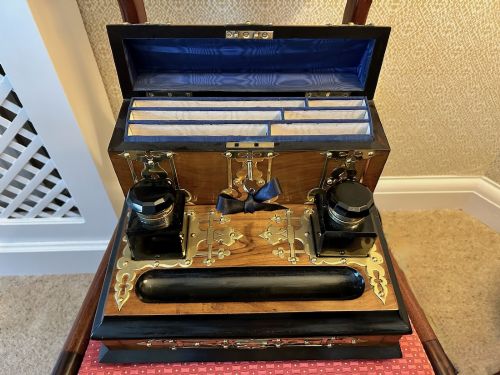
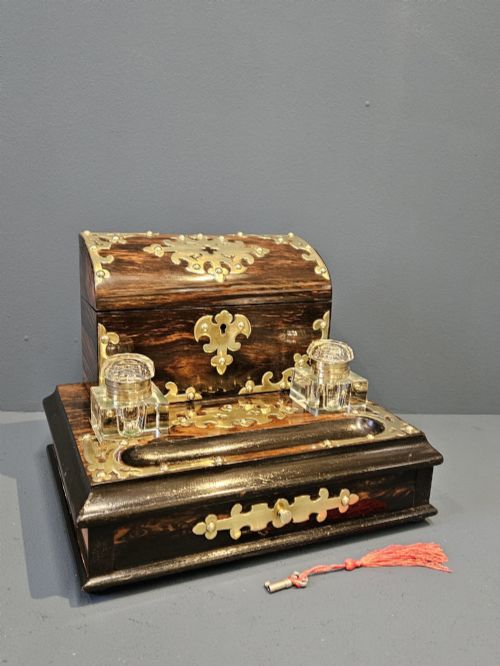


Antique Desk Box Stand
An antique desk box stand combines the utility of a portable writing chest with a raised support, offering a practical workspace for letters and ink.
Antique Desk Box Stand
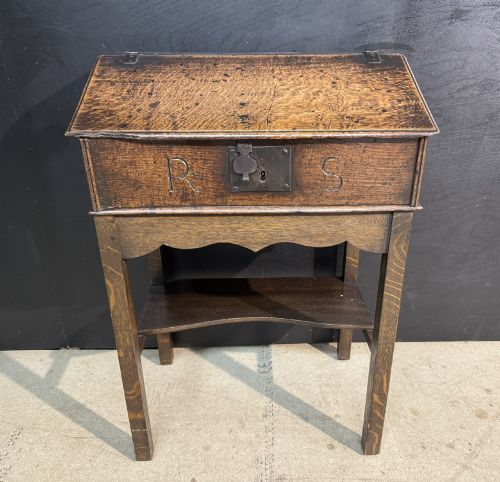
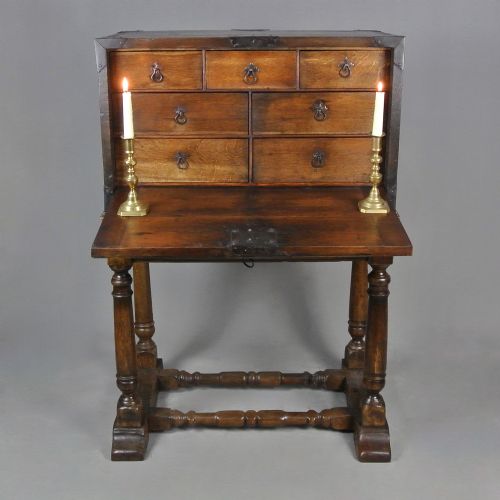
When you search for an antique desk box stand, you encounter a specialised form of writing equipment designed to elevate storage compartments above a table surface. These pieces range from seventeenth-century oak strong boxes to Victorian walnut and coromandel inkstands.
The objects combine portable boxes, stationery cabinets, and dedicated stands into single functional units. Many examples integrate inkwells, pen trays, and letter slots within the main body of the box or upon the supporting frame.
Victorian and nineteenth-century interpretations appear frequently, often featuring rosewood, mahogany, or inlaid brass details. Earlier seventeenth-century pieces rely on sturdy English oak and practical internal compartments.
How they were made
The construction relies on cabinet-making techniques suited to dense hardwoods such as oak, mahogany, walnut, and rosewood. Artisans joined carcases with dovetails and mitres to withstand the pressure of daily writing and the weight of glass inkwells.
Decorative enrichment involved brass inlay, mother of pearl, guilloche enamel, and hand-painted porcelain panels set into French and English frames. Carved limewood and Boulle marquetry also feature on specific decorative iterations.
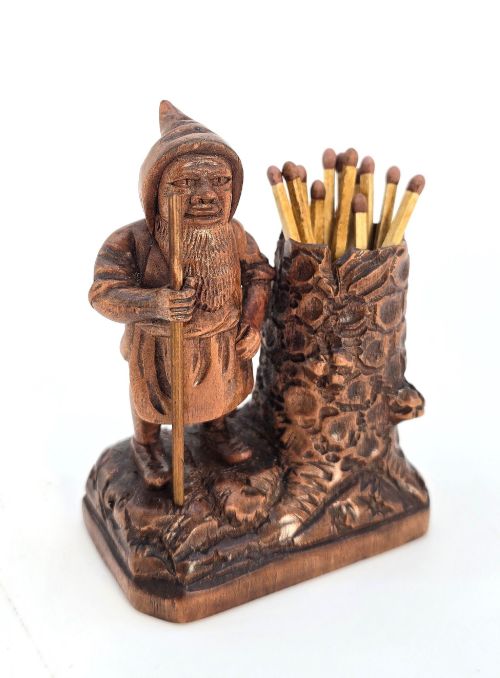
A carved limewood match holder shaped like a gnome keeps watch among the desk accessories.
What varies in quality
Quality rests in the precision of the internal fittings, such as secret drawers, original glass inkwells with matching tops, and well-fitted stationery dividers. The choice of luxury veneers, including coromandel and tortoiseshell, distinguishes higher-grade pieces from plain utility boxes.
The integrity of the stand itself relative to the box determines the overall coherence of the piece. Integrated stands built during the original period command greater interest than later adaptations or bespoke frames.
W M F
The Antique Desk Box Stand Glossary
- Inkstand
- A tray or stand designed to hold inkwells, sanders, and pen rests on a desktop. These accessories often incorporate small drawers for nibs and sealing wax.
- Writing slope
- A hinged box that opens to reveal an angled surface lined with leather or velvet for writing letters. Compartments beneath the lid store paper and correspondence.
- Boulle
- A form of marquetry using brass and tortoiseshell inlaid in ornate patterns, popular in nineteenth-century French designs. It adds reflective contrast to dark timber surfaces.
- Coromandel
- A dense, heavy timber from Asia with dark brown grain and contrasting stripes, used for luxury Victorian boxes. Its scarcity makes it desirable among collectors.
Antique Desk Box Stand: Frequently Asked Questions
What is the difference between a desk box and an inkstand?
A desk box primarily provides enclosed storage for writing paper, letters, and small implements within a lidded compartment. An inkstand focuses on open wells for ink and pen rests, though many larger examples combine both functions.
Items designed specifically as stationery boxes often include vertical slots for envelopes alongside the ink receptacles.
Are the stands usually original to the boxes?
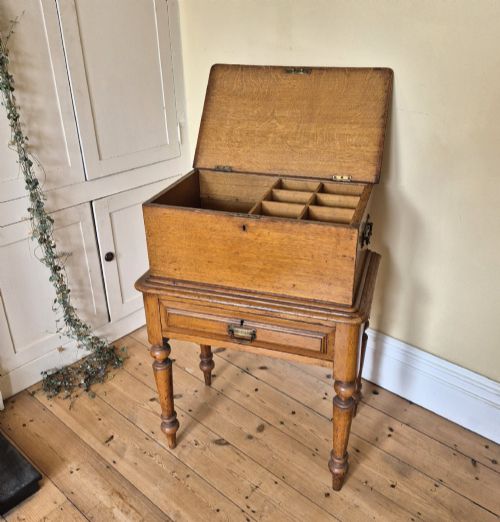
Some pieces were constructed as single units, such as Victorian sewing tables and fitted writing desks on dedicated legs. Other examples pair an earlier box with a later or bespoke stand to elevate the writing surface.
Examining the timber ageing, fixing methods, and joinery helps determine whether the stand and box share the same period of origin.
How do I care for rosewood and coromandel boxes?
These dense tropical hardwoods require stable humidity levels to prevent timber shrinkage and veneer lifting. Keep them away from direct sunlight and heat sources to protect the polished finish.
Applying a minimal amount of appropriate wax polish maintains the lustre of the wood and protects inlaid brass or mother of pearl elements.
What materials were commonly used for interior fittings?
Interiors frequently feature secondary timbers like mahogany or pine, often lined with velvet, leather, or watered silk for writing surfaces. Glass inkwells with metal collars and stoppers are standard across nineteenth-century versions.
Luxury models incorporate fitted compartments with turned ivory knobs, silver-plated mounts, and secret drawers operated by hidden release catches.