




Antique Delftware Wall Display
These antique delftware wall display pieces bring vibrant tin-glazed earthenware into interiors with centuries of hand-painted character.
Antique Delftware Wall Display
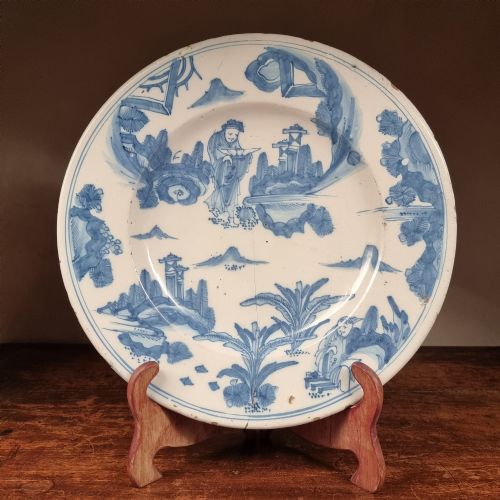
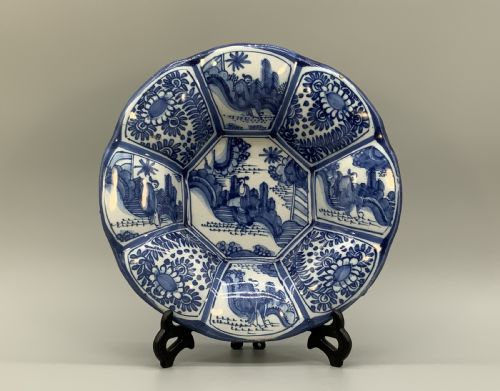
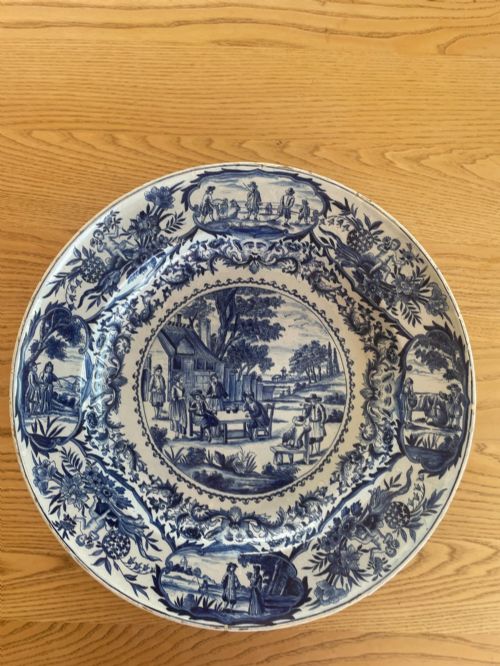
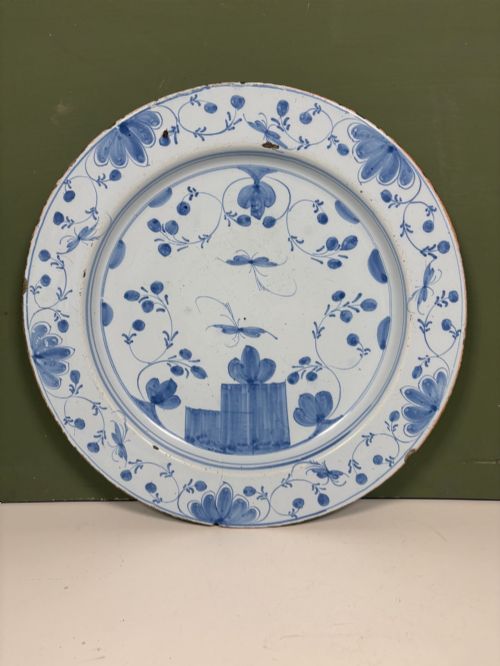
When searching for antique delftware wall display, collectors encounter chargers, large decorative plates, and dishes designed specifically to hang on walls or sit on dresser backs. The selection spans the seventeenth, eighteenth, and nineteenth centuries, offering a distinct record of historic ceramic production.
Dutch and English workshops dominate the forms, alongside French faience examples. The most common format met here is the large charger, measuring well over thirty centimetres, often decorated with floral or geometric motifs.
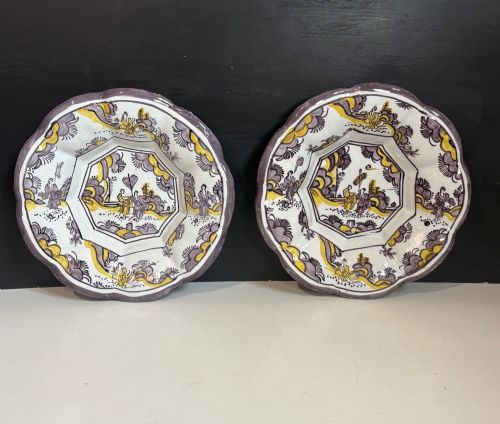
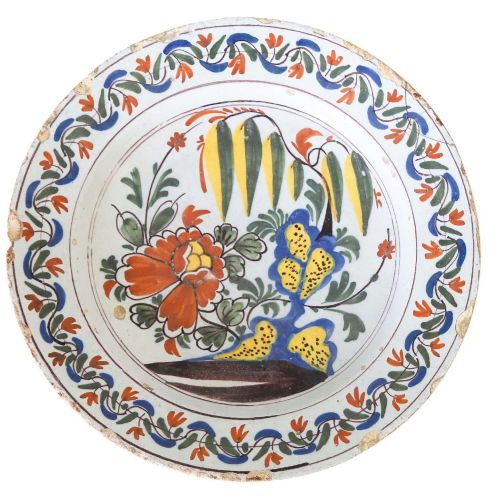
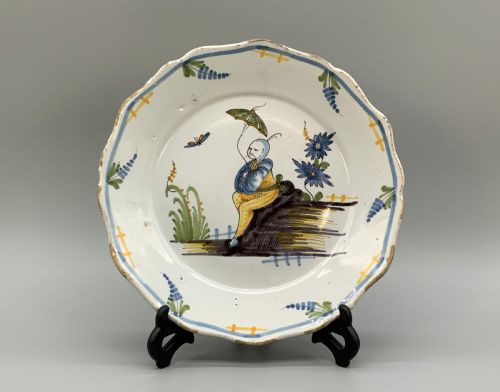
Earlier pieces from the seventeenth century adopt Kraak styles and cobalt blue palettes, while eighteenth-century examples frequently display polychrome pigments or manganese and yellow colourways. Plates and chargers alike provide a broad canvas for pictorial and botanical scenes.
Materials and construction methods
Potters shaped earthenware bodies on the wheel, coating the unfired clay in an opaque tin glaze that dried to a chalky white surface. This tin-glazed composition provided a smooth, absorbent ground for subsequent hand-painting.
Painters applied cobalt pigment, manganese, and polychrome mineral colours directly onto the raw glaze before a single high-temperature firing fused the colours into the surface. Grand feu techniques allowed cobalt and metallic oxides to melt into the glaze, producing rich tones.
The listings span the seventeenth, eighteenth, and nineteenth centuries, recording tin-glazed earthenware decorated with cobalt pigment and polychrome glazes.
Factors influencing quality and execution
Quality rests in the confidence of the brushwork and the clarity of the painted narrative, whether depicting Chinese-inspired motifs or traditional floral arrangements. Finer examples display precise control over cobalt pigment and polychrome washes without excessive blurring.
The stability of the earthenware body and the evenness of the tin glaze across large chargers indicate the potter's skill in controlling kiln temperatures. Pieces exhibiting crisp pigment adhesion and balanced compositions sit at the upper end of the range.
De Witte Ster
The Antique Delftware Wall Display Glossary
- Charger
- A large decorative plate, typically exceeding thirty centimetres in diameter, made to be displayed on walls or sideboards. These wide earthenware platters offer substantial surfaces for painted scenes.
- Tin-Glaze
- An opaque white ceramic glaze containing tin oxide, used as a smooth base for hand-painted decoration. This glaze absorbs pigments deeply during firing.
- Polychrome
- A multi-coloured decorative scheme utilising several pigments such as green, yellow, blue, and manganese. It contrasts with simple blue and white wares.
- Kraak Style
- A decorative layout featuring panelled borders and central Chinese-inspired motifs, adapted from imported porcelain. This style appears frequently on seventeenth-century dishes.
- Grand Feu
- A high-temperature firing technique that fuses pigments directly into the raw tin glaze. This method creates a durable and integrated surface decoration.
Antique Delftware Wall Display: Frequently Asked Questions
How do I hang an antique delft charger?
Displaying these chargers securely requires specialist spring-loaded wall hangers that grip the rim without causing stress to the earthenware body. Ensure the hanging wire and wall fixings take the full weight of the piece safely.
Position plates at eye level away from direct sunlight and heavy foot traffic to protect the historic tin glaze from accidental knocks.
Are eighteenth-century and seventeenth-century delft plates different?
Seventeenth-century pieces often lean towards Kraak styles with deep blue palettes and thick earthenware bodies. Eighteenth-century examples introduce broader polychrome colours, manganese tones, and English or Dutch floral designs.
Examining the thickness of the earthenware and the composition of the tin glaze helps distinguish between the earlier and later production periods.
What is the difference between a plate and a charger?
Chargers are significantly larger than standard dining plates, generally measuring well over thirty centimetres across. They served primarily as decorative display items on walls and dressers rather than tableware.
Standard plates appear in smaller formats, often found in pairs or sets intended for coordinated wall arrangements.
How should I clean antique tin-glazed earthenware?
Dust these pieces gently with a soft, dry cloth to prevent particulate accumulation on the tin glaze. Avoid using water, liquid cleaners, or abrasive materials that could penetrate historic earthenware bodies.
Keep display environments stable in temperature and humidity to protect the ceramic structure over time.