
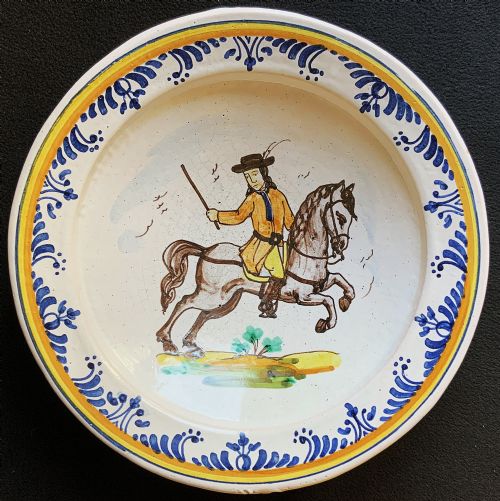


Antique Delft Bowl
An antique delft bowl brings tin-glazed earthenware into a room, offering hand-painted blue and white scenes and deep historical character.
Antique Delft Bowl
When you search for an antique delft bowl, you are looking at tin-glazed earthenware vessels shaped as bowls, dishes, and chargers. These pieces originate primarily from the eighteenth century, with occasional nineteenth-century examples appearing alongside them.
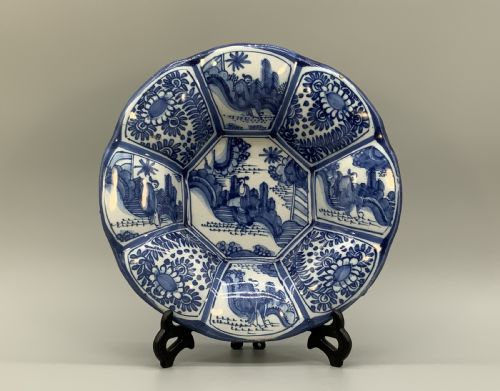
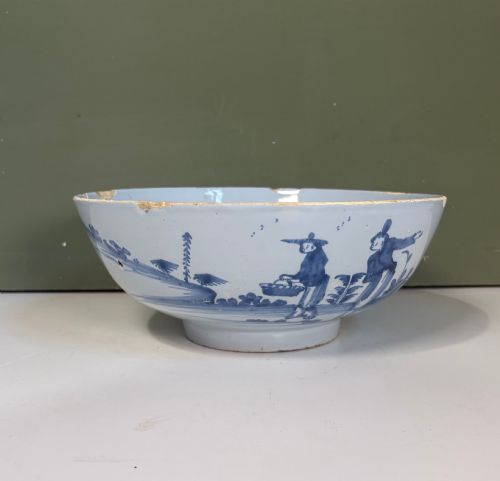
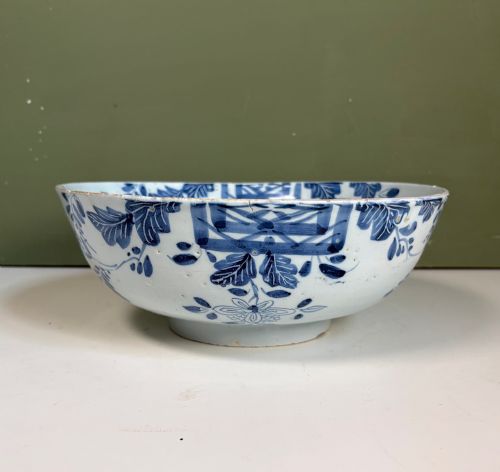
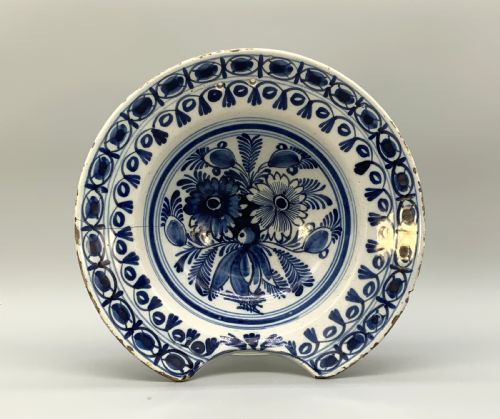
The most common versions met on this page are eighteenth-century Dutch and English pieces. They take the form of shallow bowls, punch bowls, barber's bowls, and large decorative chargers bearing hand-painted decoration.
Makers shaped these objects using earthenware bodies covered in opaque white tin glaze. Cobalt pigment provides the characteristic blue and white palette, though polychrome examples also appear in Spanish and Dutch styles.
How they were made
Potters formed the earthenware body on the wheel or pressed it into moulds to create bowls and dishes. The unglazed clay was fired once before receiving a liquid tin-glaze coating that dried to an opaque white surface.
Painters applied cobalt oxide and other ceramic pigments directly onto the porous unfused glaze before the final firing. This technique caused the pigment to blur slightly into the white ground during the kiln process.
Listings on this site span the eighteenth and nineteenth centuries, featuring tin-glazed earthenware, ceramic, and cobalt pigment materials.
What varies in quality
The precision and fluidity of the hand-painted brushwork separate superior bowls from simpler production pieces. Crisp cobalt blue detailing and well-balanced Chinoiserie or floral motifs indicate skilled workshop output.
The consistency and brightness of the white tin glaze affect visual appeal, as does the complexity of the form, such as lobed rims or deep punch bowl profiles.
The Antique Delft Bowl Glossary
- Tin-Glazed Earthenware
- Pottery covered with a lead glaze made opaque by the addition of tin oxide. This white surface provided a ground for painted decoration.
- Cobalt Oxide
- A metallic pigment used to achieve the deep blue colour seen on traditional blue and white delftware. It withstands high kiln temperatures without losing intensity.
- Chinoiserie
- European interpretations of Chinese artistic motifs and scenes. This style appears frequently on eighteenth-century delft bowls and plates.
- Charger
- A large decorative plate intended for display on a wall or sideboard rather than for everyday dining. These items often feature polychrome or blue and white designs.
Antique Delft Bowl: Frequently Asked Questions
What is an antique delft bowl?
An antique delft bowl is a tin-glazed earthenware vessel, typically dating from the eighteenth century, featuring hand-painted decoration in blue and white or polychrome colours.
These pieces were produced in workshops across England, the Netherlands, and Spain, taking forms ranging from small bowls to large punch bowls and chargers.
How were antique delft bowls used?
These bowls served various domestic and decorative functions, including serving punch, holding water for shaving in barber's bowls, or displaying food.
Many larger chargers and decorated bowls were intended primarily for visual display on walls or furniture within prosperous homes.
How do I date an antique delft bowl?
Dating relies on stylistic clues, glaze characteristics, and the composition of the earthenware body. Eighteenth-century pieces often display characteristic tin glazes and hand-painted pigments.
Comparing the form, painting style, and palette to documented examples helps narrow down the period of manufacture.
How do I care for a delft bowl?
Keep these fragile earthenware vessels away from modern dishwashers and harsh cleaning agents. Wash them gently by hand with mild soap and warm water when necessary.
Display them securely on stable surfaces or plate stands to protect the tin glaze and ceramic body from impact.