

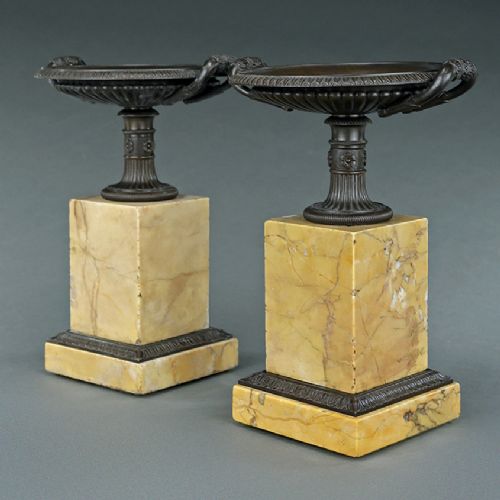


Antique Decorative Dish
An antique decorative dish brings colour and history to a table or cabinet, drawing the eye with porcelain, bronze, and enamel craftsmanship.
Antique Decorative Dish
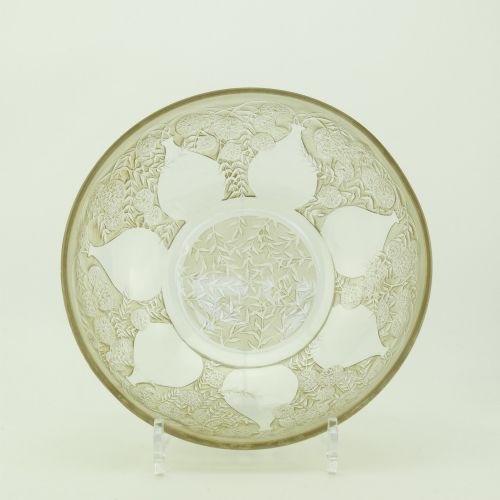
When you search for an antique decorative dish, you encounter a varied selection of cabinet plates, tazzas, chargers, and bowls designed for display rather than routine kitchen service. These items span the eighteenth, nineteenth, and early twentieth centuries, reflecting changing domestic tastes across European and Asian workshops.
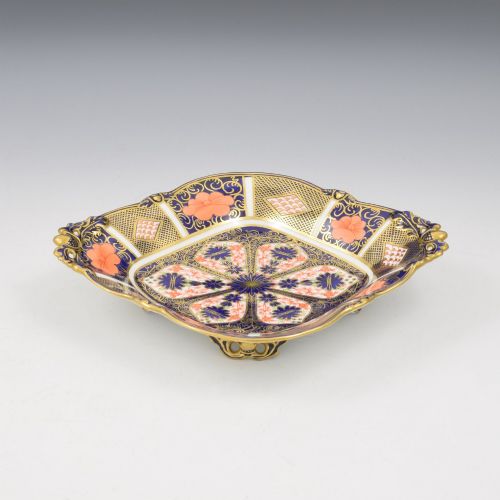
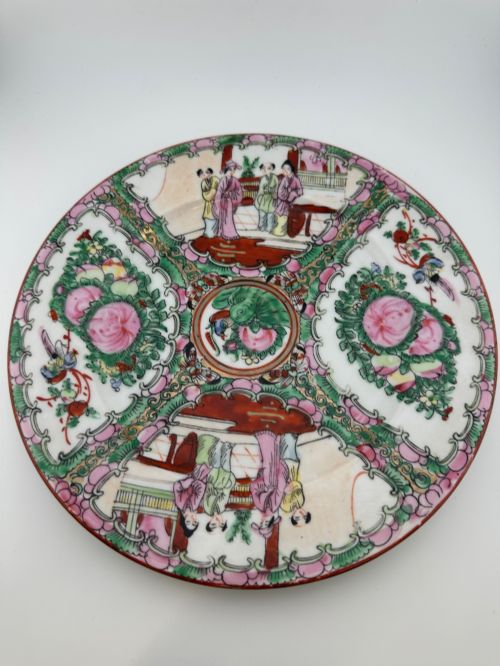
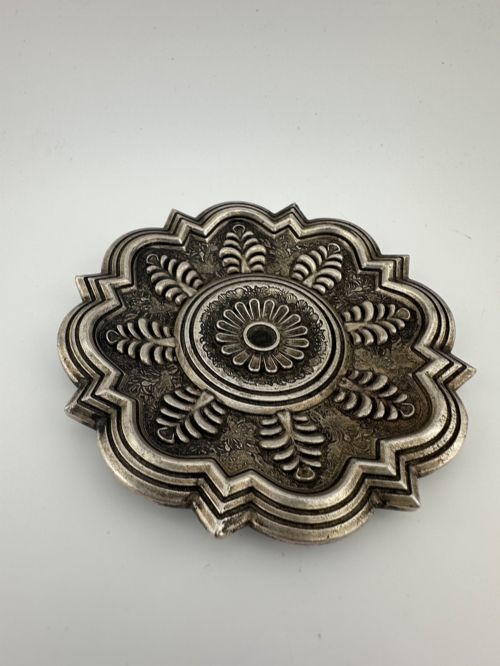
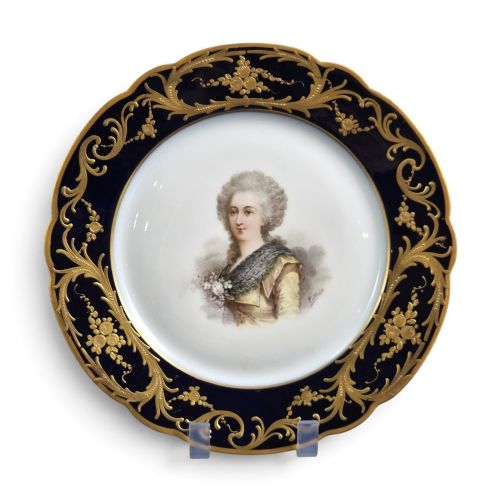
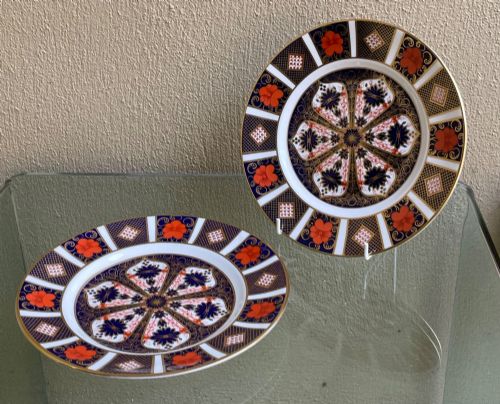
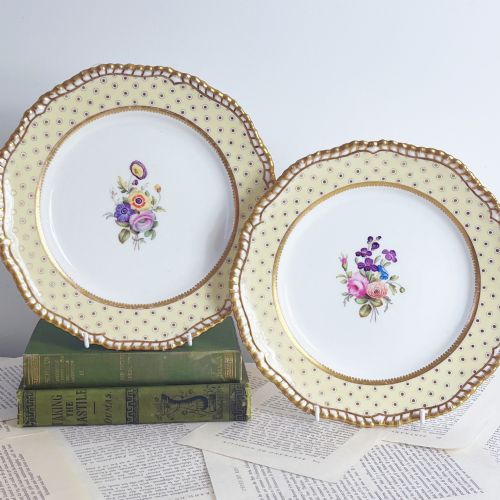
The pieces on this page are most frequently porcelain or ceramic plates and bowls, often featuring hand-painted motifs or blue and white designs from Japanese Imari and Chinese traditions. Alongside these ceramic pieces, metalwork vessels in bronze, brass, and silver appear regularly.
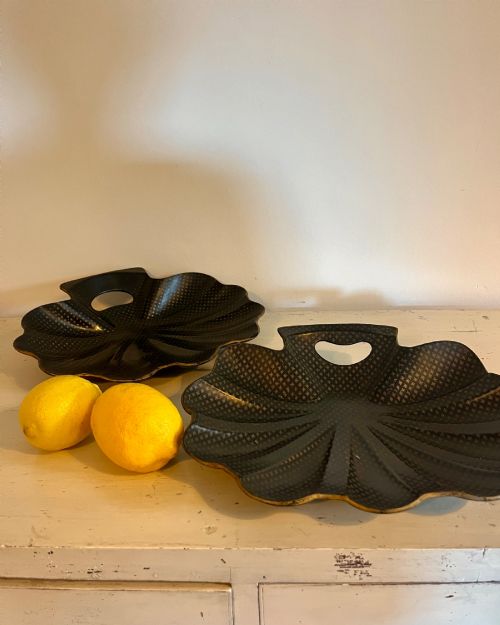
Forms range from shallow scalloped dishes and handled trays to deep centrepieces and mounted dishes supported by ormolu or gilt bronze mounts. Such variety ensures that whether you seek a Victorian cabinet plate or a Japanese cloisonné charger, the form serves a primarily ornamental role.
How they were made
Potters and porcelain makers shaped clay into bone china, porcelain, and earthenware before applying hand-painted glazes, cobalt blue pigments, and enamel colours. Many English and European factories utilised specialised techniques like gilding with gold leaf to highlight borders and motifs.
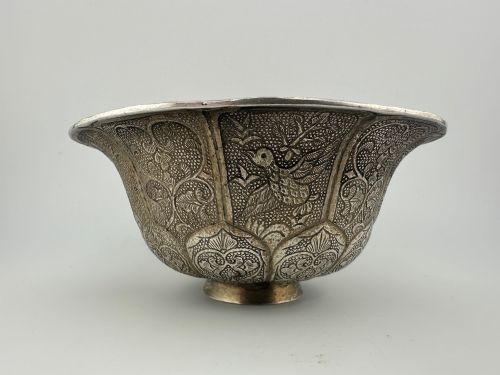
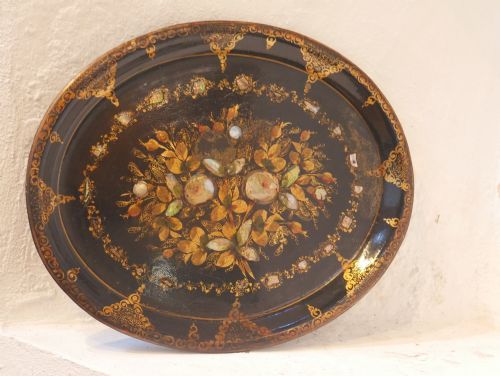
Metal vessels relied on casting bronze, brass, or silver, frequently enhanced with champlevé enamel or intricate carved decoration. Artisans also combined materials, mounting porcelain bowls in gilt bronze or framing lacquer and papier-mâché within metal rims.
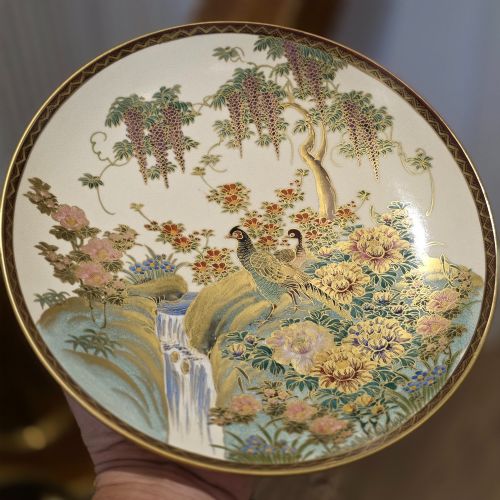
Geese and flowers march across Meiji period cloisonné chargers, reminding us that nineteenth-century artisans observed nature with immense patience.
What varies in quality
Quality in these pieces rests upon the precision of the hand-painted detail and the crispness of the moulding or carving. Fine cabinet plates and chargers exhibit controlled brushwork and rich, stable enamels that remain clear and bright.
The integration of mixed materials also defines the upper tier of the range. When gilt bronze mounts fit precisely against porcelain or when cloisonné wirework is executed without flaws, the resulting object demonstrates superior workshop execution.
Royal Crown Derby·Royal Worcester·Spode·Coalport·Christofle
The Antique Decorative Dish Glossary
- Charger
- A large decorative plate, typically used for display on a wall or dresser rather than for dining. These wide vessels often showcase elaborate painted or enamelled scenes.
- Tazza
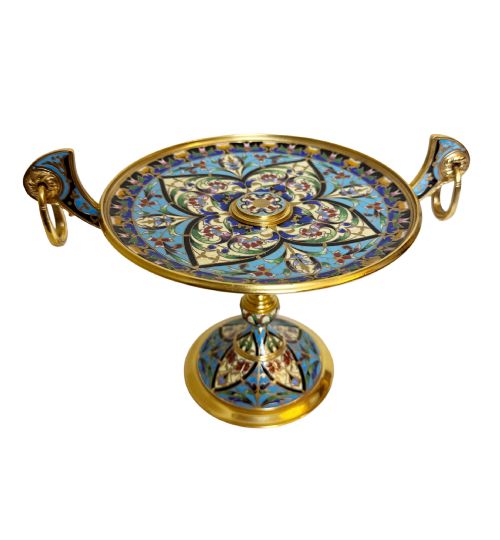
- An ornamental shallow bowl or cup mounted upon a stem and foot. They frequently appear in gilt bronze, marble, or ceramic.
- Cloisonné
- An enamel technique where metal wire creates raised partitions on a base, which are then filled with coloured paste and fired. This method produces intricate patterns of birds, flowers, and geometric designs.
- Cabinet Plate
- A fine ceramic plate intended for display in a glass-fronted cabinet or on a stand. They often feature hand-painted fruit, portraits, or landscapes by named artists.
- Ormolu
- Gilt bronze mounted onto decorative objects and furniture. The technique involves applying a gold amalgam to bronze to achieve a rich metallic lustre.
Antique Decorative Dish: Frequently Asked Questions
What is a tazza used for?
A tazza served as a raised centrepiece or display vessel on formal dining tables and sideboards. They were designed to hold fruit, sweetmeats, or simply to showcase the metalwork and enamel artistry of the maker.
In modern settings, they function effectively as standalone decorative accents on tables, desks, or open shelving where their elevation adds visual interest.
How do I display a cabinet plate?
Cabinet plates are traditionally displayed using dedicated plate stands on flat surfaces or mounted securely on walls using coated wire hangers. Because many feature delicate gilding or painted enamel, placing them away from direct, harsh sunlight preserves the colours.
Grouping plates of contrasting sizes and patterns creates a balanced display within a cabinet or across a wall arrangement.
Were these dishes used for dining?
Many items categorized as decorative dishes, such as cabinet plates and chargers, were created strictly for visual display. Others, like dessert plates and fruit bowls, saw occasional use during formal dining before transitioning to decorative display.
Examining the wear patterns and the delicacy of the enamels usually indicates whether a piece was meant for the table or the cabinet.