
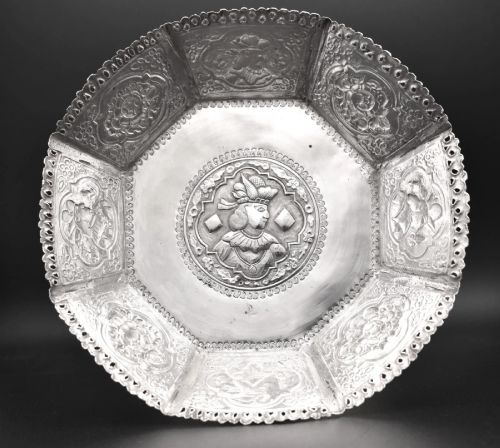

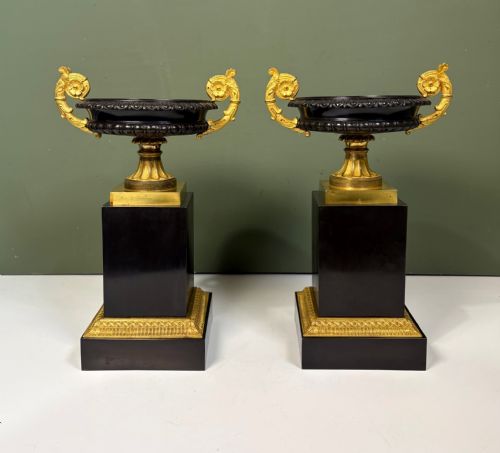

Antique Decorative Compote
An antique decorative compote brings elevation and classical presence to a table, functioning as a pedestal bowl for fruit or grand display.
Antique Decorative Compote
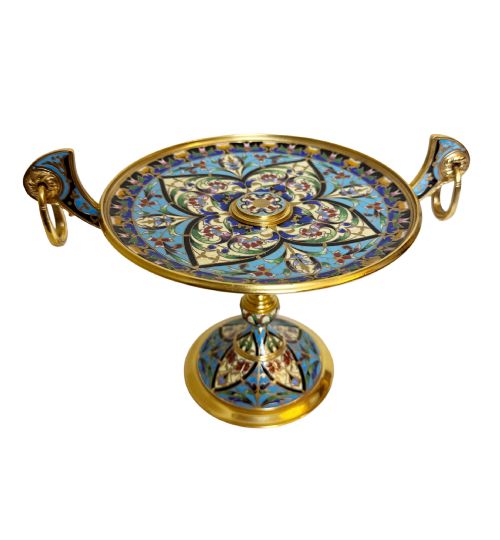
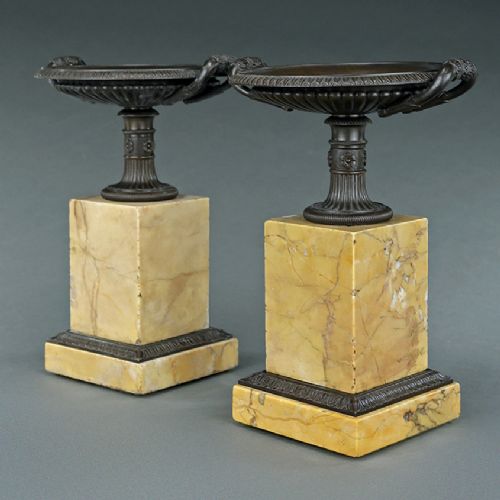
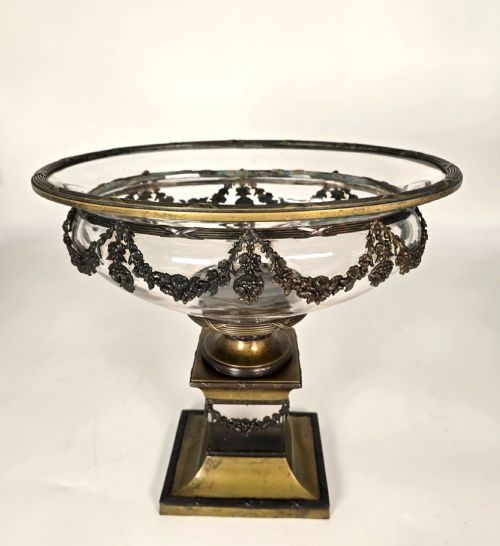
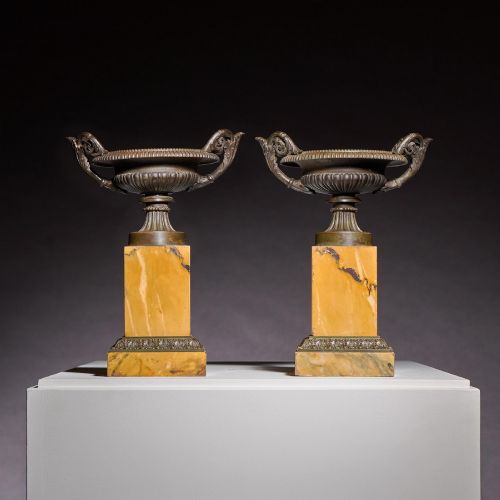
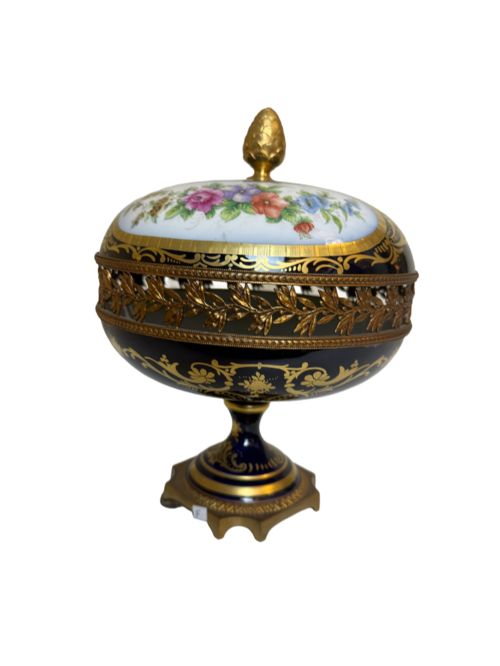
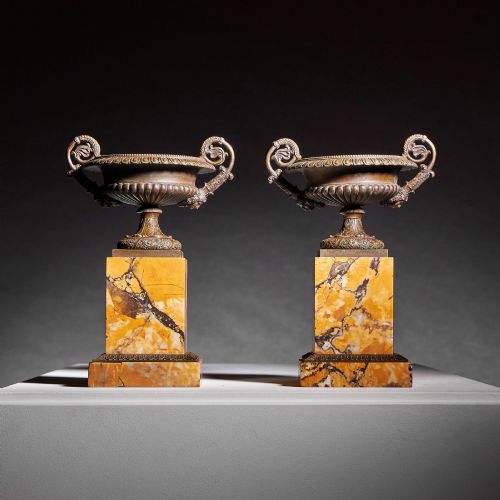
An antique decorative compote comprises footed bowls, tazzas, and pedestal dishes designed for display across the nineteenth and early twentieth centuries. These vessels appear in forms such as centrepieces, urns, and baskets originating from French, English, and continental workshops.
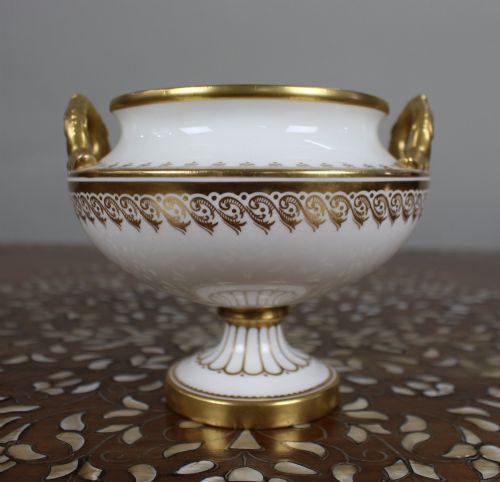
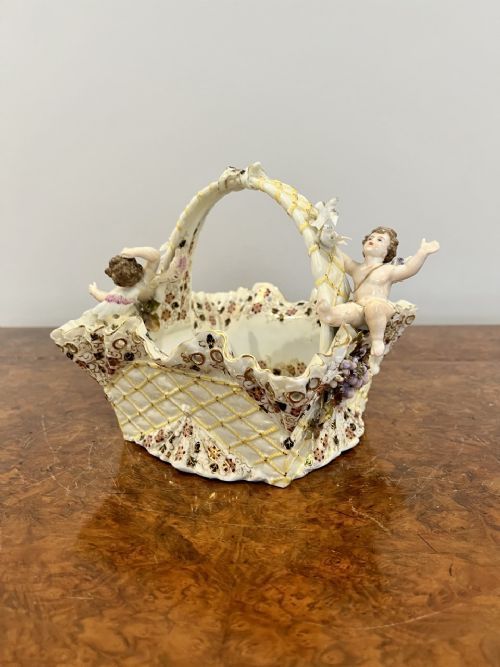
Buyers encounter pedestal bowls set upon marble bases or cast bronze supports, often incorporating porcelain bodies or glass dishes. These objects served as ornamental centerpieces in period interiors, holding fruit or simply standing as sculptural works.
How They Were Made
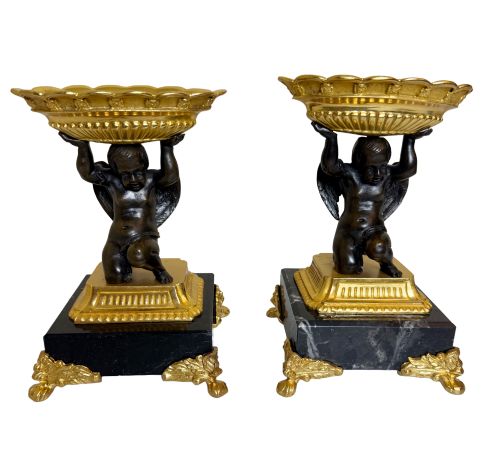
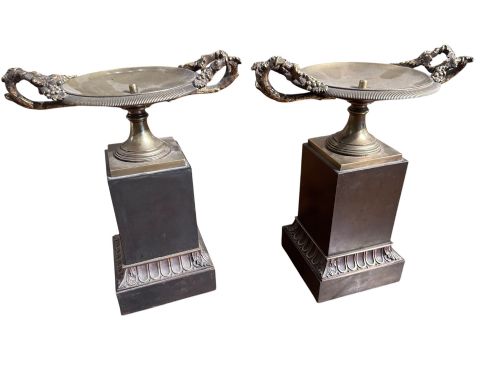
Metal components rely on bronze, gilt bronze, or ormolu, cast and chased to form mounts, cherubs, and classical figures. Marble, onyx, and malachite provide heavy, polished plinths and columns that support these metal frameworks.
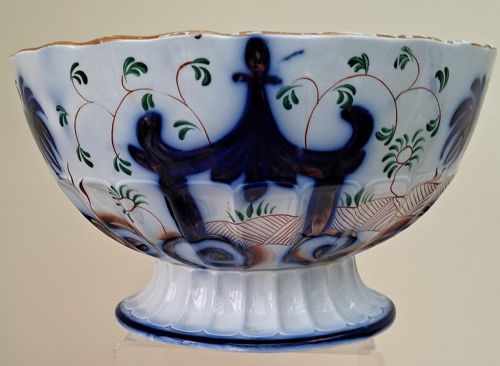
Ceramic elements involve porcelain, ironstone, and majolica, painted with enamels or finished with lustre glazes. Glass sections utilise cut crystal, coloured glass, and cameo techniques, secured into metal stands with threaded bolts or pins.
Listings feature nineteen-century French Empire, Victorian, and Regency periods, utilising bronze, marble, porcelain, and glass.
What Varies in Quality
Material selection divides the range, particularly the density and figuring of the marble or agate used in the columns and bowls. Weight, depth of fire gilding, and the integration of components such as champlevé enamel or hardstones separate ordinary production from ambitious works.
Charles Boyton·Makeig-Jones Wedgwood·Minton·Samson·Sevres·Schierholz
The Antique Decorative Compote Glossary
- Tazza
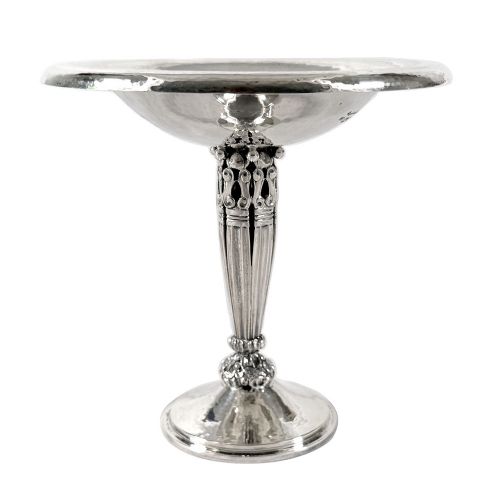
- A shallow bowl or plate mounted upon a stem and foot, originating from classical drinking vessels. These forms dominate nineteenth-century display pieces.
- Ormolu
- Finely ground high-carat gold mercury-gilded onto a bronze base, creating a rich golden surface found on French decorative objects. This technique creates a durable finish that resists tarnishing.
- Champlevé
- An enamelling technique where troughs or cells are hollowed out of a metal surface and filled with vitreous enamel before firing. The resulting design shows vibrant colour framed by thin metal lines.
- Compote
- A pedestal dish used for serving fruit or sweets, or simply functioning as a decorative table centrepiece. The term is often used interchangeably with tazza and comport.
Antique Decorative Compote: Frequently Asked Questions
How were antique compotes used in period homes?
These elevated vessels stood primarily as centrepieces on dining tables, filled with fresh fruit, sweetmeats, or flowers. They added height and visual interest to table settings during formal dinners.
Outside the dining room, they occupied sideboards, mantelpieces, and pedestals as pure ornaments that displayed the wealth and taste of the household through materials like bronze, marble, and porcelain.
How do I care for a bronze and marble compote?
Dust metal and marble surfaces regularly with a soft, dry cloth to prevent the accumulation of grit in crevices. Avoid commercial metal cleaners, which can strip historic patination or damage delicate ormolu.
Keep these objects away from direct sunlight and damp environments to protect natural stone and enamel inlays from staining or deterioration.
How can I tell a Regency compote from a Victorian one?
Regency pieces often lean heavily on strict classical antiquity, featuring dark patinated bronze paired with bright ormolu and motifs like winged figures or stylized foliage. They feel restrained and architectural.
Victorian examples tend toward ornate revival styles, incorporating vibrant majolica glazes, champlevé enamel, or complex porcelain elements with abundant ornamentation and varied colour palettes.