





Antique Decanter Box
An antique decanter box is a fitted wooden chest designed to secure spirits and glassware, prized for both practical entertaining and fine cabinetmaking.
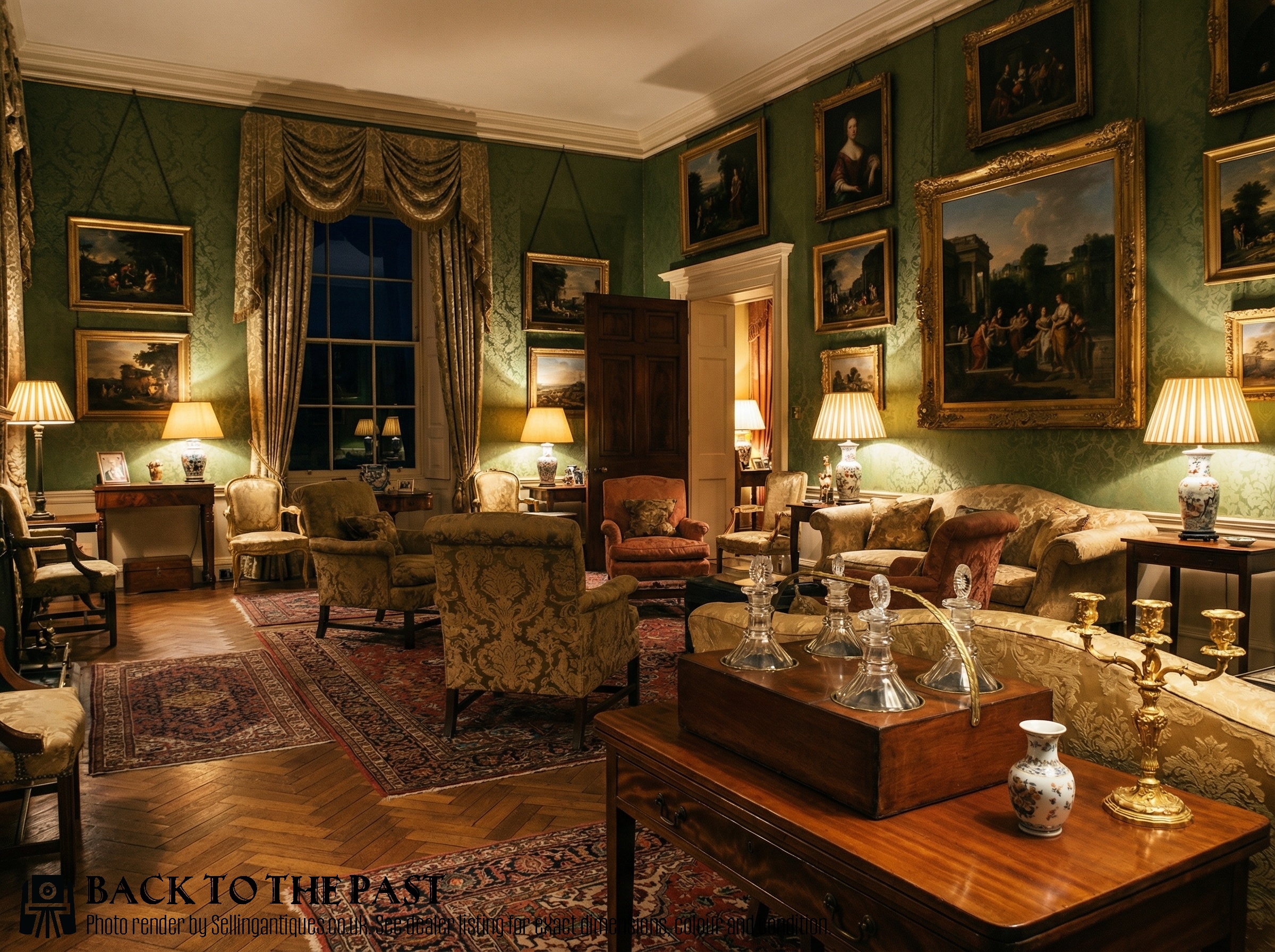
Antique Decanter Box
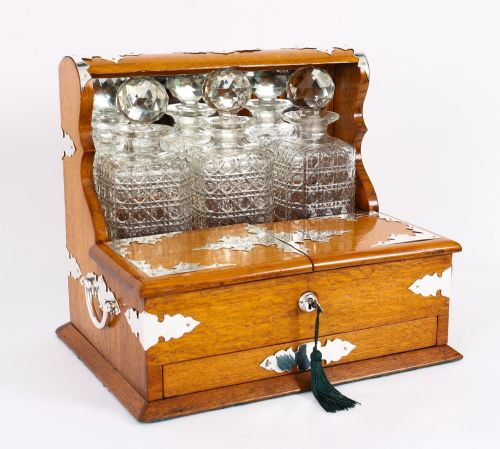
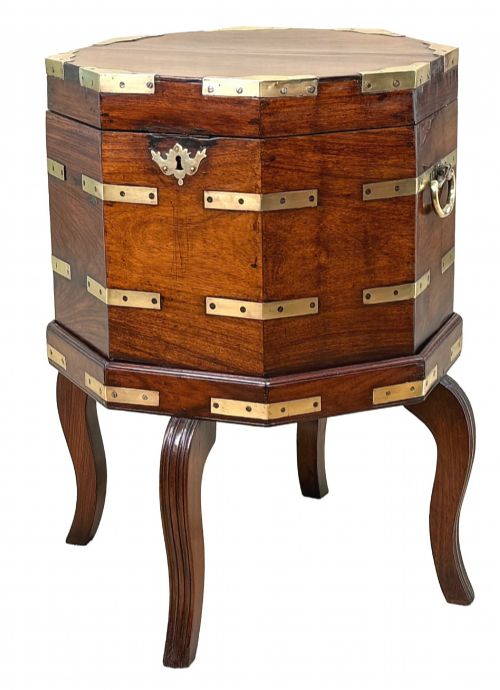
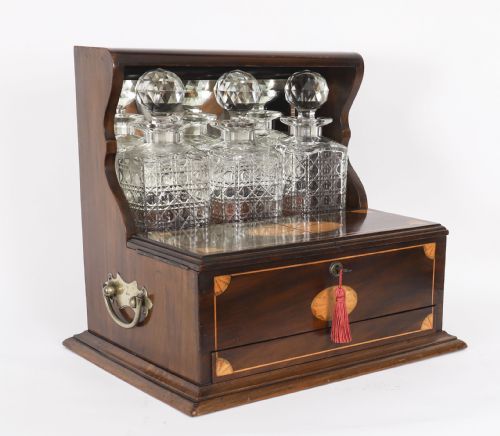
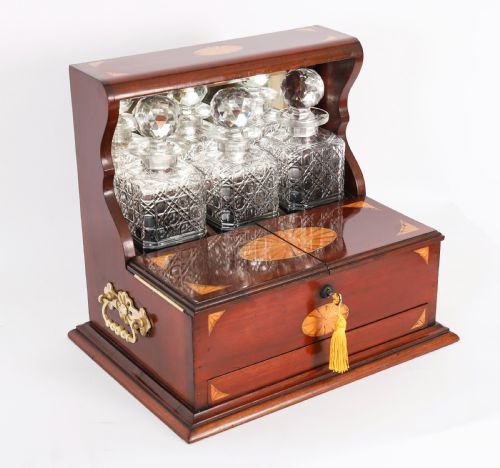
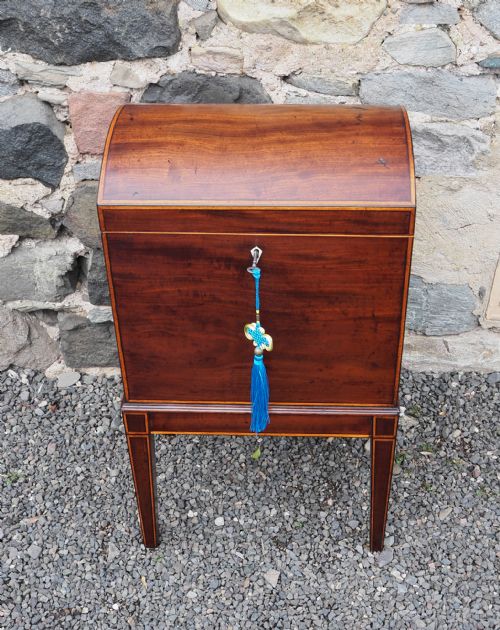
When searching for an antique decanter box, buyers encounter an array of fitted wooden containers, often described interchangeably as cellarettes, liquor cabinets, and tantaluses. These vessels range from compact Georgian wine carriers to elaborate late Victorian and Edwardian dry bar compendiums containing multiple cut crystal bottles alongside games.
The versions most frequently met on this page date from the nineteenth century, particularly the Victorian and Edwardian eras, executed in timbers such as mahogany, oak, and exotic coromandel. Alongside English examples, French Napoleon III cave a liqueur boxes and Anglo-Indian adaptations appear regularly.
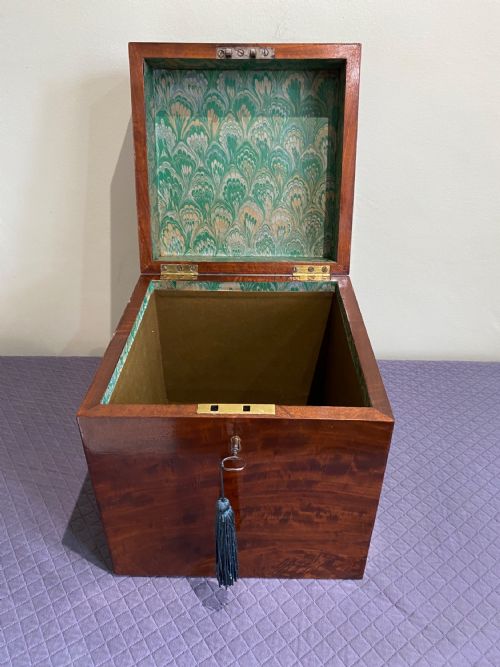
Internal partitions and velvet or silk linings typically secure two to four decanters, sometimes accompanied by matching glasses or designated compartments for cigars. The form serves primarily to lock away precious spirits while displaying craftsmanship appropriate for a drawing room or campaign setting.
How they were made
Cabinetmakers constructed these boxes using dense hardwoods including mahogany, walnut, and oak, frequently enhanced with satinwood inlay, marquetry, or brass mounts and binding to protect the edges during travel. Interior frameworks were meticulously divided and fitted to prevent fragile glass bottles from shifting during movement.
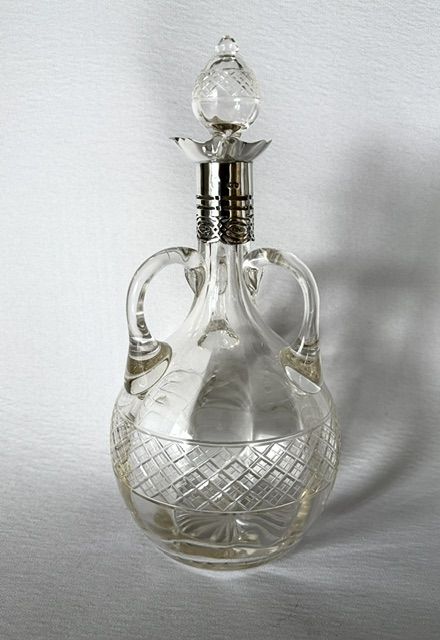
The bottles themselves utilise heavy cut glass or crystal, occasionally accented with silver plate or ormolu mounts. Joinery relied upon traditional dovetailed box construction to endure the weight of filled decanters and the strain of locking mechanisms.
Some nineteenth-century makers disguised their liquor boxes as heavy leather-bound books to keep private reserves hidden in plain sight.
What varies in quality
Quality rests upon the selection of timber, the precision of internal cabinetry, and the completeness of the original glass service. Superior pieces display figured wood grains, substantial brass hardware, and integrated locking systems that remain fully operational.
The distinction between standard containers and exceptional examples also lies in multi-functional design, such as combined games compendiums and dry bars featuring matching Baccarat crystal or bespoke silver-mounted decanters.
P and F Schafer
The Antique Decanter Box Glossary
- Tantalus
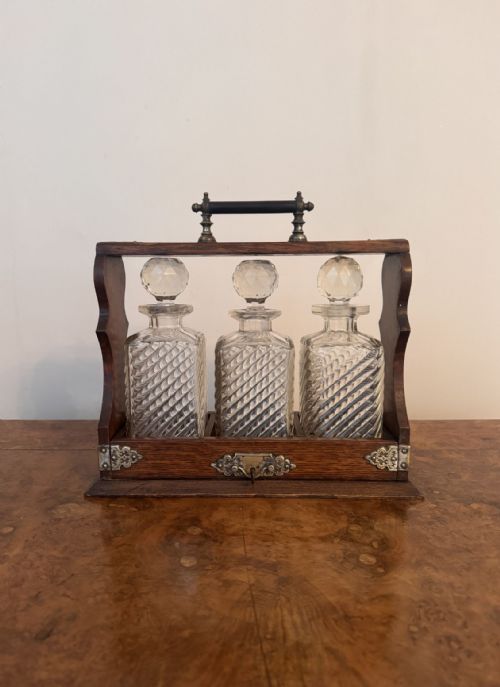
- A locking drink cabinet that holds decanters in place with a metal bar, preventing guests from pouring spirits without a key while still displaying the contents.
- Cellarette
- A lockable container or cabinet traditionally used for storing bottles of wine or spirits near the dining table.
- Cave a liqueur
- A French liqueur box, typically featuring a hinged or lifting case lined with velvet and fitted with matching glass decanters and small glasses.
- Marquetry
- The decorative craft of applying thin pieces of wood veneer to a structure to form intricate patterns and pictorial designs.
- Compendium
- A box containing multiple distinct items, frequently combining a decanter set with equipment for card games or smoking.
Antique Decanter Box: Frequently Asked Questions
What is the difference between a decanter box and a tantalus?
A decanter box fully encloses the bottles within a solid wooden case with a lid and lock. A tantalus exposes the upper portions of the decanters beneath a locking metal bar.
Both forms served to restrict access to expensive spirits, but tantaluses prioritised visual display while boxes offered greater discretion and protection.
How were these boxes used originally?
Wealthy households utilised these fitted containers in dining rooms, libraries, and drawing rooms to serve alcohol to guests. They were also adapted for travel, allowing officers and gentlemen to transport wine safely.
Many later Victorian examples doubled as social hubs by incorporating compartments for playing cards, counters, and cigars.
How do I date an antique decanter box?
Dating relies upon timber selection, cabinet hardware, and decorative style. Georgian pieces favour plain or brass-bound mahogany, whereas Victorian and Edwardian examples often employ coromandel, elaborate marquetry, and silver-plated locking bars.
Internal configurations and accompanying glassware styles also provide strong chronological indicators.
Can I replace missing decanters?
Finding exact replacement decanters to fit the precise historical partitions of a fitted box presents a significant challenge. Most internal wooden frames were custom-built around specific glass dimensions.
Buyers usually prefer pieces retaining their original matched sets of cut crystal or glass bottles.