




Antique Cranberry Pitcher
An antique cranberry pitcher brings vibrant colour to a table, combining rich glass with practical forms from the nineteenth and early twentieth centuries.
Antique Cranberry Pitcher
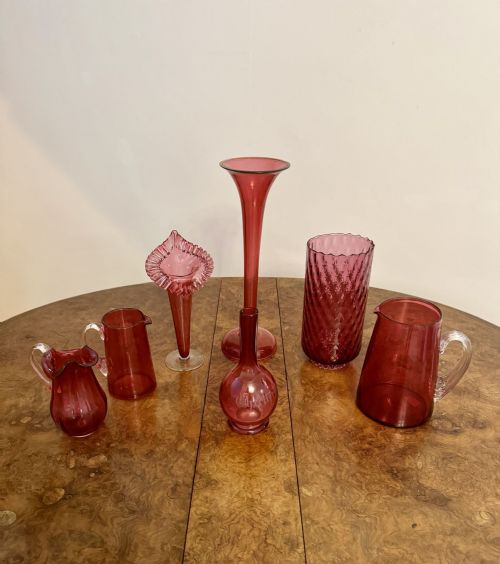
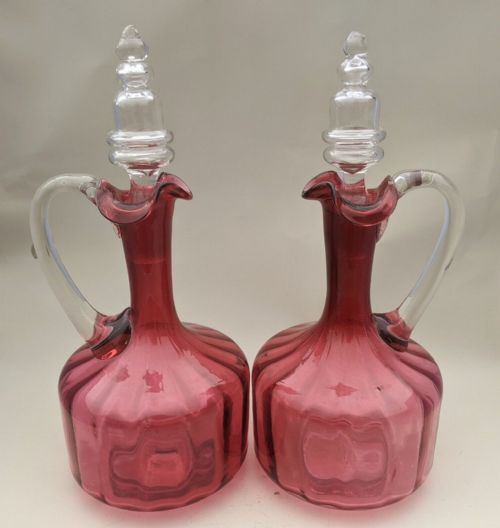
An antique cranberry pitcher is a vessel designed for pouring liquids, most commonly found from the Victorian and Edwardian periods. These pieces range from small cream jugs to large water jugs and wine decanters.
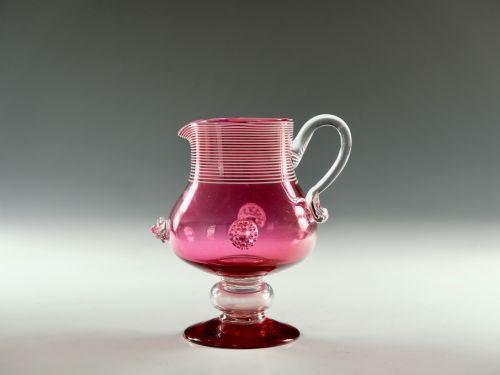
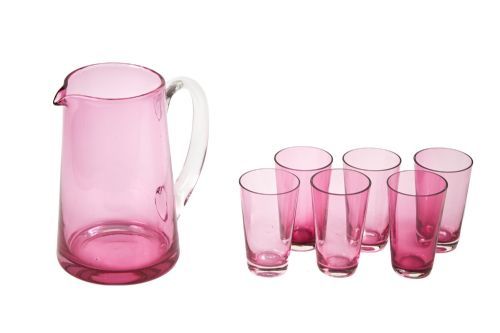
The objects listed show variations from simple cream jugs with white piping to large water jugs and coordinated drinkware sets. They originate predominantly from nineteenth-century workshops and span into the early twentieth century.
Buyers seeking an antique cranberry pitcher will encounter forms shaped for domestic use, often accompanied by matching glasses or bowls. The selection reflects both formal decanters and everyday serving pieces.
Materials and construction methods
Makers achieved the distinctive tone of an antique cranberry pitcher by introducing gold salt additives to the molten glass batch. This chemical reaction created the characteristic pinkish-red hue throughout the material.
Many examples incorporate clear glass handles, stoppers, or feet to contrast with the coloured body. Additional decorative techniques include surface engraving with motifs like fruiting vines and applied white piping.
Several pitchers arrive paired with unexpected companions, including matching sets of small drinking glasses and decorative bowls.
Assessing quality in cranberry glass
Quality in an antique cranberry pitcher rests on the depth and evenness of the glass colour. Superior examples display a rich, translucent tone without cloudiness or unintended streaks in the material.
The crispness of supplementary work, such as hand-engraved foliage or applied glass trails, separates standard production from finer output. Well-formed spouts and balanced handles indicate attentive craftsmanship during shaping.
The Antique Cranberry Pitcher Glossary
- Cranberry Glass
- A transparent red-pink glass coloured with gold chloride. It became immensely popular during the Victorian era for tableware and decorative items.
- Decanter
- A vessel used for holding and serving wine or other liquids. These pieces usually feature a fitted stopper.
- Silver Plate
- A thin layer of silver applied to a base metal object. It frequently appears on mounts, rims, and hardware associated with glassware.
- Enamel
- Opaque glass paste applied to the surface of glassware and fired for decoration. It provides contrasting colours and raised patterns.
- Crystal
- A high-clarity glass often containing lead oxide for added brilliance and weight. It allows for deep, sharp engraving.
Antique Cranberry Pitcher: Frequently Asked Questions
What is cranberry glass?
Cranberry glass is a distinctively coloured transparent glass made by adding gold salt to the molten mixture. This produces the characteristic pinkish-red shade seen in Victorian tableware.
The intensity of the colour can vary depending on the exact chemical recipe and the thickness of the blown vessel.
How were these pitchers used?
These pitchers served practical roles in the dining room and parlour for pouring water, wine, or cream. Many formed part of larger drinkware sets intended for formal entertaining.
Smaller versions functioned as cream jugs during afternoon tea, while larger pieces handled water or wine at the dinner table.
How do I date an antique pitcher?
Dating relies on stylistic clues, pontil marks, and manufacturing techniques recorded across the Victorian and Edwardian eras. Earlier pieces often display rough pontil scars where the glassblower snapped the rod.
Victorian examples tend to feature heavier moulding and rich colour, whereas Edwardian pieces sometimes show lighter, more refined proportions.
How should I clean my pitcher?
Cleaning requires warm water and mild soap, avoiding harsh abrasives that could scratch the surface or damage applied details like white piping. Hand washing is essential to preserve the integrity of the antique glass.
Sudden temperature changes should be avoided during washing to prevent thermal shock and cracking.
Are stoppers original?
Stoppers on decanters and pitchers were individually ground to fit each specific neck during manufacture. A matching number or snug fit often indicates the stopper belongs to that exact vessel.
Collectors look closely at the ground glass mating surfaces to ensure the component has remained with the piece over time.