




Pink Glass Jug
A pink glass jug brings rich colour and vibrant tone to a table, offering both decorative presence and practical utility.
Pink Glass Jug
A pink glass jug encompasses various forms made during the Victorian and Edwardian periods, including cream jugs, water jugs, and pitcher sets. These items span styles from the nineteenth century, reflecting diverse uses from serving cream to holding water.
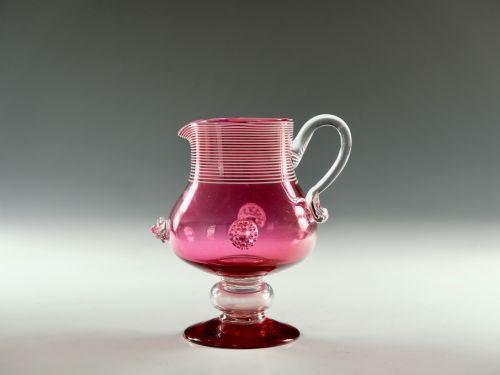
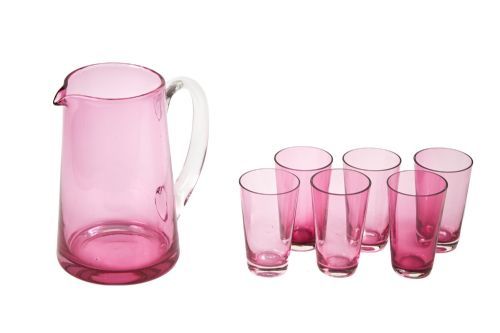
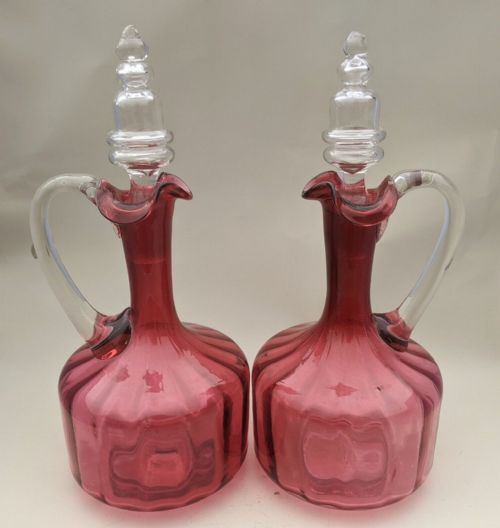
Most pieces encountered on this page display cranberry glass or Burmese glass, often associated with Victorian art glass traditions. The selection ranges from small cream jugs with white piping to larger water jugs and decanters.
The origins trace through Victorian and Edwardian eras, capturing distinct craftsmanship from around 1860 to the early twentieth century. Buyers encounter both standalone vessels and matched sets complete with glasses or bowls.
How they were made
Makers utilised blown glass techniques to shape the molten material into vessels, often incorporating applied details such as white piping. The addition of metallic oxides during melting achieved the characteristic pink and cranberry coloration.
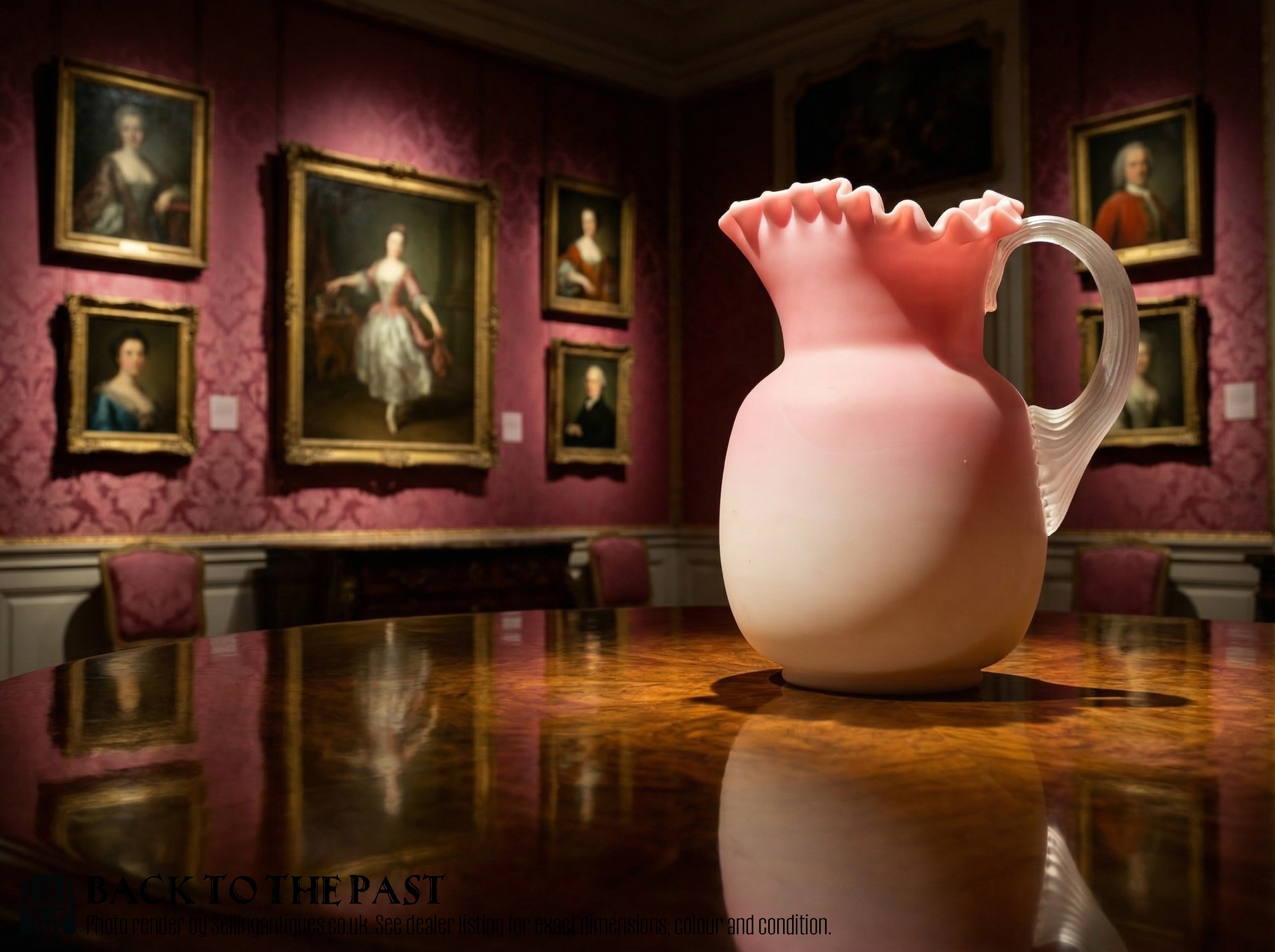
Some examples utilise Burmese glass, known for its subtle shading from yellow to pink, while others feature satin glass textures. Metal mounts, specifically silver plate, appear on certain pieces to form rims, handles, or associated lids and frames.
The listings feature Victorian and Edwardian pieces, utilising cranberry glass, Burmese glass, satin glass, and silver plate.
What varies in quality
The richness and depth of the pink or cranberry tone distinguish finer vessels from paler examples. Mastery in blowing determines the symmetry and balance of the handle, spout, and body.
Surface treatment, such as delicate white piping or enamel decoration, shows the skill of the decorator. The presence of associated elements, like matching glasses or bowls, alters the completeness of the set.
Webb and Son
The Pink Glass Jug Glossary
- Cranberry glass
- A type of red-pink transparent glass created by adding gold chloride to the molten batch. It gained immense popularity during the Victorian era for tableware and decorative objects.
- Burmese glass
- An art glass that shades from a pale yellow to a soft pink, developed in the late nineteenth century. It has a matte or satin finish.
- Silver plate
- A thin layer of silver applied to a base metal, frequently used for the mounts, rims, or handles of Victorian jugs. It provides the appearance of solid silver at a different weight.
Pink Glass Jug: Frequently Asked Questions
What were pink glass jugs used for?
These vessels served various functions around the home, from pouring cream at the tea table to holding water for guests. Larger examples often functioned as decorative centrepieces or formed part of matching drinkware sets.
Smaller cream jugs were specifically designed for dairy service during formal meals. Their dual utility as functional tableware and decorative display items made them household staples.
How do I date a Victorian pink glass jug?
Dating relies on observing stylistic markers, pontil marks, and the specific shade of pink or cranberry used. Victorian pieces often display hand-blown traits with polished pontils on the base.
Edwardian examples may show subtle shifts in form and decoration compared to earlier nineteenth-century items. Comparing the handle application and glass thickness helps narrow down the decade of production.
How should I clean my pink glass jug?
Cleaning requires warm water and mild soap, avoiding harsh abrasives that could damage the surface or any enamel work. Hand washing is essential to preserve the integrity of older glass.
Sudden temperature changes should be avoided to prevent thermal shock, particularly with nineteenth-century blown glass. Soft cloths work best for drying and polishing the exterior.