


Antique Glassware Pitcher
An antique glassware pitcher brings heavy lead crystal and vibrant cranberry glass to the table, offering a functional vessel for water, wine or cream.
Antique Glassware Pitcher
An antique glassware pitcher serves as a practical pouring vessel or decorative table centrepiece, drawing from a rich variety of forms. When searching for an antique glassware pitcher, buyers encounter everything from modest cream jugs to large water ewers and claret decanters. The pieces span from the Georgian era through the Victorian period, Edwardian years, and into Art Deco designs.
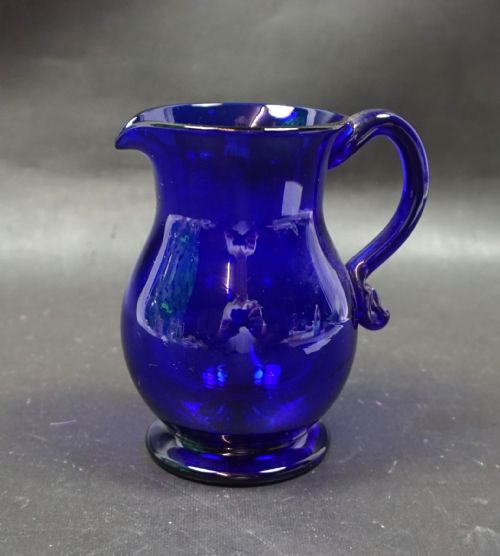
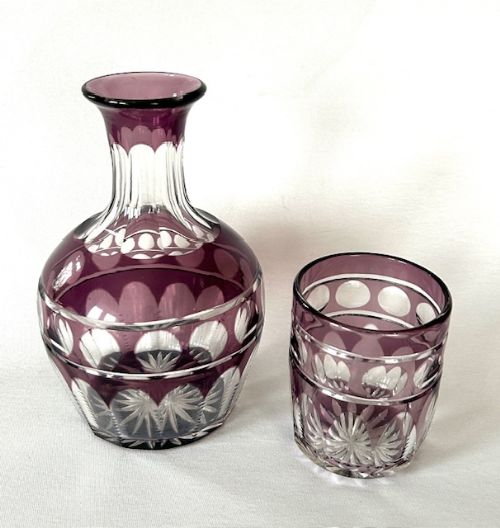
Most examples found on this page date from the nineteenth and early twentieth centuries, capturing shifts in domestic dining habits. Domestic table service required dedicated vessels for water, wine, cider and cream, leading to diverse manufacturing outputs. Makers produced these items in clear glass, rich cranberry, deep blue, green and amethyst.
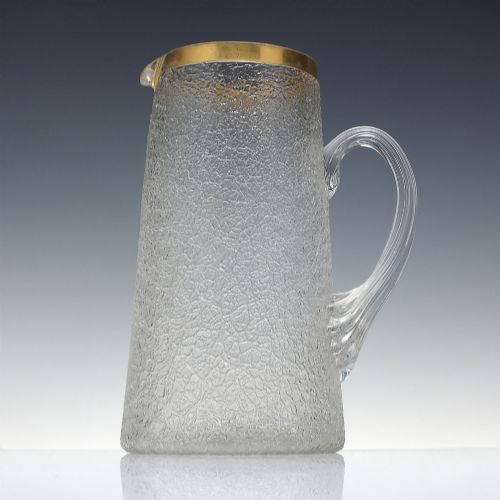
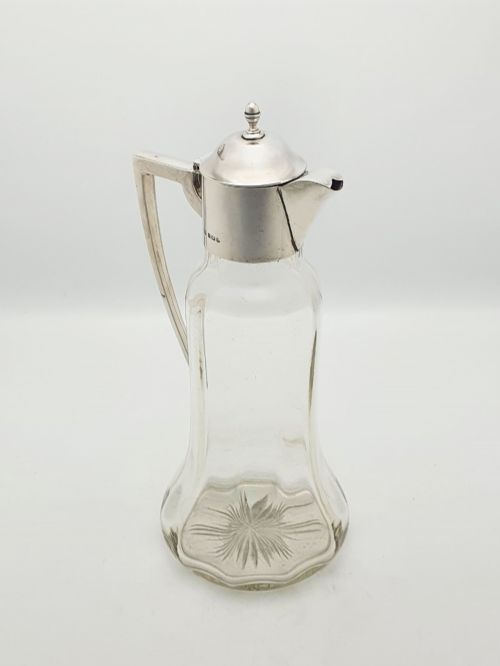
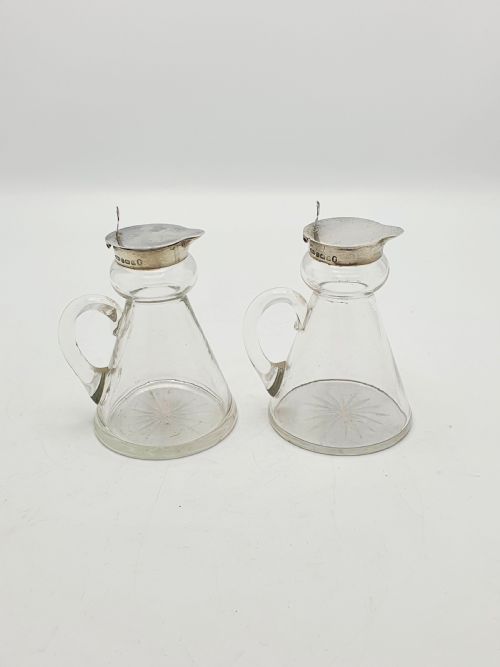
Forms range from simple domestic creamers to elaborate silver-mounted claret jugs destined for formal dining rooms. Buyers will find heavy cut glass alongside delicate enamel-painted vessels and pieces featuring applied trails or gilded rims.
Materials and production methods
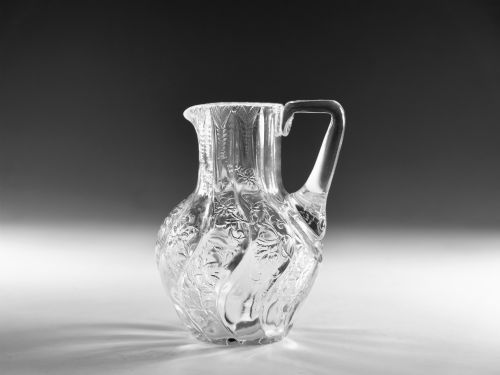
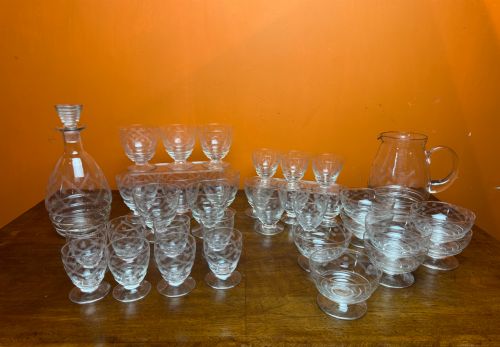
Glassmakers utilised lead crystal and clear glass as the foundation for much of the cut and intaglio work seen in Edwardian and Regency pieces. Heavy cutting required thick blanks of glass that could endure deep wheel-engraving without compromising structural integrity. Coloured glass recipes relied on metallic oxides to achieve deep cranberry, blue, green and amethyst tones.
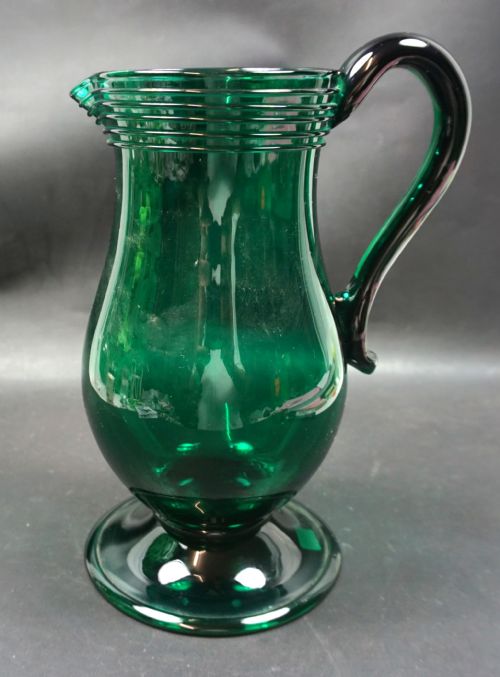
Surface ornamentation involved several distinct techniques, including acid-etching, hand-painting with enamel, and applying gold leaf details. Silver mounts and sterling silver handles were frequently added by silversmiths to complete high-end claret jugs and water pitchers. Molten glass trails were often wrapped around rims or feet while hot to add texture and structural reinforcement.
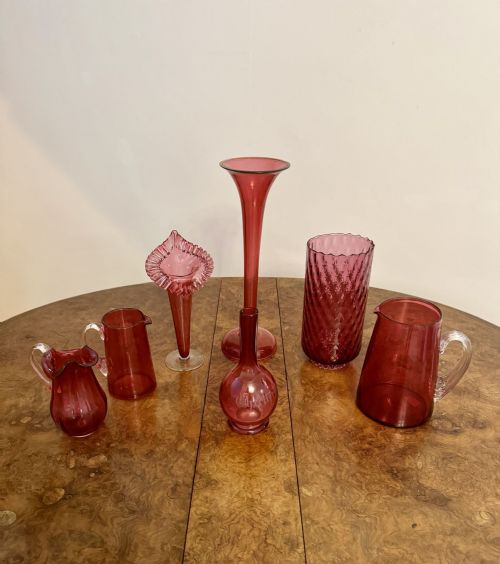
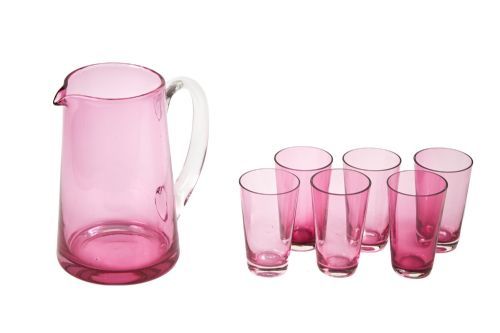
A cheerful Victorian cranberry jug usually brightens a room much faster than a standard water glass ever could.
Assessing craftsmanship and finish
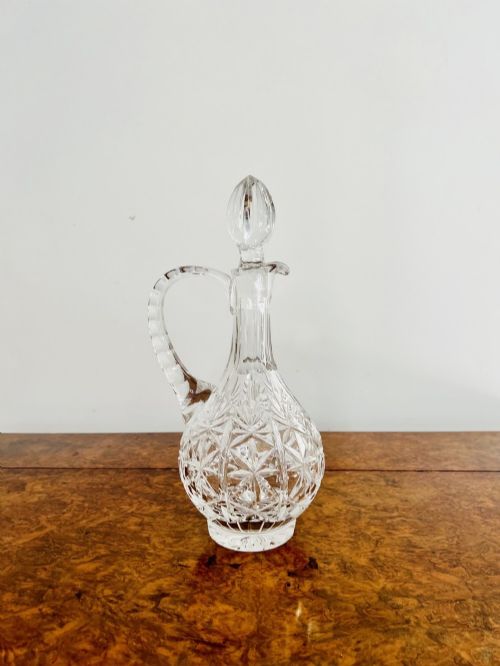
The precision and depth of the wheel-cutting separate standard vessels from exceptional examples of cut glass ewers. Crisp facets reflect light cleanly, while inferior pieces show soft edges or minor surface irregularities in the glass matrix. Hand-painted enamel and gilded highlights demand a steady hand, where fine brushwork distinguishes superior artisan output from simpler commercial decoration.
The integration of metal mounts, such as pewter or sterling silver, plays a major role in overall execution. Tight, secure metal fittings that match the exact contours of the glass indicate superior workshop standards. The clarity of the base material, whether clear lead crystal or saturated cranberry glass, dictates the visual weight of the piece.
Stevens and Williams·Webb Corbett·Baccarat·Amphora
The Antique Glassware Pitcher Glossary
- Cranberry glass
- A rich red-pink glass created by adding gold chloride to the molten batch. It became exceptionally popular during the Victorian era for jugs, decanters and matching glassware sets.
- Claret jug
- A specialised pouring vessel designed specifically for serving red wine at the dining table. They frequently feature elaborate silver-plated or sterling silver mounts and hinged lids.
- Ewer
- A large pitcher with a wide spout and a decorative handle, historically used for pouring water. Victorian and Edwardian examples often incorporated deep cut glass or Mary Gregory style enamel painting.
- Latticinio
- A decorative glass technique involving fine white or coloured glass threads twisted inside a clear glass body. Baccarat and other European factories utilised this method to create intricate internal patterns.
- Intaglio
- A method of glass carving where the design is ground into the surface rather than left protruding in relief. Edwardian rock crystal services often display this refined technique.
Antique Glassware Pitcher: Frequently Asked Questions
What is an antique glassware pitcher used for?
These vessels served various functions at the dining table, ranging from holding fresh water and cream to decanting wine and cider. Wealthy households used silver-mounted claret jugs for formal meals, while smaller jugs handled daily table duties.
Today, collectors utilise them as decorative floral vases, display pieces or functional jugs for contemporary gatherings.
How do I date an antique glassware pitcher?
Dating relies on observing stylistic markers, manufacturing techniques, and any associated hallmarks on silver mounts. Georgian and Regency pieces often show pontil marks and simpler, robust forms, while Victorian items lean towards saturated cranberry glass and enamel work.
Edwardian pitchers frequently display deep machine-cut crystal patterns, and Art Deco examples exhibit geometric silhouettes from the nineteen-thirties.
Are these pitchers safe for everyday use?
Most antique glassware is structurally stable enough for careful daily service, provided you handle it with respect. Lead crystal and thick glass tolerate room-temperature liquids well, though extreme thermal shock should be avoided.
Hand-washing is essential to protect delicate gilding, enamel painting, and any applied silver mounts from harsh detergents.
What is Mary Gregory glass?
Mary Gregory pieces feature distinctive white enamel silhouettes depicting Victorian children playing in natural settings. This decorative style appeared on various coloured glass bodies, most notably cranberry, green and blue.
While named after a specific American artist, most surviving examples actually originated in Victorian England and Bohemia.