


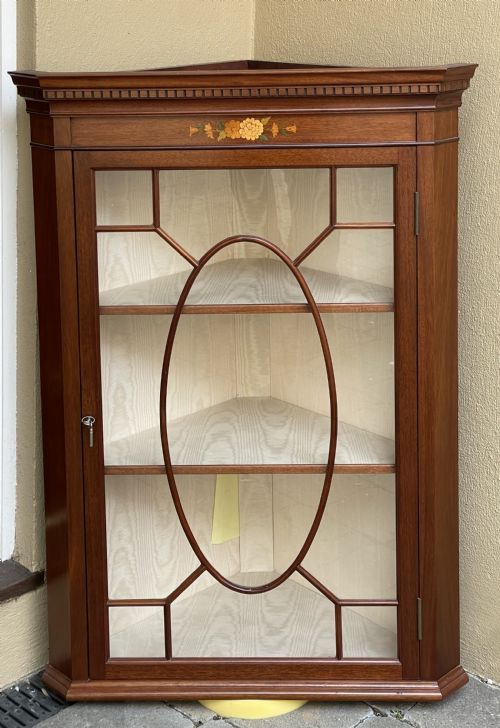

Antique Corner Wall Unit
An antique corner wall unit turns an awkward junction into display space, offering clever storage that makes the most of a neglected room angle.
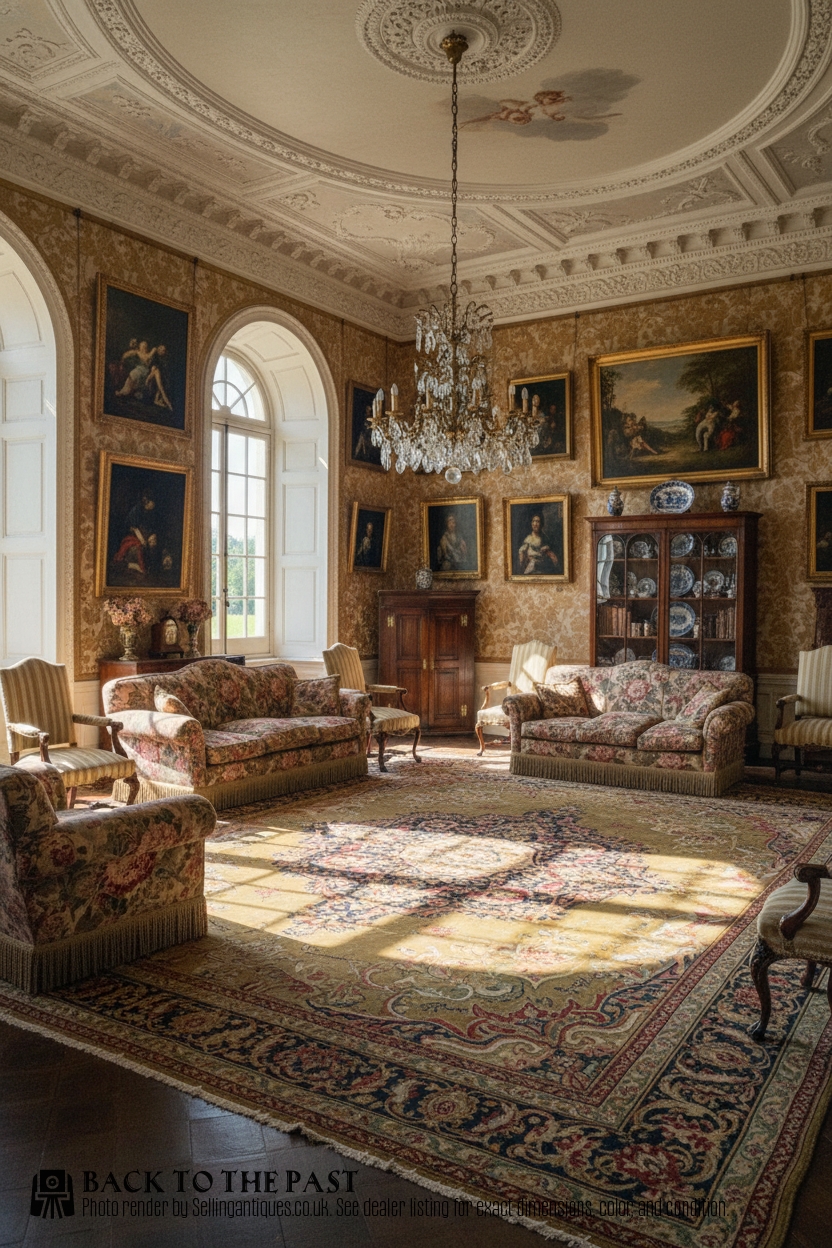
Antique Corner Wall Unit
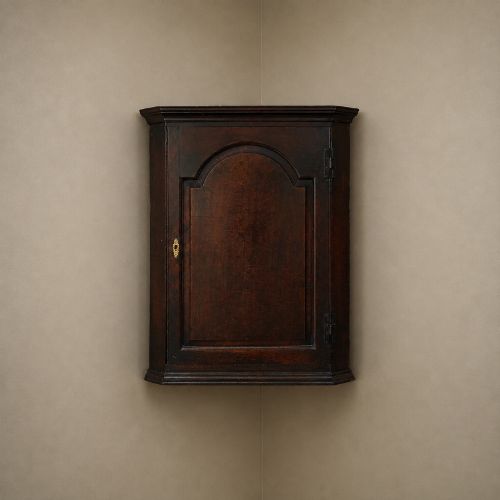
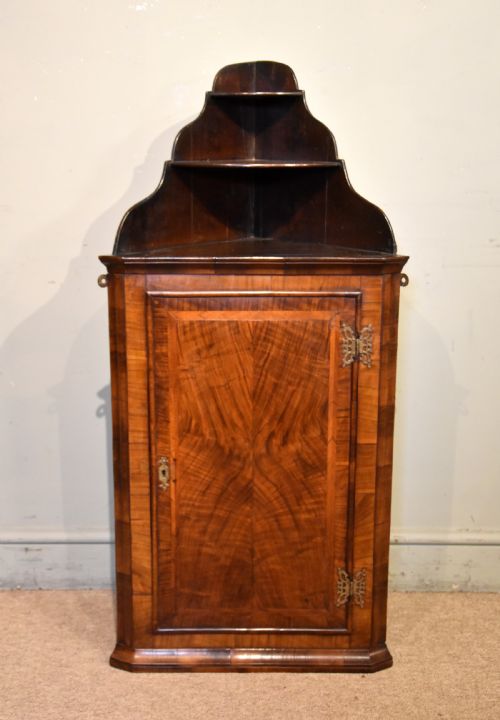
An antique corner wall unit comprises wall-hanging cupboards, open corner shelves, and glazed display cabinets designed to fit snugly into the meeting point of two walls. When searching for an antique corner wall unit, buyers encounter pieces spanning the eighteenth century, the Victorian era, and the Edwardian period, with Georgian examples appearing frequently.
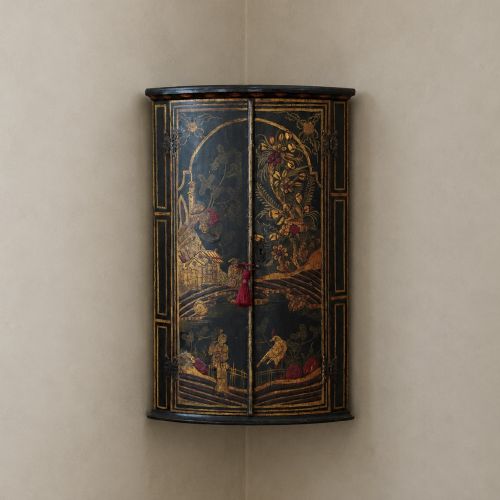
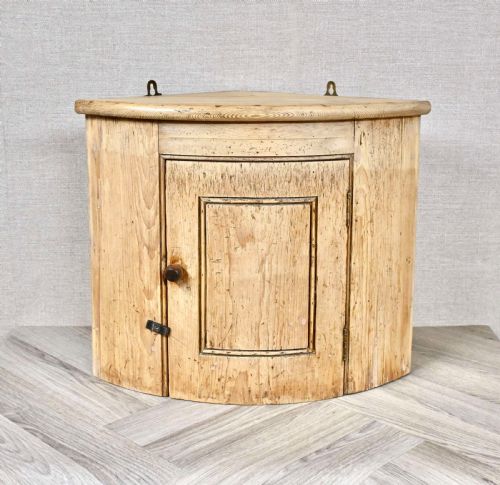
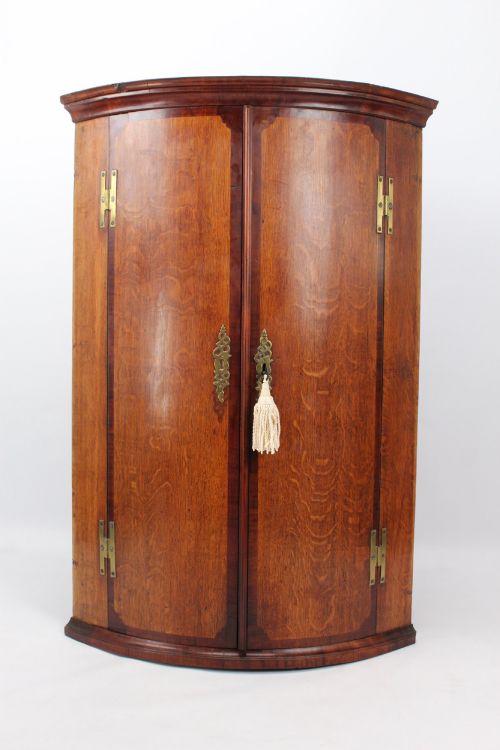
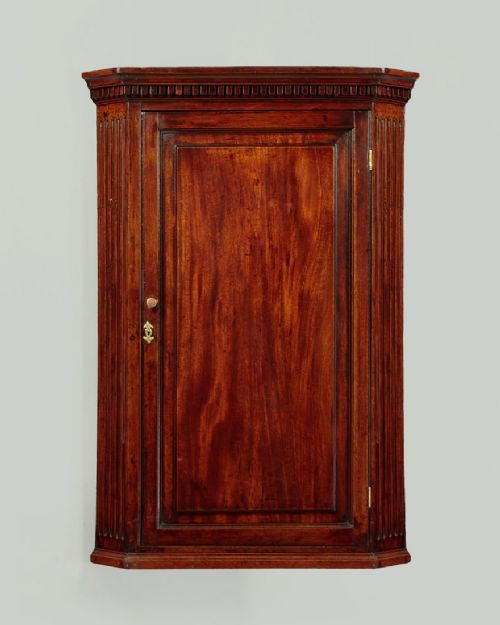
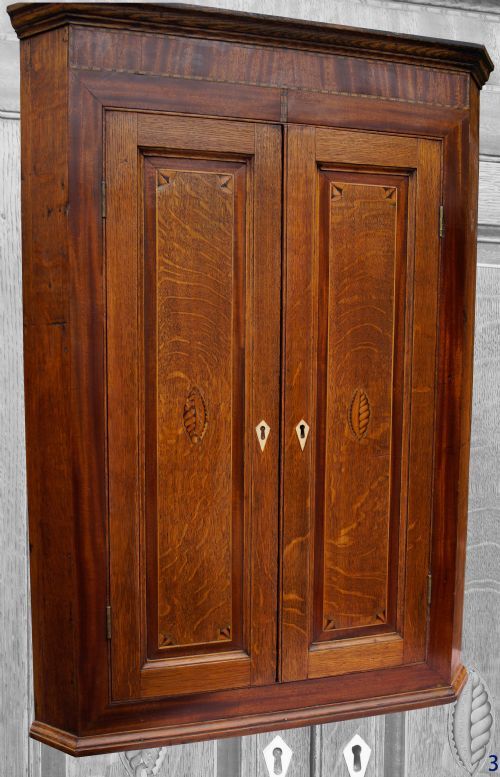
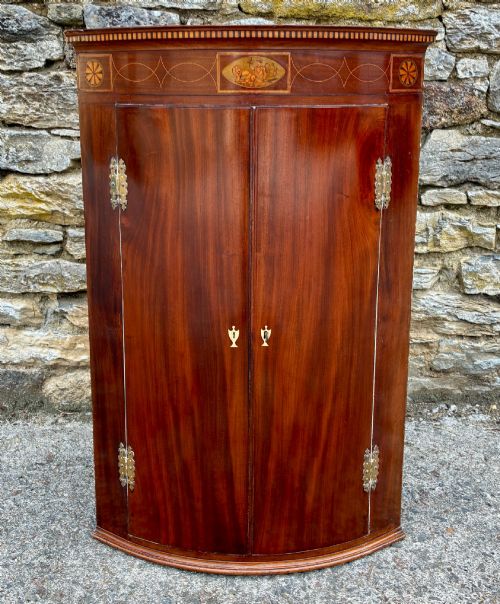
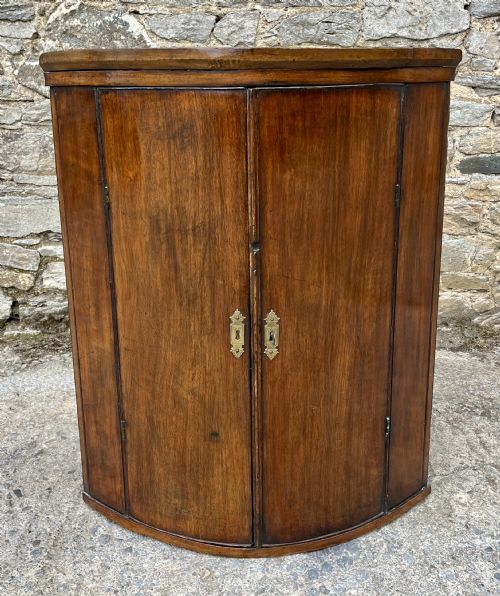
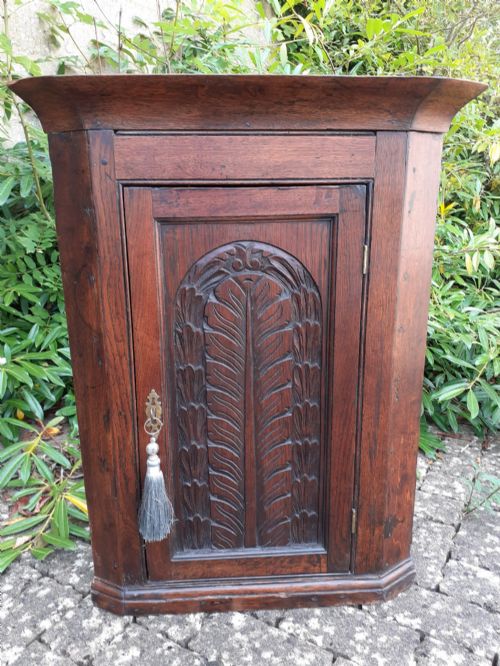
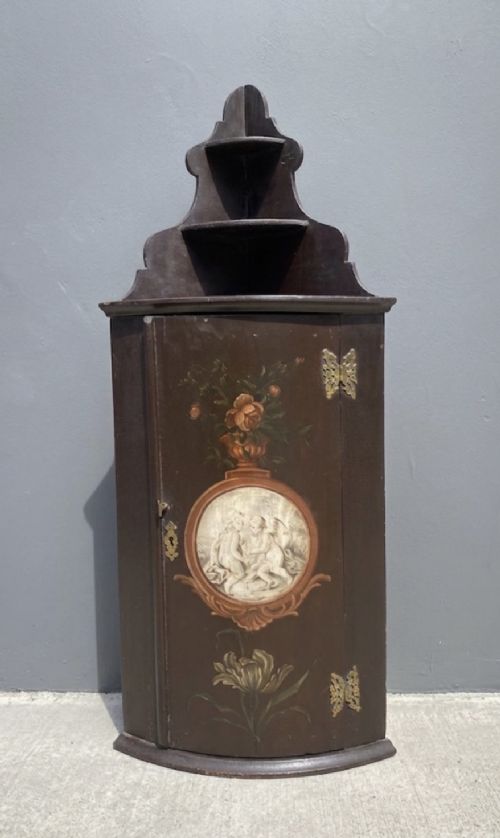
The prevailing forms include bow front cupboards, flat front wall cabinets, and hanging units fitted with panelled or glazed doors. Woods such as oak, mahogany, walnut, and pine dominate the selection, often finished with decorative inlays or painted surfaces in the Chinoiserie style.
Materials and construction
Cabinet makers utilised solid timbers alongside veneered surfaces, pairing oak, mahogany, walnut, and pine with brass hinges, escutcheons, and hanging brackets. Construction relied on traditional joinery methods suited to wall-mounted weight, securing heavy timber frames and internal shelving safely within domestic rooms.
Surface treatments range from plain waxed oak and polished mahogany to intricate inlay work in satinwood and olive wood. Painted finishes, including japanned decoration and Chinoiserie motifs, appear alongside glazed panels designed to protect and display contents.
Some seventeenth-century oak timber managed to survive centuries of household reorganising just to hold tea sets in the corner.
Standards of execution
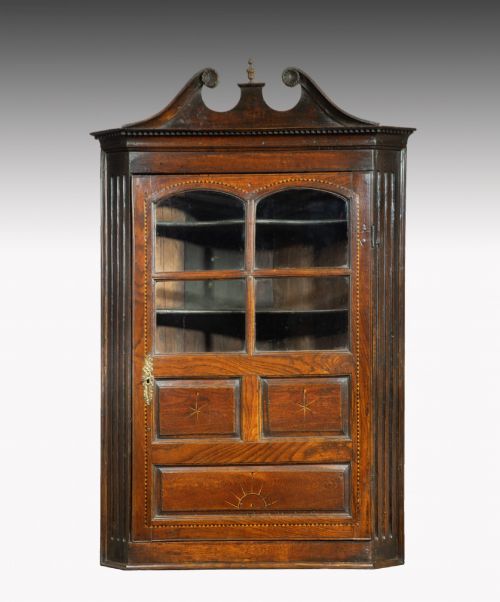
Quality rests upon the selection of timber, the crispness of carved details like broken arch pediments, and the precision of inlaid work. Superior examples exhibit fine grain matching in walnut or mahogany and well-balanced proportions that integrate smoothly into room corners.
The Antique Corner Wall Unit Glossary
- Bow front
- A convex curved cabinet front that projects outward from the corner. This curved profile requires skilled carpentry to shape the timber doors and frame.
- Chinoiserie
- European imitation of traditional Chinese artistic styles, often featuring painted motifs and figures. It appears on lacquered or japanned cabinet surfaces.
- Pediment
- The decorative structure crowning the top of a cabinet. Examples include broken arch designs that finish the upper moulding.
- Inlay
- Contrasting pieces of wood or other materials fitted into the surface to form decorative patterns. Satinwood and olive wood are typical choices for these details.
- Escutcheon
- A protective plate surrounding a keyhole. These fittings are commonly cast in brass and complement the cabinet hinges.
Antique Corner Wall Unit: Frequently Asked Questions
How do I hang a heavy antique corner cabinet?
Wall-hanging corner units require secure attachment to structural wall studs or solid masonry using appropriate weight-bearing brackets. Given the density of oak and mahogany, professional installation ensures the cabinet supports its own weight plus internal items safely.
Older units often retain original internal fixing points or brackets designed for wall suspension. Checking the integrity of these mounting areas before hanging prevents structural strain on the backboards.
What is the difference between an 18th-century and Edwardian unit?
Eighteenth-century pieces typically feature solid oak or mahogany construction with hand-cut dovetails and fielded panel doors. They often display regional craftsmanship, ranging from Georgian mahogany styles to rustic country oak.
Edwardian units frequently incorporate revival designs, such as Chippendale or Georgian revival styles, alongside lighter inlays and glass display panels. These later pieces often emphasise lighter woods and decorative display capabilities.
Can these cabinets stand on the floor instead?
Hanging corner cupboards are constructed specifically for wall suspension and lack the plinths or robust base frames required for freestanding use. Placing them on the floor risks instability unless securely anchored to the wall from behind.
Floor-standing corner cabinets and shelves appear separately in the listings, designed with sturdy bases to support their vertical weight independently.
How should I clean and maintain the wood?
Regular dusting with a soft, dry cloth removes surface debris without harming antique wax or polish finishes. Avoid silicone-based sprays, which can penetrate porous timbers and degrade the original surface over time.
Applying a traditional beeswax periodically nourishes dry hardwoods like oak and walnut. Keeping cabinets away from direct heat sources and strong sunlight prevents timber warping and veneer cracking.