
Antique Corner Wall Cabinet
An antique corner wall cabinet turns neglected room angles into display space while storing domestic provisions.
Antique Corner Wall Cabinet
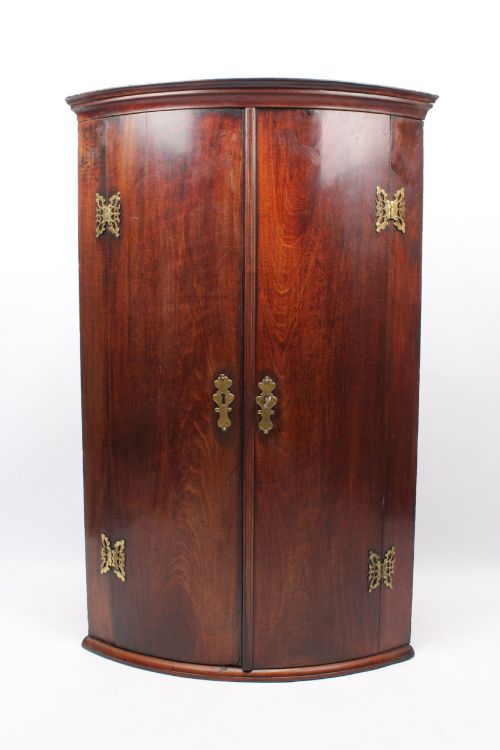
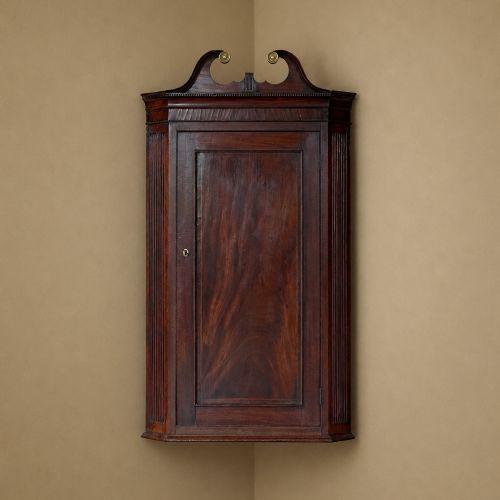
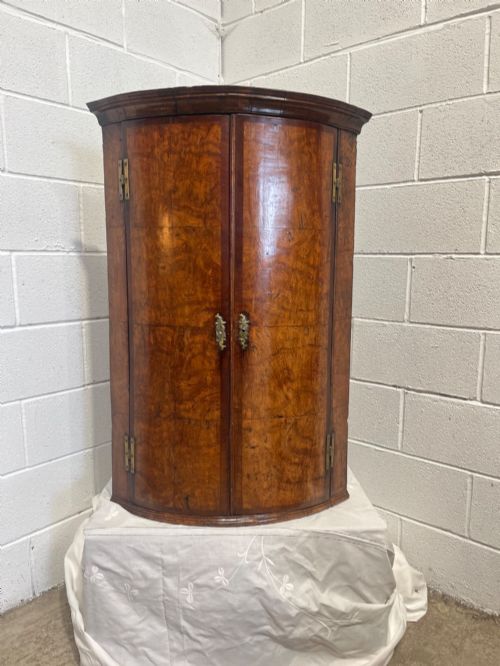
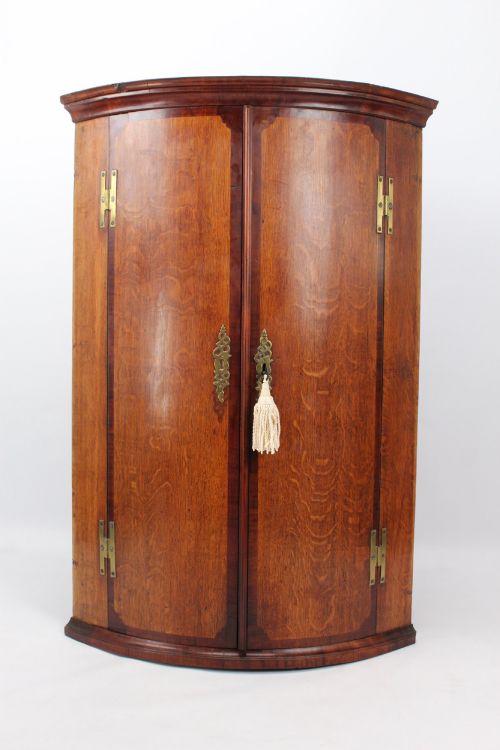
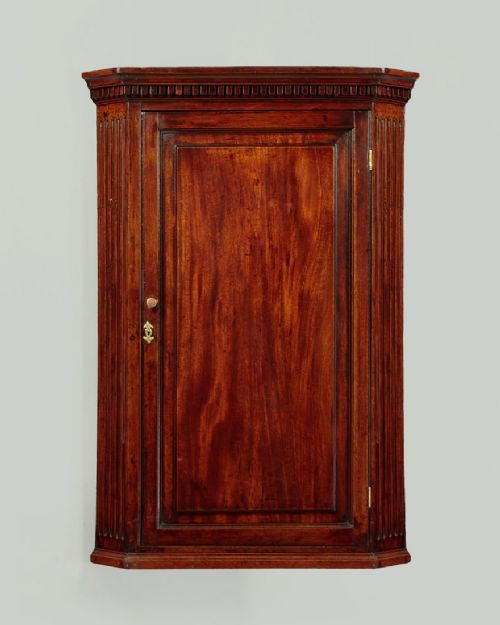
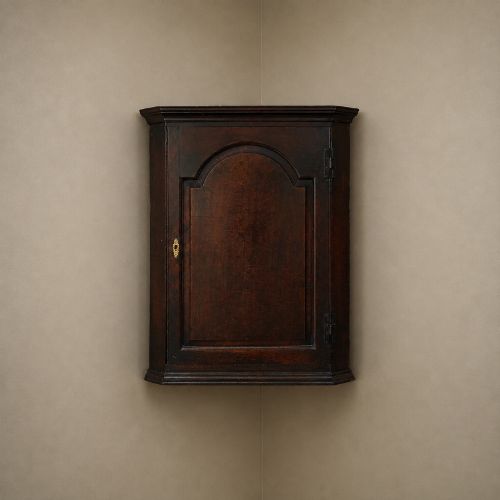
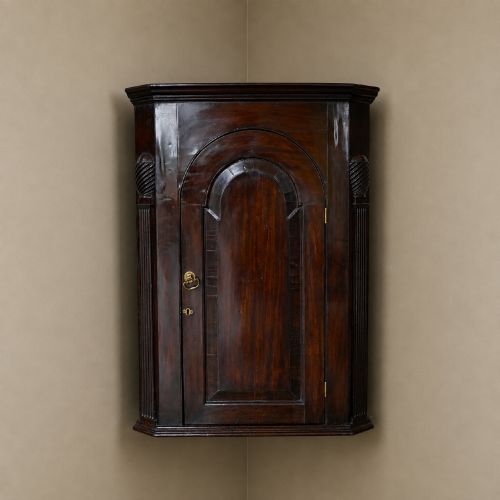
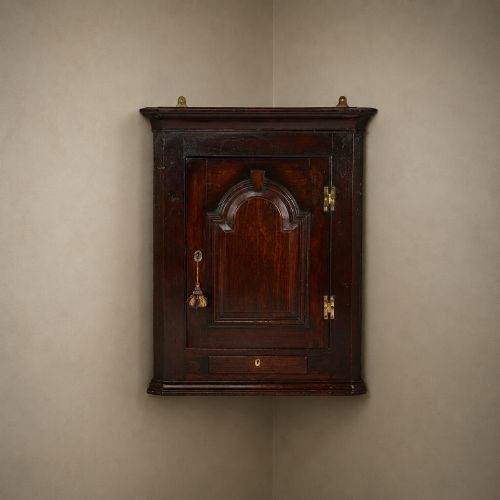
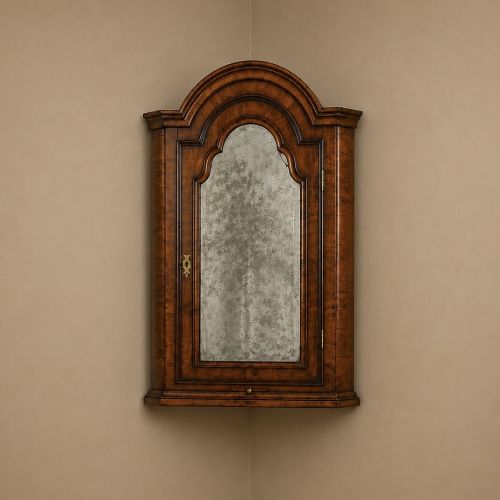
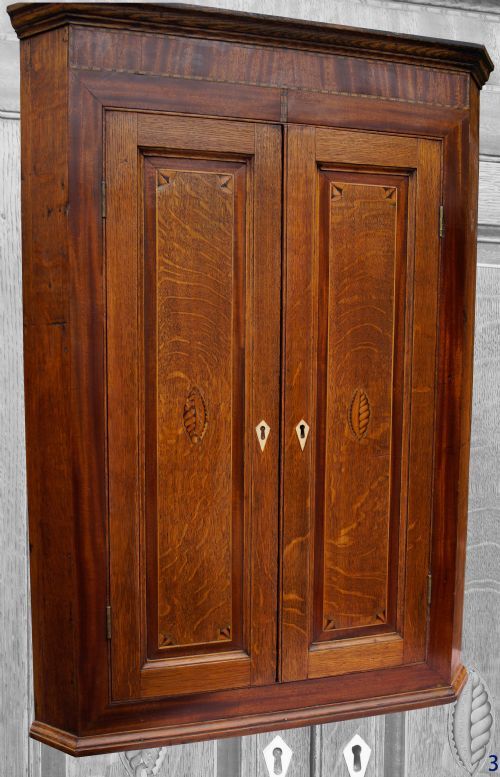
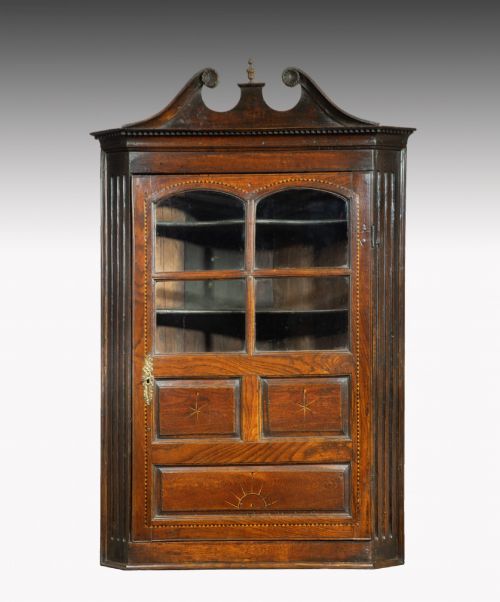
When searching for an antique corner wall cabinet, buyers encounter timber cupboards designed to fit snugly into room angles, saving floor space while securing objects behind closed doors or glass panes. The most frequent versions on this page originate in the Georgian period, taking the form of hanging cupboards built from native oak or imported mahogany.
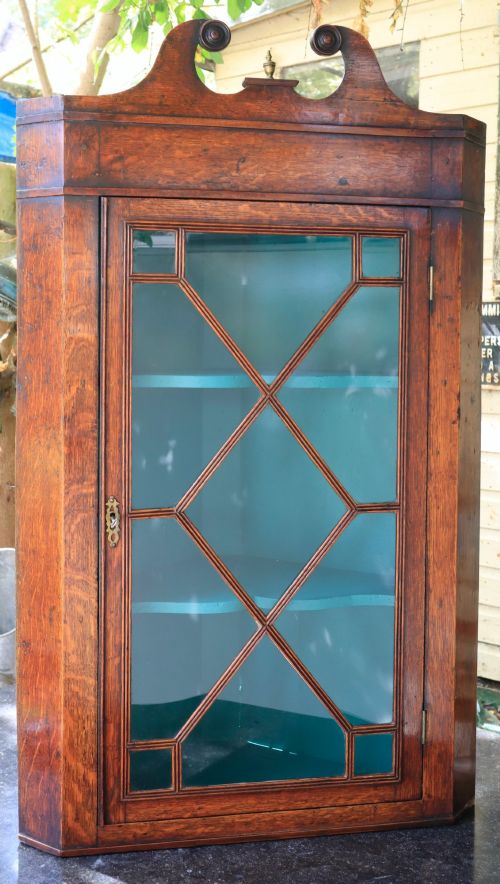
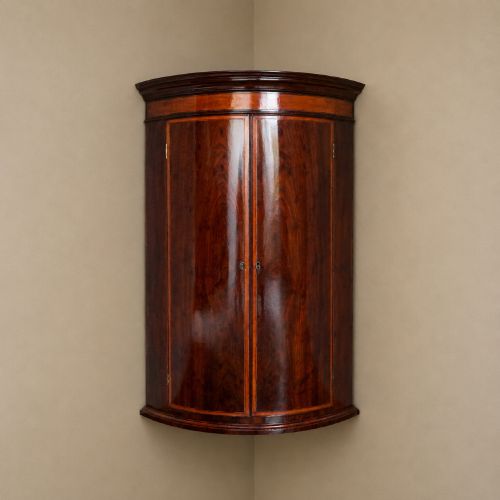
Many examples employ a bow front profile to soften the rigid ninety-degree angle against the wall, while others present a flat front suited to simpler vernacular interiors. Alongside Georgian output, later Victorian and Edwardian examples appear frequently, sometimes incorporating glazed doors for the display of ceramics or glassware.
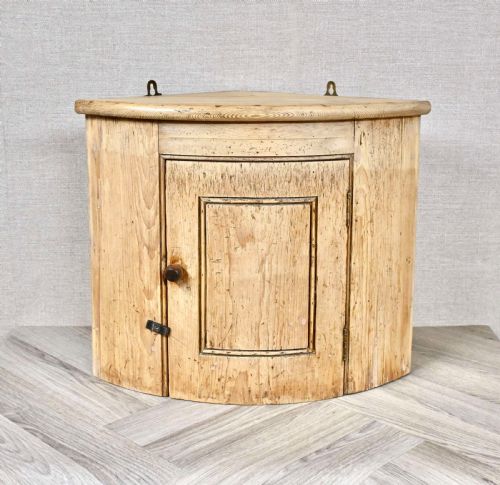
The corpus includes pieces executed in regional workshops across England, featuring timbers such as pine, walnut, and fruitwood alongside primary construction woods. These cabinets served diverse historical roles, from storing household spices and dry goods to holding bottles of wine or spirits in the parlour.
Materials and construction
Cabinet makers relied primarily on solid mahogany and oak for carcass construction, frequently selecting figured veneers like flame mahogany, burr oak, or plum pudding mahogany for primary display surfaces. Secondary timbers such as pine or deal often form the interior shelving and backboards.
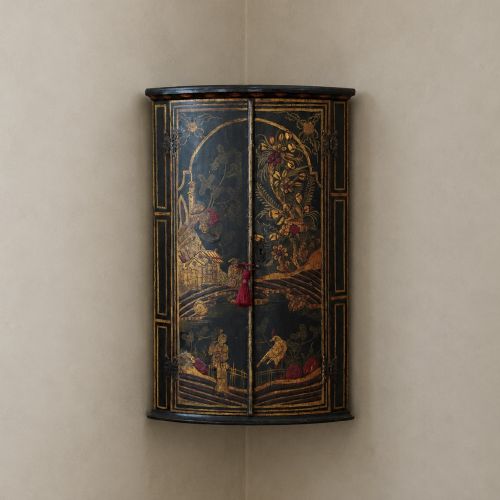
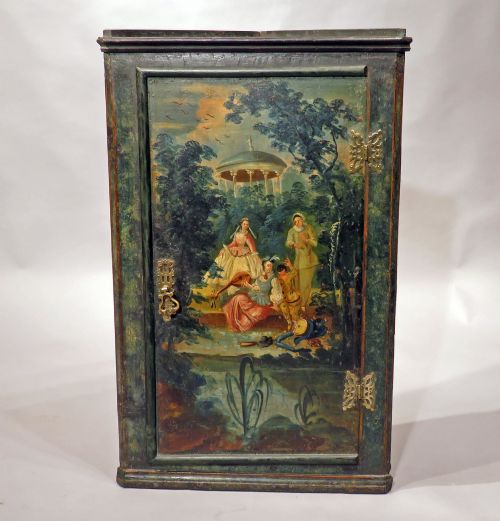
Joinery techniques combined traditional mortise and tenon frames with hand-cut dovetails on internal drawers, while brass H-hinges or butterfly hinges support the heavy timber doors. Surface decoration ranged from simple waxed finishes to elaborate japanned black lacquer work featuring Chinoiserie motifs in gold and colour.
Antique Corner Wall Cabinet Retail Price Guide 2026
Typical asking prices for corner wall cabinet among the pieces listed under this phrase on Sellingantiques today, from the lower quarter to the upper quarter. They describe what is for sale here now, not the wider market.
Listings feature woods including mahogany, oak, pine, walnut, and lacquer, spanning the Georgian, Victorian, and Edwardian eras.
Assessing construction and finish
Quality in these pieces rests upon timber selection and the crispness of internal joinery, distinguishing utilitarian utility cupboards from high-status parlour furniture. Superior examples utilise dense, highly figured hardwoods with well-matched grain patterns across the door panels and curved drawer fronts.
The refinement of brass hardware, the presence of original working locks with functional keys, and delicate decorative elements such as string inlay or astragal glazing bars elevate specific pieces above standard workshop output. Original painted interior surfaces and untouched historical patination further separate well-preserved specimens from heavily restored items.
The Antique Corner Wall Cabinet Glossary
- Bow front
- A convex curved cabinet front that projects outward from the wall angles, softening the room's geometry. This shape gained popularity during the Georgian era for both mahogany and painted pine cupboards.
- Astragal glazed
- A door construction utilising thin moulded timber strips to divide glass panes into smaller geometric sections. This technique allows objects stored within to remain visible.
- Japanned
- A European imitation of East Asian lacquerwork, created by applying layers of resin varnish and decorating the surface with raised metallic motifs. It appears on select 18th-century pieces.
- Candle slide
- A pull-out wooden board mounted beneath the cupboard doors to hold lighting while the owner accessed the contents. These sliding shelves are characteristic of early 18th-century examples.
Antique Corner Wall Cabinet: Frequently Asked Questions
How were corner cabinets used?
These cupboards provided practical storage in rooms where floor space was limited, holding tableware, documents, or dry goods out of the way.
Finer versions often served as miniature cellarettes in dining rooms, keeping wine bottles and glassware secure behind locked doors.
Are these cabinets difficult to hang?
Most wall-hanging examples feature sturdy internal fixing points or brackets built into the rear framing to support the weight of solid timber.
Because antique cabinets are heavy, particularly those made from dense mahogany or oak, secure attachment to structural wall studs is essential.
What is astragal glazing?
Astragal glazing refers to doors divided into multiple glass panes held together by slender wooden framing bars.
This technique became common in late 18th and 19th-century display cabinets, allowing owners to exhibit porcelain while protecting it from dust.
How do I date a corner cupboard?
Dating relies on timber choice, hinge types, construction methods, and prevailing decorative styles such as Georgian proportions or Edwardian inlay.
Hand-cut dovetailing, pegged joints, and secondary woods inside the carcass offer reliable clues to a piece's century of origin.