

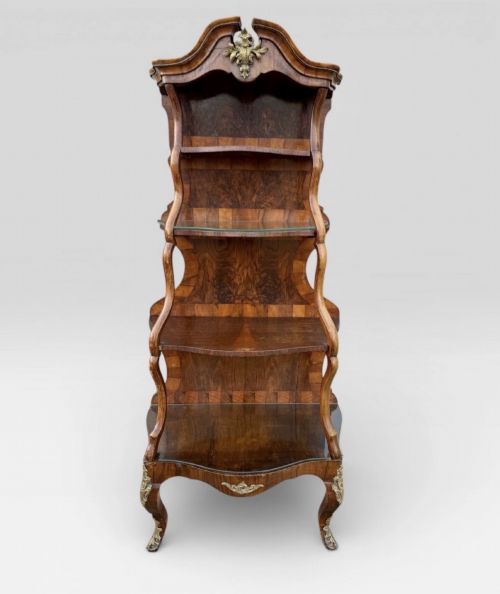


Antique Corner Shelving Stand
An antique corner shelving stand makes effective use of unutilised room space while displaying books and ornaments.
Antique Corner Shelving Stand
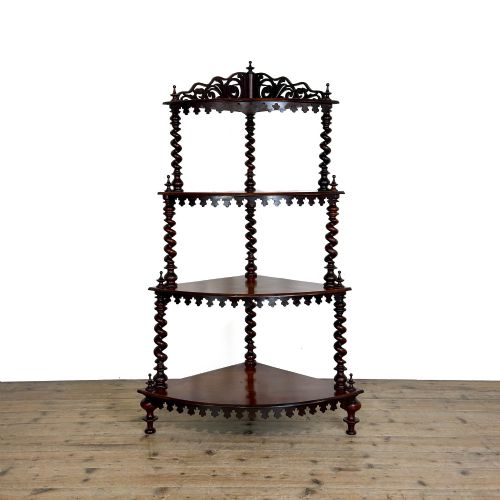
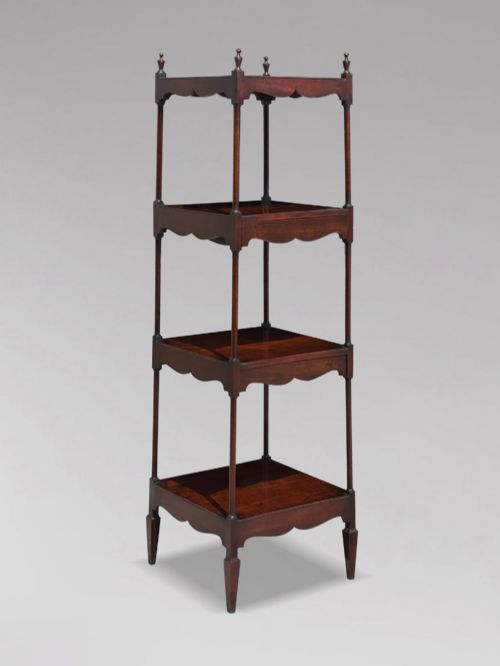
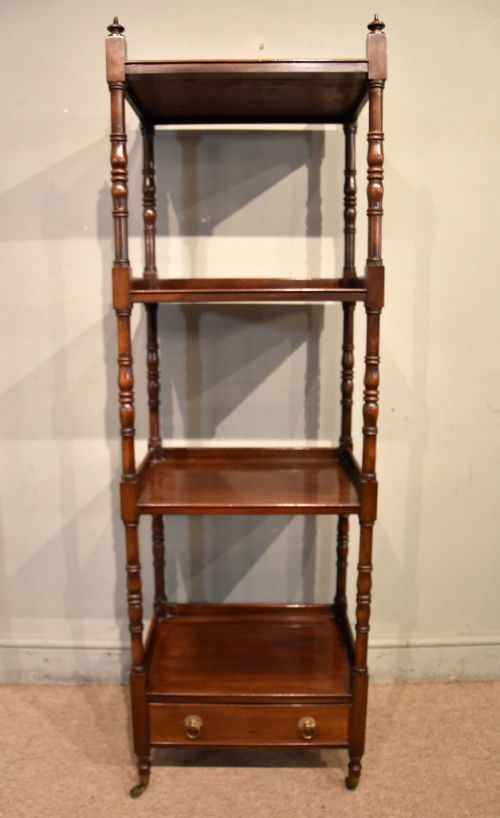
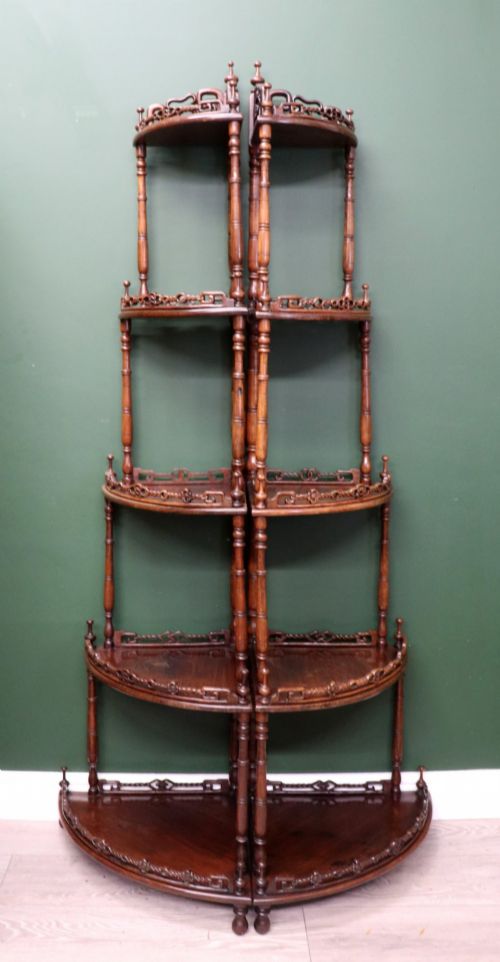
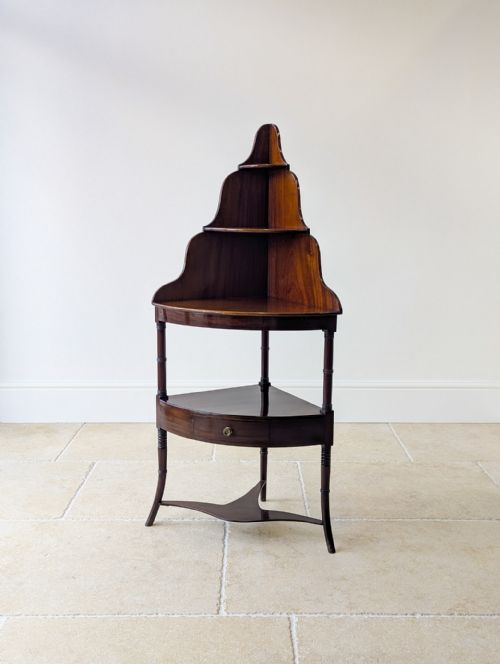
An antique corner shelving stand uses vertical space efficiently by fitting neatly into room angles. The pieces available include tiered whatnots, etageres, display cabinets, and corner stands.
Most examples date from the nineteenth century, particularly the Victorian and Regency periods, alongside earlier Georgian iterations. Mahogany and walnut appear frequently as the primary woods for construction.
Materials and construction methods
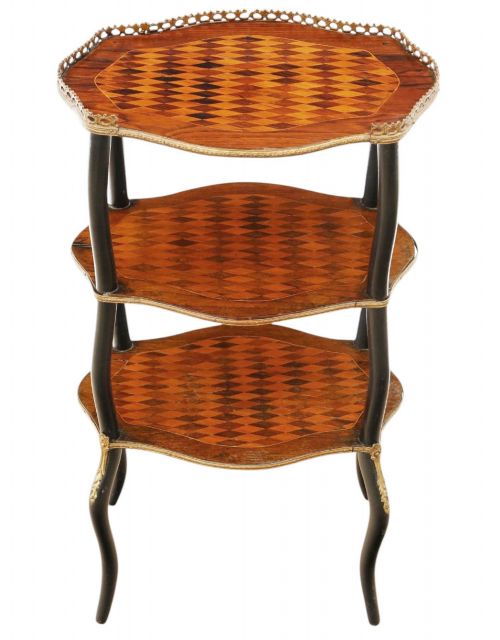
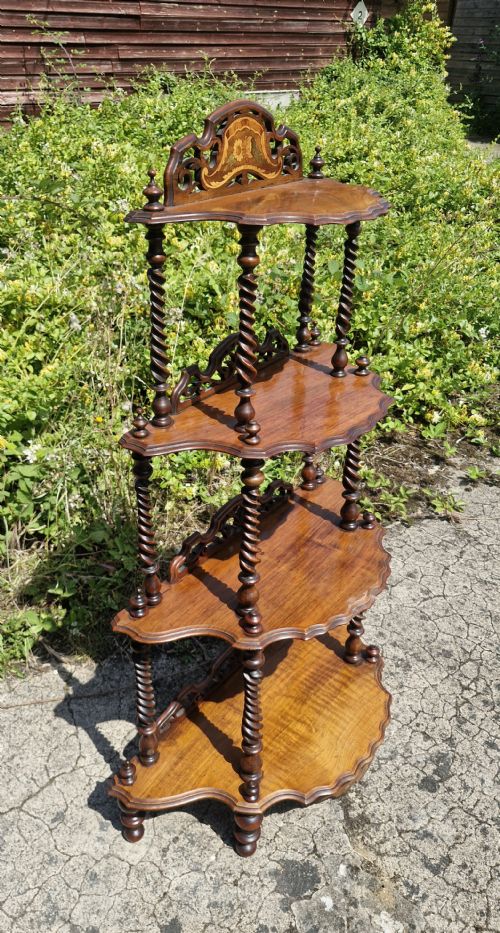
Cabinet makers utilised dense hardwoods such as mahogany, walnut, burr walnut, and rosewood to build sturdy tier supports and display frames. Inlaid parquetry, ebonised wood, and brass mounts add decorative detail to finer pieces.
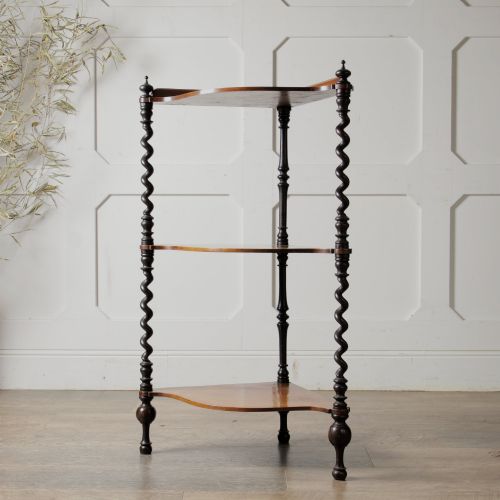
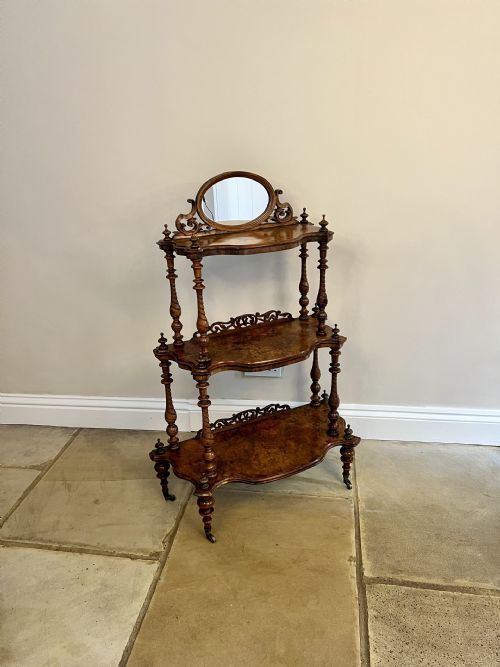
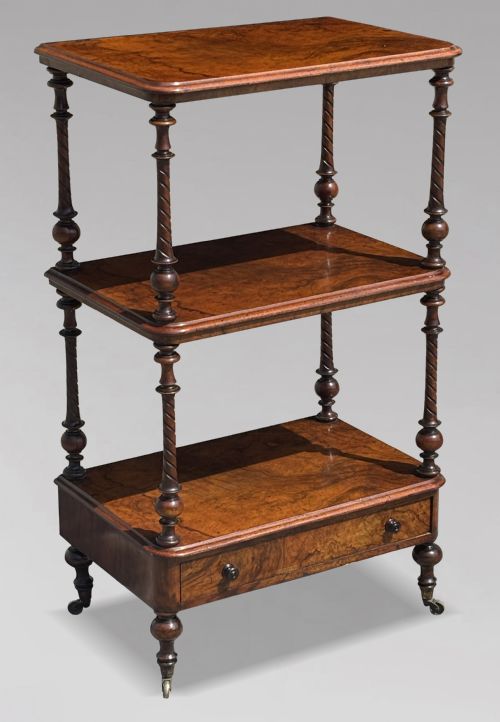
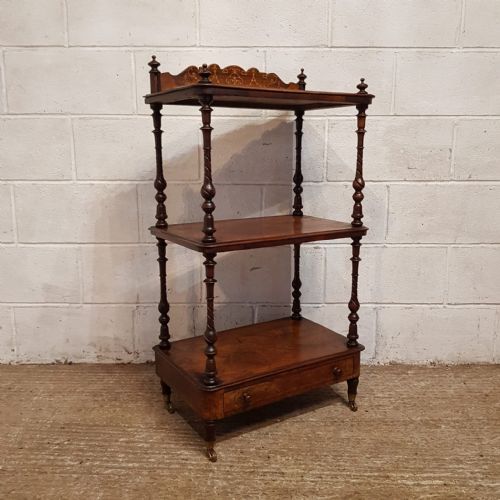
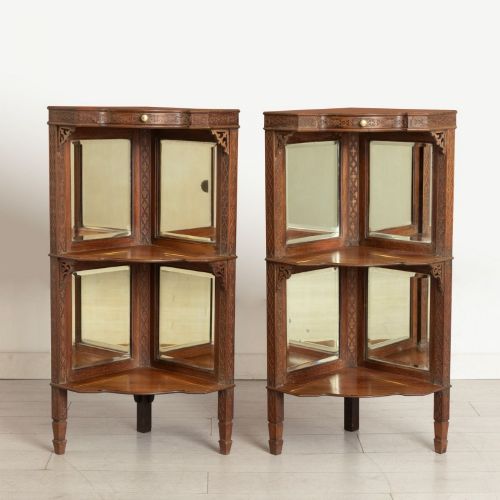
Several items incorporate turned columns, barley twist uprights, glass panels, and mirror glass backs to lighten the heavy timber appearance. Specialised variants employ lighter materials like bamboo or wrought iron.
Listings span the eighteenth, nineteenth, and twentieth centuries, featuring mahogany, walnut, rosewood, and glass.
Indicators of quality
Superior examples display careful selection of timber grain, particularly in burr walnut veneers and figured mahogany surfaces. Finely turned supports and precise inlay work separate standard utilitarian pieces from workshop items of higher status.
Structural rigidity in multi-tiered frameworks indicates sound joinery. The crispness of carved details and the integration of glass or mirror elements define the standard of the finish.
Gillows·Edwards & Roberts
The Antique Corner Shelving Stand Glossary
- Etagere
- A piece of furniture consisting of a set of open shelves for displaying small objects. This term is often used interchangeably with whatnot.
- Parquetry
- A geometric mosaic of wood pieces used for decorative floors and furniture panels. It creates patterned surfaces on tabletops and cabinet doors.
- Barley twist
- A type of turned wooden column resembling the spirals of a barley sugar twist. This decorative turning method appears frequently on nineteenth-century supports.
- Demi-lune
- A half-moon shape used for tables and console units designed to sit flush against a wall. It provides a curved front profile.
Antique Corner Shelving Stand: Frequently Asked Questions
What is an antique corner shelving stand used for?
These stands serve primarily to display ornaments, books, and collections while utilising neglected corner spaces in a room.
Multi-tiered designs allow owners to organise objects vertically without occupying substantial floor area.
How do I identify a Victorian corner stand?
Victorian stands typically feature darker timbers such as walnut, mahogany, or rosewood, often with turned columns or barley twist uprights.
Many examples incorporate multiple open tiers or glazed doors specifically built to fit right angles.
What is the difference between a whatnot and an etagere?
A whatnot is traditionally a multi-tiered shelving unit used for general display and storage of small household items.
An etagere functions similarly but frequently emphasises decorative display over utility with lighter framing.
Where should I place a corner shelving stand?
These units fit directly into the ninety-degree junction of two walls to maximise empty vertical space.
They work well in drawing rooms, hallways, and dining areas to hold decorative ceramics or small books.