


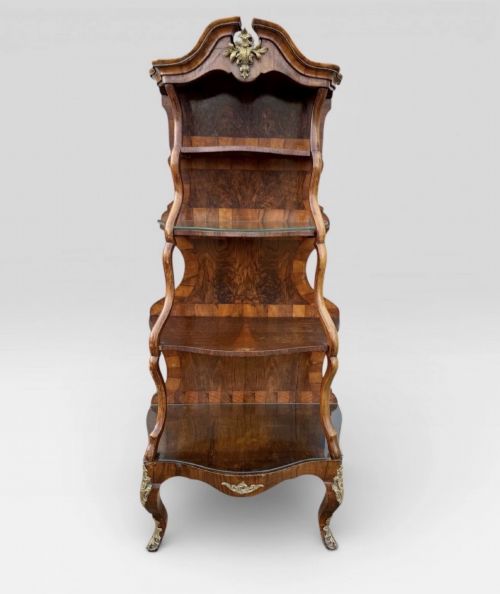


19th Century Walnut Whatnot
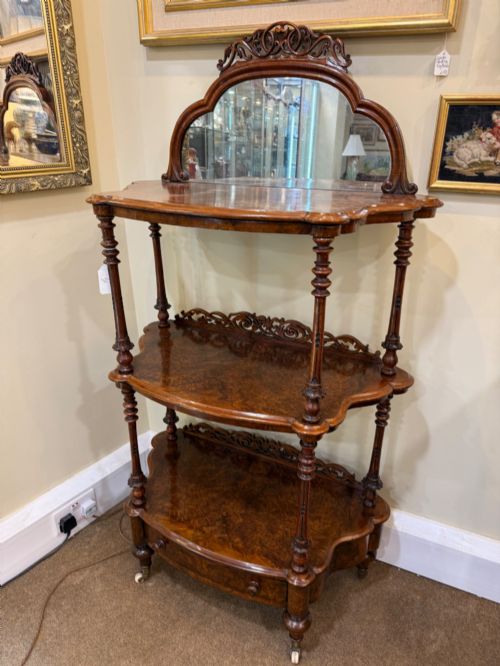
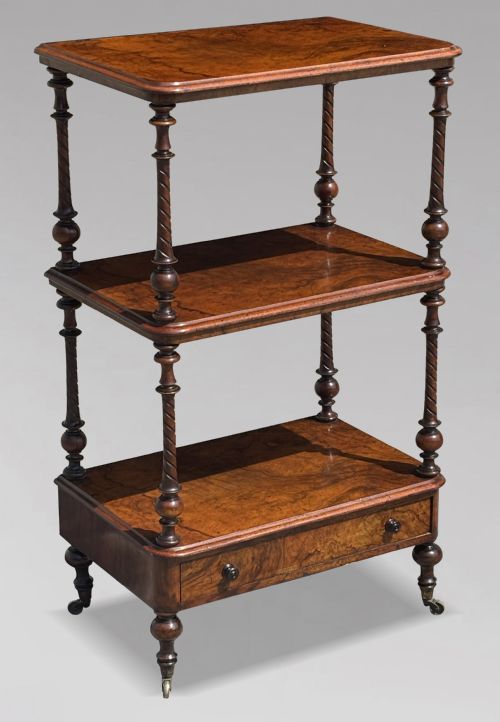
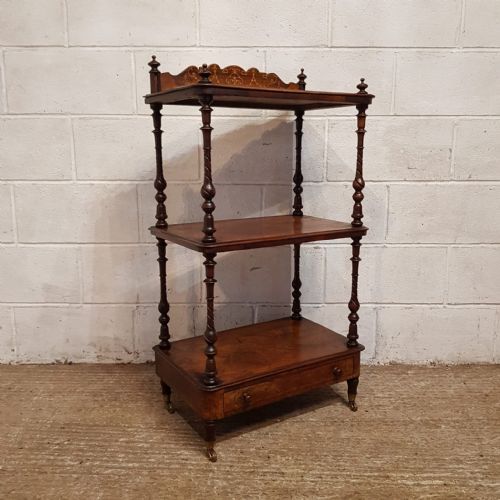
A 19th century walnut whatnot provides tiered display space with exceptional timber grain, serving as a practical stand for books and ornaments.
19th Century Walnut Whatnot
A 19th century walnut whatnot is a multi-tiered display stand designed for the Victorian parlour to hold books, ceramics, and decorative objects. These pieces appear primarily as tiered open shelves, corner units, and combined forms such as canterburys or music cabinets.
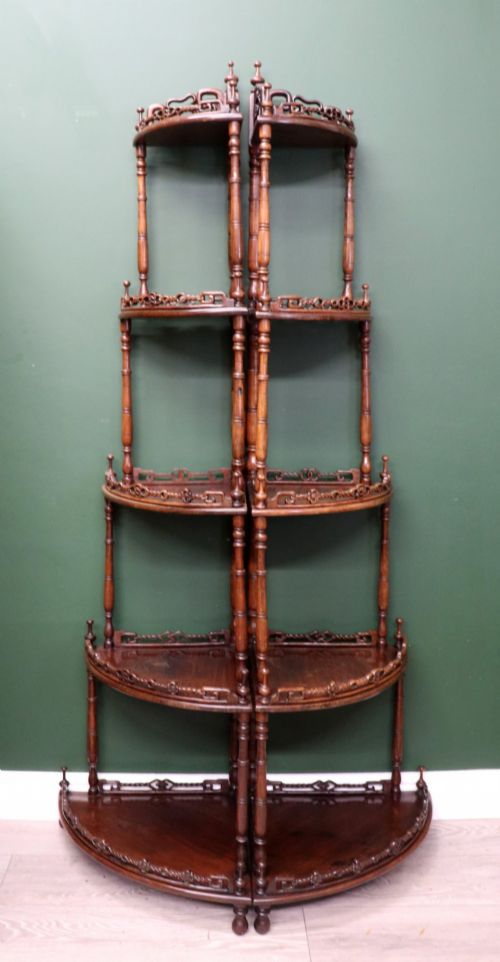
The standard version met on this page is the Victorian burr walnut three-tier or four-tier model, often shaped in serpentine outlines or built as demi-lune display console tables. Originating across the 19th century, particularly around the 1860 to 1880 decades, these items utilise rich timber figures to catch the eye.
Alongside standard open shelving units, variations include corner cabinets, chiffoniers, and low display stands incorporating glass or gilt metal mounts. Each form delivers vertical storage while maintaining a slender footprint suited to smaller reception rooms.
What varies in quality
The selection of timber grain largely dictates the visual merit of each piece, with dense, highly figured burr walnut commanding greater appreciation than plain timber surfaces. Finely executed boxwood stringing and crisp inlay work demonstrate the maker's skill.
Structural complexity also defines the tier of the piece, moving from simple open shelves to sophisticated combinations like canterburys with work tops or serpentine demi-lune consoles. The integration of gilt metal mounts, brass details, and stable tier supports elevates the standing of the furniture.
19th Century Walnut Whatnot Retail Price Guide 2026
Typical asking prices for 19th century walnut whatnot among the pieces listed under this phrase on Sellingantiques today, from the lower quarter to the upper quarter. They describe what is for sale here now, not the wider market.
Victorian households utilised these agile stands to display everything from sheet music to stuffed birds without cluttering the floor.
The 19th Century Walnut Whatnot Glossary
- Whatnot
- A piece of furniture consisting of a set of open shelves for displaying small objects. These tiered stands date predominantly to the Victorian era.
- Burr walnut
- A prized veneer sliced from walnut tree growths, displaying complex swirling grain patterns. Cabinetmakers utilised this timber for its decorative impact on tabletops and shelf faces.
- Etagere
- A French term for a piece of furniture with a tier of open shelves for displaying ornaments. These light stands share close similarities with English whatnots.
- Canterbury
- A low stand fitted with partitions for holding sheet music or books, frequently combined with whatnot shelving above. They often date from the mid-19th century.
- Demi-lune
- A half-moon shape used for console tables and corner fitments. This curved form appears on various walnut display pieces.
19th Century Walnut Whatnot: Frequently Asked Questions
What is a 19th century walnut whatnot used for?
These pieces served as display stands for ornaments, ceramics, and books in Victorian parlours. The multi-tiered shelving allowed households to exhibit decorative possessions across vertical space.
Certain variations included lower sections fitted as music cabinets or canterburys for storing folios and papers. Today, they function similarly as accent furniture in living spaces.
How do I identify a Victorian whatnot?
Victorian whatnots are characterised by tiered wooden platforms supported by turned columns or uprights. They frequently showcase burr walnut veneers and boxwood inlay.
Dates generally span from the mid-to-late 19th century, incorporating styles like Rococo Revival or French Napoleon III influences.
What is the difference between an etagere and a whatnot?
An etagere is fundamentally a French-derived term for a set of open display shelves, while whatnot is the traditional English equivalent. Both terms describe tiered furniture intended for ornamental display.
In practice, makers and dealers often used the descriptions interchangeably during the 19th century.
How do I clean burr walnut furniture?
Dust the timber regularly with a soft, dry cloth to prevent dirt accumulation on the delicate burr veneer. Avoid harsh chemical polishes that can damage the historical finish.
Apply traditional beeswax sparingly when the wood appears dry, buffing gently to maintain the natural sheen.