





Victorian Four Tier Whatnot
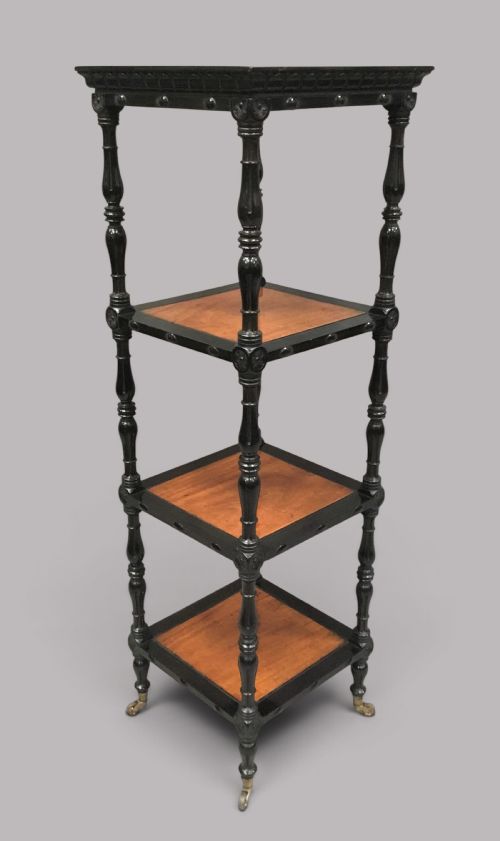
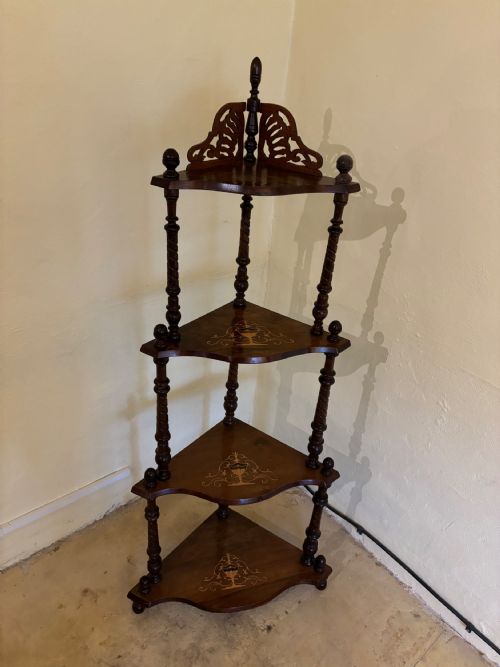
A victorian four tier whatnot provides stacked open shelving for displaying ornaments and books while anchoring a room with period timber.
Victorian Four Tier Whatnot
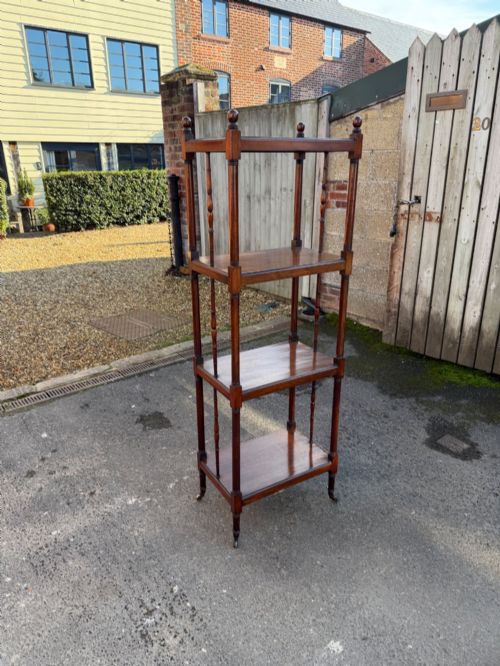
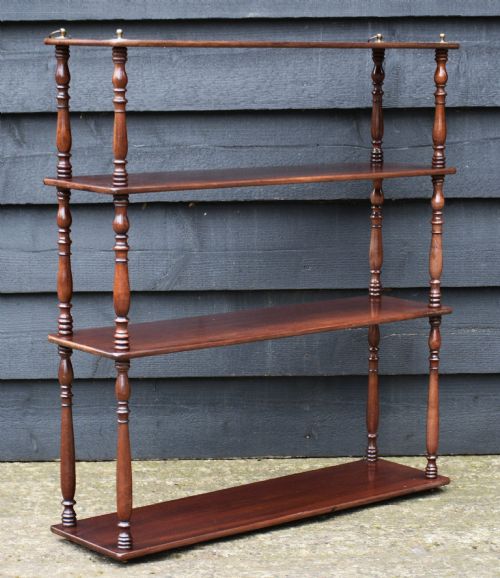
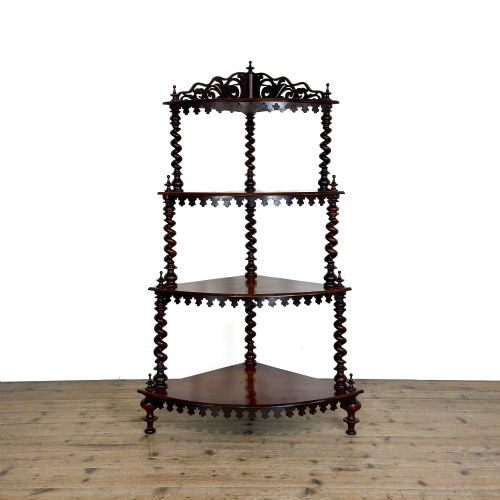
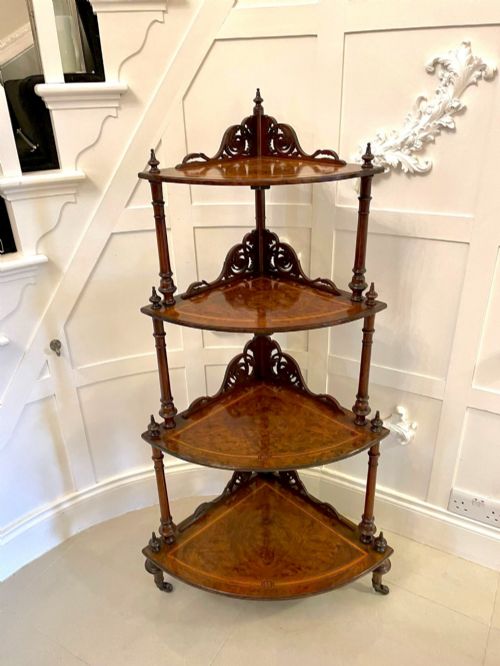
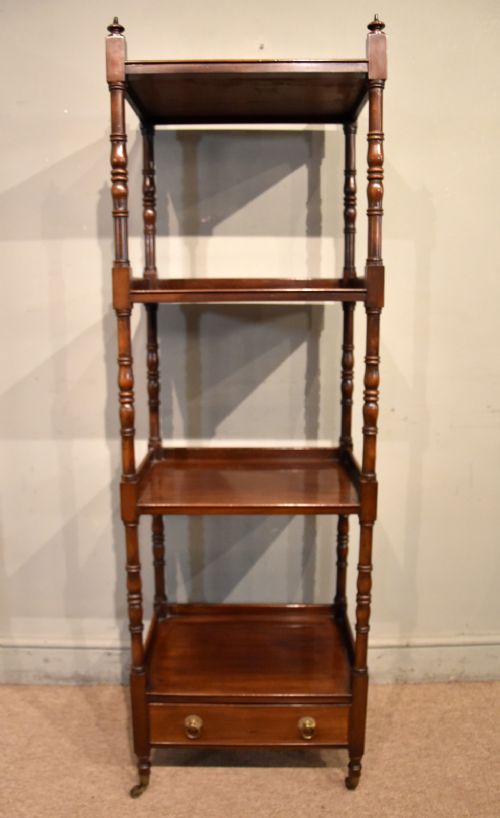
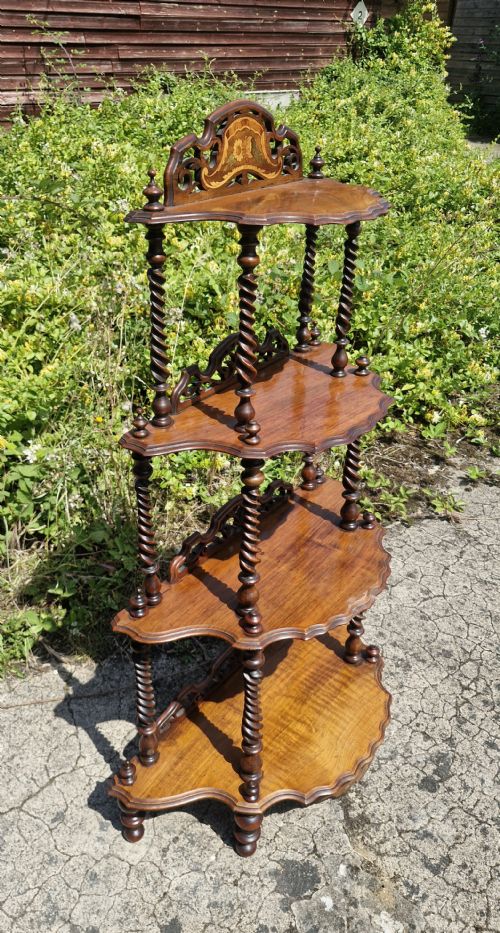
A victorian four tier whatnot is an open shelving unit designed to display ornaments, books, and small collectables across four distinct tiers. These tiered stands appear primarily in mahogany, walnut, burr walnut, and rosewood, spanning the nineteenth century from the eighteen-fifties through to nineteen-hundred.
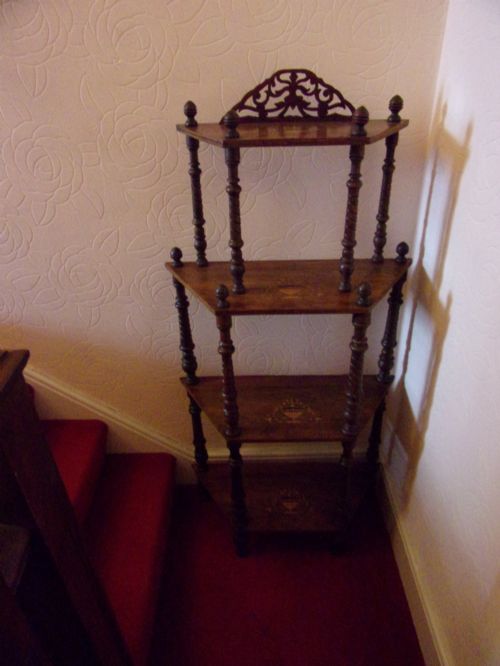
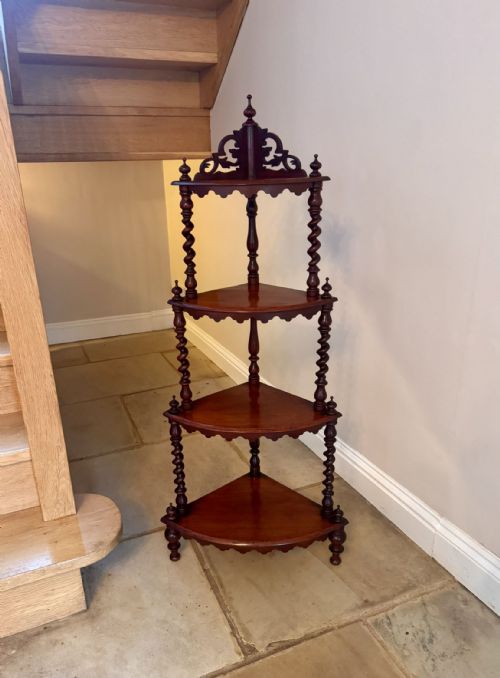
The pieces divide into freestanding rectangular display shelves and corner stands designed to fit snugly into room angles. Mahogany and rosewood examples dominate the earlier decades, while walnut and inlaid variants emerge more frequently towards the later Victorian and Edwardian periods.
How they were made
Cabinetmakers constructed these display stands using dense timbers such as mahogany, walnut, rosewood, and burr walnut, often supported by turned columns or uprights. Selected pieces incorporate brass fittings, marquetry inlay, or wood inlay to decorate the tiers and structural uprights.
Joinery techniques focus on stability across multiple levels, utilising turned supports and corner posts to bear the weight of the stacked shelves. Surfaces receive polished finishes that highlight the natural grain of the mahogany or the rich figure of the burr walnut.
Victorian Four Tier Whatnot Retail Price Guide 2026
Typical asking prices for victorian four tier whatnot among the pieces listed under this phrase on Sellingantiques today, from the lower quarter to the upper quarter. They describe what is for sale here now, not the wider market.
Some maritime examples utilised sturdy teak built to withstand rolling ship cabins while still displaying a captain's treasured china.
What varies in quality
The choice of timber and the complexity of the grain dictate the visual impact of each tier, with burr walnut and figured rosewood sitting at the upper end of the range. Subtle marquetry inlay and finely turned columns require skilled handwork that distinguishes finer examples from plain utility shelving.
Proportion and structural harmony between the four tiers determine the architectural success of the stand, whether built for a corner or a straight wall. Superior pieces maintain crisp detail in their turned supports and clean joints where the shelves meet the uprights.
The Victorian Four Tier Whatnot Glossary
- Whatnot
- An open set of shelves used for displaying ornaments and curiosities, popular throughout the nineteenth century.
- Etagere
- A French term for a piece of furniture with several tiers of shelves, often used interchangeably with whatnot in nineteenth-century inventories.
- Burr walnut
- Timber taken from a growth on the walnut tree, prized for its swirling, highly figured grain patterns on cabinet fronts and tier surfaces.
- Marquetry
- Decorative woodwork where pieces of veneer are fitted into a ground to form floral or geometric patterns on the shelves.
- Turned
- Shaped on a lathe to create rounded, cylindrical columns or supports for the tiers.
Victorian Four Tier Whatnot: Frequently Asked Questions
What is a victorian four tier whatnot used for?
These tiered stands served historically to display decorative objects, ceramics, and books in drawing rooms and parlours. Today, they function well in modern interiors for holding plants, lamps, and collections while taking up minimal floor space.
Their open construction allows light to pass through, making them suitable for smaller rooms where heavy cabinets might feel too imposing.
How do I choose between corner and freestanding models?
Corner whatnot units make efficient use of unused room angles, particularly in smaller spaces. Freestanding rectangular stands work best placed flat against a wall as a distinct focal point.
Consider the layout of your room and the available wall space before deciding which configuration suits your interior.
What timbers were used for these shelves?
Cabinetmakers primarily worked with mahogany, walnut, burr walnut, and rosewood during the nineteenth century. Less common variations include teak on ship-related pieces or exotic woods like satinwood and ebony.
The choice of timber often reflects the decade of production, with rosewood and mahogany prominent in earlier pieces and walnut favoured later.
How do I date a whatnot?
Dating relies on timber selection, decorative techniques, and structural cues recorded across the nineteenth century. Earlier mid-nineteenth-century examples frequently feature solid mahogany or rosewood, while later Victorian and Edwardian pieces often incorporate burr walnut, marquetry inlay, and satinwood.
Turned column styles and feet also shift from heavy classical proportions to more slender, refined supports towards the end of the century.