




Antique Copper Enamel Box
These antique copper enamel box pieces are small portable containers of vitreous colour that collectors prize for their miniature painted scenes.

Antique Copper Enamel Box
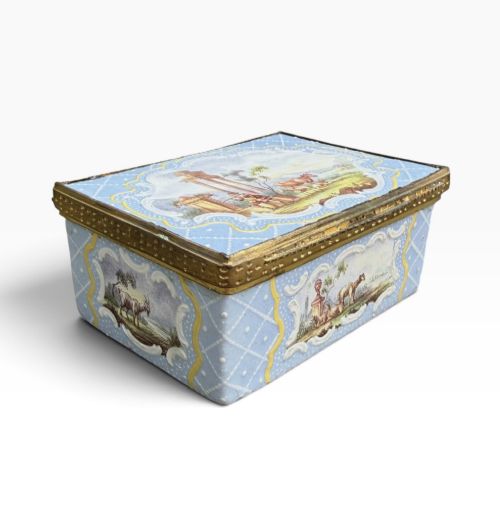
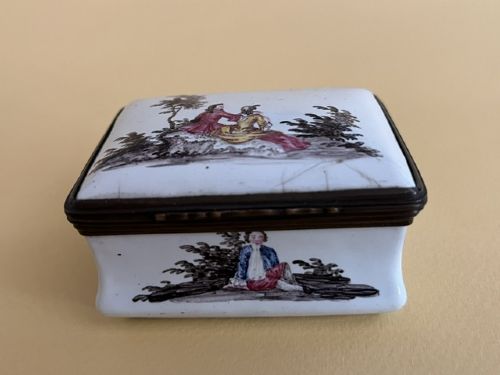
When you search for an antique copper enamel box, you look at small functional containers created for tobacco, cosmetics, or keepsakes. The most common examples on this page date from the eighteenth century, particularly the Georgian period from Staffordshire and Bilston.
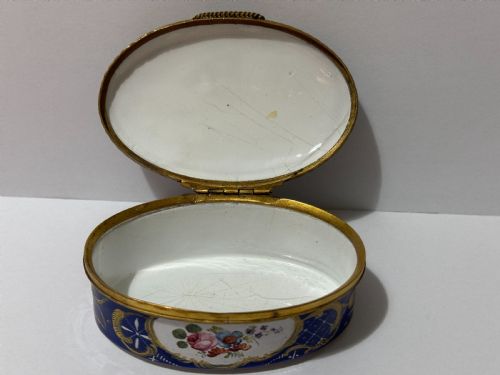
These items take several distinct forms, including rectangular or oval patch boxes, snuff boxes, and novelty trinket pieces. Many feature hinged lids decorated with hand-painted pastoral scenes, portraits, or topographical inscriptions.
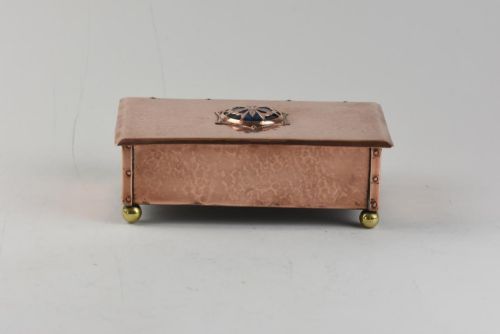
Alongside English Staffordshire work, the selection includes examples from Chinese Beijing workshops, Japanese Meiji makers, and Arts and Crafts studios. Each piece reflects the specific decorative tastes and manufacturing standards of its period and origin.
Materials and construction methods
The foundation of each piece is formed from hammered or shaped copper, which provides a sturdy metal base for the vitreous coating. Artisans apply powdered glass to the metal surface and fire it at high temperatures to fuse the enamel layer permanently.
Gilt metal, brass, and gilded copper mounts often frame the edges and secure the hinged lids of these containers. Surface decoration relies on fine enamel pigments fired in successive stages to achieve detailed painted compositions.
Certain novelty boxes take the surprising form of beetles, ladybirds, and spaniels to amuse the Georgian pocket.
Assessing quality and craftsmanship
The fineness of the hand-painted detail on the lid distinguishes standard examples from exceptional pieces. Superior items display crisp brushwork in the miniature scenes and precise registration of the colours across the fired surface.
The weight and finish of the metal mounts also indicate the standard of production. Heavier, well-fitted brass or gilt metal frames demonstrate careful assembly by the maker.
The Antique Copper Enamel Box Glossary
- Bilston enamel
- A term for vitreous enamel items produced in the Staffordshire town of Bilston during the eighteenth century. These works typically feature copper bodies with white enamel coatings and polychrome painted details.
- Patch box
- A small pocket container used to hold cosmetic beauty patches worn on the face during the Georgian era. They frequently incorporate a mirror inside the lid.
- Snuff box
- A small lidded container designed to hold powdered tobacco for nasal ingestion. These pieces often feature hinged lids and detailed miniature paintings.
- Vitreous enamel
- A material made by fusing powdered glass to a metallic substrate through firing. This creates a smooth, glossy, and durable decorative surface.
- Bonbonniere
- A small ornamental box intended for holding sweets or sugarplums. They appear in various novelty shapes and miniature forms.
Antique Copper Enamel Box: Frequently Asked Questions
What were patch boxes used for?
Georgian society used these small containers to hold silk or velvet cosmetic patches. People applied these small shapes to the face to cover blemishes or display fashion statements.
Inside the lid, makers frequently fitted a small mirror to assist with placement. These boxes remained pocket-sized for convenience throughout the day.
How do I date an enamel box?
Examining the metal mounts, base material, and painting style helps determine the period. Eighteenth-century pieces often display characteristic copper construction and specific Staffordshire palette colours.
Inscriptions naming specific places or historical figures also provide clear clues to the date of manufacture. Comparing the form to documented examples confirms the era.
Where were Bilston boxes made?
Makers produced these objects in the English Midlands, specifically within Staffordshire and the town of Bilston. This region operated as a major centre for enamel production during the Georgian period.
Local workshops employed skilled painters and metalworkers to create these portable luxury items. The distinctive manufacturing techniques separate them from continental European wares.
How should I clean my enamel box?
Gentle maintenance preserves the fragile glass surface and metal mounts. Use a soft, dry cloth to remove dust without applying moisture or cleaning agents.
Avoid abrasive materials that can scratch the fired enamel or damage the gilt metal edges. Proper handling protects the delicate hinge mechanisms from strain.