



Antique Copper Dish
An antique copper dish brings tactile warmth and historical handcraft into a modern interior, spanning from practical Georgian cookware to ornate Japanese cloisonne enamel.
Antique Copper Dish
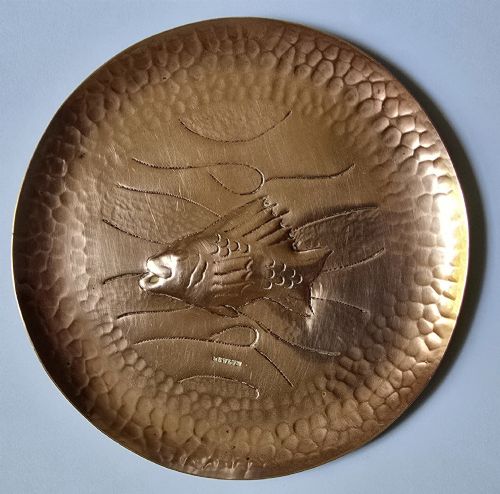
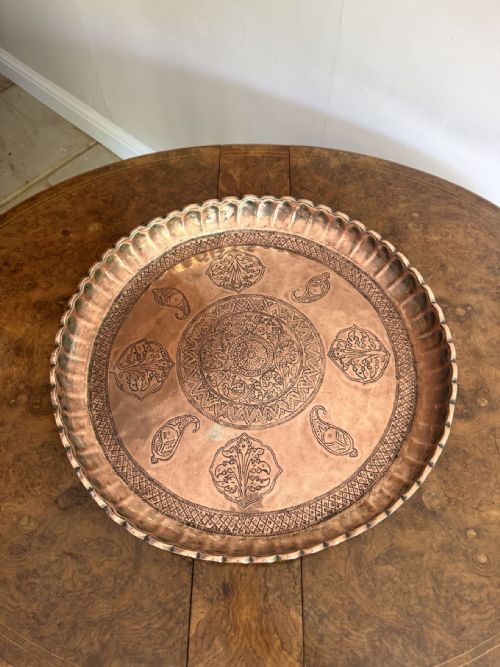
An antique copper dish encompasses a wide variety of domestic, decorative and ceremonial vessels forged from the late eighteenth century through the early twentieth century. Buyers seeking these items encounter everything from utilitarian Georgian kitchen pans and chafing dishes to large decorative wall chargers and visiting card trays.
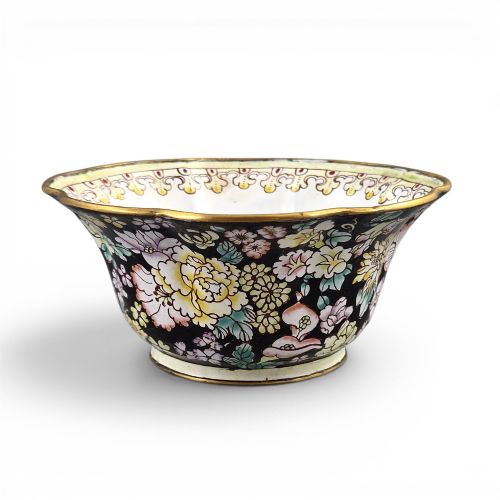
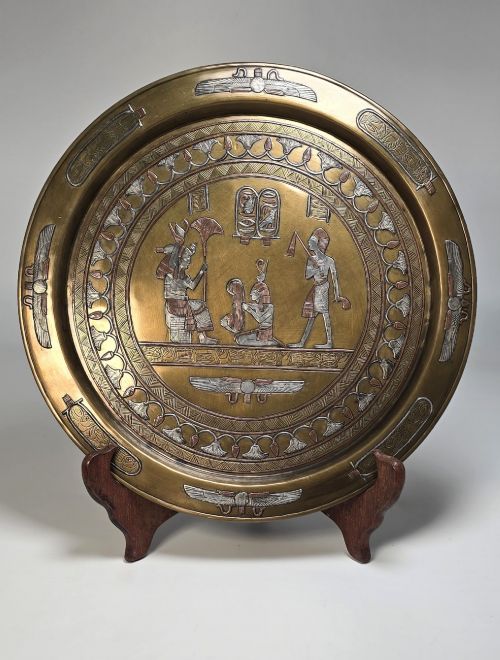
The selections range across diverse geographical origins and artistic movements, including British Arts and Crafts metalwork, Japanese Meiji period cloisonne enamel, Middle Eastern Cairo Ware, and Chinese Canton enamels. Most examples found here date from the nineteenth century, showcasing deep historical ties to domestic utility and international decorative arts.
Distinctions in craftsmanship and design
Quality rests upon the crispness and depth of the hand-executed repousse work, the precision of engraved motifs, and the complexity of inlaid metalwork. Superior examples display balanced composition, careful finishing, and distinct artistic signatures or attributed workshop provenance.
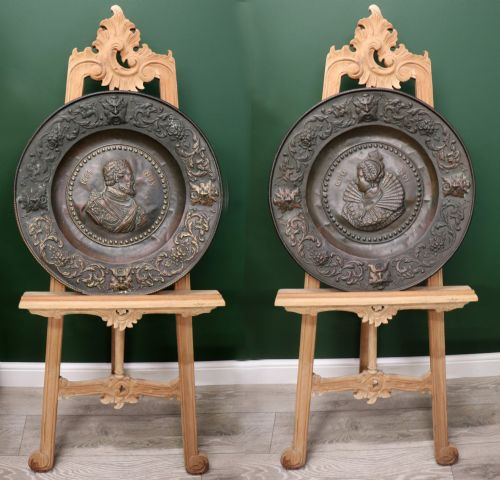
Simpler domestic kitchenware relies on robust gauge and utilitarian form, whereas decorative chargers and plates are judged by the intricacy of their pictorial storytelling, such as dragons, figures, and naturalistic flora.
Among the historical animal imagery, meticulous Japanese artisans preserved leaping koi, owls, and dragons forever locked in shimmering enamel.
Newlyn·Faulkner Bronze Company
The Antique Copper Dish Glossary
- Repousse
- A metalworking technique where the artisan hammers the metal from the reverse side to form a raised design in relief on the front.
- Cloisonne
- An ancient decorative art for metalwork objects, where enamel paste is applied within compartments made of soldered flat metal wires.
- Cairo Ware
- Late nineteenth-century metalware produced in Egypt or Europe for the Grand Tour market, typically featuring brass inlaid with silver and copper.
- Charger
- A large ornamental plate or dish intended primarily for display on a wall, sideboard, or pedestal rather than dining use.
- Meiji Period
- The era in Japanese history spanning from 1868 to 1912, renowned for exceptionally fine cloisonne enamel and mixed-metal decorative arts.
Antique Copper Dish: Frequently Asked Questions
How were antique copper dishes used originally?
Many copper vessels served practical culinary roles in Georgian kitchens as pans, chafing dishes, and warmers. Others functioned as decorative chargers, calling card trays, or ceremonial bowls displayed within formal rooms.
Over time, ornate iterations shifted entirely into ornamental items, particularly during the Arts and Crafts movement and the European fascination with Middle Eastern and Japanese export wares.
Can I polish my antique copper dish?
Polishing depends entirely on the finish and age of the specific piece. While plain Georgian cookware or nineteenth-century trays can take a bright polish, patinated surfaces and delicate cloisonne or enamel should generally remain untouched.
Removing natural patination or aggressive cleaning can diminish the historical character and destroy the surface stability built up over centuries.
How do I date an antique copper dish?
Dating relies on stylistic markers, construction methods, and any maker marks or workshop stamps. Arts and Crafts pieces usually point towards the late nineteenth or early twentieth century, while Georgian kitchenware displays heavier gauge hammering.
Japanese pieces often correspond to specific imperial eras like the Meiji period, and Middle Eastern Cairo Ware frequently aligns with nineteenth-century Grand Tour travel.
How should I display a copper charger?
Large chargers with pictorial motifs, such as dragons, figures, or floral scenes, suit wall mounting using specialised secure brackets. Smaller card trays and bowls look striking displayed flat on wooden surfaces or elevated on small stands.
Keeping them away from damp environments helps protect the metal surface and any inset enamel or silver inlay from environmental degradation.