





Antique Coopered Vessel
An antique coopered vessel is a stave-built container fashioned with metal bands, offering a robust form for domestic and naval use.
Antique Coopered Vessel
An antique coopered vessel combines traditional stave construction with metal banding, creating utilitarian objects built to hold liquids and dry goods. When exploring these pieces, collectors encounter forms ranging from domestic buckets and jugs to larger barrels and casks.
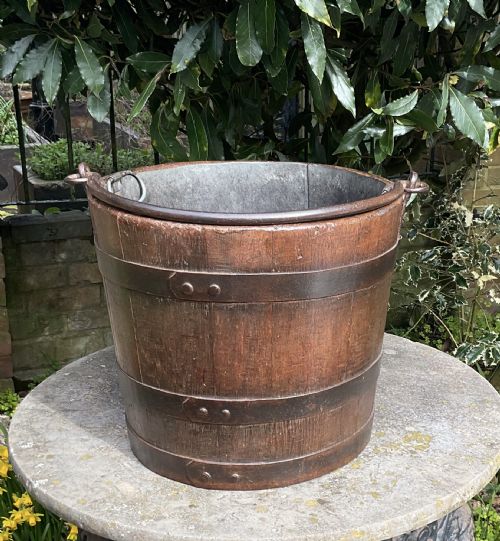
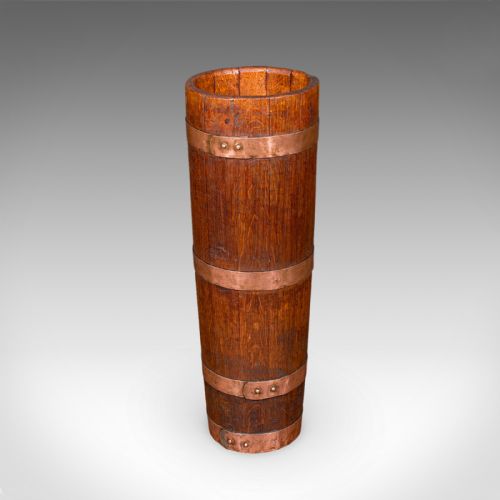
The selection on this page draws primarily from the nineteenth century and the Edwardian era, featuring oak, hardwood, and mahogany bodies secured by brass or iron hoops. Domestic examples include umbrella stands, peat buckets, and butter tubs rooted in English, Scottish, and Dutch country traditions.
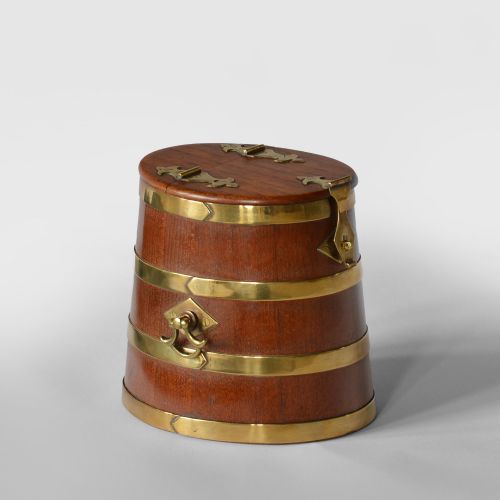
Buyers frequently find smaller items such as naval rum barrels alongside substantial log bins and well-shaped teestoof buckets. Each piece demonstrates the stave-and-hoop technique developed by traditional coopers for daily utility.
How they were made
Makers shaped individual timber staves of oak, mahogany, or general hardwood with angled edges so they fitted tightly together in a circle. These wooden bodies were then secured under tension using metal hoops made of brass or iron.
Additional elements such as brass swing handles, iron swing handles, and interior zinc liners were incorporated depending on the intended function of the container, whether for holding water, logs, or butter.
Listings span the nineteenth century through the early twentieth century, utilising oak, mahogany, and hardwood with brass or iron bands.
What varies in quality
Quality rests upon the precision of the stave joints and the proportion between the timber body and its metal banding, whether brass or iron. Tighter joinery and well-fitted original hoops separate standard utility vessels from finer examples.
The choice of timber grain, such as figured oak or rich mahogany, alongside the retention of original handles and zinc liners, dictates the standing of each piece.
The Antique Coopered Vessel Glossary
- Coopered
- Built from curved wooden staves bound together with hoops of metal or wood. This traditional technique formed liquid-tight containers long before modern manufacturing.
- Stave
- One of the narrow shaped strips of wood that form the sides of a barrel, bucket, or tub. Staves are edge-joined to create a watertight cylinder.
- Teestoof
- A traditional Dutch foot warmer or small bucket used with hot embers. These pieces reflect specific domestic heating customs in nineteenth-century households.
- Hoop
- A circular band of brass or iron fitted tightly around the wooden staves to maintain structural tension. Hoops provide both reinforcement and decorative contrast against the timber.
Antique Coopered Vessel: Frequently Asked Questions
What were coopered vessels used for?
These vessels served a wide range of domestic and naval storage needs, from holding water and butter to containing peat, rum, and coal.
Larger versions functioned as umbrella stands or log bins in country houses, while smaller tubs held perishable goods in European kitchens.
How do I date an antique barrel?
Dating relies upon timber selection, nail construction, and the specific style of the brass or iron bands used by the cooper.
Nineteenth-century examples often display hand-beaten metalwork and dense oak patination that distinguishes them from later twentieth-century reproductions.
Are these vessels waterproof?
Many historical vessels were designed to hold liquids such as water or rum using tightly fitted stave construction.
Over time, timber shrinkage can occur, so modern owners often check the condition of interior linings before introducing water.
How do I care for coopered oak?
Timber staves benefit from occasional light waxing to preserve the natural grain and prevent the wood from drying out in heated rooms.
Keeping brass and iron bands clean helps maintain the contrast between the metal hoops and the surrounding hardwood.