
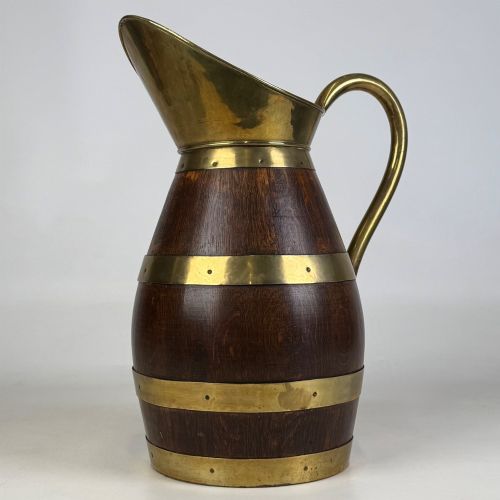
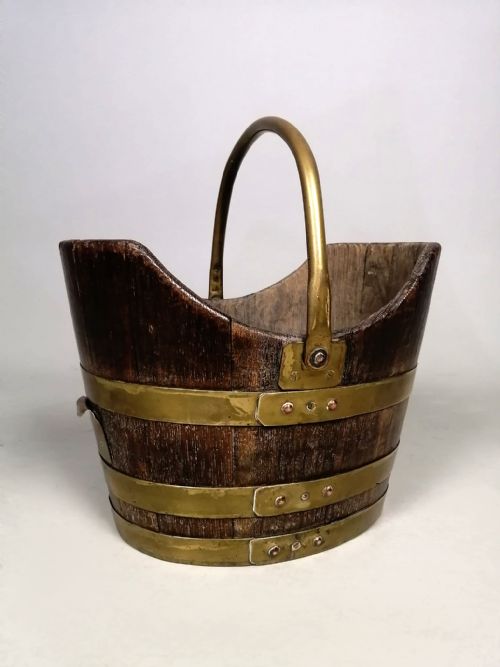

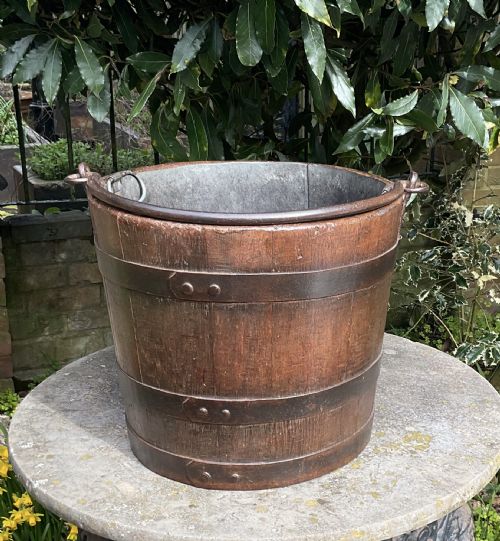


Brass Bound Oak Bucket
A brass bound oak bucket brings solid timber and gleaming metal together by the hearth or in the hallway, offering sturdy utility with timeless character.
Brass Bound Oak Bucket
The pieces on this page span the eighteenth, nineteenth, and twentieth centuries, taking influence from English, Scottish, Dutch, and maritime traditions.
Buyers encounter everything from Georgian peat buckets and naval rum tubs to Edwardian jardiniere stands and Victorian hearthside coal hods.
What varies in quality
The distinction lies in the crispness of the cooperage, the weight and gauge of the brasswork, and whether internal zinc or metal liners survive intact.
Early examples display hand-beaten metalwork and rich patination on the timber, while later pieces show more uniform machine-finished bands and simpler mounts.
Some hardworking vessels traded coal fires for merchant navy grog and naval armorial crests.
Lister and Co
The Brass Bound Oak Bucket Glossary
- Coopered
- Made by a cooper using curved wooden staves bound together with metal hoops to form a watertight or sturdy hollow vessel.
- Stave
- One of the narrow, shaped vertical strips of oak that fit edge-to-edge to make up the curved body of the bucket.
- Jardiniere
- An ornamental pot or stand designed to hold growing plants or flowers, often adapted from coopered timber vessels.
- Coal Hod
- A specialised bucket or container designed specifically for holding and carrying household coal to the fireplace.
- Armorial Crest
- A heraldic design or badge engraved or painted onto metal, often seen on naval or estate pieces.
Brass Bound Oak Bucket: Frequently Asked Questions
What were brass bound oak buckets originally used for?
These vessels served many practical roles around the home and aboard ships, holding coal for the hearth, peat for fires, or turf for heating.
Others functioned as ice buckets, planters, umbrella stands, or naval rum tubs for daily rations.
How do I care for a wooden bucket?
Keep the timber away from direct heat sources and sudden temperature shifts to prevent the oak staves from shrinking or splitting.
Feed the wood occasionally with a suitable wax and avoid leaving standing water inside unless a proper metal liner is fitted.
How can I tell an older bucket from a later one?
Examine the construction of the brass bands and the fixing pins, as hand-beaten metal and irregular dovetails or joints point towards eighteenth and early nineteenth-century work.
Later pieces from the Edwardian era and the twentieth century tend to show more uniform machining and standardised fittings.
Can these buckets still be used for plants?
Many examples make excellent indoor planters, provided you place a protective plastic or zinc insert inside to guard the historic timber against damp soil.
Check whether the piece already includes a period liner before adding earth and water.