



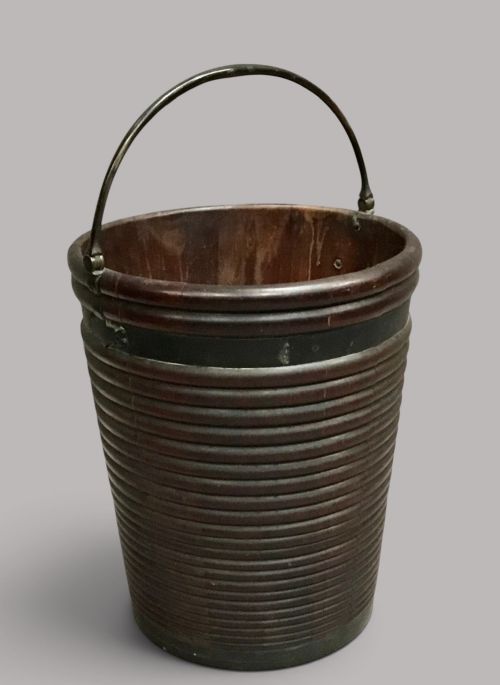


Brass Bound Coal Scuttle
A brass bound coal scuttle stands beside the hearth as a sturdy fireside container crafted to hold fuel with considerable style.
Brass Bound Coal Scuttle
A brass bound coal scuttle covers fireside storage vessels designed to hold solid fuel like coal, peat, or logs near the hearth. The pieces on this page span the eighteenth, nineteenth, and early twentieth centuries, embracing Georgian and Victorian periods.
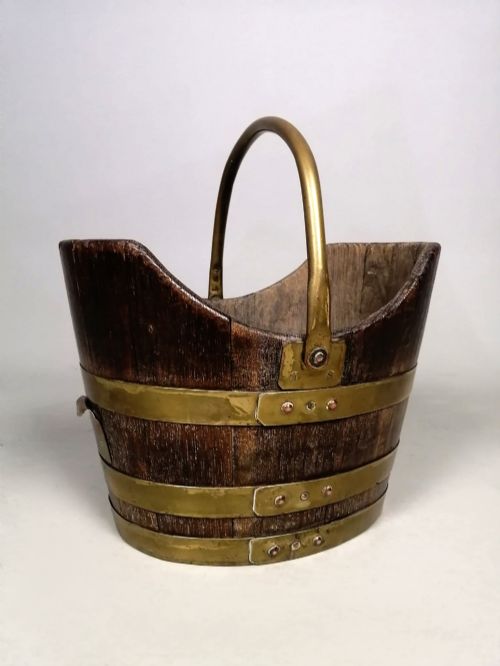
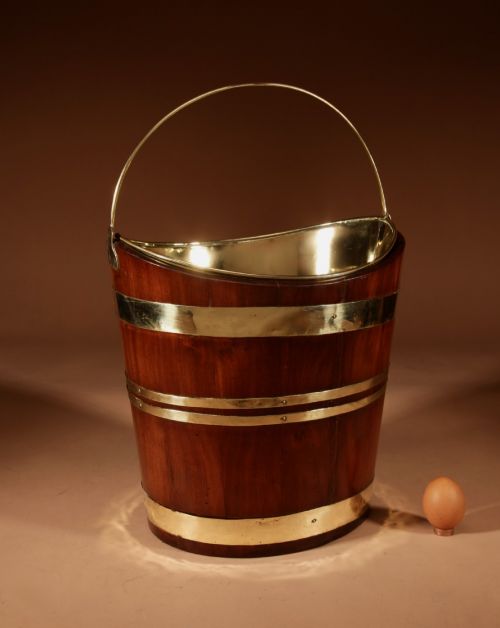
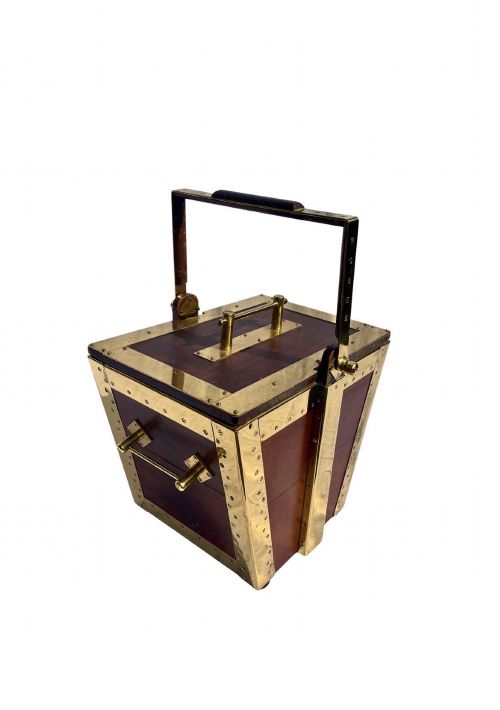
Most examples take the form of coopered wooden buckets, hogshammels, or boat-shaped vessels constructed from dense timbers such as mahogany, oak, and walnut. These containers combine utilitarian function with refined cabinetmaking, often featuring distinctive metal banding and swing handles.
Makers shaped these items for practical service in grand domestic interiors, leading to robust forms that survive in various states from plain English traditional designs to ribbed Irish variants and Scottish peat buckets.
How they were made
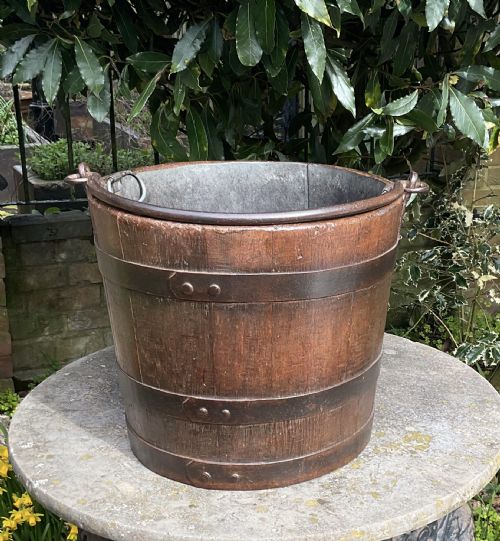
The primary construction relies on traditional cooperage, where individual wooden staves of oak, mahogany, or walnut are fitted tightly together and held under intense pressure by heavy brass bands. These metal hoops are typically secured with numerous small brass pins or tacks driven through the metal into the timber.
Many of these vessels incorporate internal liners made of zinc or metal to protect the wooden staves from moisture and the abrasive weight of coal or damp peat. Handles are forged from iron or brass, often mounted on strong pivoting brackets attached directly to the upper staves.
Brass Bound Coal Scuttle Retail Price Guide 2026
Typical asking prices for brass bound coal scuttle among the pieces listed under this phrase on Sellingantiques today, from the lower quarter to the upper quarter. They describe what is for sale here now, not the wider market.
Several examples disguise their dirty coal-carrying duties beneath the refined curves of a Dutch boat-shaped jardinière.
What varies in quality
Quality rests heavily on the choice of timber and the precision of the cooperage, with denser, well-figured mahogany or quarter-sawn oak commanding attention through tight, uniform stave joints. The weight and gauge of the brass bands also dictate the standard, as thicker metal resists denting and retains a sharper profile.
Finer examples display sophisticated joinery, such as distinct ribbing, boat-shaped silhouettes, or original armorial crests, whilst lesser specimens rely on plain cylindrical construction without secondary decorative detailing.
The Brass Bound Coal Scuttle Glossary
- Coopered
- Constructed from wooden staves bound together with metal hoops, much like a traditional barrel or cask. This method provides immense structural strength for containing heavy materials.
- Peat bucket
- A deep container originally utilised in Irish and Scottish households for storing dried turf or peat used as domestic fuel. These pieces frequently exhibit distinctive ribbed bodies or boat shapes.
- Schuitje
- A Dutch term describing a boat-shaped vessel with tapering ends, sometimes adapted in British cabinetmaking for decorative fireside storage and jardinières. Such forms showcase superior joinery.
- Coal hod
- A specialised metal or wood container equipped with a handle and lip for carrying and transferring fuel directly to the fireplace grate. They bridge the gap between heavy storage bins and daily utility.
Brass Bound Coal Scuttle: Frequently Asked Questions
Can I still use these for real coal?
While these vessels were built for heavy domestic service, modern usage requires caution regarding moisture and weight. Many original containers feature metal liners that handle dry fuel safely.
Consider placing a modern plastic or metal insert inside if you intend to store damp logs or coal to protect the historic interior staves from staining and rot.
How do I tell an 18th century bucket from a Victorian copy?
Examine the construction methods and the fasteners holding the brass bands in place. Eighteenth-century examples often display hand-beaten brass tacks, irregular timber grain from manual sawing, and deeper patination.
Victorian and later pieces frequently show machine-cut pins, standardised timber dimensions, and brighter brass work associated with industrial manufacturing methods of the nineteenth century.
What is the difference between a log bin and a coal bucket?
Log bins tend to be larger, squatter, or wider vessels designed to accommodate bulky firewood logs beside the hearth. Coal buckets are typically deeper and narrower, optimized for dense mineral fuel or peat.
Both categories frequently employ identical coopered construction and brass banding techniques, making form and capacity the primary distinctions.