



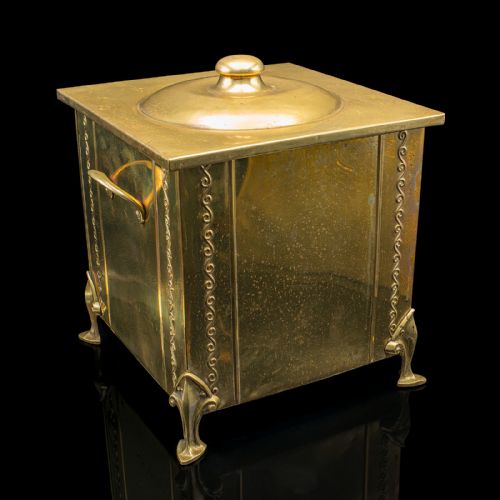
English Coal Scuttle
An English coal scuttle brings utilitarian hearthside metalwork and timber into the living room, offering robust fuel storage with period character.
English Coal Scuttle
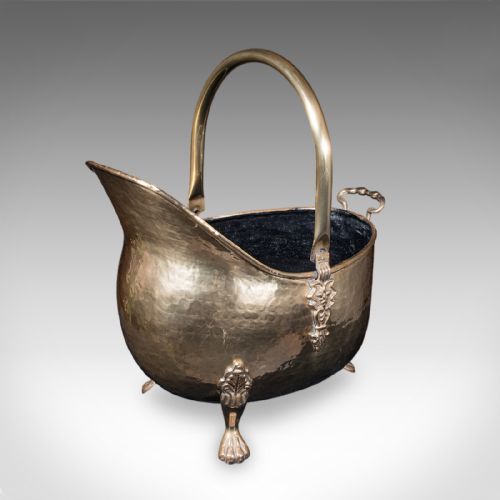
An English coal scuttle is a fireside accessory designed to hold solid fuel close to the hearth. These pieces appear as buckets, bins, and helmet-shaped scuttles originating across the Georgian, Victorian, and Edwardian periods.
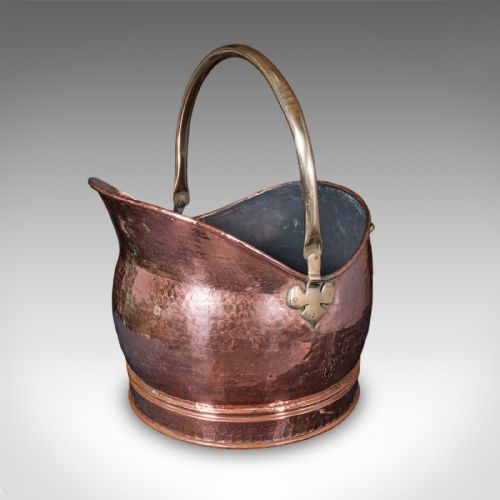
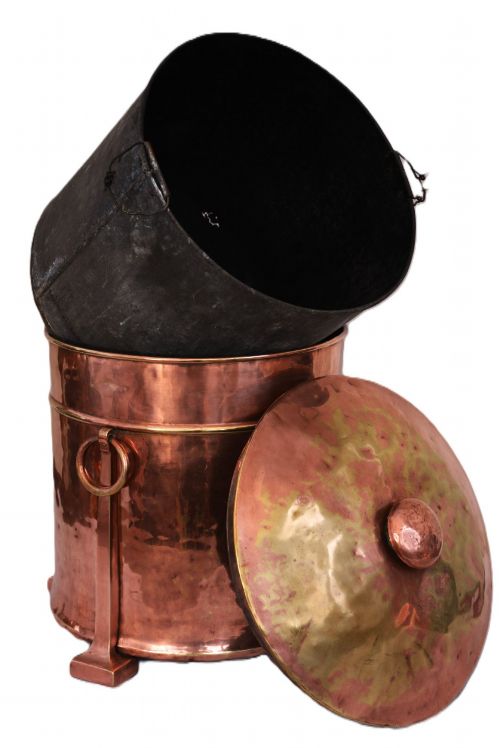
The version most commonly met on this page is the Victorian copper or brass coal scuttle, often shaped like a helmet or cylindrical bucket. These utilitarian hearth vessels incorporate sturdy handles and lift lids for daily domestic service.
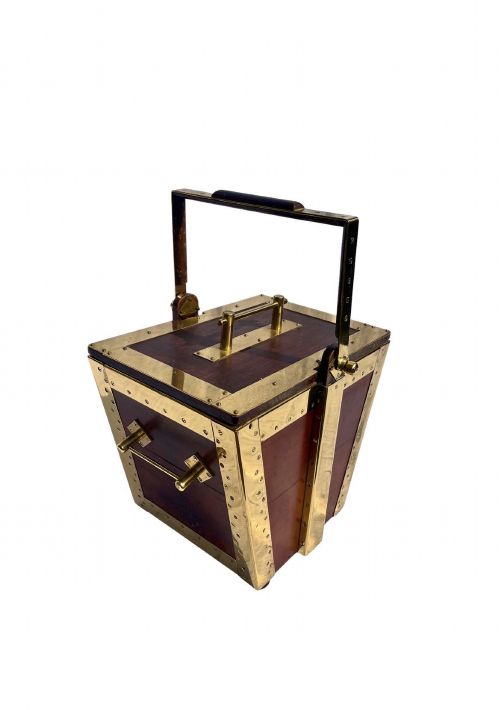
Beyond standard metal buckets, the selection includes wooden coal boxes, known as purdoniums, alongside coopered oak and mahogany log bins mounted in brass. Regional workshops and makers produced these forms using durable native timbers and sheet metals.
Materials and Techniques
Makers utilised heavy gauge sheet copper and brass for metal scuttles, employing handbeating and dovetail soldering to construct watertight, durable bodies. Swing handles and feet were cast in brass and secured with rivets.
Wooden vessels relied on traditional joinery, including coopered staves bound with brass hoops for oak and mahogany buckets. Walnut and mahogany purdoniums featured panelled construction, sometimes incorporating inlay or turned spindle galleries.
Victorian makers occasionally disguised biscuit boxes as miniature coal scuttles, confusing guests who reached for fuel instead of biscuits.
Evaluating Construction and Proportion
Quality rests in the weight of the metal and the integrity of the joinery, distinguishing heavy handbeaten copper bodies from thin machine-pressed alternatives. Superior examples maintain balance and proportion even when loaded with fuel.
Detailing determines distinction, visible in cast brass mounts, dovetail seams, and tight coopered staves that survive heavy hearthside use without separation. Original handles, liners, and secure hinges separate fine domestic pieces from worn utility items.
The English Coal Scuttle Glossary
- Purdonium
- A lidded wooden coal box featuring an interior metal liner and a hinged front flap for coal removal. These cabinets became popular during the Victorian period to keep fuel neatly enclosed.
- Helmet scuttle
- A fireside bucket shaped with a flared lip and a raised back resembling a classical helmet. This profile allowed clean pouring of coal into the grate.
- Coopered
- A method of construction where tapered wooden staves are joined edge-to-edge and bound with metal hoops. This technique was standard for watertight buckets and log bins.
- Handbeaten
- A metalworking technique where sheets of copper or brass are shaped using a hammer, leaving subtle surface indentations. This process added rigidity and decorative texture.
- Aesthetic Movement
- A late nineteenth-century design style focusing on visual beauty rather than narrative meaning. Pieces from this period exhibit clean lines and restrained decoration.
English Coal Scuttle: Frequently Asked Questions
How do I clean a brass or copper coal scuttle?
Wash the metal surfaces gently using warm soapy water and a soft cloth to remove soot and surface dust. Avoid harsh abrasive cleaners that strip the historic patina accumulated over decades.
Dry the metal thoroughly after washing to prevent water spotting. Leave the interior lining as found if it shows honest wear from domestic use.
What is the difference between a coal scuttle and a purdonium?
A coal scuttle is an open or lidded bucket designed to be carried by a swing handle to the fireplace. They often feature a pointed spout or helmet shape for pouring fuel.
A purdonium is a stationary wooden box with a sloping front drop-down door and an interior metal scoop. They sat beside the hearth as small pieces of furniture rather than portable carriers.
Can I use an antique coal scuttle for actual firewood?
Historic metal and wooden scuttles accommodate logs and kindling effectively in a modern sitting room. Ensure any interior metal liner is clean and dry before loading heavy timber.
Inspect the swing handle attachments and base rivets to confirm they support the weight of logs safely. Lighter decorative pieces function best for storage rather than heavy daily hauling.
How do I date a Victorian copper coal scuttle?
Examine the construction methods, noting whether the body is handbeaten with dovetail seams or machine-rolled with modern welds. Handbeaten copper with cast brass feet points firmly to the nineteenth century.
Check the handle mountings and screw types, as slotted handmade screws differ from later machine-threaded fixings. Traces of old solder repairs often indicate long domestic service in period homes.