



Oak Fireplace Scuttle
These oak fireplace scuttle options are practical fireside fuel stores built in timber and metal, chosen for hearth utility and period character.
Oak Fireplace Scuttle
An oak fireplace scuttle is a functional fireside container designed to hold coal, logs, or peat beside the hearth. The examples gathered under this search phrase span the eighteenth century, the Victorian era, and the Edwardian period, reflecting diverse regional styles such as Scottish coopered designs.
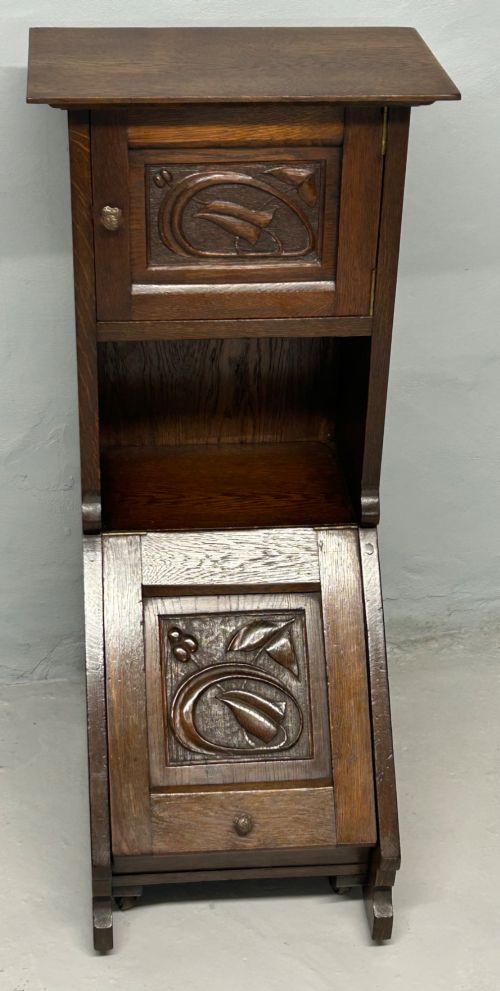
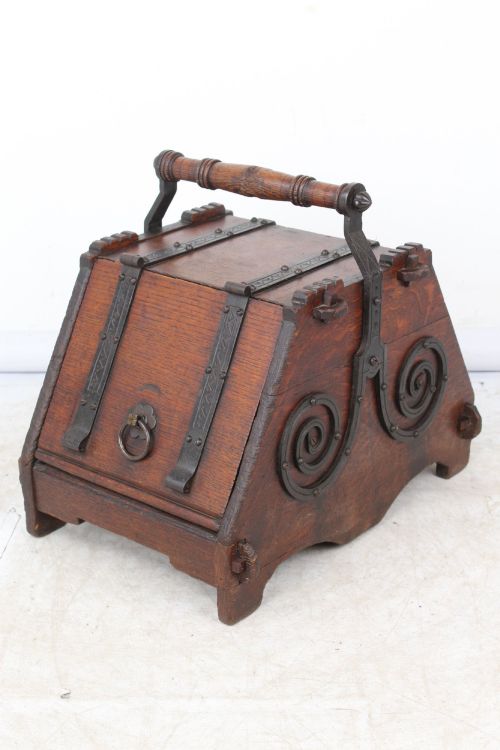
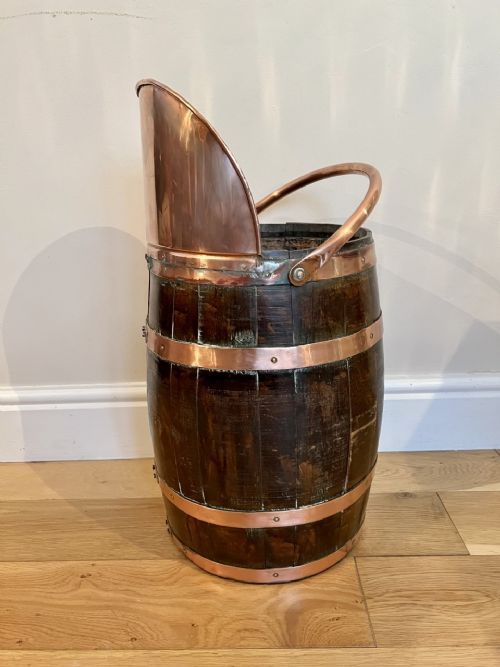
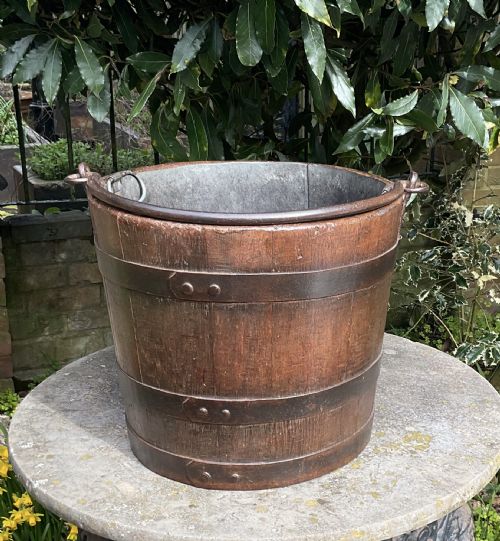
The assortment on this page includes traditional hinged purdoniums, copper-bounded buckets, coopered barrels, and lidded coal boxes. Many retain original metal liners and shovels, which makes them complete sets for daily hearth maintenance.
How they were made
Construction relies primarily on solid oak timbers, often shaped using coopered stave techniques or joined with traditional box framing. Metal components such as brass, copper, iron, and zinc provide structural reinforcement and functional linings.
Detailing ranges from carved decorative fronts to applied brass handles, hinges, and bindings. The integration of wood and metal ensures durability against heavy fuel loads and frequent handling.
Listings span multiple eras including the 18th Century, Victorian, and Edwardian periods, utilising oak alongside copper, brass, and wrought iron.
What varies in quality
Quality differences appear in the selection of timber figure, such as pollard oak, and the precision of the cooperage or joinery. Substantial brass mountings and original internal liners elevate the integrity of a piece.
The presence of matching shovels and intact decorative carving distinguishes finer workshop output from simpler utilitarian boxes.
Christopher Dresser
The Oak Fireplace Scuttle Glossary
- Purdonium
- A type of coal box featuring a sloping drop-front door designed to tip fuel forward for easy access. These boxes frequently incorporate a small internal compartment for a shovel.
- Coopered
- Built from vertical wooden staves fitted together and bound with metal hoops, a method derived from barrel-making. This technique provides exceptional strength for holding loose fuel like coal or peat.
- Coal Hod
- A deep, bucket-shaped container typically fitted with a swing handle for carrying fuel to the grate. They combine wooden bodies with metal fittings and liners.
- Liner
- A removable internal vessel, often made of zinc or galvanized metal, inserted into wooden coal boxes to catch dust and prevent moisture damage to the timber.
Oak Fireplace Scuttle: Frequently Asked Questions
What is a purdonium?
A purdonium is an enclosed wooden coal box featuring a drop-front mechanism that tilts forward to dispense fuel cleanly. They emerged in the Victorian period to keep hearth areas tidy.
Most examples include an internal metal liner and a dedicated slot for a matching shovel, keeping the fireplace tools concealed.
How do I use an antique coal scuttle today?
These pieces serve well beside modern wood-burning stoves or open hearths as decorative storage for logs, kindling, or coal. Their sturdy timber and metal construction handles daily domestic use.
Retaining the original metal liner helps protect the antique wood from dirt and moisture when holding solid fuel.
How do I date an oak coal box?
Dating relies on observing construction methods, hardware styles, and timber selection across the Victorian and Edwardian periods. Pieces from the eighteenth century show heavier coopered joins and simpler eighteenth-century proportions.
Later Victorian and Edwardian versions often incorporate elaborate brass handles, drop-front purdonium mechanisms, and machine-cut fixings.
What is the difference between a bucket and a box?
Buckets are generally coopered cylindrical vessels fitted with swing bail handles, often reinforced with brass or copper bands. Boxes are rectangular lidded or drop-front containers designed to sit flush against a hearth.
Both forms served the same primary function of fuel storage but offered different aesthetic integration into period room schemes.