

Antique Cocktail Bar Cabinet
An antique cocktail bar cabinet brings the sophisticated glamour of twentieth-century entertaining into a modern room.
Antique Cocktail Bar Cabinet
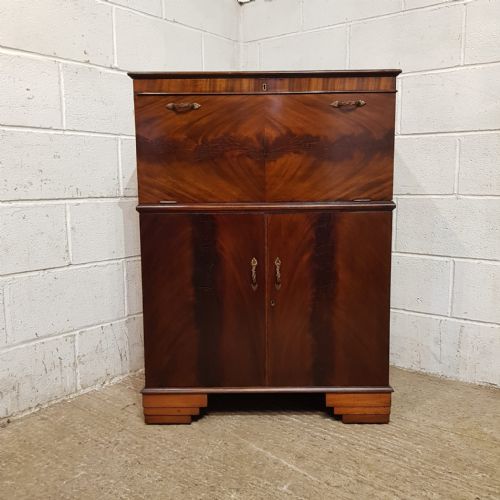
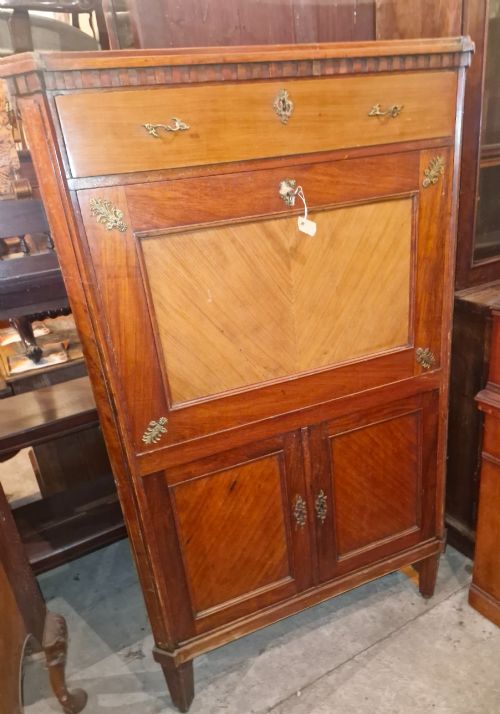
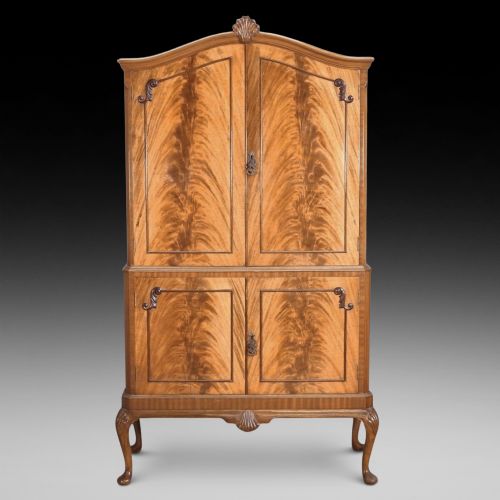
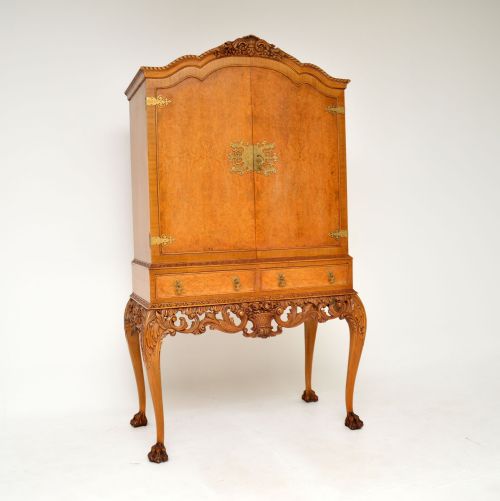
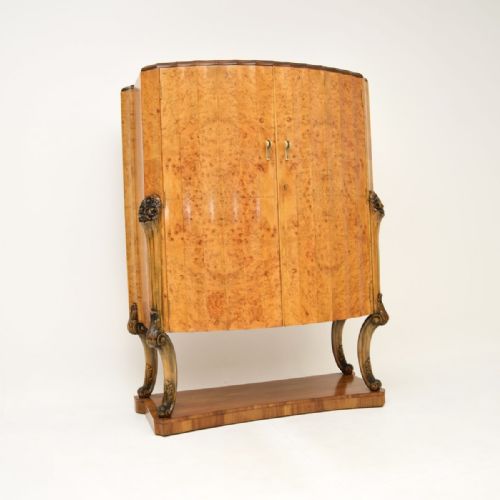
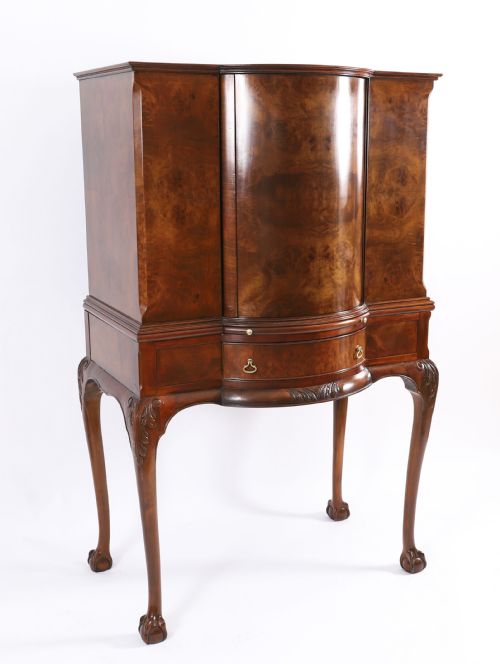
An antique cocktail bar cabinet serves as a dedicated piece of furniture designed for hosting, mixing, and storing drinks and glassware. When searching for this phrase, buyers encounter specialised furniture primarily spanning from the Edwardian era through the Art Deco period of the 1920s and 1930s.
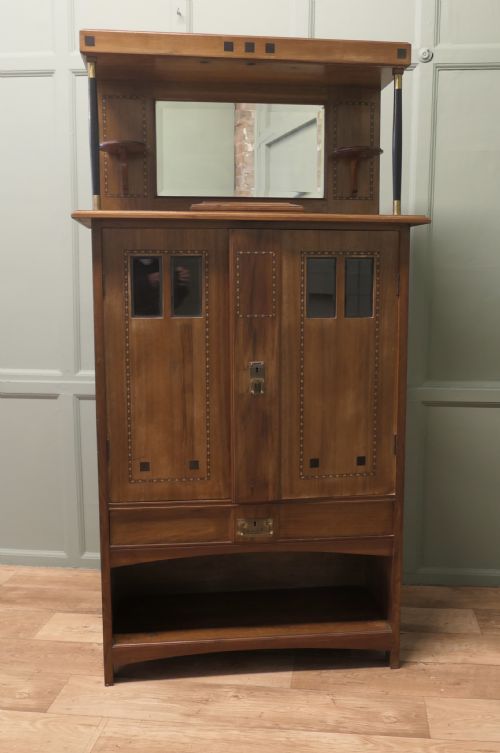
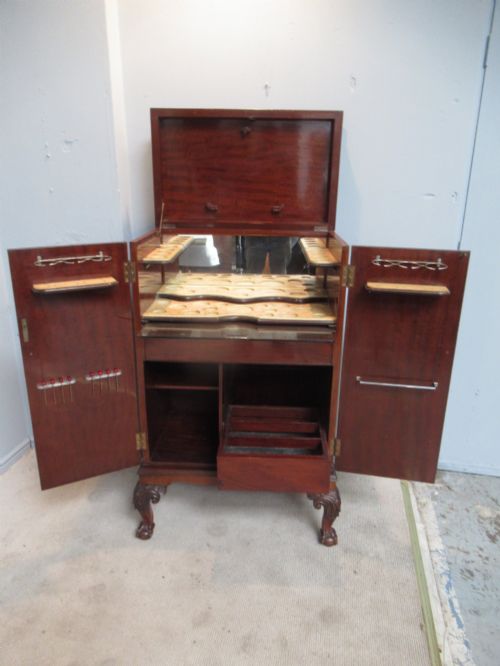
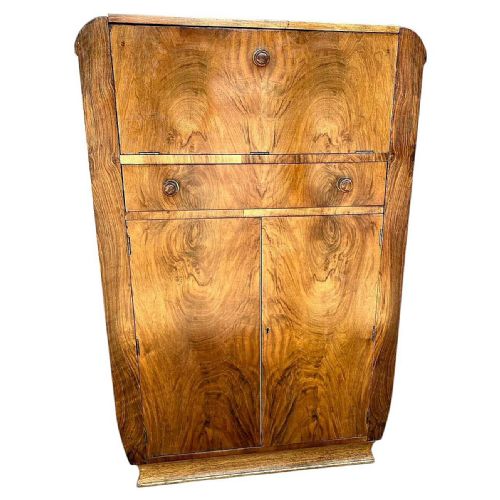
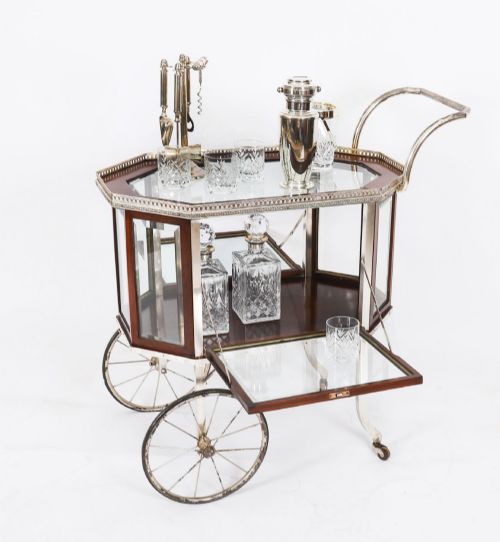
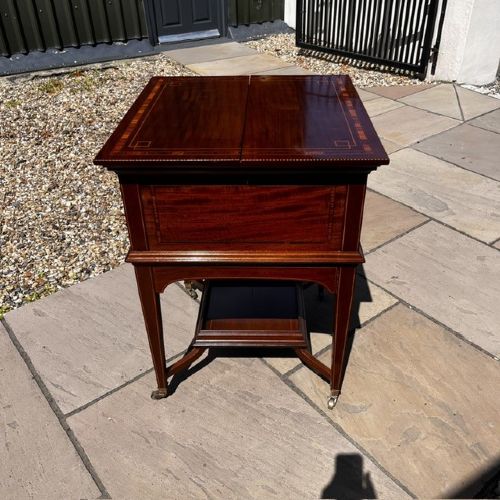
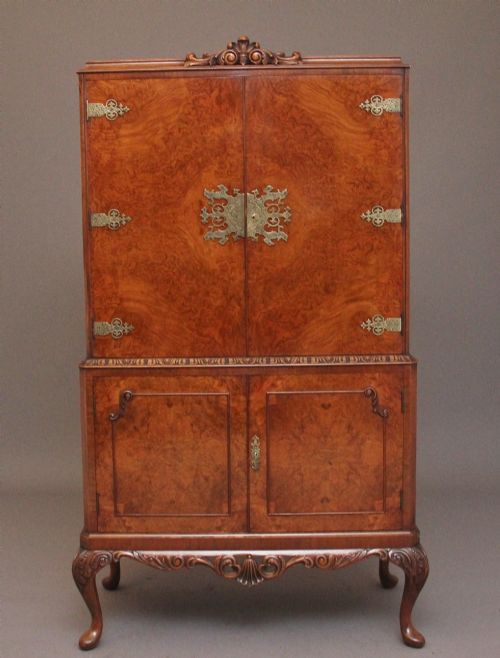
The most common examples on this page are substantial freestanding chests and cabinets veneered in rich burr walnut, often fitted with drop-down serving surfaces, internal mirrors, and dedicated storage for bottles and glasses. Alongside these tall chests, one finds lower sideboards, rolling bar carts, and metamorphic tables designed for domestic entertaining.
Origins vary from English workshops and department stores such as Harrods to French ateliers, drawing on styles that range from streamlined Art Deco geometries to revival designs like Queen Anne and Chinoiserie.
How they were made
Cabinetmakers constructed these pieces using solid timber frames of mahogany, walnut, or beech, which were then overlaid with decorative wood veneers such as burr walnut, bird's-eye maple, and satinwood to create striking grain patterns.
Metal components played a structural and decorative role, incorporating brass hardware, cast-iron legs on certain pieces, and mirrored glass panels lining the interior mixing spaces. Specialised mechanisms, including counterweighted bars, pop-up actions, and folding fronts, required precise engineering by makers.
Surface decoration frequently involved intricate marquetry, lacquered Chinoiserie finishes with hand-painted motifs, and fine polishing to highlight the natural figures of the timber.
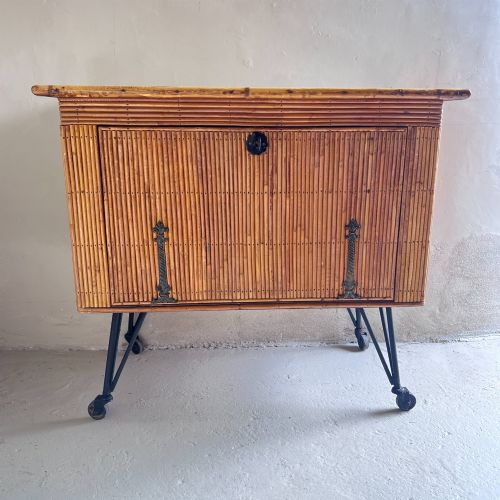
Some mid-century versions come fitted with cast-iron wheels so you can wheel your entire gin collection into the next room.
What varies in quality
The distinction between standard production and exceptional quality rests on the choice and matching of wood veneers, particularly the symmetry of burr walnut figures across the front doors and drawers. Maker attribution also elevates a piece, with works by renowned workshops such as Epstein or Maurice Adams commanding greater appreciation for their craftsmanship and design ambition.
Interior appointments separate basic storage chests from superior examples, which feature integrated electric lighting, fitted glassware sets, mirrored pull-out mixing slides, and complex mechanical folding actions. The handling of decorative styles, from the crisp execution of lacquered Chinoiserie to the precision of marquetry inlay, dictates the overall refinement of the piece.
Epstein·Maurice Adams·Hille·Harrods·Albert Barker
The Antique Cocktail Bar Cabinet Glossary
- Burr walnut
- A type of wood veneer taken from the gnarled growth on a walnut tree, prized for its swirling, highly decorative grain patterns. It forms the primary visual surface on many Art Deco drinks chests.
- Chinoiserie
- A European artistic style reflecting Chinese motifs and techniques, often characterised by lacquered surfaces and painted gold decoration. This finish appears on select cabinets from the 1920s and 1930s.
- Metamorphic
- Furniture designed to transform its shape or function through folding, sliding, or rising mechanisms. These clever designs allow a compact console to expand into a fully equipped serving station.
- Marquetry
- The art of applying pieces of veneer to a structure to form decorative patterns and pictures. Skilled cabinetmakers utilised contrasting woods to create intricate geometric designs on cabinet doors.
- Secretaire
- A desk or cabinet featuring a pull-down writing flap that conceals small drawers and pigeonholes. In drinks furniture, this mechanism is often adapted to serve as a pull-out mixing shelf.
Antique Cocktail Bar Cabinet: Frequently Asked Questions
What is the difference between a cocktail cabinet and a drinks cabinet?
In practice, these terms are often used interchangeably to describe furniture intended for alcoholic beverages and glassware. However, a dedicated cocktail cabinet typically includes specific internal fittings like a pull-out mirrored shelf for mixing drinks, juicers, and holders for cocktail sticks and measures.
A standard drinks cabinet might lean towards general bottle and glassware storage with less emphasis on a built-in mixing station. Both forms emerged strongly during the interwar years to accommodate changing domestic social habits.
How do I identify an Art Deco cocktail cabinet?
Art Deco pieces are defined by clean geometric lines, symmetrical forms, and an absence of fussy carving. They rely on the natural beauty of exotic wood veneers like burr walnut and bird's-eye maple, often accented with contrasting inlay or brass trim.
Look for architectural silhouettes, such as bow fronts or cloud shapes, combined with luxurious internal mirrors and specialised opening mechanisms that reveal a brightly lit serving space.
Were these cabinets used in homes or commercial bars?
These pieces were designed primarily for domestic use in the private entertaining spaces of middle and upper-class homes. The 1920s and 1930s saw a rise in entertaining at home, which prompted cabinetmakers to create sophisticated furniture that kept bottles and glassware neatly concealed until cocktail hour.
While some rolling bar carts and larger trolley designs offered mobility between rooms, the grander cabinets remained stationary focal points in drawing rooms and dining rooms.
How do internal lights work in vintage cabinets?
Many surviving twentieth-century drinks cabinets feature integrated electrical wiring designed to illuminate the interior mirror and glass shelves automatically when the doors or drop-fronts open.
Because these are older electrical components, any working light should be inspected by a qualified electrician to ensure safety according to modern standards before regular use.