




Antique Clock Under Glass
An antique clock under glass is a delicate timekeeper sheltered beneath its original dome, offering a clear view of intricate internal mechanics.
Antique Clock Under Glass
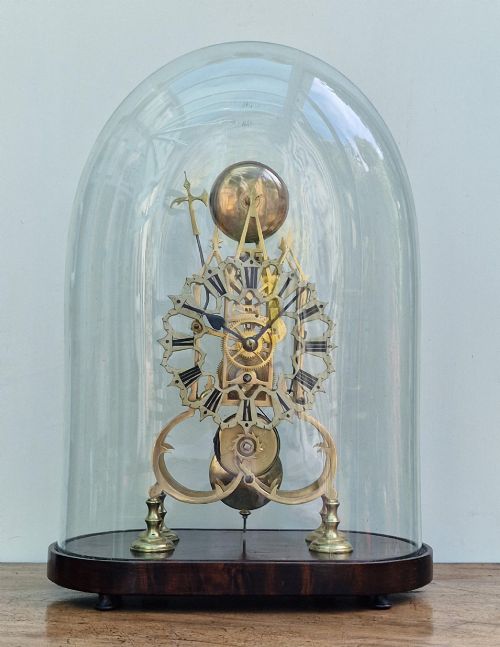
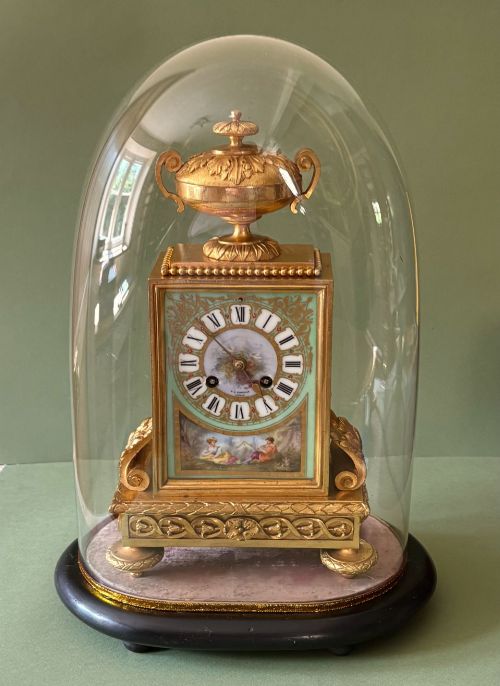
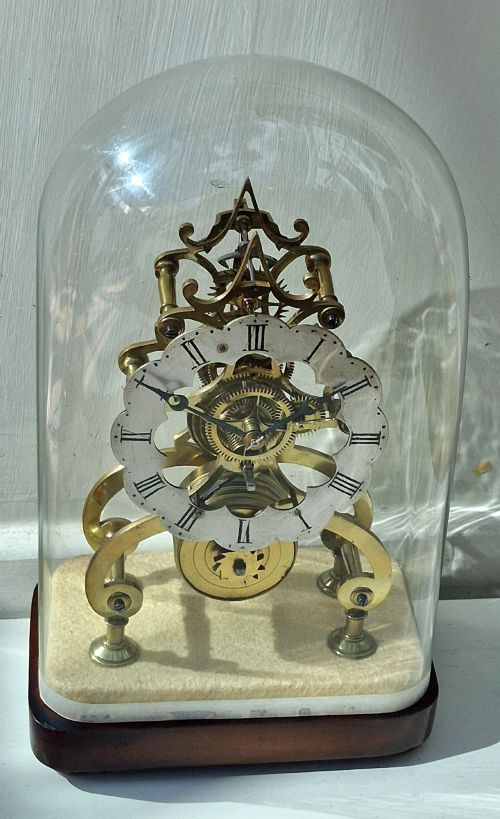
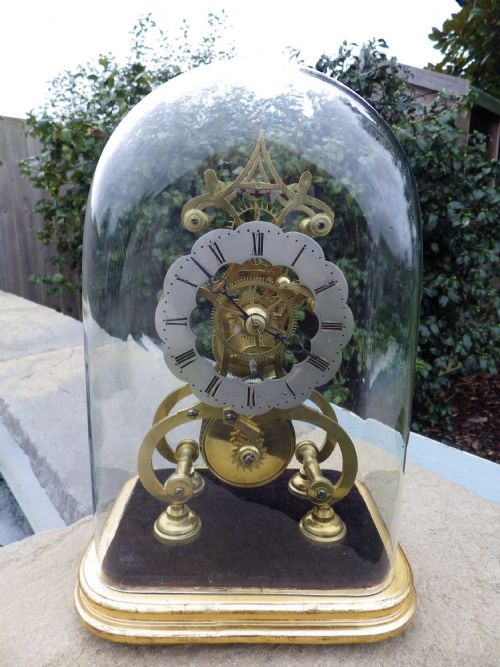
An antique clock under glass combines a mantel timekeeper with a protective glass dome, a presentation designed to keep dust from delicate wheelwork. You will frequently encounter Victorian English skeleton clocks and French portico or porcelain-mounted models on this page.
The selection ranges from mid-nineteenth century English fusee movements to ornate French ormolu garniture sets and cathedral clocks. These pieces span the Victorian era, Napoleon III styles, and Gothic Revival designs.
Most examples sit upon wooden or alabaster stands, paired with blown glass covers that protect the brass and steel mechanisms within. The arrangement highlights the horological engineering by exposing the dial and plates to the room while keeping the air still.
Materials and construction
Brass, bronze, and ormolu form the structural chassis and decorative mounts for many movements, while steel is utilised for the intricate gear train and springs. Ebonised wood, mahogany, and carved alabaster serve as bases and plinths to support the heavy metal assemblies.
Hand-blown glass creates the characteristic dome covering, often revealing minor bubbles or slight thickness variations typical of nineteenth-century glassworks. Porcelain panels, occasionally painted in Sevres styles, decorate the dial surrounds and plinths of French mantel models.
Some miniature skeleton clocks measure small enough to hide behind a book, yet still manage to chime the passing hours through their glass covers.
Distinctions in quality
The refinement of the skeleton wheelwork and the presence of a fusee movement instead of a standard spring barrel dictate the mechanical tier of a clock. Six-spoke wheel designs and passing strike complications denote higher workshop ambition.
The survival of the original hand-blown glass dome and matching wooden or alabaster stand adds significantly to the integrity of the piece. Crisp chasing on ormolu mounts and finely painted porcelain plaques separate standard production from superior examples.
The Antique Clock Under Glass Glossary
- Fusee
- A conical pulley used in a clock to maintain even power from the mainspring as it winds down. This mechanism helps the clock keep more accurate time throughout its run.
- Skeleton clock
- A timepiece designed with open brass plates that expose the gear train and escapement to view. They were often built to display the skill of the watchmaker.
- Ormolu
- Gilt bronze created by applying a mercury and gold amalgam to a bronze base and firing it. The technique produces a rich golden finish characteristic of French decorative arts.
- Garniture set
- A clock accompanied by matching decorative objects, such as urns or vases, designed to sit together on a mantelpiece. These sets frequently share a glass dome presentation.
- Portico clock
- A clock styled with architectural columns resembling a classical temple facade. They are typically French in origin and house circular movements within the central structure.
Antique Clock Under Glass: Frequently Asked Questions
Are these glass domes original?
Many pieces retain their original hand-blown glass domes, which often display minor irregularities and subtle thickness variations consistent with nineteenth-century manufacture. A dome that fits the wooden base snugly and shares the same period wear indicates high authenticity.
Replacement domes do exist in the trade, so check the edge seating and clarity of the glass against the age of the clock movement.
How do I wind a fusee skeleton clock?
Locate the winding square on the dial or movement plate and use the appropriate clock key to turn it gently. Wind the clock only until you feel resistance, ensuring you do not overwind the fusee chain.
Support the clock or keep the base steady if you need to access side winding points, and handle the exposed skeleton movement with extreme care.
What is the difference between English and French models?
English examples on this page frequently feature fusee movements and exposed skeleton wheelwork mounted on marble or wooden plinths. They emphasise mechanical precision and structural restraint.
French models tend to incorporate ormolu, porcelain panels, and architectural portico or garniture designs. They lean towards decorative richness alongside reliable bell-striking mechanisms.