

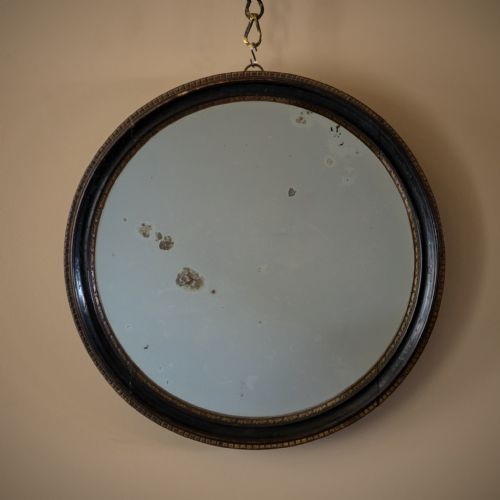

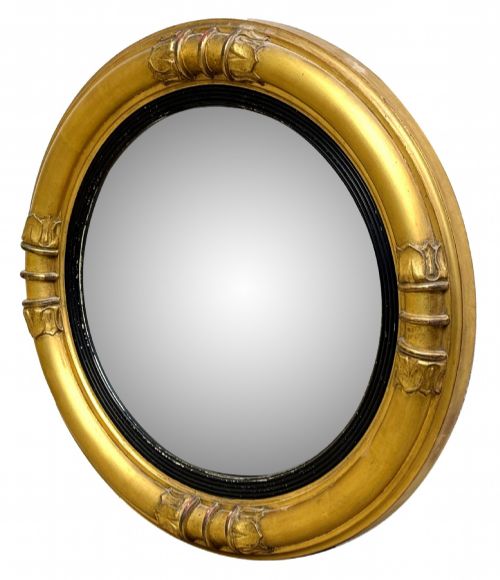
Antique Circular Wall Mirror
An antique circular wall mirror brings focal depth and historical presence to a room, capturing light across shaped glass.
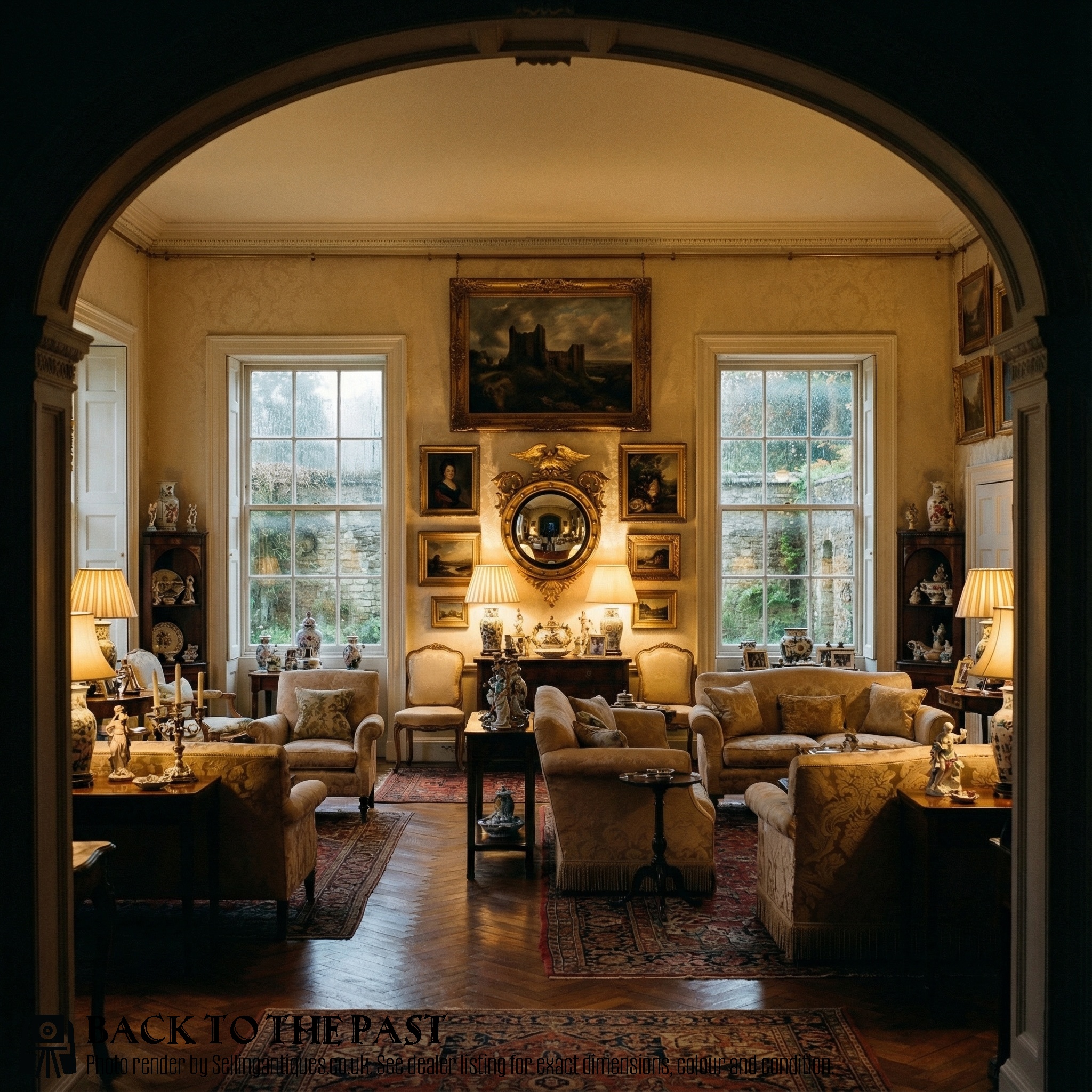
Defining the antique circular wall mirror
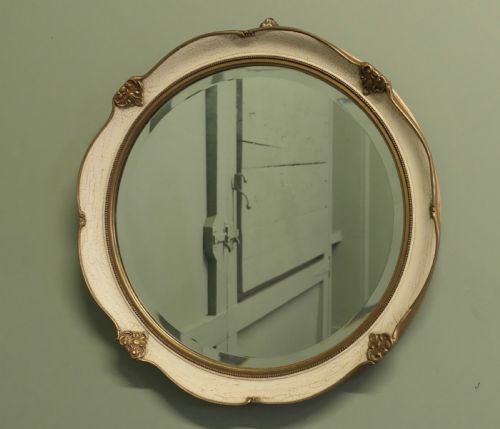
An antique circular wall mirror is a round looking glass designed for interior hanging, shaped by historical periods including the Regency and Victorian eras.
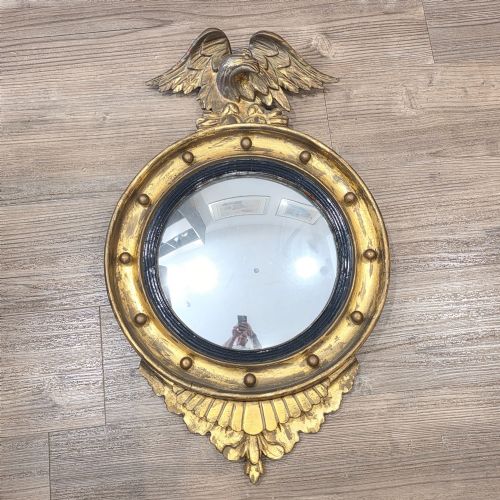
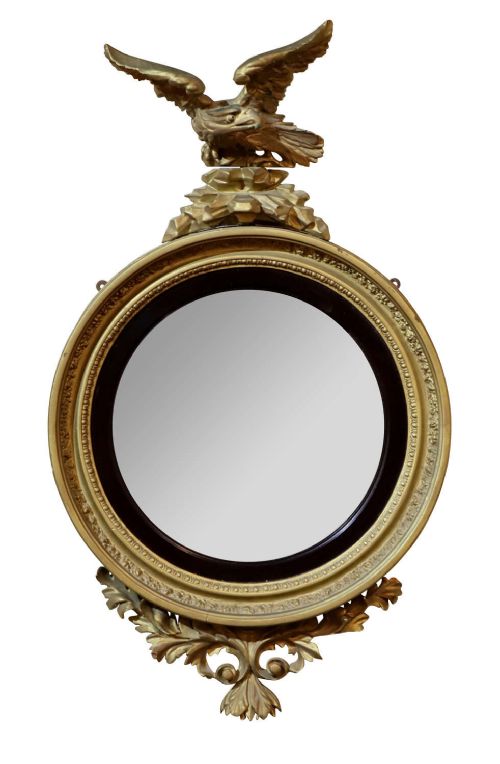
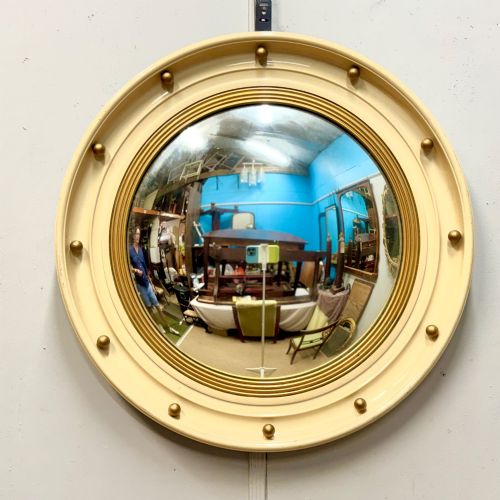
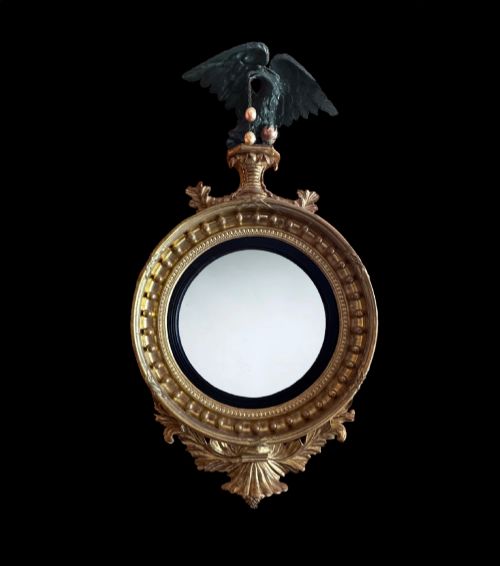
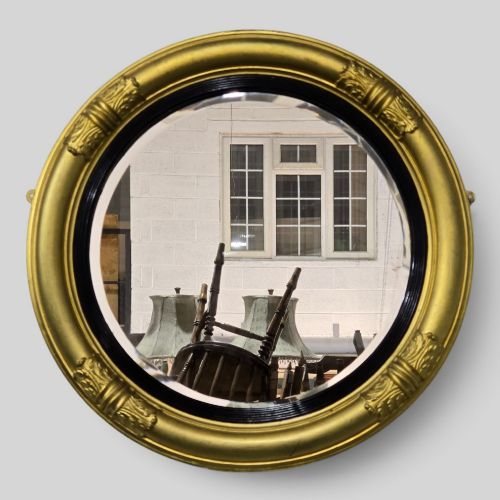
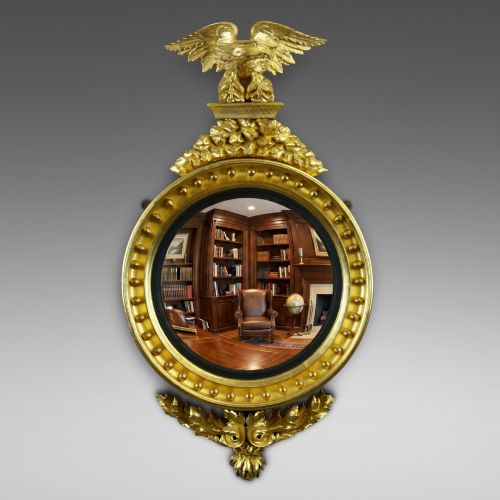
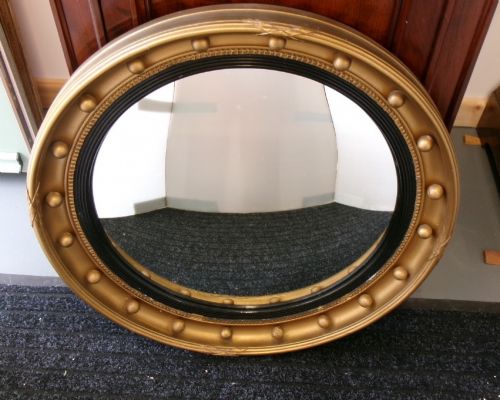
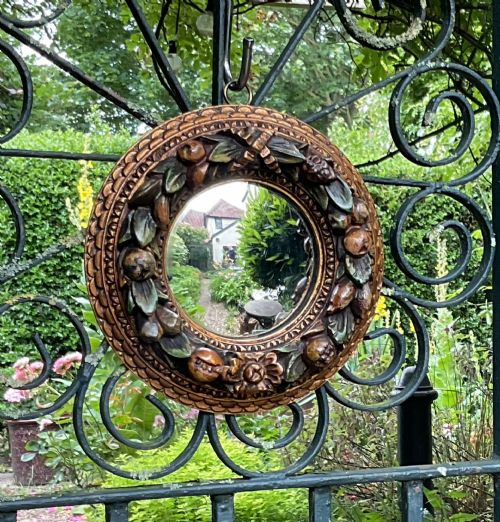
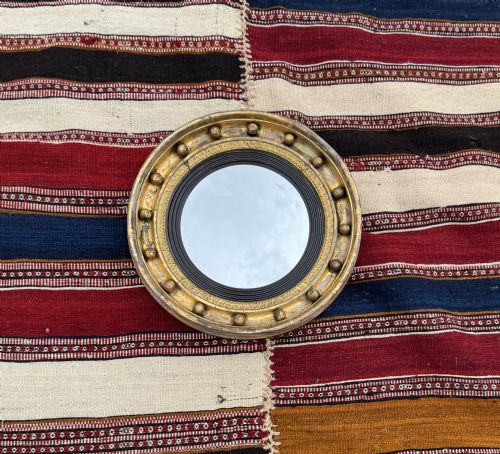
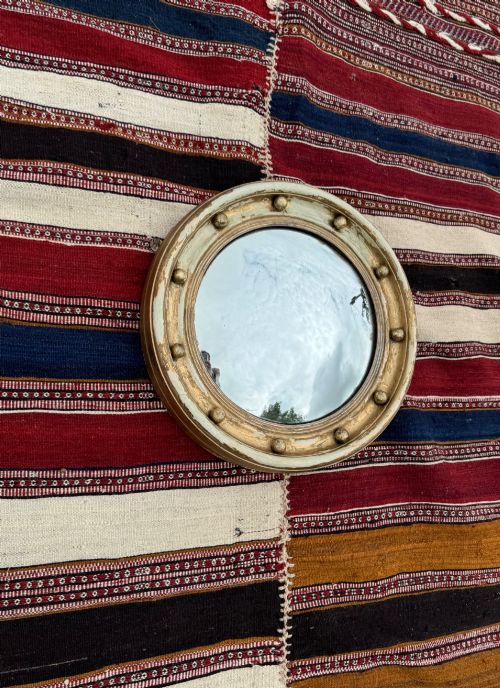
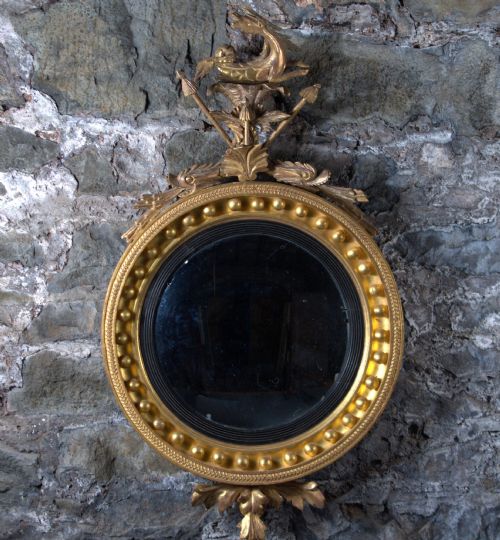
Buyers browsing this selection will most frequently encounter convex mirrors housed within round frames, often gilded or ebonised.
The objects span hall mirrors and decorative wall pieces, reflecting nineteenth-century design developments and revival styles.
Materials and construction
Frames are constructed from wood, gesso, and brass, applying gold leaf to create gilded surfaces or utilising ebonised finishes for contrast.
Makers set glass plates into circular surrounds, utilising techniques such as carving giltwood to form decorative frames around the looking glass.
Retail Price Guide 2026
Typical UK retail prices for circular wall mirror, calculated from the Sellingantiques database of over a million retail prices indexed since 2003. This retail price guide relies exclusively on Sellingantiques data; no external sources or auction records are used, so the figures do not describe the wider market.
Convex mirrors were once called butler's mirrors because their wide-angle view allowed staff to monitor the entire dining room from a corner.
Assessing quality and craftsmanship
The refinement of the carved giltwood and the application of gold leaf or gesso dictate the visual depth of the frame.
Subtleties in the execution of the circular plate and the surrounding frame distinguish standard production from finer period examples.
The Antique Circular Wall Mirror Glossary
- Convex mirror
- A curved round looking glass that diverges light to offer a wide-angle reflection of the interior space. It often appears in nineteenth-century decorative pieces.
- Giltwood
- Timber that has been coated with gold leaf or gold paint. This technique creates a luminous finish characteristic of period frames.
- Ebonised
- Wood treated to resemble expensive ebony. The dark finish provides a sharp contrast against gilt detailing.
- Gesso
- A plaster-like material applied to wooden frames before gilding. It provides a smooth base for intricate carved decoration.
Frequently Asked Questions
How do I hang a heavy antique mirror safely?
Hanging a heavy framed mirror requires securing fixings directly into solid wall studs or using appropriate masonry anchors. The weight of giltwood and plaster frames demands robust structural support.
Consult a professional if you are unsure about the load-bearing capacity of your wall.
How do I clean an antique mirror?
Clean the glass gently using a soft microfibre cloth and a mild, ammonia-free cleaning solution sprayed onto the cloth rather than the glass. Avoid getting moisture behind the plate edges.
Dust the giltwood or ebonised frame lightly with a dry brush to protect the historical surface finishes.
How do I date an antique circular mirror?
Dating relies on examining the materials, frame construction techniques, and the characteristics of the glass plate. Regency and Victorian pieces exhibit specific decorative motifs and framing methods.
Comparing the backboards, fixings, and overall wear helps establish the period of manufacture.