



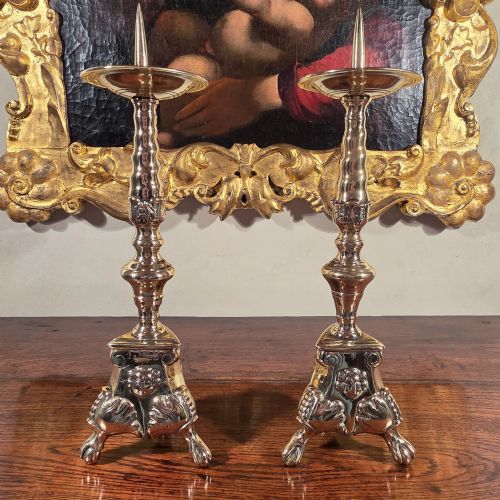


Antique Church Candle Stand
These heavy altar lights and floor pieces bring height and solemnity into a room.
Antique Church Candle Stand
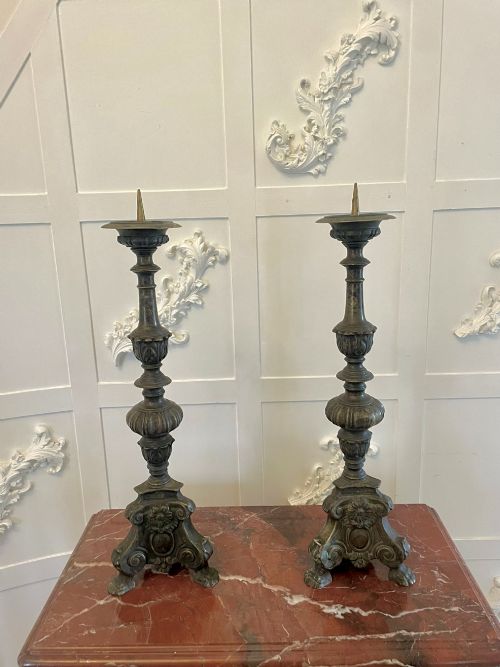
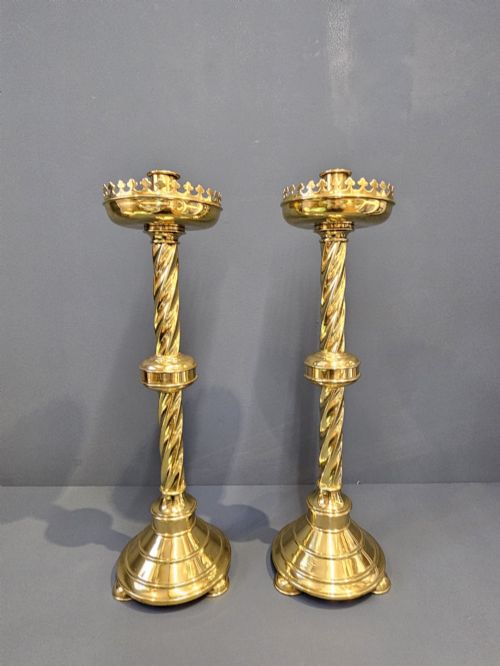
An antique church candle stand encompasses tall brass altar sticks, heavy floor-standing prickets, and carved wooden torcheres originating from ecclesiastical settings. These pieces date principally from the eighteenth and nineteenth centuries, including Victorian interpretations of earlier Gothic and Baroque styles.
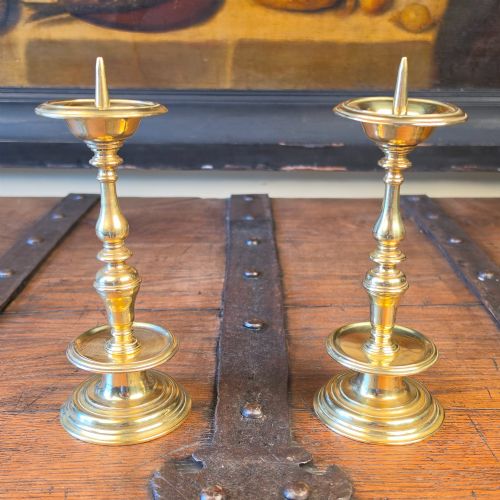
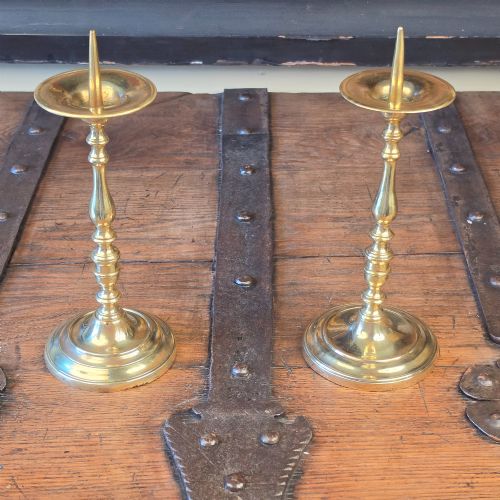
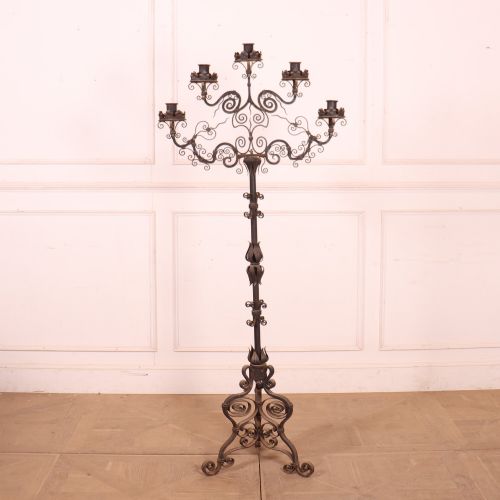
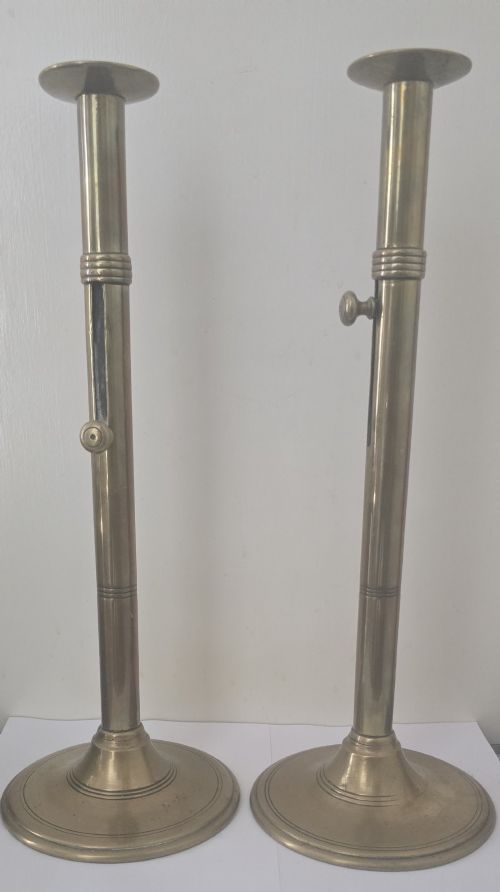
The version most commonly encountered on this page is the brass pair, standing tall for the altar or floor, often featuring pricket spikes designed to hold large wax candles. Alongside these, buyers find wrought iron multi-candle candelabras, carved pinewood stands, and giltwood pieces echoing continental church interiors.
Materials and Construction
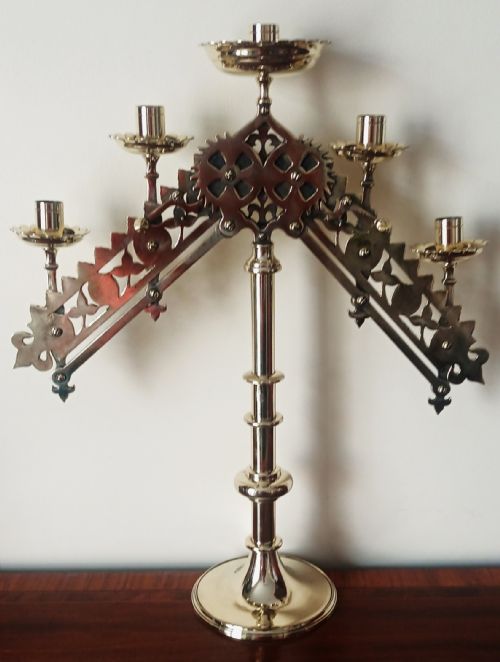
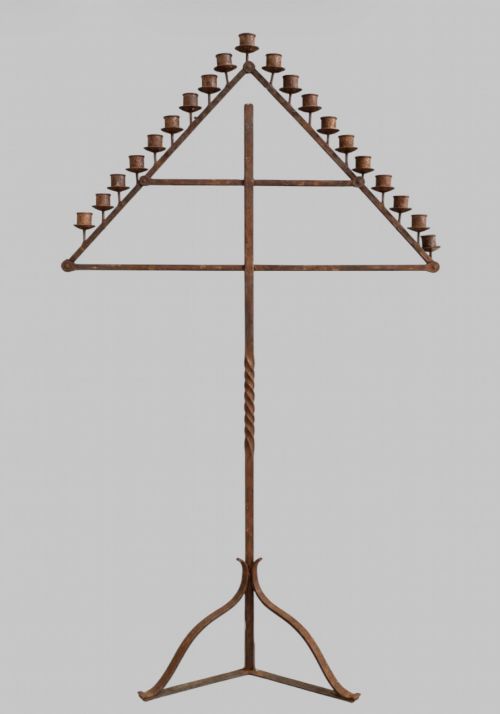
Foundry-cast brass forms the backbone of many pieces, often shaped into heavy columns, Corinthian capitals, or articulated arms designed to swing out from a central shaft. Wrought iron provides a rigid, architectural structure for multi-candle floor pieces and heavy Candelabrum frameworks.
Timber is heavily represented through carved wood, pinewood, and gesso or giltwood surfaces, frequently finished with silver leaf or polychrome paint. These wooden torchere and altar stands rely on traditional joinery and hand-carving to achieve their dramatic proportions.
Articulated brass arms swing outward on hinges, allowing seventeenth-century style church lights to dramatically alter their silhouette on command.
Gradations in Quality
The distinction between ordinary production and superior craftsmanship rests in the weight of the metal and the crispness of the casting. Heavy, thick-walled brass and bronze retain sharp detail in the ornamentation, whereas lesser examples show softer edges and lighter, more hollow construction.
In wooden and giltwood items, quality is measured by the depth of the hand-carving and the integrity of the gesso surfaces. Pieces retaining original silver leaf or polychrome paint demonstrate a higher level of historical preservation than later repainted variants.
The Antique Church Candle Stand Glossary
- Pricket
- A sharp metal spike atop a candlestick designed to secure a wax candle with a recessed base. This form predominates in church and altar lighting.
- Torchere
- A tall stand or candlestick designed to support a single light source at an elevated position. They are frequently carved from wood or gilt.
- Giltwood
- Timber that has been coated with a thin layer of gold leaf or gold paint. It appears often on continental altar-style candle holders.
- Candelabra
- A branched candlestick holding multiple candles on separate arms. Architectural examples in iron and brass appear throughout the nineteenth century.
- Ecclesiastical
- Pertaining to a church or chapel. Items described thus were made specifically for religious rites and liturgical spaces.
Antique Church Candle Stand: Frequently Asked Questions
How were church candle stands used?
These tall stands and prickets were placed upon altars or stood directly upon the floor to illuminate chancels and sanctuaries during religious services. Their height ensured that candlelight projected across large ecclesiastical spaces.
Over time, many of these heavy brass and wooden pieces transitioned from places of worship into domestic interiors, where they served as dramatic focal points in large rooms.
Are these candle stands electrified?
The majority of pieces remain in their original form, designed strictly for wax candles rather than electrical wiring. Pricket spikes and drip pans generally survive intact.
Buyers who wish to convert them for modern lighting typically do so without altering the main structural components of the antique metal or wood.
How do I date a brass church candlestick?
Dating relies on the weight of the metal, the method of casting, and stylistic details such as knops, bases, and column types. Nineteenth-century pieces often reflect earlier Gothic Revival or Baroque tastes.
Component construction, such as threaded sections versus pinned joints, also offers clues regarding the manufacturing period of the piece.
How do I care for antique giltwood?
Giltwood and silvered wooden stands require gentle dusting with a soft, dry brush to protect the delicate metallic leaf. Moisture and harsh cleaning agents must be avoided entirely.
Keeping these pieces away from direct sunlight and excessive heat sources preserves the underlying gesso and paint finishes over decades.